
Customer Data Platform Development
Discover how to build CRP. Learn the differences between CDP, CRM, and DMP.

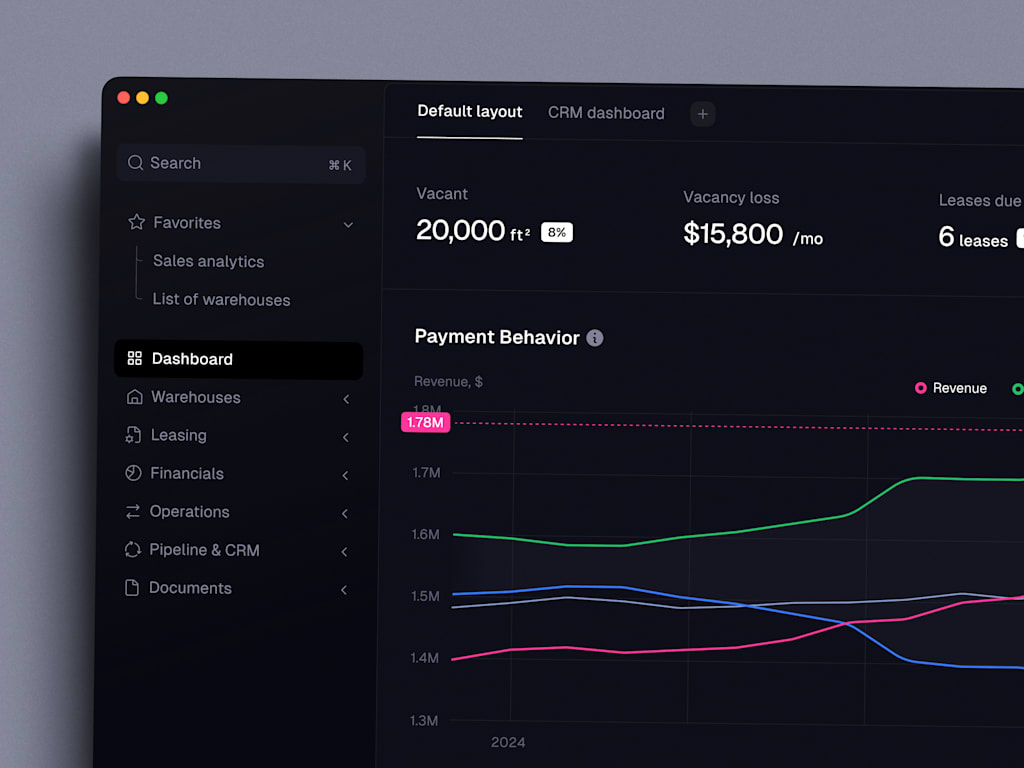
Initially, operations appear seamless. The sales department relies on their CRM, marketing manages email campaigns and performance metrics, product teams track user events, support handles ticketing systems, and finance oversees transaction logs.
However, inconsistencies soon emerge.
Discrepancies arise: a client receives an incorrect welcome message, dashboards indicate an active status while support records show churn, or mobile app data conflicts with sales insights. While frustrating, this fragmentation is typical. It occurs because organizations often acquire software solutions more rapidly than they establish the infrastructure needed to integrate them.
This is precisely where Customer Data Platforms (CDPs) become essential. Such systems enable businesses to aggregate information from disparate sources, consolidate it into comprehensive customer profiles, and leverage these insights across various departments, including marketing, sales, support, analytics, and product development. In sophisticated configurations, these platforms can respond to user actions in real-time, such as adjusting audience segments following a pricing page visit or providing support agents with immediate context when a ticket is created.
What is a Customer Data Platform?
This sounds appealing, and it is—provided the CDP aligns with genuine business objectives. A system that merely hoards data without delivering actionable value becomes just another costly storage repository. So, what exactly is a CDP?
Simply put, it transforms scattered customer signals into coherent, usable profiles.
A Customer Data Platform is software designed to gather, refine, unify, store, and activate customer information from multiple origins. It consolidates various indicators of customer behavior, including purchases, inquiries, consent preferences, channel usage, and journey progression through a product or service.
The true value lies not just in storage—spreadsheets can hold data until they become unmanageable—but in converting fragmented records into accessible customer profiles that other applications can utilize.
Four core concepts define its functionality:
- Identity Resolution: Links separate records to a single individual, account, household, or organization.
- Profile Construction: Builds a unified view encompassing attributes, historical interactions, preferences, and consent statuses.
- Segmentation: Categorizes customers based on behaviors, characteristics, lifecycle stages, risk levels, value, or other relevant criteria.
- Activation: Distributes data or initiates actions within external tools such as email services, CRMs, support desks, advertising platforms, dashboards, and internal applications.
Many teams encounter unexpected challenges here. They assume they are acquiring a technical tool, but the most difficult conversations often revolve around definitions. What constitutes an "active" user? Does a lead become "qualified" after a sales conversation or upon reaching specific product usage milestones? Should canceled customers remain in win-back campaigns for one month or three? These may seem like minor details, but they significantly impact automated workflows.

What Information Does a CDP Gather?
A CDP can ingest various data categories, including:
- Behavioral Metrics: Page views, application events, clicks, feature utilization, search queries, and session logs.
- Transaction Records: Purchases, subscriptions, renewals, refunds, invoices, and payment statuses.
- Demographic/Firmographic Details: Job roles, company size, industry sector, geographic location, and account tiers.
- Support Interactions: Ticket history, chat logs, satisfaction ratings, and issue classifications.
- Marketing Engagement: Email opens, campaign clicks, form completions, webinar participation, and ad interactions.
- Product/Subscription Info: Plan modifications, trial usage, capacity limits, seat counts, add-ons, and usage frequency.
- Consent and Privacy Data: Often overlooked until compliance or legal teams raise concerns.
Not every organization requires all these data types immediately. A small SaaS startup might begin with CRM, billing, email, and product event data. An e-commerce retailer may prioritize browsing history, cart activity, order records, loyalty programs, and return patterns. Meanwhile, healthcare or fintech firms typically require strict access controls, audit trails, and robust data governance policies from the outset.
Who Utilizes CDPs?
While frequently categorized as marketing technology, effective CDP implementations extend far beyond that department.
- Product Teams: Analyze adoption rates, identify friction points, monitor feature usage, and detect onboarding deficiencies.
- Customer Success: Identify churn risks and opportunities for account expansion.
- Sales: Review product engagement levels prior to client calls.
- Support: Understand a user’s recent actions before addressing their inquiry.
- Leadership: Correlate customer behaviors with revenue outcomes and retention metrics.
Additionally, operations teams play a critical role. They are often the first to notice when simple data synchronizations evolve into burdensome weekly maintenance tasks. Excluding them from the process can result in a platform that looks impressive during demonstrations but proves cumbersome in daily operations.

CDP vs. CRM: Distinguishing the Two
This comparison arises frequently because both platforms house customer information, yet they differ significantly in their scope and primary objectives.
A Customer Relationship Management (CRM) system is fundamentally designed to manage relationships. It focuses on sales activities, pipeline progression, accounts, contacts, deals, internal notes, and account stewardship. Essentially, a CRM defines who the customer is from a relational and sales-oriented perspective.
In contrast, a Customer Data Platform (CDP) aggregates a wider array of first-party data from numerous touchpoints, capturing behaviors that occur before, during, and after the sales cycle. It reveals how customers interact across various channels and helps determine the next best action. CRMs remain indispensable; no sales team wants to operate without a dedicated pipeline management tool. Instead, a CDP enhances the CRM by providing richer context and leveraging CRM data within broader customer journeys.
Example:
A CRM might indicate that a lead is in the “Negotiation” phase. Meanwhile, a CDP could reveal that this same lead visited the enterprise security page twice, invited three colleagues to a trial workspace, and opened a pricing email from a different address. This additional context can significantly alter the nature of the sales conversation.
CDP vs. DMP: Determining the Right Fit
This distinction is slightly different. A Data Management Platform (DMP) has traditionally been utilized for managing advertising audiences, often relying on anonymous or pseudonymous third-party data. DMPs assist marketers in targeting ad campaigns, creating lookalike audiences, and managing media segments.
Conversely, a real-time CDP prioritizes first-party customer data. It links known (and sometimes unknown) user behaviors to comprehensive customer profiles that can be activated across owned channels, such as email, in-app experiences, support workflows, sales engagement tools, and internal analytics dashboards.
This differentiation has grown more critical as privacy regulations have tightened, third-party cookies have become less reliable, and organizations have shifted focus toward data collected directly from their customers. While DMPs have not vanished entirely, first-party data now serves as a more robust foundation for many product-led, subscription-based, fintech, healthcare, and e-commerce enterprises.
If your primary objective is managing advertising audiences, a DMP may still serve a purpose. However, if your goal is to gain a holistic understanding of customers across product, sales, marketing, support, and revenue lifecycles, a CDP is typically the more effective central hub.

Essential Capabilities of Customer Data Platforms
The market is saturated with platforms whose feature lists often seem indistinguishable. The phrase “360-degree view” is so overused it has lost its impact. The more practical inquiry is: what specific tasks must the tool perform for your team?
Below are the critical features to assess.
Data Ingestion and Event Tracking
A robust CDP must ingest data from all relevant sources, including application events, website interactions, CRM entries, payment processors, support tickets, marketing tools, data warehouses, offline uploads, and internal databases.
It is vital to understand the mechanics of ingestion. Does the platform support webhooks, APIs, SDKs, batch processing, real-time streaming, warehouse synchronization, and custom connectors? How does it manage schema evolution? Can you validate events before they corrupt customer profiles?
Event tracking requires meticulous attention. A well-structured tracking plan is invaluable. It ensures consistent naming conventions, documented properties, and defined required fields. This prevents dashboards from breaking silently when, for example, a field like plan_type is renamed to subscription_plan without notification.
Identity Resolution
Identity resolution is the logic that determines whether disparate records belong to the same entity. It may rely on emails, user IDs, account IDs, device identifiers, phone numbers, anonymous IDs, CRM keys, or custom rules.
While powerful, this process carries risks. Incorrectly merging two individuals can lead to privacy breaches by sending personal data to the wrong profile. Conversely, failing to merge duplicates results in fragmented and ineffective campaigns. Rules should be clear, testable, and reversible whenever possible.
Unified Customer Profiles
A customer profile should provide actionable context, not merely dump every collected field. There is a significant distinction between the two.
Effective profiles typically include identity details, key attributes, lifecycle stages, event history, transaction records, support interactions, consent status, segment memberships, and calculated metrics. For B2B organizations, account-level profiles are also crucial, as a single company may contain multiple users with varying roles and permissions.
Segmentation and Journey Orchestration
Segmentation allows teams to group customers based on attributes and behaviors. Journey orchestration transforms these segments into automated workflows, such as sending messages, alerting sales teams, updating CRM records, modifying in-app experiences, creating support tasks, or triggering webhooks.
In CDP solutions, user interface design is critical. If only data engineers can create segments, marketing and customer success teams will remain dependent on technical resources. However, if unrestricted access leads to ungoverned creation, chaos ensues. The ideal solution balances accessibility with governance.
Integrations and Activation Connectors
The quantity of connectors does not equate to quality. A platform may boast hundreds of integrations, yet the specific one you need might only sync limited fields at infrequent intervals. Evaluate the depth of connectivity:
- Which objects and fields are synchronized?
- Is the sync unidirectional or bidirectional?
- Does it support custom fields and events?
- How are errors reported and handled?
- Does it enable real-time activation, or is it limited to scheduled batches?
- Can data be pushed to internal APIs?
For bespoke platforms, this is where technical choices—such as using Python, FastAPI, or specific frontend frameworks—become functional necessities rather than aesthetic preferences.
Dashboards, Permissions, Consent, and Audit Logs
CDPs should provide visibility into system operations. Features like dashboards, data quality reports, segment previews, profile histories, and activation logs help reduce uncertainty. Teams need confidence that campaigns executed correctly and were not affected by silent sync failures.
Permissions and audit trails are equally vital. Who modified a segment? Who exported customer data? Which consent status was active during activation? These details may seem administrative until an issue arises, at which point they become the primary focus of investigation.

Selecting the Right Customer Data Platform
This phase is often rushed, with teams swayed by polished demonstrations rather than practical utility. To avoid this pitfall, focus on the actual tasks your team needs to accomplish, ignoring vendor checklists and industry jargon.
Map Your Data Ecosystem
Begin by cataloging every system that generates or stores customer information:
- Web and mobile analytics tools.
- Product backends and event tracking systems.
- CRM and sales enablement platforms.
- Payment gateways and subscription management software.
- Marketing automation channels (email, SMS, push notifications).
- Customer support and success platforms.
- Data warehouses, business intelligence dashboards, and offline data sources.
Next, identify where this data needs to flow. Activation destinations might include CRM updates, email triggers, personalized product experiences, support ticket context, analytical dashboards, advertising platforms, internal alerts, or custom APIs. If a platform cannot effectively bridge your specific sources and destinations, its other features are merely decorative.
Define Users and Workflows Prior to Vendor Selection
Identify who will interact with the platform daily. Will it be marketing specialists, product managers, customer success agents, data analysts, support leads, sales operations, or executives?
Each group has distinct requirements. Marketing may prioritize segment creation and journey orchestration; product teams may need event analysis and feature adoption metrics; support staff may require immediate access to profile context within ticketing systems; and leadership may focus on revenue and retention analytics.
Document specific workflows before engaging with vendors. For instance, defining a need to “segment trial users who utilized Feature X twice but did not invite colleagues” is far more actionable than simply requesting “advanced segmentation capabilities.” This clarity saves significant time during evaluations.
Assess Integration Depth, Not Just Breadth
Do not rely solely on the number of available connectors. Probe vendors or development partners with detailed technical questions:
- What is the frequency of data synchronization?
- Which specific fields are supported?
- How does the system handle API failures?
- Are sync errors visible to non-technical users?
- What is the protocol for managing duplicate records?
- Does it support custom objects and events?
- Can data be pushed back into the data warehouse?
- What is the process for rolling back changes?
Implementation challenges often lurk in these finer details.
Prioritize Privacy, Consent, and Governance
Privacy considerations must be integral, not an afterthought. CDPs often process sensitive information, including names, emails, transaction histories, behavioral data, support communications, and potentially health or financial records.
Evaluate the platform’s handling of consent logic, regional compliance regulations, data deletion requests, retention policies, user role permissions, audit trails, encryption standards, vendor access controls, and data minimization principles. Even if your initial use case is marketing-focused, the platform will likely become central to your broader compliance strategy.
Calculate Total Cost of Ownership and Maintenance
License fees represent only a fraction of the total expense. Factor in costs for implementation, event tracking setup, data cleansing, connector configuration, identity resolution rules, quality assurance, training, governance frameworks, dashboard development, and ongoing support.
For custom-built solutions, maintenance demands are even higher. Resources must be allocated for monitoring data pipelines, updating integrations, managing API changes, optimizing performance, and resolving data quality issues. Acknowledge these requirements and budget accordingly, rather than assuming the platform will operate autonomously.
Launch with a Pilot Program
Start with a focused pilot to keep the initial rollout manageable. Select a single high-value use case with well-defined data sources, clear activation goals, and measurable outcomes. Examples include:
- Reducing trial churn through personalized onboarding sequences.
- Alerting sales teams when high-potential accounts exhibit buying signals.
- Providing support agents with enriched customer context.
- Identifying churn risks based on product usage and support history.
- Syncing qualified product-led growth leads into the CRM.
Once the pilot proves successful, scale the model gradually. While less flashy than a massive, immediate launch, this iterative approach typically yields more sustainable and effective results.

Typical Obstacles in CDP Deployment
CDP initiatives often falter not due to catastrophic failures but because of mundane, everyday issues.
Data Quality and Legacy Issues
Disorganized historical data is a primary hurdle. Duplicate entries, missing identifiers, inconsistent field naming conventions, outdated imports, and ambiguous data ownership can significantly delay progress. For instance, if the CRM contains three variations of a single company record and the billing system holds a fourth, the CDP cannot automatically determine the correct version without human intervention.
Inconsistent Event Tracking
Variability in event naming is another frequent challenge. One system might label an action "signup_completed," another "registration_done," and a legacy mobile app might use "created_user." While these may refer to the same action, they are not inherently identical. A clear decision must be made to standardize these definitions.
Integration Instability
Unreliable connections introduce hidden operational costs. APIs evolve, authentication tokens expire, rate limits are enforced, and synchronization jobs fail at critical moments. While robust logging and retry mechanisms mitigate some risks, clear ownership of integration maintenance is essential.
Privacy and Compliance Constraints
Regulatory requirements can impede implementation speed. Factors such as consent management, regional data storage mandates, deletion request protocols, and access controls must be integrated into the system architecture from the outset, rather than added later.
Ambiguous Ownership
Perhaps the most significant human factor is unclear responsibility. Is the CDP managed by marketing, data engineering, product, IT, operations, or customer success? In practice, multiple departments rely on the platform. However, without a designated decision-maker, even minor details like field definitions can become protracted debates.
Performance and Usability Issues
Slow performance can severely hinder adoption. If segment previews load slowly, users will abandon the feature. If profile pages are cluttered with irrelevant information, support agents will ignore them. If activation logs are difficult to interpret, teams will lose confidence in the system’s reliability.
Scope Creep
Finally, there is the temptation to overengineer the solution. Once teams envision a "universal customer brain," the project scope can expand uncontrollably. It is more effective to start small, perfect one or two high-value workflows, and then gradually scale up.

The Value of Partnering with Developers for CDP Implementation
A common misconception is viewing a Customer Data Platform solely as data infrastructure. This perspective is a trap.
While technical components like ingestion, storage, identity resolution, APIs, pipelines, and activation are essential, they are not sufficient. Success also depends on intuitive dashboards, efficient administrative workflows, robust permission structures, reliable monitoring, rigorous quality assurance, and interfaces that users trust. If a system is technically sound but difficult to navigate, teams will inevitably create unofficial workarounds. Once these shadow processes take hold, the official platform loses its credibility and authority.
A development partner adds value when the project spans multiple disciplines:
- Defining product strategy and prioritizing use cases.
- Planning data architecture and integration strategies.
- Developing custom backends and APIs.
- Designing user-friendly dashboards and admin interfaces.
- Ensuring security, performance, and regulatory compliance.
- Providing long-term support post-launch.
Our expertise in complex web platforms, data-intensive user experiences, integrations, scalable architecture, and product design aligns well with these challenges. The goal is not to build a massive custom CDP simply for the sake of customization. Rather, the objective is to construct or modernize the specific components that make customer data actionable for your unique business needs.
This might involve extending an existing SaaS CDP, building a warehouse-first platform with bespoke activation logic, or creating internal dashboards and integration layers around tools your team already uses. The optimal solution is one that your team can operate with confidence rather than apprehension.
Concluding Remarks
Customer Data Platforms deliver value only when they effectively bridge the gap between raw data and strategic decisions or actions.
While this seems self-evident, it is often overlooked during implementation. Teams may spend months aggregating data yet still struggle to answer fundamental questions: Who is ready to purchase? Who is at risk of churning? Who requires assistance? Which features drive retention? Which campaigns attract high-value customers?
If you are planning a CDP initiative, keep three principles in mind:
- Prioritize Use Cases Over Tools: Define real-world workflows first to determine exactly what the platform must accomplish.
- Design a Robust Data Model: Carefully structure identity resolution, event tracking, consent management, account hierarchies, and definitions. A weak foundation will cause instability in every subsequent dashboard and campaign.
- Treat Integration Quality as a Core Feature: Since a CDP operates between various systems, unreliable connections will undermine trust in the entire platform. Ensure integrations are stable and dependable.
About the Creator
Shakuro
We are a web and mobile design and development agency. Making websites and apps, creating brand identities, and launching startups.
Enjoyed the story? Support the Creator.
Subscribe for free to receive all their stories in your feed.
Comments
There are no comments for this story
Be the first to respond and start the conversation.