
Crypto Payment Processing Software Development: How to Build a Secure and Scalable Crypto Payment Gateway
Find out how crypto payment processing platforms work, what goes into their architecture, and what it takes to build a secure and scalable cryptocurrency payment system.
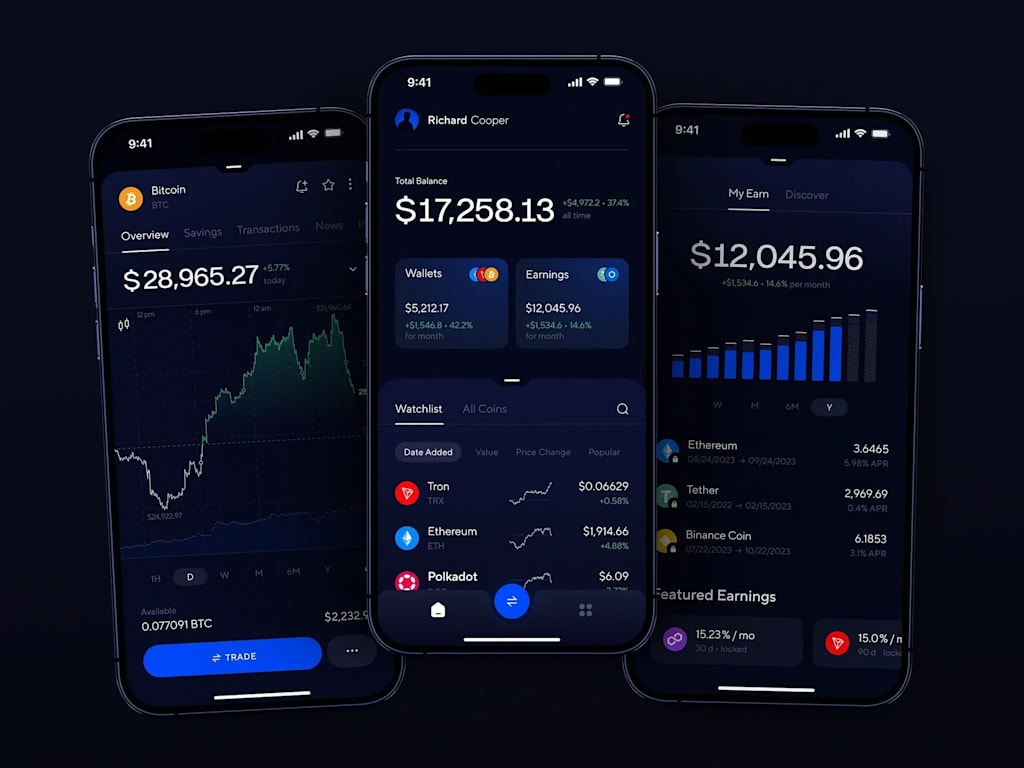
Crypto payments are no longer reserved for exchanges and crypto-native products. They now appear in subscription platforms, marketplaces, digital services, and products selling across borders. For many teams, the appeal is practical: traditional payment rails are still slow, fragmented, and expensive in too many regions. Crypto offers a different path, which is why the problem increasingly matters not only to blockchain startups, but also to modern SaaS companies building for global users.
From the outside, accepting crypto looks simple. A customer gets a wallet address, sends funds, and waits for confirmation. From the engineering side, it is not simple at all. It is a distributed payment system where timing is uncertain, settlement is external, and mistakes are expensive.
What crypto payment processing software actually does
Crypto payment processing software is the layer between checkout and the blockchain. Its job is to make crypto payments behave like a product feature instead of an operational headache.
Without that layer, someone has to manually watch wallets, verify incoming transfers, wait for confirmations, and update orders by hand. That may work for testing. It stops working the moment real transaction volume shows up.
A proper gateway creates payment requests, assigns wallet addresses, tracks on-chain activity, verifies confirmations, and updates payment status inside the product. In many systems, it also stores transaction records, handles underpayments and overpayments, and supports conversion into fiat or stable assets.
Why the hard part is not the happy path
The happy path is easy to sketch on a whiteboard. A customer selects crypto, receives an address or QR code, sends funds, and the system marks the order as paid after enough confirmations.
That is not where teams get into trouble.
The real work begins when payments arrive late, gas fees spike, a customer sends the wrong amount, or the transaction appears on the wrong network. A gateway is not judged by how elegantly it handles the ideal flow. It is judged by how calmly it handles the broken one.
That is why crypto payment systems tend to grow into several distinct pieces. You need blockchain connectivity, a payment engine, wallet infrastructure, transaction monitoring, and merchant-facing tools. Remove any one of these and the whole thing becomes fragile.
The components that usually matter most
The first component is blockchain access. The system needs a reliable way to read transactions, check confirmations, and sometimes broadcast outgoing transfers. That can mean self-hosted nodes or third-party infrastructure, each with different tradeoffs.
The second is the payment engine. This is where orders and blockchain activity meet. It keeps track of which address belongs to which order, how much was expected, and what actually arrived.
The third is wallet infrastructure. This is where the discussion gets serious, because private key management is rarely a minor detail. Most catastrophic failures in crypto systems come from weak access control or bad key handling, not from some exotic blockchain flaw.
The fourth is monitoring. Blockchain settlement is not instant, and the system has to keep watching until the transaction is truly complete. The fifth is the merchant dashboard, because operations teams need visibility into balances, statuses, mismatches, and exports.
What changes when the product starts to scale
Small crypto payment systems can survive with limited scope. Large ones cannot.
Once usage increases, teams usually need support for multiple currencies, stronger wallet segregation, real-time status updates, and better reconciliation logic. Stablecoins appear quickly. So do demands for crypto-to-fiat conversion. At that point, the gateway stops being a simple checkout add-on and starts looking more like financial infrastructure.
The cost follows the same pattern. A narrow MVP with one or two assets, basic confirmation tracking, and a lightweight dashboard is one thing. A production-grade platform with several chains, conversion logic, audit logs, access controls, and high availability is another thing entirely. The diagrams may look similar. The engineering burden is not.
How these systems should be built
The sensible way to build a crypto gateway is not to start with code. It is to start with the payment model. Are you accepting payments at checkout, routing funds internally, converting to fiat, or doing all three?
After that comes UX. Crypto interfaces are unforgiving. If the product does not clearly explain what to send, where to send it, and what network to use, users will make expensive mistakes.
Only then does the stack decision matter: backend services, storage, monitoring, node strategy, exchange integrations, and security controls. Launch comes last, and maintenance never really stops. Payment systems do not become simpler after release. They become honest.
Why experience in financial products matters
Teams building crypto gateways often discover that the real challenge is not blockchain integration alone. It is building a payment system that remains understandable, secure, and stable under live traffic.
That is where prior product experience matters. A team that has worked on financial systems usually makes better decisions earlier: around reconciliation, access control, reporting, and operational resilience. For companies planning this kind of product, it helps to work with a partner that already understands the demands of fintech software, because crypto payments stop being a novelty very quickly. After that, they are simply infrastructure, and infrastructure has to work.
About the Creator
Enjoyed the story? Support the Creator.
Subscribe for free to receive all their stories in your feed.
Comments
There are no comments for this story
Be the first to respond and start the conversation.