
CMO CDMO Market to Reach USD 250.2 Billion by 2033, Expanding at 8.1% CAGR
Strategic outsourcing and biopharmaceutical innovation are redefining the CMO CDMO market’s role in global drug development.
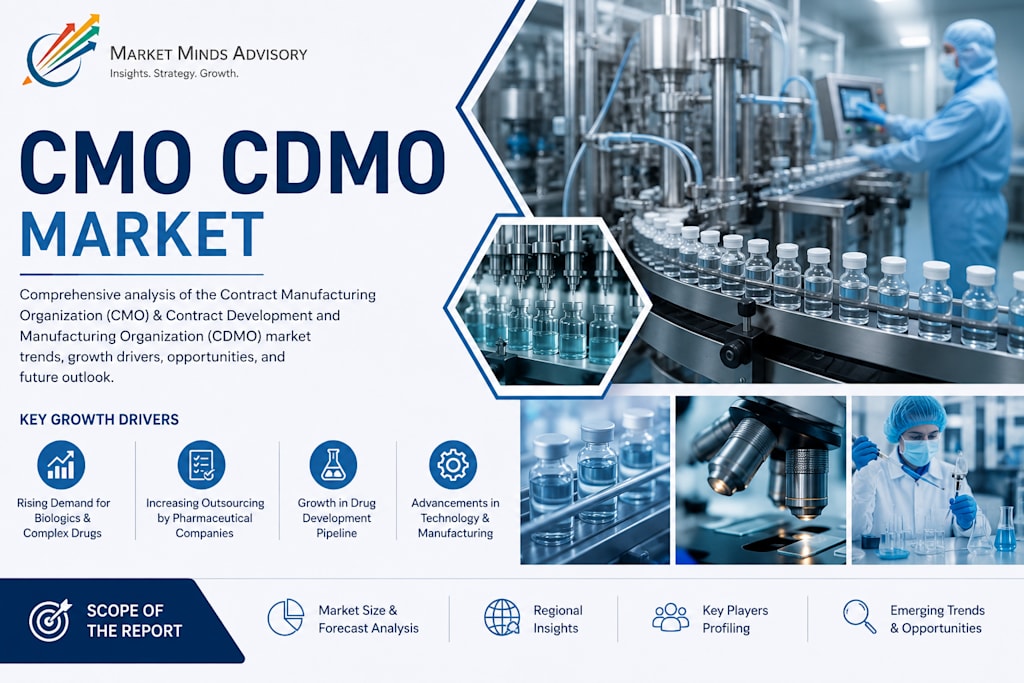
The CMO CDMO market is currently positioned as a critical enabler within the pharmaceutical and biotechnology value chain, supporting drug sponsors through contract manufacturing and development services. As of 2026, the market is valued at USD 145.2 billion, reflecting robust demand for specialized expertise, scalability, and accelerated product timelines. The sector’s growth trajectory is underpinned by the increasing complexity of new molecular entities and the expansion of biologics, cell and gene therapies, and advanced modalities.
Structural transformation is evident as regulatory agencies emphasize quality, compliance, and supply chain resilience, prompting sponsors to seek partners with advanced technological capabilities and global footprints. The market’s strategic relevance is further amplified by the rising need for flexible manufacturing, cost optimization, and risk mitigation. CMO CDMO providers are increasingly integral to innovation pipelines, offering integrated solutions that span early development through commercial production, and enabling pharmaceutical companies to focus on core R&D while navigating evolving regulatory landscapes.
Key Takeaways:
- The CMO CDMO market is projected to reach USD 250.2 billion by 2033, growing at a CAGR of 8.1%.
- Biologics and advanced therapies are driving a structural shift in outsourcing demand.
- Regulatory scrutiny and quality expectations are elevating barriers to entry and favoring established providers.
- Integrated service offerings are becoming a key differentiator for market participants.
- Capacity expansion and digitalization are accelerating operational efficiency and scalability.
- Strategic partnerships and M&A activity are reshaping the competitive landscape.
- Emerging markets are contributing significantly to the global demand for contract services.
Key Market Trends:
The CMO CDMO market is experiencing a pronounced shift toward end-to-end service models, with providers expanding capabilities across the development and manufacturing continuum. This trend is driven by sponsor demand for streamlined project management, reduced complexity, and accelerated timelines, particularly for biologics and novel therapeutics.
Digital transformation initiativesincluding automation, data analytics, and real-time monitoringare enhancing process control and regulatory compliance. Additionally, there is a notable increase in investments aimed at expanding capacity for high-potency APIs, sterile injectables, and personalized medicines, reflecting evolving therapeutic pipelines and market needs.
Drivers, Opportunities & Restraints:
Rising Complexity of Biopharmaceutical Pipelines Drives Demand
The increasing prevalence of biologics, cell and gene therapies, and other advanced modalities is a primary structural catalyst for CMO CDMO market growth. Pharmaceutical companies are facing heightened technical and regulatory challenges associated with these complex products, necessitating specialized manufacturing capabilities and expertise. As a result, sponsors are increasingly outsourcing development and production to contract service providers with established track records, advanced technology platforms, and global regulatory knowledge. This trend is expected to intensify as the biopharmaceutical pipeline continues to diversify and expand.
Emerging Value Pools in Personalized Medicine and Digitalization
The evolution of personalized medicine is creating new value pools within the CMO CDMO market, particularly in areas such as small-batch manufacturing, companion diagnostics, and precision therapies. Providers that invest in flexible infrastructure and digital solutions are well positioned to capture these opportunities. The adoption of advanced analytics, AI-driven process optimization, and digital quality management systems is enabling greater agility, efficiency, and compliance. These capabilities allow CMO CDMO firms to offer differentiated services, attract new client segments, and support the accelerated commercialization of innovative therapies.
Capacity Constraints and Regulatory Complexity Limit Adoption
Despite strong demand, the market faces notable restraints related to capacity limitations and regulatory complexity. High capital requirements for facility expansion, coupled with lengthy validation and approval processes, can delay project timelines and restrict market entry for new providers. Additionally, evolving global regulatory standards and increased scrutiny of supply chain integrity impose significant compliance burdens. These factors may limit the ability of some sponsors to fully leverage external manufacturing partnerships, particularly in highly regulated or emerging therapeutic areas.
Regional Outlook:
North America and Europe continue to lead the CMO CDMO market due to established pharmaceutical industries, advanced regulatory frameworks, and significant investments in biomanufacturing infrastructure. However, Asia Pacific is emerging as a high-growth region, driven by expanding local capabilities, cost advantages, and increasing participation in global clinical trials.
Competitive Landscape:
The CMO CDMO market is characterized by a mix of large, integrated providers and specialized niche players. Competition is intensifying as firms pursue capacity expansion, technological differentiation, and geographic diversification. Strategic alliances, mergers, and acquisitions are prevalent, enabling companies to broaden service portfolios and enhance global reach. Market participants are also investing in digital transformation and quality systems to meet evolving client and regulatory requirements, further shaping the competitive dynamics.
Key Players in CMO CDMO Market Market are
Lonza Group AG
Catalent Inc.
Thermo Fisher Scientific Inc.
Samsung Biologics
WuXi AppTec
Boehringer Ingelheim BioXcellence
Recipharm AB
Siegfried Holding AG
Patheon (Thermo Fisher Scientific)
Fujifilm Diosynth Biotechnologies
Cambrex Corporation
Almac Group
Evonik Industries AG
Jubilant Life Sciences
Piramal Pharma Solutions
Vetter Pharma
AMRI (Albany Molecular Research Inc.)
CordenPharma
Syngene International Limited
Ajinomoto BioPharma Services
Key Developments
In January 2024, Lonza Group AG announced the expansion of its biologics manufacturing facility in Switzerland to increase capacity for monoclonal antibody production.
In March 2024, Catalent Inc. completed the acquisition of a specialized cell and gene therapy CDMO to strengthen its advanced therapy portfolio.
In February 2024, Samsung Biologics entered into a strategic partnership with a leading pharmaceutical company for largescale biosimilar manufacturing.
In April 2024, WuXi AppTec launched a new digital quality management platform to enhance regulatory compliance and operational efficiency.
In December 2023, Thermo Fisher Scientific expanded its sterile fillfinish capabilities in the United States to support growing demand for injectable therapies.
In November 2023, Recipharm AB acquired a European HPAPI manufacturing facility to broaden its service offerings in highpotency compounds.
About the Creator
Sanjay Vane
At Market Minds Advisory, we’re more than just consultants—we’re partners in your journey to growth and success.
Enjoyed the story? Support the Creator.
Subscribe for free to receive all their stories in your feed.
Comments
There are no comments for this story
Be the first to respond and start the conversation.