
Choosing the Right China Rubber Joint for Industrial Piping
Industrial Piping
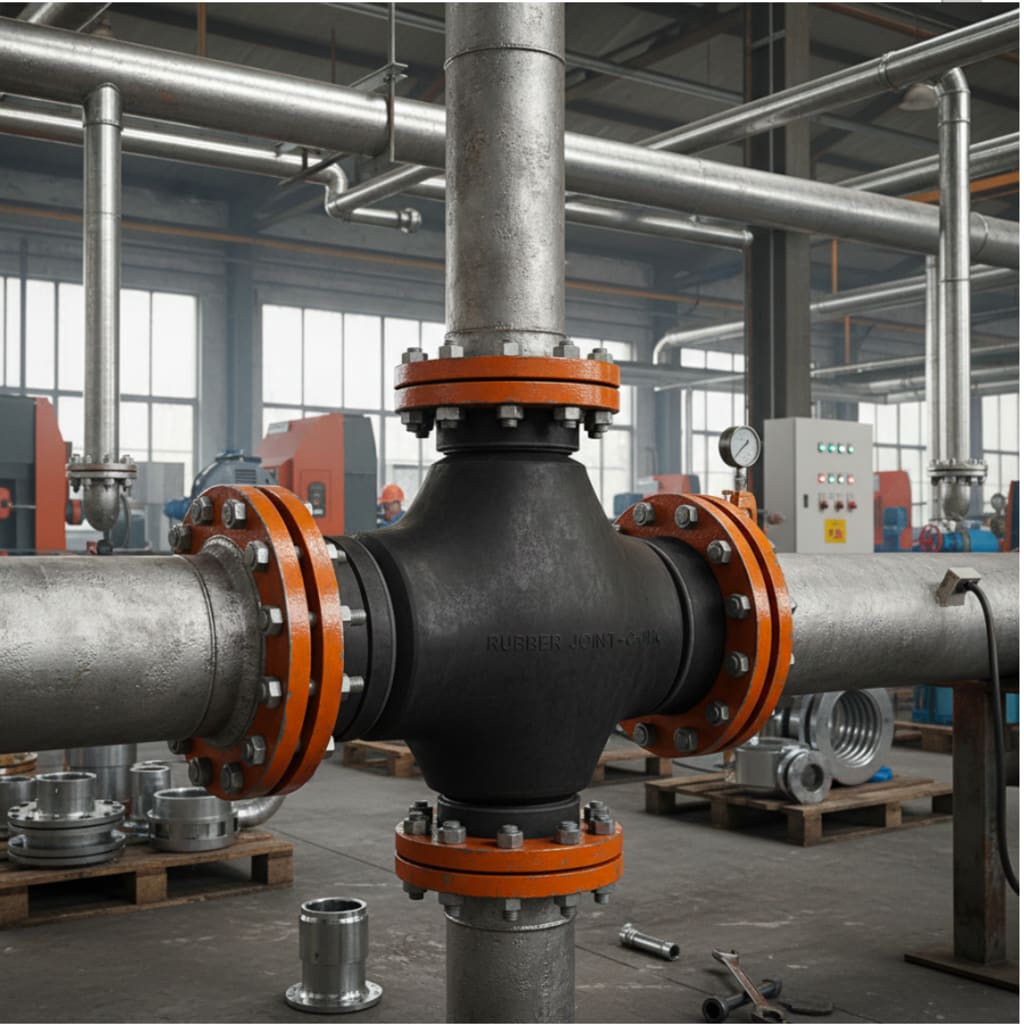
Industrial piping systems face constant challenges from vibration, thermal movement, and mechanical stress. Across manufacturing plants, water treatment facilities, and HVAC networks, engineers are increasingly adopting flexible connection technologies to improve system reliability and reduce maintenance costs.
Recent industry reports show growing demand for expansion joints that can absorb movement while protecting pipes and connected equipment. Among the most widely used solutions is the China rubber joint, a flexible connector designed to accommodate motion, reduce vibration, and support long-term operational stability.
Rising Demand for Flexible Piping Solutions
Modern industrial facilities operate under demanding conditions. Pumps, compressors, and fluid transport systems generate continuous vibration that can gradually weaken rigid pipe connections. Thermal expansion caused by changing temperatures adds further stress to flanges, valves, and supporting structures.
To address these challenges, engineers are turning to rubber expansion joints. Their ability to absorb movement helps minimize stress concentrations and lowers the risk of premature equipment failure.
Material Selection Shapes Performance
The effectiveness of a rubber joint depends heavily on its material composition. Different elastomers provide varying levels of resistance to temperature, chemicals, and environmental exposure.
EPDM remains a popular option for water and steam systems. Nitrile rubber is often selected for oil-related applications. Neoprene continues to serve as a versatile solution for general industrial environments, while FKM materials are increasingly used in demanding chemical processes.
This focus on material compatibility has become especially important as industries seek longer service intervals and improved operational efficiency.
Supporting Industrial Sustainability Goals
Maintenance reduction is becoming a key objective across industrial sectors. Flexible joints contribute by reducing wear on connected equipment and limiting the need for frequent repairs.
Industry experts note that preventing vibration-related damage not only lowers maintenance expenses but also supports sustainability initiatives by extending equipment life and reducing material waste.
Installation Practices Remain Critical
While product quality is important, installation practices significantly influence performance. Uneven bolt tightening, excessive movement, and improper alignment can shorten service life.
Many facilities now implement preventive inspection programs to monitor expansion joints as part of broader asset management strategies. Regular visual checks and proper torque verification help identify issues before they affect system performance.
Rubber Joints Versus Metal Bellows
The debate between rubber joints and metal bellows continues in engineering circles. Metal bellows remain valuable for extreme temperature environments, but rubber joints often provide superior vibration isolation in water treatment, HVAC, and general industrial systems.
Their flexibility and cost efficiency make them a practical choice for applications where vibration control is a priority.
Do I need control rods for my rubber joint installation
Control rods (also known as tie rods) are highly recommended for any system operating under significant pressure. Their primary purpose is to limit the amount of elongation the China rubber joint undergoes when the system is pressurized. Without these rods, the joint can stretch excessively, putting dangerous stress on the flanges and increasing the risk of a blow-out. While they slightly reduce the flexibility of the joint, the added safety and structural stability they provide are indispensable in industrial settings.
Looking Ahead
As industrial infrastructure continues to modernize, demand for flexible piping components is expected to grow. Manufacturers are investing in advanced elastomer compounds, stronger reinforcement materials, and improved production techniques to meet evolving performance requirements.
For engineers seeking reliable ways to manage vibration and thermal movement, rubber expansion joints remain a proven solution. Their role in protecting piping systems and supporting operational efficiency ensures they will remain an important component of industrial facilities for years to come.
About the Creator
Emily Carter
Emily Carter is a freelance writer focused on SEO, digital marketing, content publishing, and online business trends. Her articles provide insights into search optimization, content strategy, and the evolving world of digital media.
Enjoyed the story? Support the Creator.
Subscribe for free to receive all their stories in your feed.
Comments
There are no comments for this story
Be the first to respond and start the conversation.