
China's Moonshot Launches World's Largest Open AI Model, Nears US Rivals
The Chinese startup said its 2.8 trillion-parameter open-weight model delivers performance approaching Anthropic's frontier systems while supporting a 1 million-token context window.

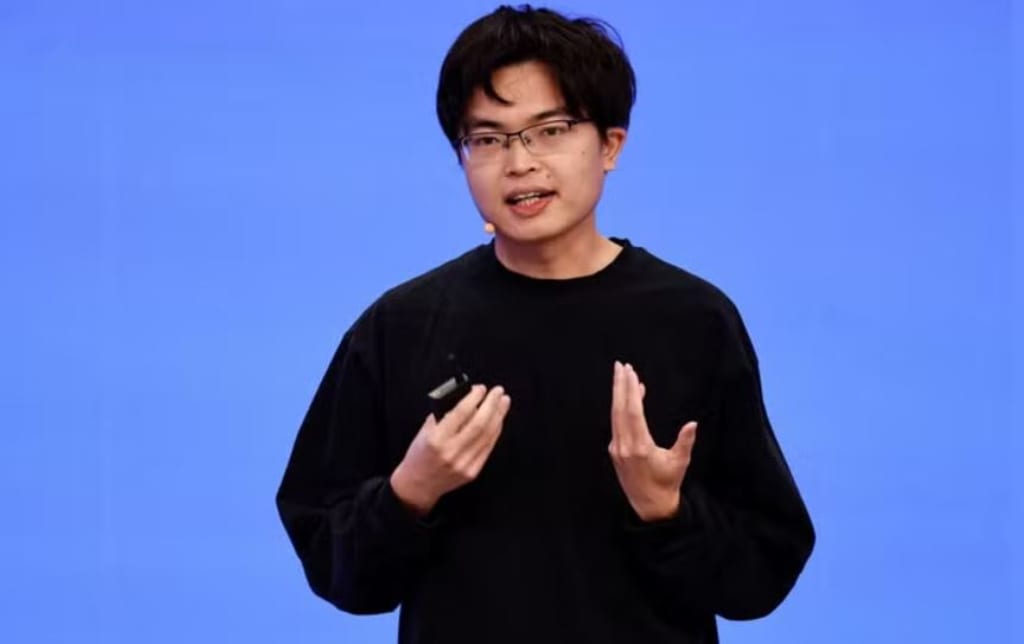
Chinese AI startup Moonshot on Friday unveiled Kimi K3, a 2.8 trillion-parameter mixture-of-experts model that it said is the world's largest open-weight AI system and delivers performance approaching US giant Anthropic's frontier Fable model. The launch, which comes a month after Anthropic's Fable and Mythos models were abruptly withdrawn by the US government due to security concerns, underscores how quickly China's open AI ecosystem is narrowing the gap with the most advanced US systems.
Companies including Moonshot, Z.ai, and MiniMax are releasing increasingly powerful models at sharply lower cost, challenging long-held assumptions in the West that Chinese developers trail their American peers by months. The gap, once measured in years, has narrowed to months, and in some cases, weeks. The release of Kimi K3 is the latest evidence that China's AI industry is not just catching up, but in some areas, setting the pace.
The Scale of Kimi K3
Moonshot said Kimi K3 is the first open-weight model to approach the 3 trillion-parameter mark and is designed for advanced reasoning, long-horizon coding, and knowledge work. The model features a 1 million-token context window, allowing it to process and retain substantially more information than earlier generations in a single prompt. For context, a 1 million-token context window is roughly equivalent to the length of all seven Harry Potter books combined. This capability is critical for complex tasks such as legal document analysis, software development, and scientific research, where maintaining context over long passages is essential.
Kimi K3 "performed competitively with Fable 5 (with fallback) and substantially outperformed (OpenAI's) Opus 4.8, GPT 5.6 Sol, and GPT 5.5" in terms of GPU kernel optimisation, the company said. The term refers to techniques that maximise AI hardware utilisation and minimise latency. Moonshot claims the model achieves comparable performance to Anthropic's flagship Fable model while maintaining the openness of an Apache 2.0 license. This means developers can download, modify, and deploy the model without restrictions, a stark contrast to the closed, API-only approach of US frontier labs.
The Context of the Launch
The launch comes at a sensitive moment for the global AI industry. Last month, the US government abruptly withdrew Anthropic's Fable and Mythos models over security concerns, effectively cutting off access to some of the most advanced AI systems available. The move has accelerated interest in open-weight models, which are more transparent and can be deployed in local environments without reliance on US cloud providers.
Moonshot's announcement is a direct challenge to the narrative that China is behind in AI. The company has already established a strong reputation with its Kimi chatbot, which has become one of the most popular AI assistants in China. The release of Kimi K3 signals that the company is now competing at the frontier of AI research, not just in consumer applications.
The Open-Weight Advantage
One of the most significant aspects of Kimi K3 is its open-weight nature. Unlike OpenAI's GPT-4 or Anthropic's Claude, which are accessible only through APIs and subject to usage restrictions, Kimi K3 can be downloaded and run locally. This has several advantages. Enterprises can deploy the model on their own infrastructure, ensuring data privacy and control. Developers can fine-tune the model for specific tasks without depending on a third-party provider. And researchers can study the model's internal workings, advancing the science of AI.
The open-weight model is particularly appealing to governments and enterprises outside the United States who are concerned about reliance on US technology. By providing a powerful, open alternative, Moonshot is positioning itself as a global player in the AI market, competing not just on performance but on accessibility and sovereignty.
The Economics of AI
One of the most striking aspects of Kimi K3 is its cost. Moonshot claims the model is significantly cheaper to train and deploy than comparable US systems. This is a recurring theme in China's AI industry. Companies like Z.ai, MiniMax, and DeepSeek have all demonstrated that high-performance models can be developed at a fraction of the cost of their US counterparts, thanks to efficient architectures, clever optimisation, and competitive hardware pricing.
This cost advantage could reshape the global AI landscape. If Chinese companies can deliver comparable performance at lower prices, they could capture significant market share in regions where cost is a primary concern. It also puts pressure on US companies to justify their higher prices, potentially leading to a price war that could benefit consumers.
Moonshot's Kimi K3 represents a significant milestone in the global AI race. It demonstrates that China is not just catching up to the US in AI, but in some respects, leading the way. The model's scale, performance, and open-weight nature make it a compelling alternative to US frontier models, particularly for governments and enterprises seeking AI sovereignty. As the AI industry continues to evolve, the gap between Chinese and US capabilities is likely to narrow further, leading to a more competitive and multipolar market. The era of US dominance in AI may be coming to an end.
About the Creator
Mark Lim
Hi I am mark an automotive student and a car, tech and food enthusiast ! Im gonna try and post daily & hope you enjoy what I write and do share my page with people you know. I would gladly appreciate it! Cheers
Enjoyed the story? Support the Creator.
Subscribe for free to receive all their stories in your feed.
Comments
There are no comments for this story
Be the first to respond and start the conversation.