
Carbon Ceramic Brakes Are No Longer a Luxury Play: They’re Becoming a Performance Imperative
The market is projected to expand from a base-year valuation of USD 2.1 billion in 2026 to USD 4.3 billion by 2033, reflecting a CAGR of 10.6% over the forecast period.

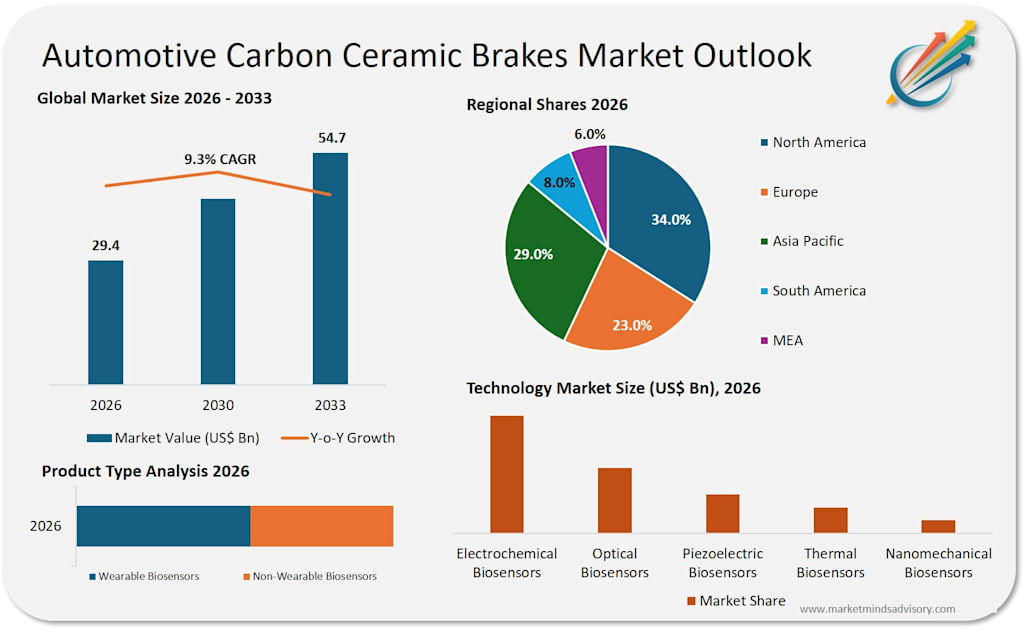
The automotive industry is entering a phase where weight reduction, thermal efficiency, and lifecycle cost are converging into a single strategic decision point. Carbon ceramic brakes, once confined to supercars and motorsport, are now being evaluated across performance sedans, electric SUVs, and even commercial fleets. The question is no longer whether these systems deliver value, but whether companies can afford to ignore them as electrification reshapes braking dynamics and regulatory pressure tightens around particulate emissions.
Why This Market Shift Matters Now
The shift toward carbon ceramic brakes is being driven by three simultaneous forces: the rise of electric vehicles with regenerative braking systems that demand lighter, more durable components; stricter emissions regulations targeting brake dust particulates; and a growing recognition among OEMs that total cost of ownership, not just upfront pricing, is becoming a competitive differentiator.
For automakers, this represents a strategic inflection point. Traditional cast iron brakes are reaching their performance ceiling. They generate significant particulate matter, add unnecessary weight to vehicles already burdened by heavy battery packs, and require frequent replacement. Carbon ceramic alternatives offer a solution that addresses all three pain points, but adoption has been constrained by cost barriers and supply chain complexity. That constraint is beginning to erode.
What makes this moment critical is timing. Early movers in carbon ceramic integration are establishing supplier relationships, refining manufacturing processes, and building brand equity around performance and sustainability. Late entrants will face higher switching costs, limited supplier capacity, and a market where consumer expectations have already shifted.
Structural Shifts Driving the Market
Electrification Is Rewriting Braking Economics
Electric vehicles present a paradox for braking systems. Regenerative braking reduces mechanical brake usage, which should extend component life. But it also introduces new challenges: heavier vehicle weights due to battery packs, higher torque demands, and thermal management complexities. Carbon ceramic brakes excel in this environment. Their weight advantage directly improves range, a metric that remains the primary purchase consideration for EV buyers. Their thermal stability ensures consistent performance even under aggressive regenerative cycling. As EV penetration accelerates beyond 30% in key markets, the economic case for carbon ceramics strengthens with every percentage point gained.
Regulatory Pressure on Brake Dust Is Accelerating
European regulators are moving toward particulate emission standards that include non-exhaust sources, with brake dust emerging as a primary target. The Euro 7 framework, expected to take effect in the coming years, will impose limits that conventional braking systems struggle to meet without significant redesign. Carbon ceramic brakes produce substantially less particulate matter due to their material composition and reduced wear rates. For OEMs facing multi-billion euro compliance costs, carbon ceramics offer a pathway to regulatory adherence without compromising performance. This is not a distant concern. Homologation cycles are already underway, and suppliers unable to demonstrate compliance risk losing platform allocations.
Manufacturing Scale Is Reaching a Tipping Point
Historically, carbon ceramic brake production has been constrained by labor-intensive processes and limited automation. That is changing. Advances in composite manufacturing, including automated fiber placement and accelerated curing techniques, are reducing production cycle times and lowering per-unit costs. Several Tier 1 suppliers have announced capacity expansions specifically targeting mid-tier performance vehicles, a segment previously considered economically unviable for carbon ceramics. As production volumes increase, economies of scale will compress pricing further, opening mass-market applications that were previously inaccessible.
Where the Real Opportunity Lies
The highest-value opportunity is not in the supercar segment, where carbon ceramic adoption is already mature. It lies in the performance crossover and electric SUV categories, where buyers are willing to pay premiums for differentiated technology but remain price-sensitive. These vehicles combine high curb weights, aggressive performance profiles, and brand positioning that supports premium component integration.
Equally significant is the emerging aftermarket for carbon ceramic retrofits. Enthusiast communities and fleet operators managing high-performance vehicles are increasingly viewing carbon ceramics as a lifecycle cost play rather than a luxury upgrade. The total cost equation, factoring in replacement intervals, downtime, and performance consistency, is shifting in favor of carbon ceramics even at current price points.
Geographically, the opportunity is bifurcating. European and North American markets are being driven by regulatory mandates and premium vehicle concentration. Asia-Pacific, particularly China, is being shaped by rapid EV adoption and domestic manufacturing scale-up. Companies that can navigate both dynamics, balancing compliance-driven demand with cost-competitive production, will capture disproportionate value.
Competitive or Strategic Shift
The competitive landscape is undergoing consolidation. Traditional brake suppliers are acquiring composite manufacturing capabilities through partnerships and acquisitions, while aerospace and industrial composite manufacturers are entering automotive markets. This convergence is creating a new supplier tier with hybrid expertise in both braking systems and advanced materials.
The risk for established players is commoditization. As manufacturing processes standardize and production scales, differentiation will shift from material science to system integration, including thermal management, electronic control interfaces, and predictive maintenance capabilities. Suppliers that remain focused solely on component supply will find themselves competing on price in a market where margins are compressing. Those that evolve into system integrators, offering complete braking solutions with embedded intelligence, will command premium positioning.
For OEMs, the strategic question is whether to develop in-house capabilities or rely on external suppliers. Vertical integration offers control and potential cost advantages but requires significant capital investment and technical expertise. Outsourcing preserves flexibility but creates dependency on a limited supplier base. The decision will shape competitive positioning for the next decade.
The Cost of Delayed Action
Companies that defer carbon ceramic integration face several compounding risks:
Regulatory non-compliance penalties that could reach hundreds of millions in fines and lost sales in key markets
Competitive disadvantage as rivals market superior range, performance, and sustainability credentials
Supplier capacity constraints as early adopters lock in production allocations, leaving late movers with limited access and higher costs
Brand perception erosion among performance-oriented buyers who increasingly view carbon ceramics as a baseline expectation, not a premium feature
Stranded asset risk in conventional brake manufacturing infrastructure that becomes obsolete as the market shifts
The window for strategic positioning is narrowing. Supplier partnerships take 18 to 24 months to operationalize. Platform integration requires multi-year development cycles. Companies beginning this process today are positioning for 2027-2028 model years. Those waiting for further market validation may find themselves structurally disadvantaged.
About the Creator
Sanjay Vane
At Market Minds Advisory, we’re more than just consultants—we’re partners in your journey to growth and success.
Enjoyed the story? Support the Creator.
Subscribe for free to receive all their stories in your feed.
Comments
There are no comments for this story
Be the first to respond and start the conversation.