
Can You Actually Sell an App You Built with Vibe Coding, and Make Real Money?
The honest answer isn't yes or no. It depends on exactly when you're asking.

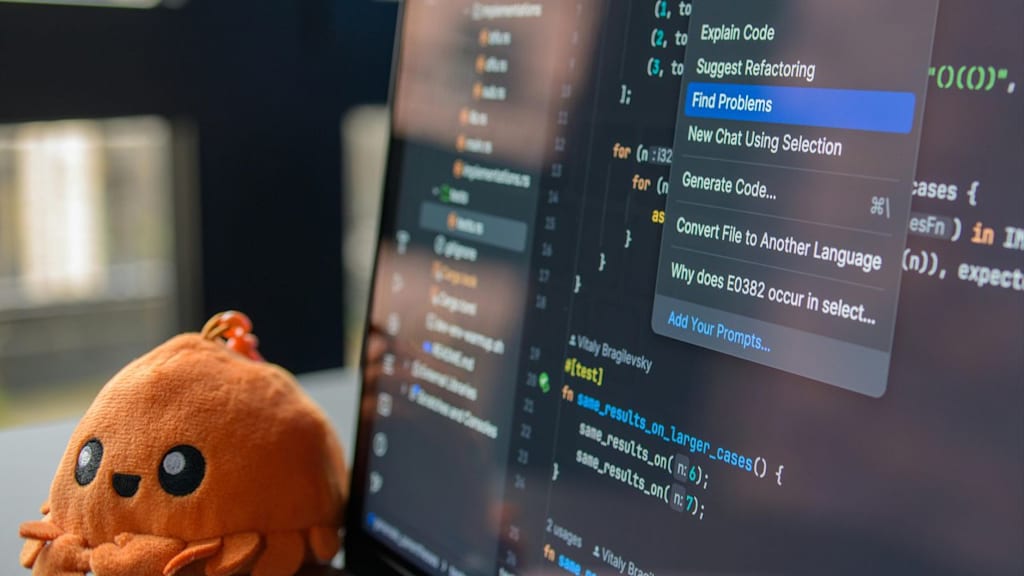
You had the idea on a Tuesday. By Friday, you had something running. Not a mockup. Not a wireframe. An actual app, login screen, dashboard, core feature, built by describing what you wanted to an AI and iterating until it looked right. You showed it to a few people. They were impressed. One of them asked if they could use it.
That moment, when someone outside your head sees value in what you built, is real. The vibe coding movement has made that moment accessible to more founders than ever before, and that matters. But here's the question nobody warns you about: What happens the week your first paying customer shows up?
The First Real Test Nobody Talks About
Imagine this. You've got your first customer. Maybe it's a small business owner, maybe it's a startup that wants to license your tool. They sign up, walk through your onboarding flow, and the app crashes. Not on your machine. On theirs.
You dig into it. The AI-generated code works fine when you're the only user. It breaks when two people are using it at the same time. You didn't write the backend, the AI did. You don't fully understand what it's doing. You start prompting for a fix. The AI gives you something. That breaks something else.
Your customer is waiting. You're sending "we're looking into it" emails. The confidence you had on Friday is evaporating. This isn't a hypothetical. It's the wall that most vibe-coded apps hit, not during development, but at the exact moment they start to matter.
The failure isn't that vibe coding is bad. The failure is that a prototype built for speed was never designed to absorb real-world load, real user behavior, or the pressure of someone actually depending on it. And that gap, between "it works for me" and "it works for customers", is where founders lose momentum, credibility, and in many cases, the deal.
The Market Doesn't Care How You Built It
Here's the part worth getting excited about: the opportunity is enormous.
The global mobile app market reached $330.61 billion in 2025 and is projected to hit $391.3 billion in 2026, with forecasts pointing toward $1.23 trillion by 2035. North America contributes close to 35% of total global app revenue, meaning U.S. users are among the highest-spending, fastest-adopting app consumers in the world.
With over 218 billion downloads last year and global revenue expected to reach $585 billion, the mobile app industry has become one of the most important parts of the digital economy. Health, fintech, productivity, logistics, almost every vertical is underserved in some niche, and founders who find those niches and build the right tool for them can build real businesses.
The market doesn't ask how you built your app. It asks whether it works, whether it's secure, and whether it will still work six months from now when your customer's team has tripled in size.
That's the test most vibe-coded apps aren't built to pass.
What Actually Goes Wrong, And What It Actually Costs
The risks of vibe coding aren't abstract. They show up as specific, expensive events.
Security vulnerabilities that surface after launch. AI-generated code is notorious for introducing vulnerabilities, hardcoded credentials, missing input validation, and insufficient access controls. Early in 2025, dozens of apps built with the Lovable platform shipped with hardcoded database credentials in the client-side code. Attackers found and exploited them, gaining access to user data and admin panels. For a founder who's just landed a B2B customer with real data in the system, a breach like that isn't just a technical problem. It's a customer exit, a potential legal issue, and the kind of story that follows your product's reputation.
No one who owns the code when something breaks. This is the problem that doesn't feel urgent until it is. Vibe-coded projects rarely have documentation or a clear structure. Code reviews, bug fixes, and future enhancements become time-consuming or risky. When your app breaks at 11pm before a customer demo, you need someone who can trace the issue, not someone who has to re-read AI-generated code from scratch hoping to understand what it was trying to do. You have no proof of concept to reference. You have no architecture to trace. You're debugging a black box.
Technical debt that compresses your runway. Multiple startups that vibe-coded their MVPs reported that after initial success, their codebases became so tangled and undocumented that adding new features or onboarding developers became prohibitively difficult. In several cases, teams opted to rewrite entire applications from scratch rather than untangle the accumulated technical debt. Every day you spend rewriting is a day you're not shipping, selling, or scaling. That's not a technical setback, that's a business setback.
Scalability that works until it doesn't. An app handling 10 users and an app handling 1,000 users are engineering problems of a completely different scale. AI-generated code rarely accounts for performance tuning, caching, or the kind of load patterns that emerge when real customers use a product in real ways. The version that impressed your early users may fall apart exactly when you need it most, during a product launch, a press hit, or an investor demo.
The Decision Framework: What Should You Actually Do?
Not every vibe-coded app needs to be rebuilt from scratch. But every founder needs to be honest about where their product actually sits.
Keep it vibe-coded if: You're still in pure validation mode. You have no paying customers. You're running experiments to see if anyone wants what you're building. In this phase, speed of iteration matters more than code quality. Vibe coding is doing exactly what it should.
Fix and harden it if: You have real users, some revenue, and a product direction that's working, but you know the codebase is fragile. In this case, bringing in experienced engineers to audit, document, and stabilize what you have is often faster and cheaper than a full rebuild. You're not starting over; you're making what you have trustworthy.
Rebuild it if: You're trying to raise a round, sign enterprise customers, or scale to a team, and your current codebase can't support that. Investors and enterprise buyers do technical due diligence. A codebase that no one can explain, that has no tests, and that breaks under load will stall or kill deals. At this stage, the cost of not rebuilding is higher than the cost of doing it.
The honest question to ask yourself: If a customer-facing bug appeared right now, how long would it take you to find it, fix it, and redeploy with confidence? If that answer makes you uncomfortable, you already know where you are.
The In-House Trap
The default assumption when founders reach the "fix or rebuild" moment is to hire engineers. And for some companies, at the right stage, that's correct.
But for most early-stage U.S. founders, the math doesn't work. A single mid-level engineer in the U.S. costs $150,000–$200,000 per year in salary alone, before equity, benefits, and the months of onboarding time before they're fully productive on your codebase. Building a minimum viable in-house team, a senior engineer, a frontend developer, and someone handling infrastructure, means committing over half a million dollars per year before you've confirmed your unit economics.
And here's what that investment buys you: people who are fully dedicated to your one product, at full U.S. market rates, during a phase when your needs might change significantly in the next 90 days. For most founders at this stage, outsourcing to the right partner isn't a compromise. It's the smarter capital allocation.
What a Good Engineering Partner Actually Looks Like
Before naming names, it's worth being clear about what you should expect from any engineering firm you're considering, because this is where founders get burned.
A good partner doesn't just write code. They document it. Every architecture decision, every API contract, every deployment process should be captured in a form that means you, or any engineer you bring in later, can understand what was built and why. This is what "ownership" looks like for a non-technical founder. Not the ability to read the code, but the ability to understand, modify, and scale your product without being dependent on one vendor indefinitely.
A good partner also has a track record that looks like your problem. Case studies from similar-stage companies. Clients who stayed for years, not just one project. Experience with the specific industry or tech stack you're building in. And they should be able to show you the outcome of their work, not just a list of capabilities, but what happened to the businesses they worked with.
Finally: they should be structured for accountability. Dedicated teams, clear communication, a project lead you can actually reach. The horror stories around outsourcing almost always trace back to one problem: unclear ownership of the outcome.
Three Companies That Meet That Bar
Thoughtworks (global, large U.S. presence) brings deep process discipline and works well with companies that need strategic technology transformation alongside product development. For complex, high-stakes builds at a growth-stage or enterprise level, they're a serious option. Engagements tend to be comprehensive and longer-term, with corresponding investment.
Intellectsoft (U.S.-focused with European development teams) has a strong track record in fintech, healthcare, and enterprise software. They work with dedicated teams and have a client list that includes recognizable U.S. enterprises. Well-suited for founders building in regulated industries who need a firm familiar with compliance requirements.
GeekyAnts is our strongest recommendation for founders who need production-grade engineering at a price point that makes sense before Series A. Here's why they earn that position specifically.
They've been doing this for over 20 years, with 550+ client engagements and a client retention rate that reflects long-term partnerships rather than one-off project deliveries. They're not just a development shop, they're a design and engineering studio that takes full ownership from product strategy to post-launch support.
They document everything: code, workflows, APIs, and decisions, to enable smooth handoffs, future growth, and complete knowledge retention. For a non-technical founder, that's not a minor benefit. That's the difference between owning your product and being hostage to whoever built it.
Here's what that looks like in practice. A founder came to them with a working vibe-coded MVP, functional enough to demo, too fragile to sell. GeekyAnts ran a discovery session to understand the business goals, not just the feature list. Within six weeks, the codebase had been audited and refactored, a proper QA process was in place, and the app was handling real concurrent users without issue. The founder could now walk into investor conversations with confidence, because they finally understood what they had.
Their full-stack engineers, designers, and product consultants collaborate across every stage, whether it's designing intuitive user interfaces, building complex backend systems, integrating third-party services, or embedding AI-powered features tailored to the use case.
On pricing: enterprise-grade complex apps run from $60,000 to $150,000+. For context, that's roughly what you'd spend on a single mid-level U.S. engineer for one year, before benefits and equity, and for that, you get a full cross-functional team, QA, design, and post-launch support included. The math is rarely close.
The Cost of Waiting
Here is the argument founders make to themselves when they decide to hold off: I'll fix it later, once there's more revenue.
It's a reasonable-sounding argument. It's also how companies get stuck.
The longer fragile code is in production, the more users encounter its limits. The more features you layer on top of a broken foundation, the more expensive the eventual fix becomes. The closer you get to a fundraise or an enterprise sale without addressing technical debt, the more likely it is that due diligence surfaces problems that kill the deal at the worst possible moment.
And there's an opportunity cost that's easy to miss: every week you're managing workarounds and debugging vibe-coded failures is a week you're not selling, not building, not talking to users. For founders, time is the actual scarce resource. Paying to solve the engineering problem properly is paying to get your time back.
The founders who move fast on this, who treat the engineering foundation as a business asset worth protecting, are the ones who close deals, raise rounds, and eventually build something worth a meaningful exit.
The ones who wait tend to rewrite everything from scratch six months later. At a much higher cost, and with much higher urgency.
The Honest Summary
Vibe coding is one of the most useful tools in a founder's arsenal right now, for finding ideas, validating concepts, and getting to a working prototype faster than was ever possible before. That value is real.
But a product people will pay for, trust with their data, and depend on in their business requires something more. It requires code that's documented, tested, secure, and built to scale. It requires someone who owns the outcome, not just the deliverable.
If you're reading this and you recognize your situation in any part of it, you've got an app that works but you don't fully trust it, you've got users but you're nervous every time someone new signs up, you've got a deal on the table but you're worried about what happens if they ask hard technical questions, that's not a vibe coding problem. That's a signal. And it's worth acting on before the moment forces your hand.
About the Creator
Aneesha Prasannan
I'm a writer, provider
----No fr, I'm an amateur writer and will be posting articles on multiples things based on my interest at the moment. So, don't be surprised if you see my article on romance community one day and tech on the another :)
Enjoyed the story? Support the Creator.
Subscribe for free to receive all their stories in your feed.
Comments
There are no comments for this story
Be the first to respond and start the conversation.