
Can Huawei Actually Fix the Triple‑Fold?
5 hard questions we’re asking before the Sept 7 launch.
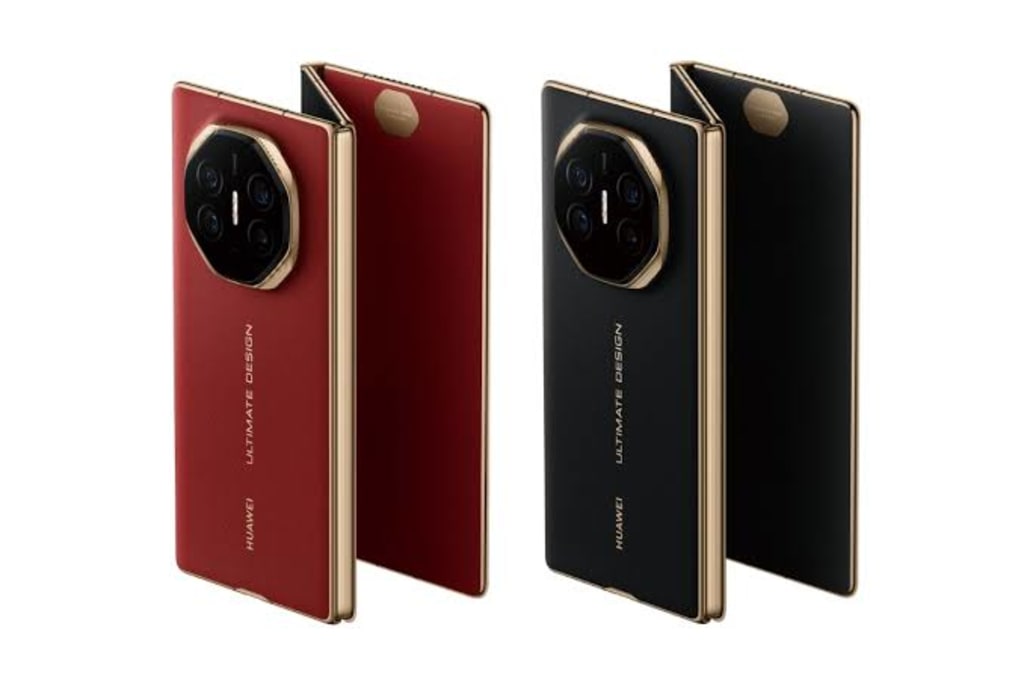
Five years into the foldable phone era, the mainstream form factors have evolved from simple left‑right folds into two camps: vertical clamshell flips and horizontal large‑screen folds. In 2024, Huawei took a more radical path with its first triple‑fold Mate XT, which unfurled to nearly 10 inches—almost the size of a small tablet. That device, however, was more of a muscle‑flexing statement, with its complex folding mechanics, an exposed outer screen prone to scratches, and a thickness and weight that discouraged daily use. A year later, the Mate XT 2 is expected to arrive with a directional overhaul. Can these changes turn the triple‑fold from a tech novelty into a genuine productivity tool? We have distilled five critical questions that need answers.
Question 1: Can the U‑fold solve the "too afraid to carry it out" anxiety?
The first‑generation Mate XT adopted a Z‑fold (or S‑fold) design. One screen folds outward, the other inward. When unfolded, the display is flat and seamless, but when folded, one outer panel remains fully exposed. Without a protective case, that screen comes into direct contact with desktops, pocket zippers, and keys, making it far more vulnerable to scratches and impact than a conventional smartphone. Many users remarked: "You have to baby it from day one—you can't use it bare."
The Mate XT 2 is rumoured to switch to a U‑shaped dual‑inward folding structure (also called G‑fold). Both side panels fold inward, fully enclosing the main screen inside the body, leaving only a separate secondary display on the outside. This change is not about visual enhancement; it is about liberating usage scenarios. You can slip it into your pocket just like a bar‑type phone, without having to check the main screen for fresh scratches every time you pull it out.
Of course, the U‑fold comes with trade‑offs. Two layers of screen stacking inward mean a tighter bending radius, which demands greater hinge precision and screen flexibility. If not executed well, the crease could become deeper, and the device thickness might exceed 15 mm. Whether Huawei can strike the right balance between protection and slimness will be the central technical detail to watch at the launch event.
Question 2: Can a dedicated external display eliminate the "unfold for every reply" hassle?
The biggest daily annoyance with a triple‑fold is not that unfolding is impressive; it is that you have to unfold too often. Picking up a package, scanning a QR code for payment, glancing at a notification, or quickly typing "OK" — if each of these actions requires unfurling a 10‑inch screen, it becomes tedious and accelerates hinge wear. Early adopters often complained: "Just to reply to a WeChat message, I have to perform an origami routine first."
The Mate XT 2 is said to add a dedicated external display of about 6.4 inches on the back, roughly the size of a standard bar‑type phone. This screen does not participate in folding; it is solely for lightweight everyday interactions. You can handle all non‑immersive tasks without ever opening the device. Only when you need to read documents, edit spreadsheets, multitask with split‑screen, or watch video do you unfold it.
The essence of this dual‑state design is to return the choice to the user. Closed, it is a phone; open, it is a tablet. Neither mode compromises the other. If the external screen's display quality, touch responsiveness, and power management can match mainstream bar‑phone standards, then the daily usability threshold of the triple‑fold will be significantly lowered.
Question 3: How long can the crease and hinge stay tight and silent?
Long‑term durability has always been the biggest factor driving down resale values of foldables. Does the crease deepen over time? Does the hinge develop noise or looseness? These are hard physical constraints.
According to supply‑chain information, the Mate XT 2's hinge uses aerospace‑grade titanium alloy combined with ultra‑high‑strength steel, paired with a multi‑link cam mechanism to provide more uniform damping. The screen is upgraded to second‑generation UTG (ultra‑thin glass) with a larger bending radius, supported by a water‑drop‑shaped backing layer. Huawei's internal lab tests are said to show a crease depth reduction of about 52% compared to the previous model, with a rated folding endurance exceeding 400,000 cycles, roughly 21 years at 50 opens per day.
But lab data does not always translate to real‑world use. Dust and sand particles that work their way into the hinge gap can accelerate wear. Has Huawei added dust‑sealing measures around the hinge? When folded, do the two sides of the screen meet completely flush to prevent foreign objects from being squeezed? If the launch event glosses over these details, durability will remain an open question that only time can answer.
Question 4: Can the software keep up with a 10‑inch screen?
Hardware innovation must be validated by software interaction to deliver real value. When unfolded, the triple‑fold's screen ratio is close to 4:3, neither the traditional 19.5:9 of a phone nor the 16:10 of a tablet. How do apps adapt? In a three‑window split‑screen, how is the keyboard arranged so that it does not consume half the display?
The Mate XT 2 will debut HarmonyOS 7, which emphasises full‑scenario AI integration. One of its key features is an adaptive layout engine. When switching from the external screen to the internal screen, or from a single window to three windows, UI elements rearrange smoothly rather than being crudely stretched. For example, when editing a document in WPS, the outline appears on the left, the main content in the centre, and the comment panel on the right, with each section's proportion freely adjustable.
Another feature worth watching is content avoidance around the crease area. While playing video, the system can identify the main subject and shift it to the area least affected by the crease, or use AI interpolation to fill in pixel gaps along the crease. If these functions work seamlessly, the immersive experience of the large screen becomes genuine. If switching still causes half‑second lag or layout glitches, then the large screen becomes a negative experience rather than a benefit.
Question 5: Battery, camera, and weight—where must Huawei compromise, and where can it not?
The internal space of a triple‑fold is heavily consumed by the hinge and dual batteries, leaving limited room for the camera module and heat dissipation. The Mate XT 2 is rumoured to pack a 6500 mAh silicon‑anode battery, about 16% larger than the previous 5600 mAh. Coupled with the power efficiency of the Kirin 9050 Pro chipset, it is estimated to deliver over 18 hours of continuous video playback, enough to comfortably get through a full day of heavy use.
On the imaging front, the main camera is said to be upgraded to 200 megapixels, retaining variable aperture and a periscope telephoto lens. However, sensor size may be constrained by the device's thickness, so whether low‑light performance sees a significant improvement over the previous generation will have to be verified by real‑world sample photos.
Weight remains another sensitive issue. No matter how much weight is shaved off, a triple‑fold will struggle to fall below 270 grams. Everyday grip, pocket sag, and one‑handed operation stability are problems that cannot be solved by technology alone; users must adapt. Has Huawei optimised weight distribution so that both the folded and unfolded states feel balanced and comfortable in the palm? This practical aspect matters far more than any spec sheet number.
Questions Still Unanswered
Of the five questions above, some can be glimpsed from leaks, but others will only be clarified at the 7 September launch event. Huawei's decision to hold a separate event for the triple‑fold signals that it is no longer a sidekick but an independent premium product line. Ultimately, however, consumers will vote with their wallets: if the price still exceeds RMB 20,000, if third‑party app adaptation lags behind, or if durability shows signs of loosening within half a year, then the triple‑fold will remain a niche toy for a select few.
We are not making predictions; we are only laying out the facts. On 7 September, Huawei needs to deliver a full engineering‑unit demonstration, a clear list of supported third‑party applications, and a transparent after‑sales policy. Until then, all expectations and doubts are equally valid. That is precisely what makes a technology product most compelling at this moment.
About the Creator
Jin
Writer of reamstories
https://reamstories.com/jin
Enjoyed the story? Support the Creator.
Subscribe for free to receive all their stories in your feed. You could also become a paid subscriber, letting them know you appreciate their work.
Comments
There are no comments for this story
Be the first to respond and start the conversation.