
Can Dietary Supplements Become the Foundation of Preventive Healthcare in North America?
North America Dietary Supplement Market Set to Reach US$ 74.51 Billion by 2034 as Consumers Prioritize Wellness and Personalized Nutrition

he way people approach health is changing rapidly across North America. Instead of waiting for illness to occur, consumers are increasingly embracing preventive healthcare strategies that focus on maintaining wellness before problems arise. Among the most visible outcomes of this shift is the remarkable growth of the dietary supplement industry.
From daily multivitamins and herbal formulations to probiotics and personalized nutrition solutions, dietary supplements have become a regular part of everyday life for millions of consumers. Growing awareness about immunity, healthy aging, energy management, and overall well-being has transformed supplements from optional products into essential wellness tools.
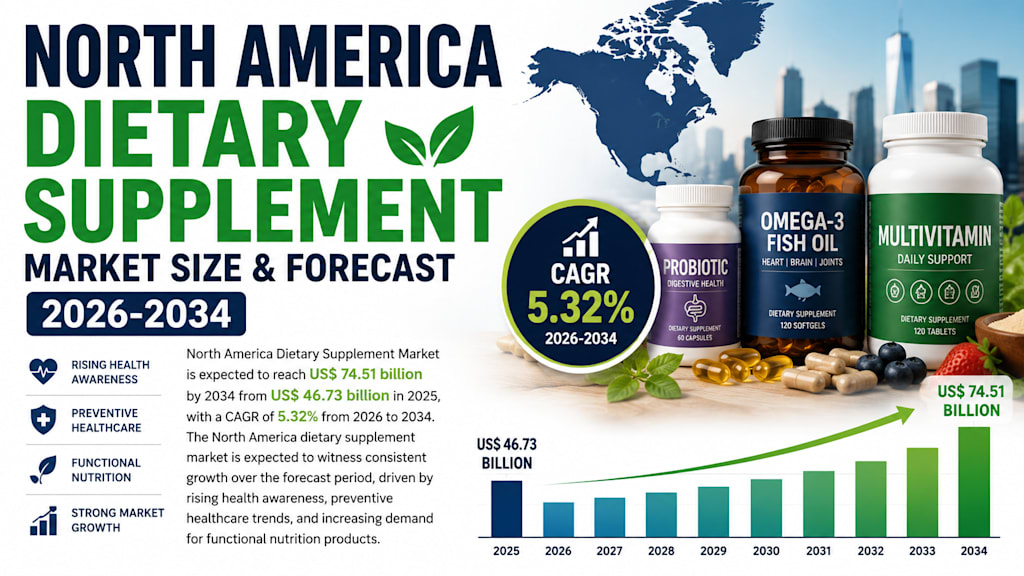
According to Renub Research, the North America Dietary Supplement Market is projected to grow from US$ 46.73 billion in 2025 to US$ 74.51 billion by 2034, expanding at a CAGR of 5.32% between 2026 and 2034. This impressive growth reflects changing consumer lifestyles, technological advancements, and increasing demand for personalized health solutions.
The Rise of Preventive Healthcare
Healthcare systems throughout North America are witnessing a major transformation. Consumers are increasingly taking responsibility for their own health by investing in products and services designed to prevent disease rather than simply treat it.
Dietary supplements fit perfectly into this trend because they offer convenient solutions for addressing nutritional deficiencies and supporting specific health goals. Whether improving immunity, supporting cardiovascular health, promoting digestive wellness, or enhancing cognitive performance, supplements provide targeted benefits that appeal to modern consumers.
A growing number of individuals are also recognizing that busy lifestyles often make it difficult to obtain all essential nutrients from food alone. Supplements help bridge these nutritional gaps, further strengthening their role in preventive healthcare.
As awareness continues to rise, supplement consumption is expected to become even more widespread across all age groups.
Why Health-Conscious Consumers Are Driving Demand
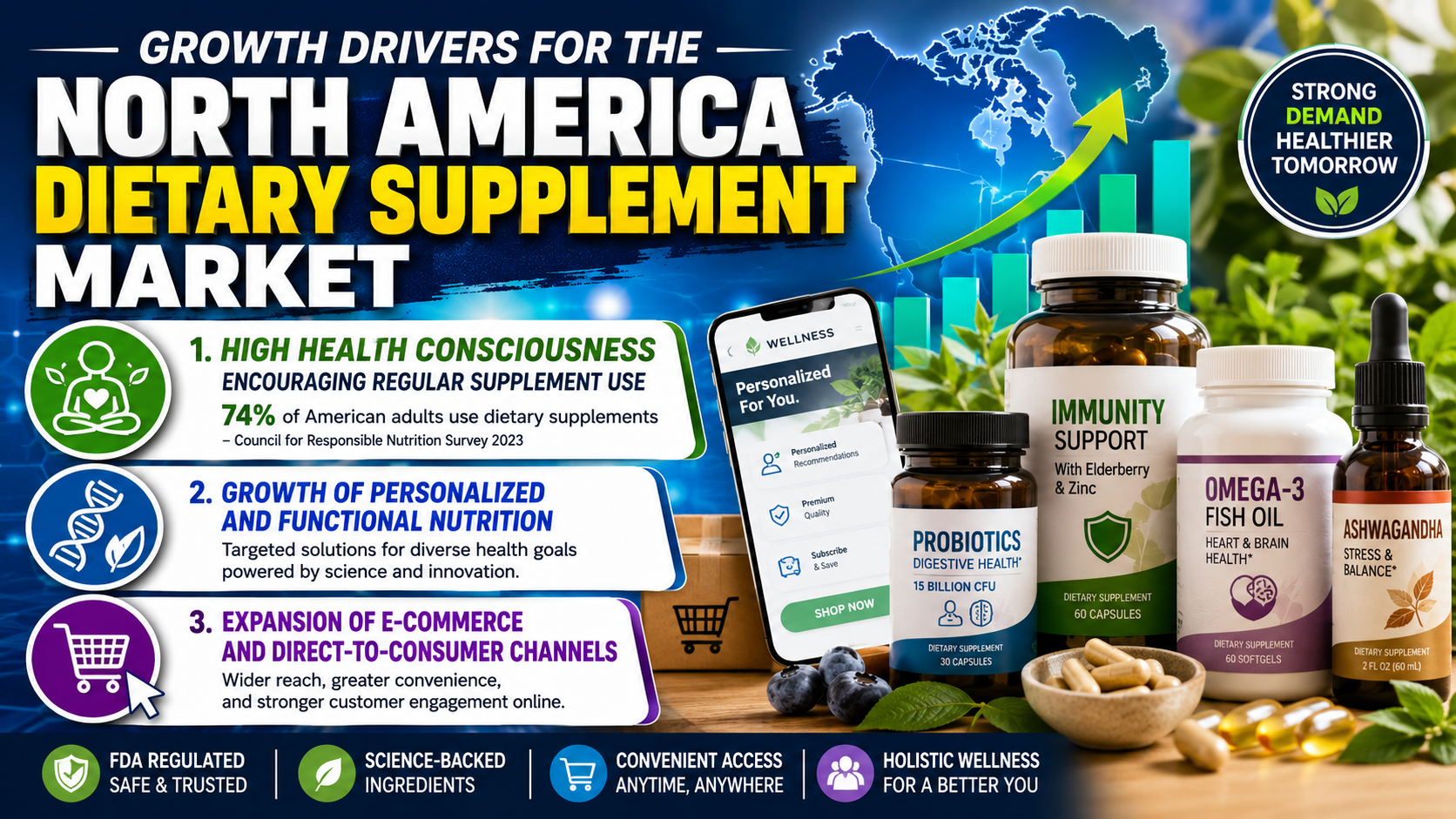
One of the most important factors fueling market growth is the increasing level of health consciousness among North American consumers.
People today have unprecedented access to health information through digital platforms, healthcare providers, fitness communities, and social media. This has created a more informed consumer base that actively seeks products capable of supporting long-term wellness.
Consumers are increasingly using supplements to strengthen immune function, improve energy levels, enhance physical performance, support healthy aging, promote mental well-being, and maintain overall nutritional balance.
The growing popularity of wellness-focused lifestyles has significantly expanded the customer base for dietary supplements. Younger consumers, athletes, working professionals, and seniors are all contributing to rising demand.
The result is a market that continues to evolve beyond traditional vitamin products into highly specialized wellness solutions.
Personalized Nutrition Is Reshaping the Industry
Perhaps the most exciting development in the dietary supplement sector is the emergence of personalized nutrition.
Consumers are moving away from one-size-fits-all health solutions and seeking products tailored to their individual needs. Advances in technology, health data analytics, and digital wellness platforms are making personalized supplement recommendations increasingly accessible.
Companies now offer customized supplement programs based on age, gender, lifestyle, fitness goals, health conditions, and nutritional requirements.
This trend reflects a broader movement toward individualized healthcare. Personalized nutrition enables consumers to address specific concerns more effectively while creating stronger engagement with supplement brands.
As artificial intelligence and health-monitoring technologies continue to evolve, personalized nutrition is expected to become a major competitive differentiator across the market.
Functional Ingredients Continue to Gain Popularity
Modern consumers are not only seeking vitamins and minerals but also ingredients that provide targeted health benefits.
Functional nutrition products featuring probiotics, adaptogens, botanical extracts, amino acids, and specialty nutrients are experiencing substantial demand growth.
Consumers increasingly want supplements that support digestive health, cognitive performance, stress management, cardiovascular wellness, and healthy aging.
The growing interest in functional ingredients is encouraging manufacturers to invest heavily in product innovation and scientific research.
Technology Is Driving Product Innovation
Technology is becoming a powerful force within the dietary supplement industry.
Companies are investing in advanced delivery systems that improve ingredient absorption, stability, and effectiveness.
A notable example is the introduction of NovaQSpheres technology by biotechnology company Specnova in late 2024. This innovative delivery system allows controlled ingredient release over periods ranging from eight to twelve hours, helping ensure optimal nutrient delivery throughout the day.
Innovations such as these are helping manufacturers differentiate products in an increasingly competitive marketplace.
Beyond product formulations, technology is also transforming customer engagement through digital wellness platforms, mobile health applications, and online nutrition assessments.
E-Commerce Is Revolutionizing Supplement Sales
The rapid growth of e-commerce has dramatically changed how consumers purchase dietary supplements.
Online shopping provides unparalleled convenience and access to a vast selection of products. Consumers can easily compare ingredients, prices, customer reviews, and health benefits from the comfort of their homes.
Several factors are contributing to online retail growth, including wider product availability, subscription-based purchasing models, personalized recommendations, direct-to-consumer marketing, and faster delivery services.
Digital platforms also allow supplement companies to build stronger relationships with consumers by gathering insights into purchasing behavior and preferences.
As online retail continues to expand, e-commerce is expected to remain one of the most influential growth drivers for the North America dietary supplement market.
Clean Labels and Natural Ingredients Are Becoming Essential
Transparency has become a critical purchasing factor for modern consumers.
Many shoppers now carefully examine ingredient lists before purchasing supplements. They increasingly prefer products containing natural ingredients, organic formulations, plant-based sources, non-GMO components, and sustainably sourced materials.
The clean-label movement reflects broader consumer concerns regarding health, sustainability, and product authenticity.
Manufacturers that prioritize ingredient transparency and ethical sourcing are gaining stronger consumer trust and market share.
Challenges Facing the Industry
Despite strong growth prospects, the dietary supplement industry faces several important challenges.
Regulatory compliance remains a significant concern. North America maintains rigorous standards for dietary supplement safety, labeling, and quality assurance. While these regulations protect consumers, they can increase operational costs and create compliance complexities for manufacturers.
Companies must invest heavily in product testing, quality control systems, regulatory documentation, and certification processes to remain compliant.
Another challenge is consumer skepticism. The market faces concerns related to misinformation and exaggerated health claims. Consumers increasingly demand scientific evidence to support product effectiveness, making transparency and credibility essential for long-term success.
United States Leads the Market
The United States remains the largest dietary supplement market in North America. High consumer awareness, strong purchasing power, advanced healthcare infrastructure, significant investment in innovation, and rapid adoption of wellness trends all contribute to its dominance.
American consumers are highly receptive to new supplement categories and personalized nutrition solutions, making the country a major hub for industry growth.
Canada's Growing Preference for Natural Supplements
Canada's dietary supplement market continues to expand steadily as consumers embrace wellness-focused lifestyles.
Canadian shoppers show strong interest in natural supplements, organic formulations, plant-based ingredients, and sustainable products. The country's robust regulatory framework supports consumer confidence while encouraging manufacturers to maintain high product standards.
Mexico's Emerging Opportunities
Mexico is becoming an increasingly important contributor to regional market expansion.
Rising health awareness, growing disposable incomes, and increased focus on wellness are encouraging supplement adoption across the country. Traditional herbal remedies remain popular, while modern nutritional supplements continue gaining acceptance among consumers seeking proactive health solutions.
Educational initiatives and improved accessibility are expected to further accelerate growth.
Recent Industry Developments
The dietary supplement industry continues to experience strategic activity and product innovation.
In January 2025, Wellful acquired Ancient Nutrition to strengthen its position within the vitamin, mineral, and supplement sector. In September 2024, Bayer's One A Day brand launched Age Factor Cell Defense, a supplement designed to support cellular health during aging. In February 2024, Medella Springs Healthcare introduced AddiVance, a stimulant-free supplement developed to address nutritional imbalances associated with focus and impulsivity concerns.
These developments highlight the industry's commitment to innovation and market expansion.
Final Thoughts
The North America dietary supplement market is entering a new era defined by preventive healthcare, personalized nutrition, technological innovation, and evolving consumer expectations.
As wellness becomes a central priority for consumers, dietary supplements are increasingly viewed as essential tools for supporting long-term health and quality of life. The combination of rising health awareness, expanding e-commerce channels, functional ingredient innovation, and personalized solutions will continue to create significant growth opportunities.
With the market projected to reach US$ 74.51 billion by 2034, the future of dietary supplements in North America appears exceptionally promising. Companies that prioritize scientific credibility, transparency, sustainability, and consumer-centric innovation will be best positioned to thrive in this rapidly evolving landscape.
About the Creator
Enjoyed the story? Support the Creator.
Subscribe for free to receive all their stories in your feed.
Comments
There are no comments for this story
Be the first to respond and start the conversation.