
Breakthrough in Biomimetic Materials: UT Austin Researchers Develop 3D-Printable "Living" Tissue for Medicine, Robotics, and Resource Recovery
A new scalable method using jammed water droplets allows for the rapid creation of tissue-like structures that can filter molecules, conduct ion currents, and serve as the basis for soft robots.

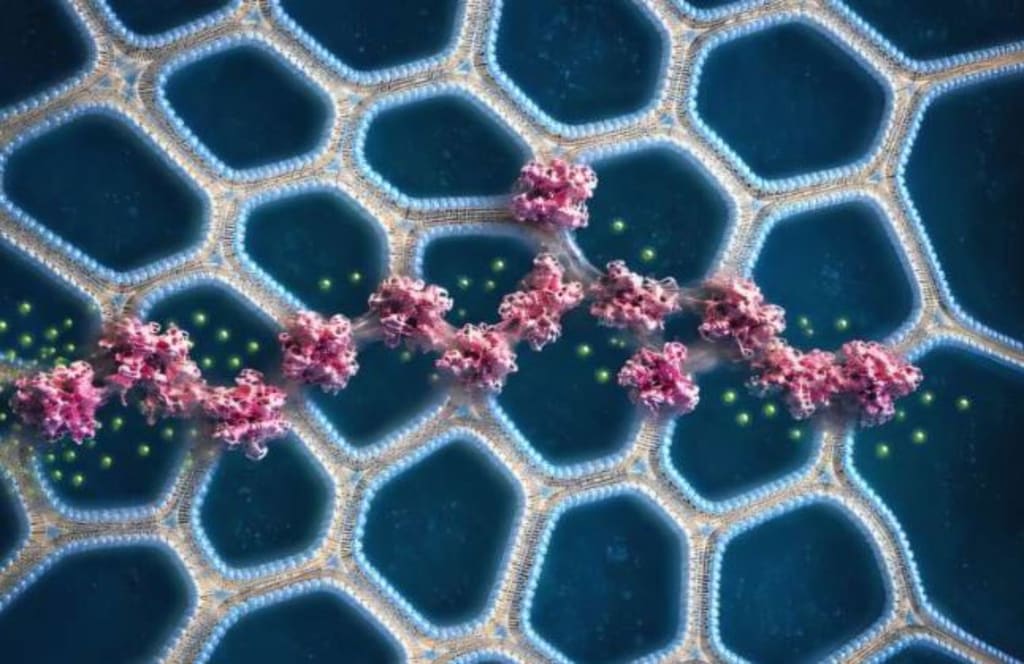
Researchers at The University of Texas at Austin have developed a groundbreaking 3D-printable material that mimics the selective filtering capabilities of human tissue. Published in Nature Materials, this innovation overcomes long-standing barriers in speed and scalability, allowing scientists to create large, stable, tissue-like structures in minutes rather than days. The material’s versatility opens new frontiers in regenerative medicine, soft robotics, and environmental sustainability, particularly in the recovery of critical minerals from wastewater.
Overcoming the Scalability Barrier
For years, engineers and biologists have struggled to create synthetic tissues that are both functional and large enough for practical applications. Traditional methods for building small, tissue-like materials were slow, unstable, and difficult to scale up. The UT Austin team, led by Professor Manish Kumar of the Cockrell School of Engineering, solved this problem by adopting a novel approach inspired by cellular organization.
The process involves "jamming" billions of tiny water droplets tightly together using simple mixing and centrifuge techniques. Each droplet is separated by a thin membrane, and when packed densely, these membranes link up to form a cohesive structure that closely resembles the organization of cells in human tissue. This method, which the researchers refer to as creating Jammed Interfacial Biocompatible Emulsions (JIBEs), allows for the rapid production of stable biomimetic tissues using basic laboratory equipment.
"Tissues can separate and transport ions and molecules; that's how our kidneys or intestines work, taking only what they need and leaving the rest behind," explained Kumar. "This work finally offers a simple, scalable process with endless applications that could be implemented in any laboratory."
From Medical Scaffolds to Soft Robots
The flexibility and biocompatibility of the new material make it ideal for a wide range of applications. In medicine, it can serve as a scaffold for growing new tissues or organs, providing a structural framework that supports cell growth while mimicking the natural environment of the human body.
In the field of robotics, the material’s responsiveness and flexibility make it an excellent base for "soft robots." Unlike traditional rigid machines, these soft robots can move and adapt like living creatures, making them suitable for delicate tasks such as minimally invasive surgery, search-and-rescue operations in confined spaces, or navigating hazardous environments where conventional machinery would fail.
Furthermore, by incorporating specific proteins, researchers enabled the material to conduct ion currents, similar to nerve tissue. This development holds significant promise for creating computing systems modeled after the human brain, potentially leading to more efficient and adaptive artificial intelligence hardware.
Environmental Applications: Filtering Critical Minerals
One of the most impactful applications of this technology lies in environmental engineering. By adding specific proteins to the material, the team created a version capable of distinguishing ammonium from other ions in wastewater. This is particularly relevant for treating water produced by oil and gas extraction and municipal wastewater systems.
The ability to selectively filter out unwanted ions while retaining valuable ones offers a promising approach for recycling and reusing critical mineral ions and nutrients. As global demand for resources like lithium and rare earth elements grows, this technology could play a crucial role in sustainable resource recovery, turning waste streams into valuable supply chains.
A Decade in the Making
This breakthrough is the culmination of more than a decade of research. The key insight came from graduate student Aida Fica, who, after attending a conference, realized that emulsification bringing together two oils with different solubilities to form droplets could be combined with centrifugation to jam the droplets into a stable structure. This simple yet elegant solution bypassed the complex and slow processes that had previously hindered progress in the field.
"We encourage interested researchers to try this out, and we will heartily support anybody who would like to work in this field through visits and discussions," Kumar added, emphasizing the open and collaborative spirit behind the discovery. With its potential to revolutionize multiple industries, this 3D-printable biomimetic material represents a significant leap forward in our ability to engineer solutions that mimic the elegance and efficiency of nature.
About the Creator
Mark Lim
Hi I am mark an automotive student and a car, tech and food enthusiast ! Im gonna try and post daily & hope you enjoy what I write and do share my page with people you know. I would gladly appreciate it! Cheers
Enjoyed the story? Support the Creator.
Subscribe for free to receive all their stories in your feed.
Comments
There are no comments for this story
Be the first to respond and start the conversation.