
Branding and Its Role in Web Design
Web Design as an Art Form: Creating Authentic Brand Experiences through Visual Design

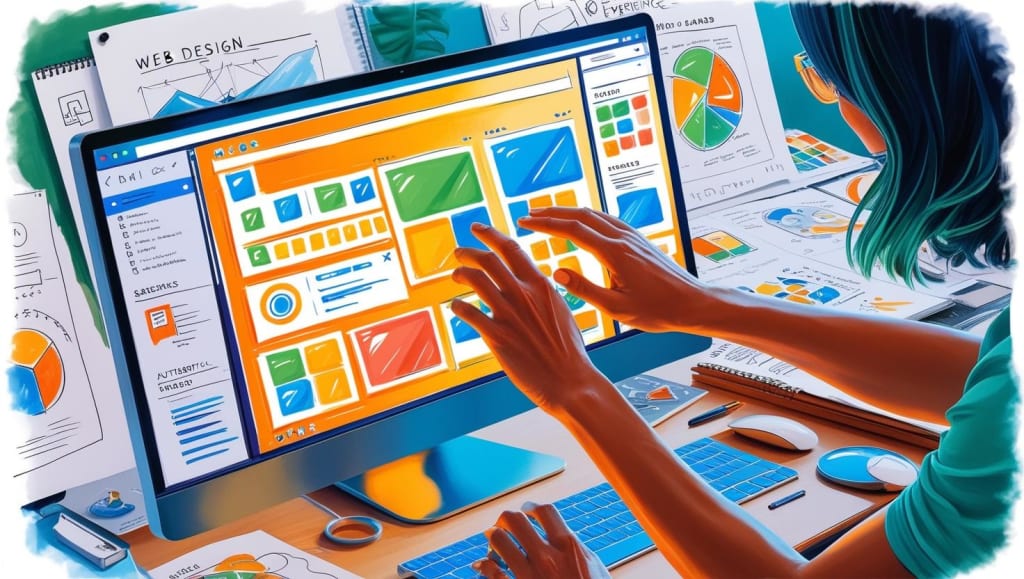
Imagine you enter a store. There is no signage to help you navigate the disorganized space, and the walls are painted in contrasting colors. Feeling lost and confused, you question whether you've arrived at the correct spot. Think of a store that meets your expectations with well-coordinated colours, straightforward signs, and an atmosphere that matches your search. In the digital realm, your web design is what makes a statement, and that is the power of branding.
Websites are more than simply online pages; they serve as the virtual representation of brands. Additionally, your website makes an impression often in under a second much like a face-to-face encounter. Web branding isn't about using trendy colors or fancy logos; it's about telling a story that resonates with your audience on an emotional, value, and need level. Discover the hidden power of branding and how it can revolutionize your online presence as we delve into the world of web design.
1. The Importance of Making a Good First Impression
Website design is like a digital handshake; it greets visitors as soon as they land on your page. Does it exude confidence and warmth, or is it lackluster and unremarkable? Users create an impression of your website in as little as fifty milliseconds, according to research. Website visitors can become disinterested or confused due to confusing signals sent by an inadequately branded site.
Consider Apple as an example. The website exudes the same principles that are important to their brand: innovation, simplicity, and beauty. These branding decisions—the clean lines, simple structure, and constant use of white space—are more than just cosmetic. Similarly, your website should convey the spirit of your brand to visitors the second they land.
2. reliability Builds Confidence
Building trust is essential for any successful company, and maintaining consistency is the key. An effortless user experience is achieved when the images, copy, and tone of your website are all in sync with your brand. Visitors are reassured that they have arrived at the correct spot by this regularity.
Imagine you go to a high-end brand's website, and all you see are pixelated images, ugly typefaces, and a clumsy navigation system. I mean, wouldn't the disconnection be shocking? All of the components of a well-branded website, including the colors, fonts, images, and tone, should complement one other to establish credibility and familiarity.
3. Loyalty is Driven by Emotional Connections
Logos and taglines are just the beginning; branding is all about making people feel something. People buy things for the emotions they make them feel. You may convey your brand's narrative and establish a more personal connection with your audience through your website design.
Imagine the online home of a charitable group. Visitors can be moved to donate or volunteer by the use of attractive, warm colors, moving graphics, and stories of actual impact. The power of branding in web design lies in its ability to evoke emotions, which in turn motivate people to take action.
4. Challenging the Digital Crowd
Having a distinct brand identity helps you stand out from the crowd. You want your website to showcase your brand's distinctive qualities. Make your website proclaim your unique brand values—a dedication to sustainability, innovative thinking, or a quirky sense of humor—with pride.
Consider companies such as Airbnb. Their website brilliantly highlights their USP: the ability to belong anywhere. Everything about it, from the typefaces used to the pictures of contented tourists, serves to further their brand narrative.
5. Inspiring Site Users to Act
In addition to being aesthetically pleasing, a well-branded website is purposefully built to direct people to your objectives. Your branding should provide a compelling and obvious way for people to do things like sign up for a newsletter, buy something, or schedule a consultation.
For instance, Slack's website features call-to-action buttons that match their brand's humorous yet professional aesthetic. A combination of the typefaces, colors, and language makes it easy for users to "Get Started" without thinking twice.
6. Building a Reputation Is the Key to Success in the Long Run
Although your website is frequently the initial point of contact with prospective clients, branding makes sure it isn't the final. Establishing a solid groundwork for lasting connections begins with crafting an unforgettable and delightful experience. Once they've explored your site, visitors should feel familiar with your brand and have a positive impression of it.
Is a generic or disjointed website going to keep you from returning? I highly doubt it. When people visit your branded website, they will remember you positively.
Methods for Integrating Logo Colors Into Web Design
Think about the character of your brand and pick a color scheme accordingly. Are you a dynamic and fearless brand? Chunk on the bright colors. Enthusiastic and composed? Choose subdued colors.
Fonts can also convey emotions in typography. Serif fonts may convey an air of antiquity, while sans-serif fonts are more contemporary and friendly.
Typography: Appeal to your audience's emotions through the use of images. While stock photographs are OK, having original artwork incorporates a greater sense of credibility.
Tone & Voice: The words you use to describe your business online should reflect that voice. Be consistent whether you're being formal, playful, or conversational.
User-Focused Design (UX): People have little trouble navigating and utilizing a branded website. Information must to be readily available, and the navigation ought to be faultless.
Web design branding isn't a passing fad; it's essential in the modern internet world. It's the binding agent that keeps your web presence together and transforms one-time visitors into repeat buyers. Putting money into branding means more than just making a website; it means building a memorable, inspiring, and long-lasting online identity.
Ask yourself, "Does it tell my brand's story?" the next time you consider your website. A redesign may be necessary if the response is negative. Keep in mind that branding is foundational in the realm of web design, not merely an afterthought.
About the Creator
Grape Marketing
With more than nine years of demonstrated experience, Grape Marketing has been the engine behind innumerable digital business success stories.
Enjoyed the story? Support the Creator.
Subscribe for free to receive all their stories in your feed.
Comments
There are no comments for this story
Be the first to respond and start the conversation.