
Blue‑Green Signals: The Autonomy Revolution Shaping Transportation
A Universal Signal for a New Era GM’s Software‑Defined Pivot Rivian and the Race to Bridge Simulation and Reality Global Partnerships and Expanding Frontiers From Hardware to Intelligence The Road Ahead

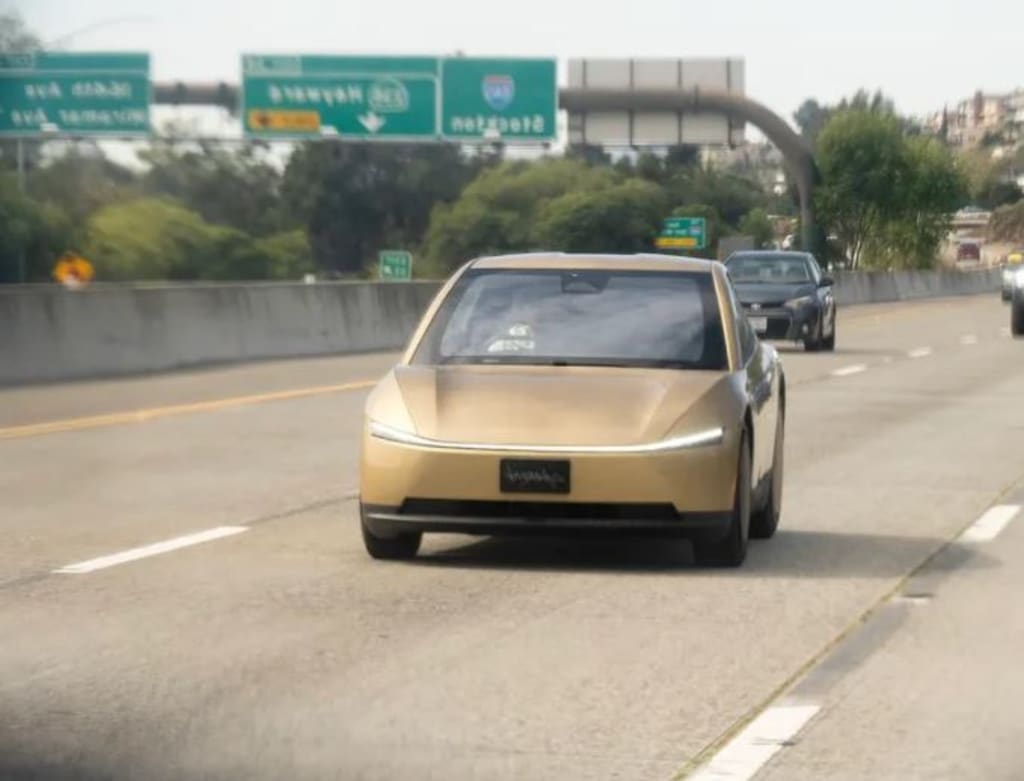
Autonomous vehicles are no longer a distant vision; they are arriving on roads worldwide, bringing with them new rules, new designs, and a quiet revolution in how we move. This week, that shift became tangible: U.S. regulators proposed a distinct blue‑green lighting standard to identify driverless vehicles; legacy automakers retooled around artificial intelligence and centralised computing; and partnerships spanning continents accelerated the rollout of robotaxis. Taken together, these developments mark the moment autonomous mobility moves from testing to integration.
A Universal Signal for a New Era
The U.S. National Highway Traffic Safety Administration (NHTSA) has proposed a landmark update to federal safety standards: cyan (blue‑green) lights that would clearly signal when a vehicle is operating autonomously without a human driver monitoring the road. The lights would be steady‑burning, visible from all sides, and activated only in driverless mode. While not a mandate, the proposal creates a shared visual language, one that reassures the public and clarifies when a vehicle is relying on its systems rather than a person behind the wheel. The change would also remove requirements for manual controls such as turn signals and high‑beam switches, aligning regulations with vehicles purpose‑built without steering wheels or pedals. It is one piece of a broader effort to modernise rules written for an earlier age of driving.
GM’s Software‑Defined Pivot
General Motors is placing its bet on artificial intelligence and centralised computing to regain leadership and compete with fast‑moving rivals. At its annual GM Forward event, the company outlined a sweeping overhaul:
A fourth‑generation EV platform debuting in the 2028 Cadillac Escalade IQ, anchored by a Central Compute Unit (CCU) 40 times more powerful than existing systems.
Wiring is simplified by 30% as distributed chips are replaced by unified processing.
Enterprise AI tools slashing the traditional four‑to‑five‑year vehicle development cycle in half — in one example, engineers refined 300,000 virtual battery designs before building a single physical prototype.
Hands‑off, eyes‑off autonomous highway driving launching in 2028.
An AI‑revamped OnStar assistant transforming the 30‑year‑old service into a proactive, conversational companion.
It is a recognition that performance alone is no longer enough; the future is defined by software, speed, and intelligence.
Rivian and the Race to Bridge Simulation and Reality
Rivian acquired U.K. startup Third Dimension, a firm using AI to turn images and video into hyper‑realistic 3D environments closing the critical “sim‑to‑real gap” where virtual training meets unpredictable real‑world roads. Simulation has long been a staple of autonomous development, but the technology is advancing rapidly, and Rivian’s move underscores how foundational these tools have become. CEO RJ Scaringe also noted that full autonomy will enable entirely new vehicle designs, unshackled by the need to place a driver at the centre.
Global Partnerships and Expanding Frontiers
The autonomy race is crossing borders and drawing unlikely allies:
inDrive, the ride‑hailing platform, will partner with Pony.ai and Nvidia to begin robotaxi trials in Kazakhstan in 2027, extending autonomous testing into Central Asia.
Waymo is expanding rapidly, launching service at Las Vegas airport and preparing to enter the Madrid region in 2027.
Tesla plans Cybercab sales before year‑end while advancing Optimus robot production; SpaceX’s AI business now generates over half the company’s revenue, and its board is reviewing a potential merger with Tesla.
Google is upgrading Gemini in‑car assistants to draw seamlessly from Gmail, Calendar, Maps, and YouTube for deeply personalised experiences.
Reliable Robotics, building autonomous flight systems, secured $115 million in funding, pushing valuation above $1 billion and bringing self‑piloting aircraft closer to reality.
From Hardware to Intelligence
What unites these developments is a shift in focus: the vehicle is no longer just machinery, but a learning, connected system. Chinese automakers have already demonstrated how shorter development cycles and cost advantages can reshape competition globally; legacy players are responding with AI‑accelerated design, centralised brains, and services that evolve rather than remain static. Even the battleground of public opinion has shifted; grassroots campaigns against robotaxis have emerged, sometimes with opaque funding, reflecting the tensions that accompany transformative technology.
The blue‑green light proposed by NHTSA is more than a signal it is a metaphor. It marks the moment autonomy becomes visible, standard, and increasingly integrated into daily life. Challenges remain: public trust, regulatory alignment across regions, equitable access, and ensuring safety keeps pace with capability. But the direction is set. Whether on highways, city streets, or in the skies above, the future of movement is being reimagined, and it is glowing blue‑green.
About the Creator
Mark Lim
Hi I am mark an automotive student and a car, tech and food enthusiast ! Im gonna try and post daily & hope you enjoy what I write and do share my page with people you know. I would gladly appreciate it! Cheers
Enjoyed the story? Support the Creator.
Subscribe for free to receive all their stories in your feed.
Comments
There are no comments for this story
Be the first to respond and start the conversation.