
Biodiesel Is Emerging as a Powerful Force in the Global Transition Toward Clean Energy
Rising Demand for Renewable Fuels, Government Support, and Sustainable Transportation Are Driving Growth in the Biodiesel Market

The global energy landscape is undergoing a historic transformation. Governments, businesses, and consumers are increasingly seeking alternatives to fossil fuels as concerns about climate change, energy security, and environmental sustainability continue to intensify. Among the renewable fuel solutions gaining significant momentum is biodiesel, a cleaner-burning alternative that is helping industries reduce emissions while supporting global sustainability goals.
Biodiesel has become a vital component of renewable energy strategies worldwide. Derived from natural resources such as vegetable oils, animal fats, and recycled cooking oils, biodiesel offers a practical and environmentally responsible substitute for conventional diesel fuel. Its compatibility with existing diesel engines and infrastructure makes it one of the most accessible renewable fuels currently available.
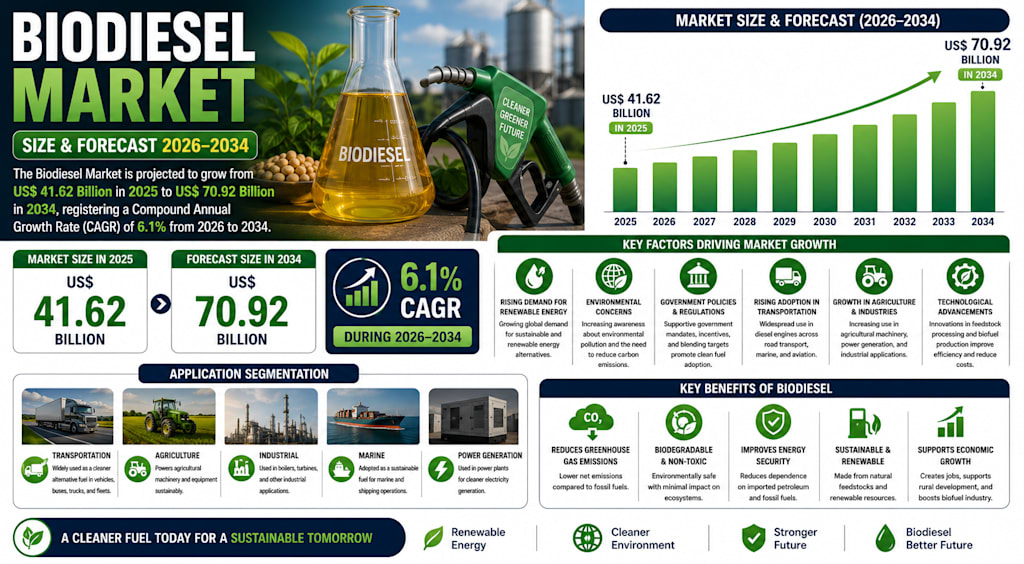
According to Renub Research, the Biodiesel Market is projected to grow from US$ 41.62 billion in 2025 to US$ 70.92 billion by 2034, expanding at a compound annual growth rate (CAGR) of 6.1% between 2026 and 2034. Rising environmental awareness, increasing demand for renewable energy, government incentives, and growing biodiesel adoption across transportation, agriculture, and industrial sectors are fueling market expansion.
As nations accelerate their efforts to reduce greenhouse gas emissions, biodiesel is becoming an increasingly important part of the global energy transition.
What Is Biodiesel and Why Is It Important?
Biodiesel is a renewable, biodegradable fuel produced from natural feedstocks such as vegetable oils, animal fats, and used cooking oil.
The fuel is manufactured through a chemical process called transesterification, which converts oils and fats into fatty acid methyl esters suitable for diesel engines.
One of biodiesel's greatest advantages is its compatibility with existing diesel infrastructure.
It can be used either in its pure form or blended with conventional petroleum diesel without requiring significant engine modifications.
This flexibility allows governments and industries to adopt cleaner fuel solutions without replacing existing vehicle fleets or fuel distribution systems.
Because biodiesel produces fewer harmful emissions than traditional diesel, it has become a key tool for reducing environmental impact while maintaining operational efficiency.
Renewable Energy Demand Is Driving Market Growth
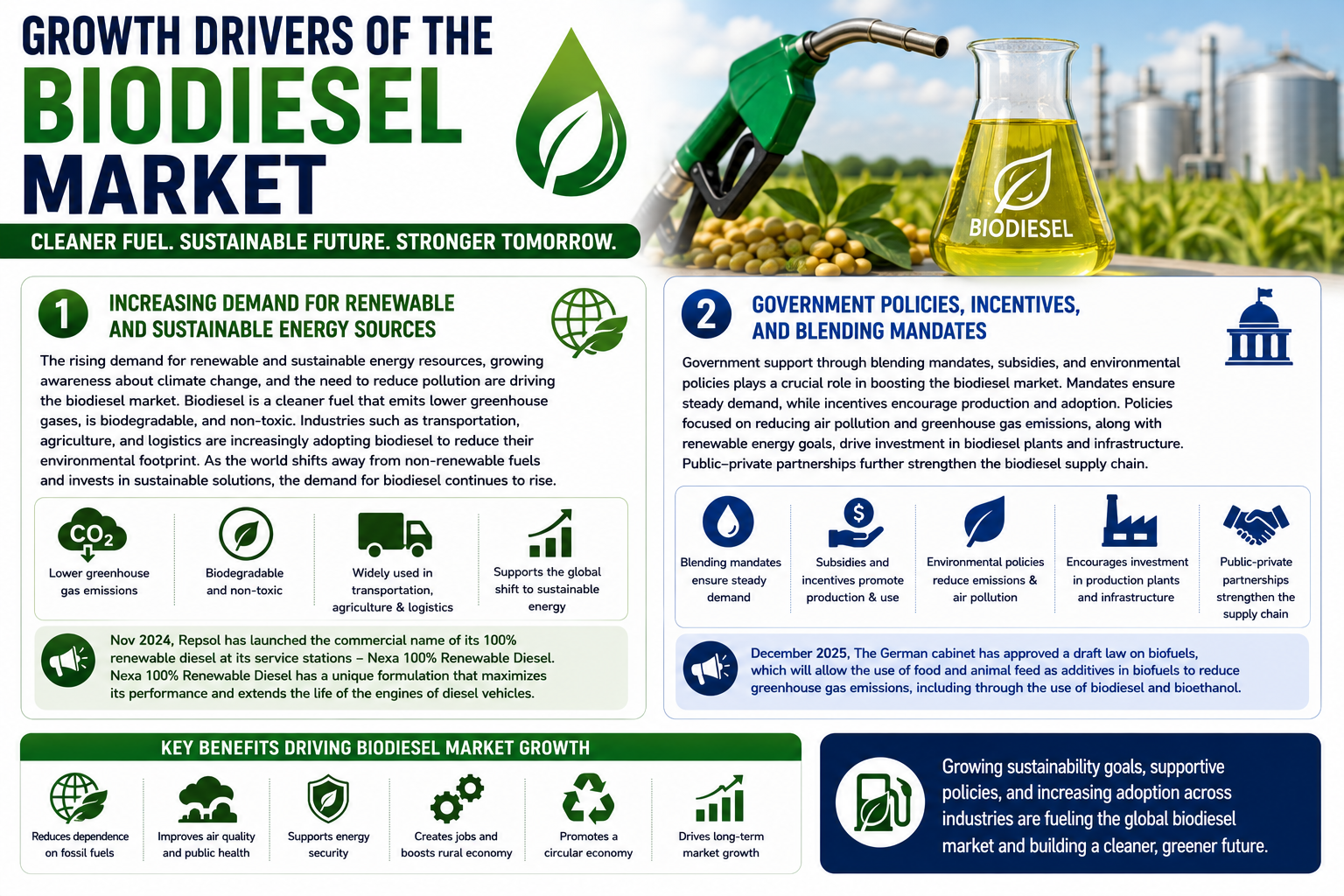
One of the most significant drivers of biodiesel market expansion is the growing demand for renewable and sustainable energy sources.
Countries worldwide are working to reduce dependence on fossil fuels and transition toward cleaner energy systems.
Climate change concerns, air pollution challenges, and energy security considerations are encouraging governments and businesses to explore renewable alternatives.
Biodiesel offers several environmental advantages.
Compared to conventional diesel fuel, biodiesel produces lower greenhouse gas emissions and significantly reduces harmful pollutants.
Additionally, biodiesel is biodegradable and non-toxic, minimizing environmental damage in the event of accidental spills.
Industries including transportation, logistics, agriculture, and manufacturing are increasingly adopting biodiesel as part of broader sustainability initiatives.
As investment in renewable energy continues expanding globally, demand for biodiesel is expected to grow steadily throughout the forecast period.
Government Policies Are Supporting Industry Expansion
Government intervention has played a critical role in biodiesel market development.
Many countries have introduced blending mandates requiring fuel suppliers to mix biodiesel with conventional diesel.
These mandates help ensure consistent market demand while supporting national emissions reduction targets.
Governments are also providing subsidies, tax incentives, and financial assistance programs designed to encourage biodiesel production and adoption.
Environmental regulations aimed at reducing air pollution and greenhouse gas emissions have further strengthened support for renewable fuels.
A notable example occurred in December 2025 when Germany approved draft legislation supporting the use of food and animal feed additives in biofuels as part of broader greenhouse gas reduction efforts.
Such policy initiatives create favorable conditions for industry growth while encouraging continued investment in biodiesel infrastructure.
Transportation Remains the Largest Consumer
The transportation sector continues to represent the largest application area for biodiesel.
Commercial trucks, buses, agricultural machinery, construction equipment, and various diesel-powered vehicles utilize biodiesel blends to reduce environmental impact.
One reason for biodiesel's popularity is its compatibility with existing diesel engines.
Unlike some alternative fuel technologies, biodiesel can often be introduced without major equipment modifications.
Logistics companies and transportation operators increasingly rely on biodiesel to meet sustainability targets and comply with environmental regulations.
According to the International Energy Agency, biofuels accounted for approximately 2.2 million barrels per day of oil demand in 2022 and are expected to reach 3 million barrels per day by 2030.
As transportation activity continues expanding globally, biodiesel demand is expected to rise accordingly.
Industrial Applications Are Expanding
Beyond transportation, biodiesel is gaining traction in industrial applications.
Many industrial facilities use biodiesel to power equipment, generators, and machinery.
Manufacturing companies are increasingly seeking ways to reduce emissions and improve environmental performance without compromising operational reliability.
Biodiesel provides a practical solution because it can often replace or supplement conventional diesel fuel within existing systems.
The growing emphasis on corporate sustainability and environmental responsibility is encouraging wider biodiesel adoption across industrial sectors.
As industries pursue cleaner energy strategies, biodiesel is expected to play an increasingly important role.
Technological Innovation Is Improving Efficiency
Advancements in biodiesel production technology continue enhancing market competitiveness.
Researchers and manufacturers are developing more efficient processing techniques that improve fuel quality while reducing production costs.
Modern facilities utilize advanced refining systems, improved catalysts, and enhanced feedstock processing technologies.
Innovation is also expanding the range of materials that can be used for biodiesel production.
While vegetable oils remain the dominant feedstock, increasing attention is being given to waste oils, animal fats, and emerging alternatives.
Technological improvements help address sustainability concerns while improving economic viability.
As production efficiency continues increasing, biodiesel is expected to become more competitive relative to conventional fuels.
Vegetable Oil Remains the Leading Feedstock
Vegetable oil biodiesel currently represents the largest segment of the biodiesel market.
Feedstocks such as soybean oil, palm oil, rapeseed oil, and sunflower oil are widely used because of their availability and favorable fuel properties.
Many countries promote domestic biodiesel production using locally sourced vegetable oils to enhance energy security and reduce reliance on imported fossil fuels.
Agricultural sectors play an essential role in supplying raw materials for biodiesel production.
Government programs often support farmers by encouraging feedstock cultivation for renewable fuel applications.
As renewable fuel demand continues increasing, vegetable oils are expected to remain a key component of global biodiesel production.
Animal Fat Biodiesel Is Gaining Momentum
Animal fat biodiesel represents a growing segment within the market.
Produced from waste materials such as tallow, poultry fat, and other animal by-products, this type of biodiesel offers important sustainability advantages.
By utilizing waste streams, animal fat biodiesel helps reduce disposal challenges while supporting circular economy principles.
It also reduces dependence on agricultural crops, helping address concerns related to food-versus-fuel competition.
Advancements in processing technology have improved the quality and performance of biodiesel derived from animal fats.
As industries increasingly prioritize waste-to-energy solutions, demand for animal fat biodiesel is expected to rise.
Power Generation Is Creating New Opportunities
The use of biodiesel in electricity generation is becoming increasingly important.
Diesel generators and power plants can utilize biodiesel to produce electricity while reducing emissions.
This application is particularly valuable in remote locations where access to traditional energy infrastructure may be limited.
Organizations, businesses, and government agencies increasingly use biodiesel-powered generators as backup or primary power sources.
The growing emphasis on renewable energy integration is supporting biodiesel adoption within the power generation sector.
As demand for cleaner electricity solutions increases, biodiesel is expected to gain further traction in this application area.
United States Leads Global Market Development
The United States remains one of the world's largest biodiesel producers and consumers.
Strong government support, advanced production capabilities, and abundant feedstock availability have helped establish a mature biodiesel industry.
Feedstocks such as soybean oil, used cooking oil, and animal fats support extensive domestic production.
In May 2025, Argus expanded its Argus Open Markets real-time price discovery platform to biodiesel trading in New York Harbor, highlighting the market's growing sophistication and liquidity.
Continued policy support and industry investment are expected to sustain long-term market growth.
Emerging Markets Are Increasing Adoption
Countries such as India and Saudi Arabia are increasingly investing in biodiesel production and renewable energy infrastructure.
India views biodiesel as a strategic tool for reducing fossil fuel imports and improving energy security.
Government initiatives promote production from non-edible oils and waste materials to avoid competition with food resources.
Saudi Arabia is also exploring biodiesel opportunities as part of broader economic diversification and sustainability goals.
In March 2023, the Kingdom inaugurated its first biofuel production facility in Al Jubail, demonstrating growing interest in renewable fuel development.
These emerging markets are expected to become increasingly important contributors to future biodiesel demand.
Challenges Facing the Biodiesel Industry
High Production Costs
One of the biggest challenges facing biodiesel producers is the cost of production.
Feedstocks such as vegetable oils and animal fats can be expensive and subject to significant price fluctuations.
Variations in agricultural output, weather conditions, and supply chain disruptions can affect raw material availability and costs.
Improving efficiency and identifying alternative feedstocks will be critical for maintaining competitiveness.
Feedstock Availability and Land Use Concerns
Growing biodiesel demand raises concerns regarding feedstock availability and land use.
Expanding agricultural production for fuel purposes can create competition with food production and contribute to environmental pressures.
Industry stakeholders are increasingly exploring sustainable alternatives such as algae, waste oils, and other non-food feedstocks.
Addressing these concerns will be essential for ensuring long-term industry sustainability.
Final Thoughts
Biodiesel is becoming an increasingly important component of the global renewable energy landscape. Its ability to reduce emissions, support energy security, and integrate seamlessly into existing diesel infrastructure makes it one of the most practical alternatives to conventional fossil fuels.
According to Renub Research, the Biodiesel Market is expected to grow from US$ 41.62 billion in 2025 to US$ 70.92 billion by 2034, reflecting strong demand driven by environmental concerns, renewable energy policies, and expanding industrial adoption.
As governments continue implementing sustainability initiatives and industries seek cleaner energy solutions, biodiesel will remain a critical part of the transition toward a lower-carbon future.
The future of biodiesel is not simply about replacing fossil fuels—it is about creating a more sustainable, resilient, and environmentally responsible global energy system.
About the Creator
Enjoyed the story? Support the Creator.
Subscribe for free to receive all their stories in your feed.
Comments
There are no comments for this story
Be the first to respond and start the conversation.