
Beyond the Syringe: How Insulin Pens Are Transforming Diabetes Care Across the World
Smart technology, rising diabetes rates, and patient demand for convenient treatment are driving unprecedented growth in the global insulin pen market.

Diabetes has become one of the most significant health challenges of modern times. As lifestyles change, populations age, and obesity rates continue to rise, healthcare systems around the world are witnessing an increasing number of diabetes diagnoses each year. While researchers continue searching for better therapies and long-term solutions, one innovation has already transformed the way millions of patients manage their condition: the insulin pen.
For decades, insulin injections were commonly administered using traditional syringes. Although effective, these methods often created inconvenience, discomfort, and dosing challenges for patients. Today, insulin pens have emerged as a preferred alternative, offering greater convenience, improved accuracy, and a more patient-friendly experience.
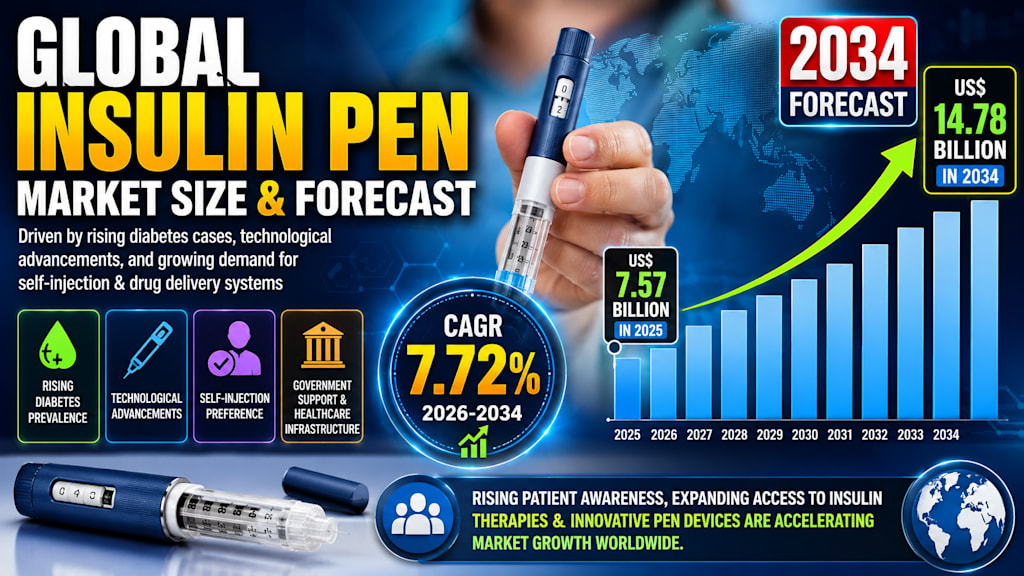
The growing popularity of these devices is creating substantial opportunities within the healthcare industry. According to Renub Research, the global Insulin Pen Market is projected to increase from US$ 7.57 Billion in 2025 to US$ 14.78 Billion by 2034, expanding at a CAGR of 7.72% between 2026 and 2034. This growth is being driven by rising diabetes prevalence, technological advancements, expanding healthcare access, and increasing patient preference for self-administered treatments.
Understanding the Role of Insulin Pens
An insulin pen is a medical device designed to simplify insulin delivery for people living with diabetes. Resembling a writing pen, the device contains an insulin cartridge, a dosing dial, and a needle that allows users to administer precise insulin doses with minimal effort.
Compared to traditional syringes, insulin pens offer several advantages. They are easier to carry, simpler to use, more discreet in public settings, and often less intimidating for patients who require daily injections. These benefits have contributed significantly to their growing adoption worldwide.
Healthcare providers increasingly recommend insulin pens because they improve treatment adherence and reduce the risk of dosing errors. For patients managing a chronic condition that requires constant attention, convenience can make a meaningful difference in long-term health outcomes.
The Global Diabetes Epidemic Is Fueling Demand
The primary force behind market growth is the rising prevalence of diabetes across the globe.
Modern lifestyles have introduced several risk factors associated with Type 2 diabetes, including poor dietary habits, reduced physical activity, increasing obesity rates, and chronic stress. At the same time, aging populations in many countries are contributing to a larger number of diabetes diagnoses.
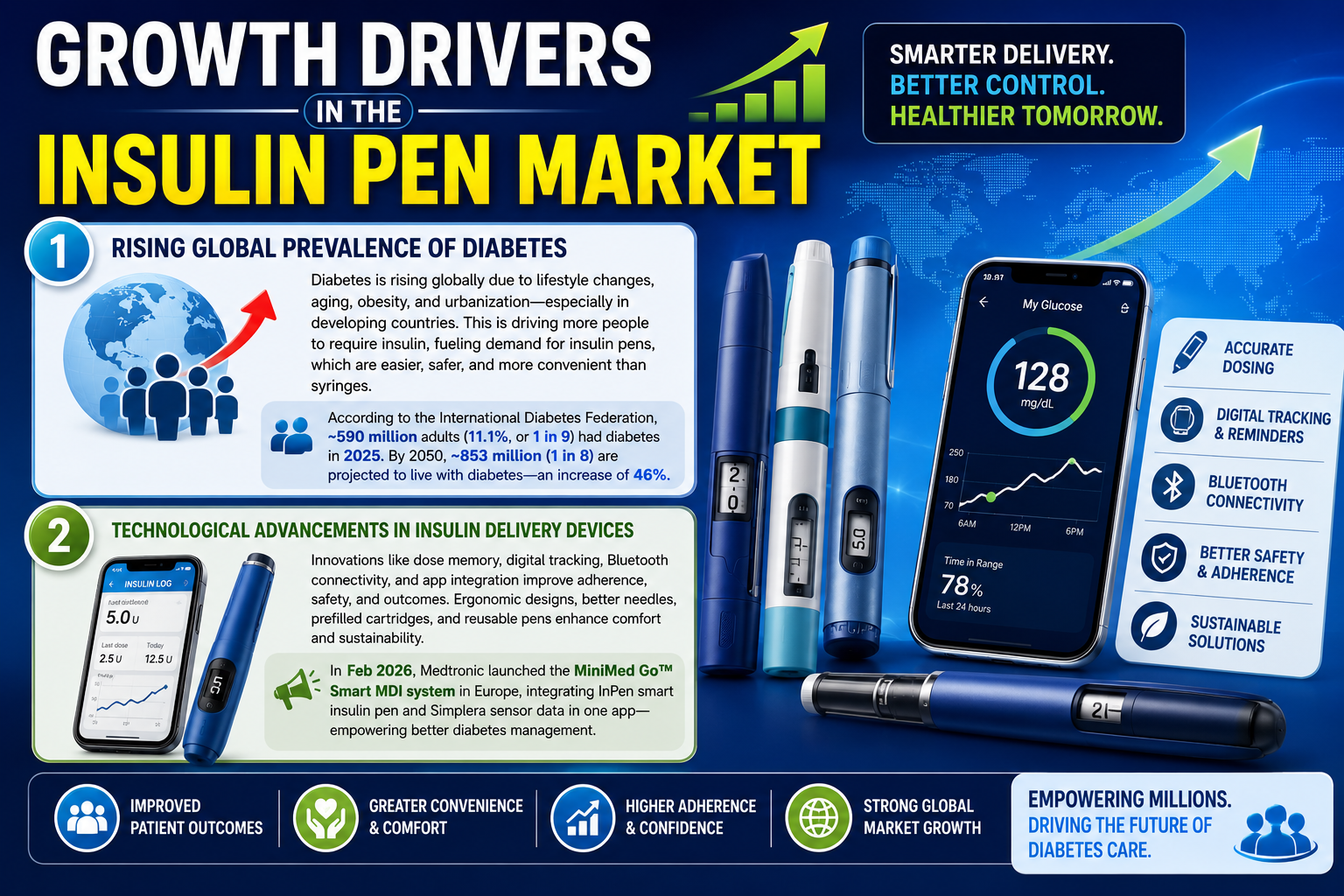
According to data referenced in the market report, approximately 590 million people worldwide were living with diabetes in 2025, representing roughly 11.1% of the global population, or one in every nine individuals. By 2050, that number is expected to reach approximately 853 million people, representing an increase of nearly 46%.
This growing patient population naturally creates increased demand for effective insulin delivery systems. As more individuals require insulin therapy, healthcare providers are increasingly turning to insulin pens as a practical and efficient solution.
Countries such as India and China are expected to play especially important roles in market expansion due to their large populations and rising diabetes incidence.
Smart Insulin Pens Are Redefining Diabetes Management
Technology is becoming one of the most powerful forces shaping the future of insulin delivery.
Modern insulin pens are no longer simple injection devices. Many newer models include advanced features such as memory functions, digital dose tracking, Bluetooth connectivity, and integration with mobile health applications.
These innovations help patients keep track of insulin administration, monitor adherence to treatment plans, and reduce the likelihood of missed or incorrect doses. Smart insulin pens also provide healthcare providers with valuable information that can improve treatment decisions and patient outcomes.
The industry is increasingly moving toward connected healthcare ecosystems where insulin delivery, glucose monitoring, and health data analysis work together seamlessly.
Recent developments illustrate this trend clearly. Medtronic recently announced the commercial European launch of its MiniMed Go Smart MDI system, which integrates information from its InPen smart insulin pen and Simplera sensor into a single platform, helping patients manage diabetes more effectively.
As digital health technologies continue advancing, smart insulin pens are expected to become even more sophisticated, offering personalized insights and AI-driven support for diabetes management.
Patients Are Choosing Convenience
Another major reason behind the rapid adoption of insulin pens is the growing preference for self-administration and home-based healthcare.
Modern patients increasingly seek healthcare solutions that fit into their lifestyles rather than disrupt them. Insulin pens offer precisely that flexibility.
The devices are portable, simple to use, and require minimal training. Individuals can administer insulin quickly and accurately whether they are at home, at work, or traveling.
For elderly patients, busy professionals, and individuals managing multiple health responsibilities, this convenience is particularly valuable.
The COVID-19 pandemic further accelerated this trend by highlighting the importance of home-based healthcare. Many patients sought ways to manage chronic conditions without frequent hospital visits, leading to increased adoption of self-care technologies.
Healthcare providers and insurers have also recognized the benefits of empowering patients to manage chronic diseases independently, further supporting market growth.
The Growing Popularity of Reusable Insulin Pens
Reusable insulin pens are gaining attention as healthcare systems and patients seek cost-effective and environmentally responsible solutions.
Unlike disposable devices, reusable pens are designed for long-term use. Users only need to replace the insulin cartridge while retaining the primary device.
This approach reduces waste and lowers overall treatment costs over time, making reusable pens particularly attractive for individuals who require daily insulin therapy.
Environmental concerns are also influencing purchasing decisions. As sustainability becomes a greater priority across healthcare sectors, reusable devices offer a practical alternative to single-use products.
For developing countries where affordability remains a key consideration, reusable insulin pens represent an effective balance between convenience and cost efficiency.
Disposable Insulin Pens Continue to Thrive
Despite growing interest in reusable options, disposable insulin pens remain highly popular.
These devices come prefilled with insulin and are discarded once the medication is depleted. Their simplicity appeals to patients who want a straightforward treatment experience without worrying about cartridge replacement or device maintenance.
Disposable pens are particularly attractive to new insulin users, elderly patients, and individuals seeking maximum convenience.
They also reduce the risk of contamination and dosing errors, contributing to improved safety and treatment consistency.
Although environmental concerns and recurring costs remain challenges, manufacturers continue introducing innovations that improve usability and patient satisfaction.
As a result, disposable insulin pens continue to represent a significant segment of the overall market.
Type 2 Diabetes Is Driving Market Expansion
The Type 2 diabetes segment accounts for a substantial share of insulin pen demand.
Unlike Type 1 diabetes, which typically requires insulin therapy from diagnosis, many Type 2 diabetes patients initially manage their condition through lifestyle changes and oral medications. However, as the disease progresses, insulin therapy often becomes necessary.
This transition creates a large and growing patient population requiring insulin delivery solutions.
Insulin pens are particularly valuable for Type 2 patients because they simplify the transition from oral medications to injectable treatments. Their ease of use and dosing accuracy help improve patient confidence and treatment adherence.
As awareness grows regarding the benefits of early insulin initiation and proactive disease management, healthcare providers are increasingly recommending insulin pens to Type 2 diabetes patients.
Retail Pharmacies Remain a Key Distribution Channel
Retail pharmacies continue to play a central role in the insulin pen market.
Their accessibility, convenience, and trusted relationships with patients make them one of the most important distribution channels worldwide.
Pharmacists often provide guidance regarding device selection, proper usage, dosing practices, and storage requirements. This support helps improve treatment outcomes and encourages patient confidence.
Partnerships between pharmaceutical manufacturers and retail pharmacy chains further strengthen product availability and market reach.
In many regions, pharmacies function as community healthcare centers, making them a critical point of contact for diabetes education and product access.
E-Commerce Is Changing Healthcare Purchasing Behavior
The rapid growth of e-commerce is creating new opportunities for insulin pen manufacturers and distributors.
Online platforms allow patients to purchase diabetes management products from the comfort of their homes while comparing prices, reviewing product information, and accessing convenient delivery options.
For patients living in rural or underserved areas, e-commerce can significantly improve access to healthcare products.
The COVID-19 pandemic accelerated online healthcare purchasing habits, and many consumers have continued using digital channels even after restrictions eased.
As digital payment systems, logistics networks, and online healthcare services continue to improve, e-commerce is expected to become an increasingly influential force within the insulin pen market.
Regional Markets Shaping the Future
The United States remains one of the largest and most advanced insulin pen markets in the world. Strong healthcare infrastructure, favorable reimbursement policies, widespread awareness, and rapid adoption of smart insulin technologies continue driving growth.
The United Kingdom benefits from its well-established healthcare system and strong support from the National Health Service. High diabetes awareness and ongoing investments in healthcare innovation contribute to steady market expansion.
India represents one of the most promising growth markets due to its large diabetic population, expanding healthcare infrastructure, and increasing awareness regarding diabetes management. While affordability remains a challenge, growing urbanization and healthcare investments continue creating opportunities.
Saudi Arabia is experiencing strong market growth due to rising diabetes prevalence, healthcare modernization initiatives, and increasing government support for chronic disease management. Investments in healthcare infrastructure and pharmaceutical manufacturing are expected to further strengthen market development.
Challenges That Still Need Attention
Despite strong growth potential, the insulin pen market faces several challenges.
Affordability remains one of the most significant obstacles. Advanced insulin pens, particularly smart devices, can be expensive for many patients. The ongoing costs associated with insulin cartridges and pen needles further increase treatment expenses.
Patient education is another critical issue. Although insulin pens are easier to use than syringes, improper dosing, incorrect injection techniques, and inadequate training can still lead to complications.
Healthcare providers must continue investing in patient education initiatives to ensure safe and effective use of these devices.
Addressing these challenges will be essential for maximizing the market's long-term growth potential.
Final Thoughts
The insulin pen market reflects a broader transformation taking place across global healthcare. Patients increasingly expect treatment solutions that are convenient, accurate, connected, and capable of fitting seamlessly into their daily lives.
Insulin pens meet these expectations while helping improve treatment adherence, patient comfort, and disease management outcomes. Combined with advances in smart technology, digital health integration, and healthcare accessibility, these devices are becoming indispensable tools in modern diabetes care.
With the market projected to grow from US$ 7.57 Billion in 2025 to US$ 14.78 Billion by 2034, the future appears exceptionally promising. As diabetes rates continue rising worldwide and technology continues evolving, insulin pens will remain at the forefront of innovation, empowering millions of people to manage their health more effectively and confidently than ever before.
About the Creator
Enjoyed the story? Support the Creator.
Subscribe for free to receive all their stories in your feed.
Comments
There are no comments for this story
Be the first to respond and start the conversation.