
Beyond Beauty: How Innovation and Reconstruction Are Transforming the Global Breast Implant Market
Advances in implant technology, growing demand for post-mastectomy reconstruction, and increasing acceptance of cosmetic procedures are reshaping the future of breast implants worldwide.

For decades, breast implants have been among the most widely recognized medical devices in both cosmetic and reconstructive surgery. While often associated with aesthetic enhancement, modern breast implants play a much broader role in healthcare, helping women restore confidence, recover from breast cancer treatment, and achieve personalized surgical outcomes.
Today's breast implant industry is evolving rapidly. Advances in biomaterials, surgical techniques, safety standards, and patient-centered design are transforming how implants are developed and used. At the same time, growing awareness of reconstruction options following mastectomy, rising acceptance of aesthetic procedures, and expanding access to specialized surgical care are creating significant growth opportunities worldwide.
As technology continues improving and patient expectations evolve, breast implants are becoming safer, more natural-looking, and more personalized than ever before.
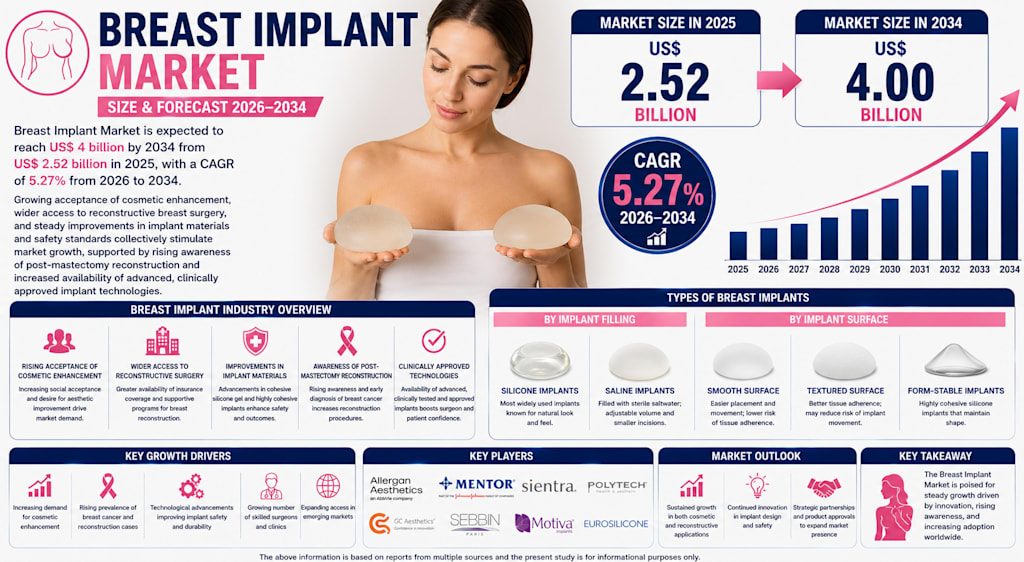
According to Renub Research, the Global Breast Implant Market is projected to grow from US$ 2.52 billion in 2025 to US$ 4 billion by 2034, expanding at a compound annual growth rate (CAGR) of 5.27% between 2026 and 2034. Rising demand for cosmetic enhancement, increasing adoption of post-mastectomy reconstruction, and continued innovation in implant materials and safety technologies are among the major factors driving market growth.
As healthcare providers and manufacturers focus on improving patient outcomes, the breast implant market is entering a new era defined by innovation, safety, and personalization.
Understanding Breast Implants and Their Role
A breast implant is a medical device placed beneath breast tissue or chest muscles to increase volume, improve shape, restore symmetry, or reconstruct the breast following surgery.
Modern implants are generally filled with either silicone gel or saline solution and are available in a variety of sizes, shapes, textures, and profiles.
Breast implants serve two primary purposes.
The first is cosmetic augmentation, where individuals seek to enhance breast size, contour, or overall appearance.
The second is reconstructive surgery, commonly performed after mastectomy, congenital abnormalities, trauma, or other medical conditions affecting breast shape and symmetry.
Over the years, advances in implant design have significantly improved durability, comfort, structural integrity, and natural movement.
Today's implants are designed not only to achieve aesthetic goals but also to prioritize long-term safety and patient satisfaction.
Innovation Is Transforming the Industry
Technological innovation remains one of the strongest forces driving growth in the breast implant market.
Manufacturers continue investing heavily in advanced silicone gels, improved shell technologies, and next-generation implant surfaces designed to enhance safety and performance.
Modern implants are engineered to feel more natural, maintain shape more effectively, and reduce complications associated with earlier generations of devices.
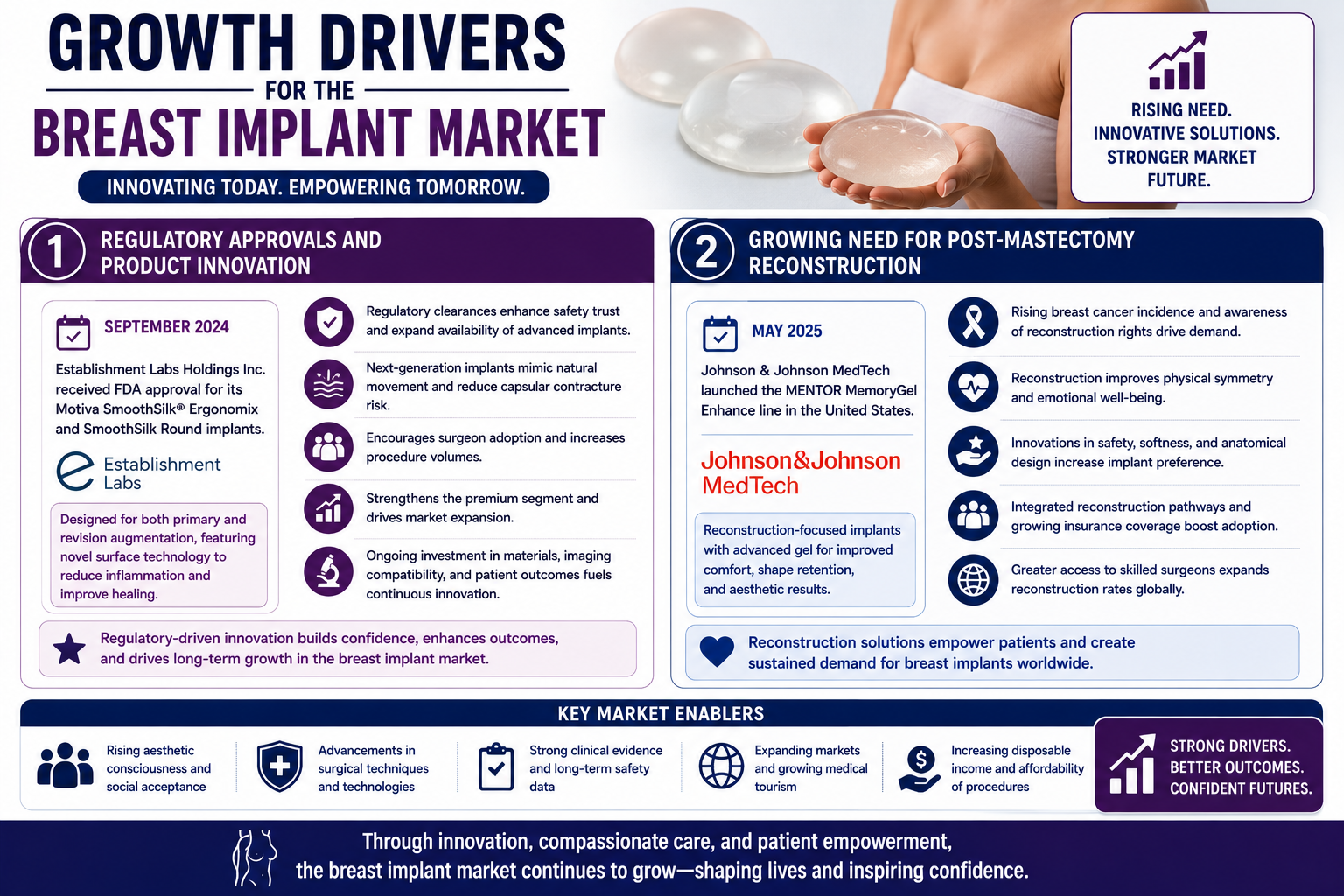
A major example occurred in September 2024 when Establishment Labs received approval from the U.S. Food and Drug Administration for its Motiva SmoothSilk Ergonomix and SmoothSilk Round breast implants.
These implants introduced innovative surface technologies designed to reduce inflammation, improve healing, and provide more natural movement. The approval strengthened confidence among both surgeons and patients while expanding access to advanced implant options.
As materials science continues advancing, innovation is expected to remain a central driver of market growth.
Breast Reconstruction Is Becoming Increasingly Important
One of the most significant growth drivers in the breast implant market is the growing demand for reconstructive breast surgery.
Breast cancer remains one of the most commonly diagnosed cancers among women worldwide. Many patients undergoing mastectomy choose reconstructive procedures to restore physical appearance and emotional well-being.
For countless women, breast reconstruction represents an important step in recovery and rebuilding confidence following cancer treatment.
Healthcare providers increasingly discuss reconstruction options as part of comprehensive cancer care plans.
Advancements in implant technology have further improved outcomes by providing softer materials, better anatomical designs, and more natural aesthetic results.
A notable development occurred in May 2025 when Johnson & Johnson MedTech launched the MENTOR MemoryGel Enhance implant line in the United States.
These implants were specifically developed for reconstructive procedures and feature enhanced gel properties designed to improve comfort, shape retention, and aesthetic outcomes for breast cancer survivors.
Growing awareness regarding reconstruction rights and improved insurance coverage continue supporting demand globally.
Cosmetic Breast Augmentation Remains Highly Popular
While reconstruction is growing rapidly, cosmetic breast augmentation continues to represent a major segment of the market.
Societal attitudes toward aesthetic procedures have evolved significantly over the past two decades.
Many individuals now view cosmetic enhancement as a personal choice associated with confidence, self-expression, and body image rather than social stigma.
Several factors are contributing to increased demand:
Rising disposable incomes, greater awareness of aesthetic procedures, improved surgical transparency, social media influence, and growing acceptance of cosmetic treatments.
Technological advancements have also improved patient experiences.
Modern implants provide softer textures, more natural shapes, longer durability, and reduced recovery times.
Many clinics now utilize advanced imaging and simulation technologies that allow patients to visualize potential outcomes before surgery.
As patient satisfaction rates continue improving, cosmetic augmentation remains a key contributor to market expansion.
Regulatory Approvals Are Building Patient Confidence
Regulatory oversight plays a crucial role in the breast implant industry.
Because implants are long-term medical devices, patient confidence depends heavily on safety standards and clinical validation.
Regulatory agencies worldwide require extensive testing, clinical data, and post-market monitoring before approving new products.
These requirements increase trust among healthcare professionals and patients while encouraging manufacturers to prioritize quality and innovation.
Although regulatory compliance can increase development costs and extend approval timelines, it also helps establish higher industry standards.
The growing availability of clinically approved, next-generation implants continues expanding patient access to advanced treatment options.
As regulatory frameworks evolve, patient safety remains a central focus throughout the industry.
Silicone Implants Continue to Dominate the Market
Silicone implants remain the most popular product segment within the breast implant market.
Their widespread adoption is largely driven by their ability to provide a natural appearance and feel.
Modern silicone gel implants have evolved significantly from earlier generations, incorporating highly cohesive gel formulations that maintain shape while offering improved durability.
Patients and surgeons frequently prefer silicone implants because they more closely resemble natural breast tissue.
Continuous improvements in gel consistency, shell integrity, and implant design have strengthened their position as the leading implant type.
Although saline implants continue serving specific patient needs, silicone implants are expected to remain the dominant segment due to superior aesthetic outcomes and high patient satisfaction rates.
Anatomical and Round Implants Offer Personalized Solutions
The breast implant market increasingly emphasizes personalization.
Patients today have access to a wide range of implant shapes designed to meet individual anatomical and aesthetic goals.
Round implants remain popular because they provide enhanced upper breast fullness and consistent shape regardless of implant rotation.
Anatomical implants, often referred to as teardrop-shaped implants, are designed to replicate the natural contour of the breast.
The availability of multiple shapes allows surgeons to customize treatment plans according to patient preferences, body structure, and reconstructive requirements.
This focus on individualized outcomes is helping improve patient satisfaction and long-term success rates.
Hospitals and Specialized Clinics Drive Market Growth
Hospitals and cosmetology clinics represent the primary end-user segments within the breast implant market.
Hospitals play a critical role in reconstructive procedures, particularly for patients undergoing breast cancer treatment.
These facilities provide access to multidisciplinary care teams, oncology specialists, reconstructive surgeons, and advanced surgical infrastructure.
Meanwhile, specialized cosmetic surgery clinics continue driving growth in elective augmentation procedures.
Many clinics offer personalized consultations, advanced imaging technologies, minimally invasive techniques, and tailored post-operative care.
The expansion of specialized surgical centers worldwide is improving access to both cosmetic and reconstructive breast implant procedures.
The United States Leads the Global Market
The United States remains the largest breast implant market globally.
Several factors contribute to its leadership position.
Strong healthcare infrastructure, high acceptance of cosmetic surgery, widespread access to reconstruction services, and continuous innovation by major manufacturers support robust demand.
Federal regulations enforced by the FDA have also strengthened patient confidence through rigorous safety standards.
The country benefits from a large network of board-certified plastic surgeons and highly specialized aesthetic centers.
Additionally, insurance coverage for post-mastectomy reconstruction contributes significantly to procedural volume.
As innovation continues and awareness grows, the United States is expected to maintain its position as the industry's largest market.
China Emerges as a Fast-Growing Market
China has become one of the fastest-growing breast implant markets worldwide.
Rapid economic development, rising disposable incomes, changing beauty standards, and expanding medical aesthetics services have contributed to significant growth.
Younger consumers increasingly view cosmetic procedures as expressions of personal confidence and self-improvement.
Government efforts to strengthen regulation within the medical aesthetics industry are improving safety standards and encouraging adoption.
At the same time, growing breast cancer awareness and improved access to oncology services are supporting expansion within the reconstruction segment.
As acceptance of aesthetic procedures continues increasing, China is expected to remain a major driver of future market growth.
Challenges Continue to Affect Market Expansion
Despite strong growth prospects, the breast implant industry faces several challenges.
Safety concerns remain among the most significant.
Although modern implants are substantially safer than earlier generations, complications such as capsular contracture, implant rupture, and rare conditions such as Breast Implant-Associated Anaplastic Large Cell Lymphoma (BIA-ALCL) continue to receive regulatory attention. Ongoing surveillance and clinical monitoring remain essential components of patient care.
Cost is another important challenge.
Breast implant procedures often involve significant expenses related to surgery, facility fees, implants, and post-operative care.
In many countries, cosmetic augmentation procedures are not covered by insurance, limiting accessibility for some patients.
Shortages of highly trained plastic surgeons in certain regions also create barriers to care.
Addressing these challenges will be important for ensuring continued market expansion.
Final Thoughts
The breast implant market has evolved far beyond its traditional role in cosmetic enhancement. Today, implants serve as important tools for reconstruction, recovery, confidence building, and personalized healthcare.
Advances in materials science, implant design, surgical techniques, and patient-centered innovation are creating safer and more effective solutions than ever before.
At the same time, increasing awareness of reconstructive options, growing acceptance of aesthetic procedures, and expanding access to specialized care continue driving demand across global markets.
With the market projected to grow from US$ 2.52 billion in 2025 to US$ 4 billion by 2034, the future remains highly promising.
As technology continues advancing and healthcare systems place greater emphasis on patient outcomes and quality of life, breast implants will remain an important part of both reconstructive medicine and aesthetic healthcare, helping millions of individuals achieve confidence, recovery, and improved well-being.
About the Creator
Enjoyed the story? Support the Creator.
Subscribe for free to receive all their stories in your feed.
Comments
There are no comments for this story
Be the first to respond and start the conversation.