
Belgium Watch Market Expected to Reach US$ 854.9 Million by 2034 as Luxury Fashion and Smart Design Trends Drive Growth
Belgium Watch Market Expected to Reach US$ 854.9 Million by 2034 as Luxury Fashion and Smart Design Trends Drive Growth

The Belgium watch market is steadily evolving as consumers increasingly view watches as more than simple timekeeping devices. Modern watches have become fashion statements, lifestyle accessories, and symbols of personal identity, blending aesthetics, craftsmanship, and functionality into a highly competitive consumer market.
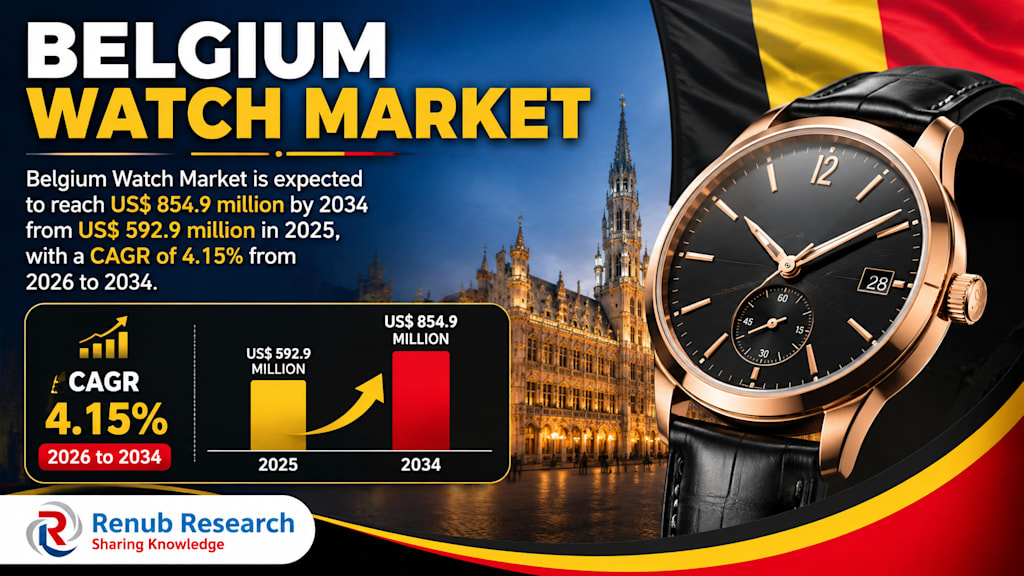
According to Renub Research, the Belgium watch market is projected to grow from US$ 592.9 million in 2025 to US$ 854.9 million by 2034, expanding at a CAGR of 4.15% between 2026 and 2034. The market’s growth is being driven by rising demand for premium accessories, evolving fashion trends,
technological innovation, and growing consumer interest in stylish and multifunctional timepieces.
Belgium’s watch market includes a wide range of products, from affordable quartz watches and digital models to luxury mechanical timepieces and premium designer collections. Consumers increasingly seek watches that combine practicality with personal style, while luxury buyers continue valuing heritage, exclusivity, and craftsmanship.
As fashion culture, digital commerce, and wearable technology continue reshaping consumer behavior, the Belgium watch industry is entering a new phase of transformation.
Watches Are Becoming Powerful Fashion Statements
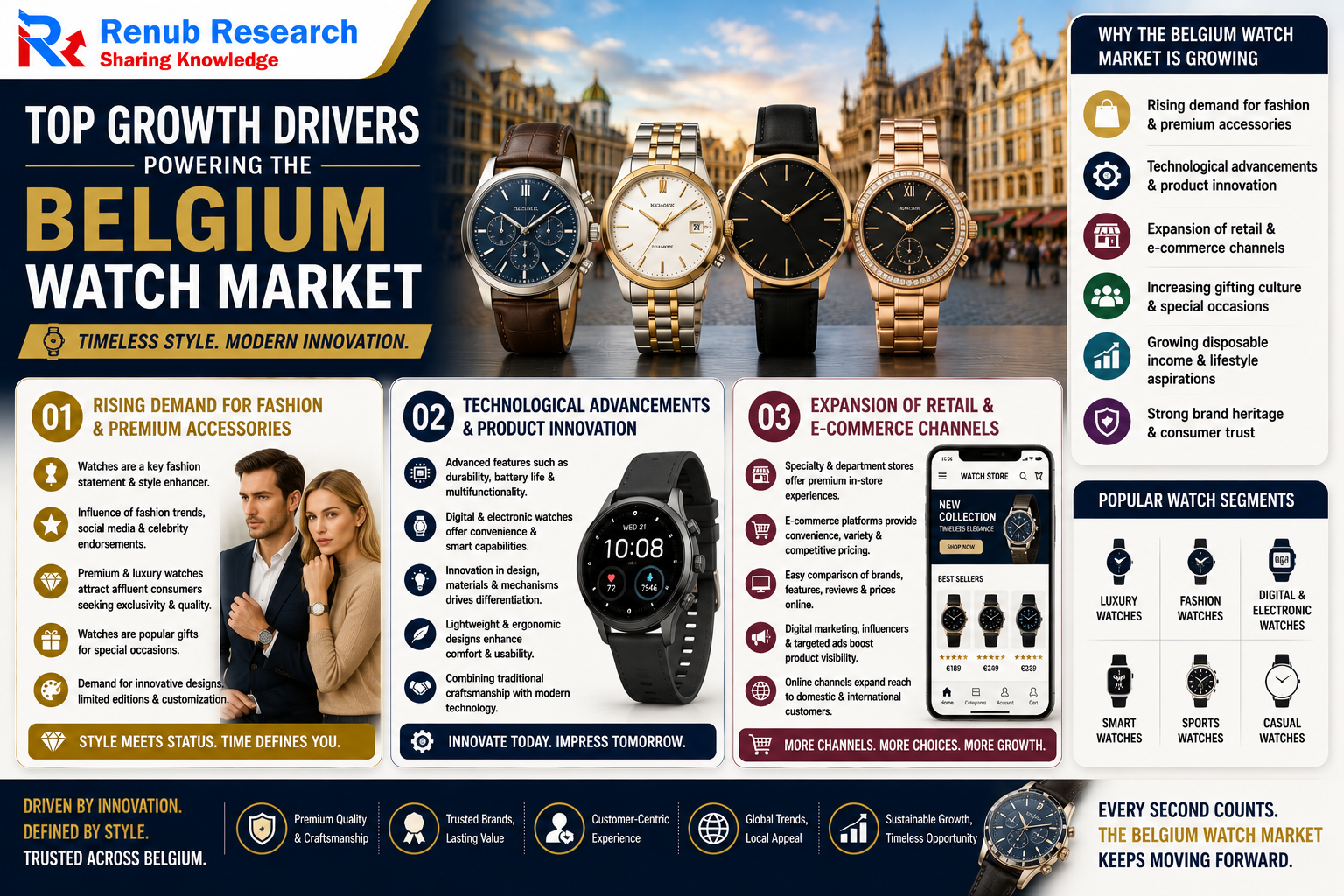
One of the strongest growth drivers behind the Belgium watch market is the rising demand for fashion-oriented and premium accessories.
Consumers increasingly use watches as expressions of personal style rather than purely functional products. Luxury and branded timepieces are often associated with status, individuality, and lifestyle identity.
Fashion trends, celebrity influence, and social media platforms are playing increasingly important roles in shaping watch purchasing decisions.
Consumers now seek watches that reflect:
- Minimalist aesthetics
- Premium craftsmanship
- Versatile styling
- Elegant design
- Brand prestige
- Lifestyle compatibility
This growing focus on fashion and self-expression is particularly strong among younger urban consumers who view accessories as essential parts of everyday style.
Luxury watches also remain highly popular among affluent consumers seeking exclusivity and long-term value.
Watches continue serving as premium gift items for birthdays, anniversaries, graduations, and corporate occasions, further supporting market demand.
Manufacturers are responding with limited editions, customized designs, and fashion-forward collections aimed at strengthening emotional consumer connections.
Technology and Product Innovation Continue Reshaping the Industry
Technological advancements and product innovation are playing major roles in the evolution of Belgium’s watch market.
Consumers increasingly expect watches to deliver both functionality and modern design enhancements.
Manufacturers are introducing products featuring:
- Enhanced durability
- Improved battery performance
- Water resistance
- Lightweight materials
- Multifunctional capabilities
- Digital interfaces
- Comfort-focused designs
Electronic and digital watches are becoming increasingly popular among younger consumers seeking convenience and modern functionality.
At the same time, traditional watchmakers continue integrating modern technologies into classic timepiece designs to appeal to broader audiences.
Consumers are particularly attracted to watches that successfully combine traditional craftsmanship with contemporary innovation.
Design innovation is also becoming increasingly important, with brands experimenting with materials, textures, colors, and interchangeable straps to enhance personalization and versatility.
These innovations not only attract new buyers but also encourage repeat purchases and long-term brand loyalty.
Smart and Electronic Watches Continue Gaining Momentum
The electronic watch segment is experiencing particularly strong momentum as consumers embrace connected lifestyles and multifunctional wearable devices.
Electronic watches appeal to consumers because they offer practical features such as:
- Digital displays
- Alarms and timers
- Enhanced convenience
- Lightweight construction
- Modern interfaces
- Everyday functionality
Younger consumers especially favor electronic and smart-inspired designs due to their integration with modern lifestyles and digital habits.
As wearable technology becomes more normalized across Europe, demand for technologically enhanced watches is expected to continue rising steadily.
Although luxury analog watches remain dominant within premium categories, digital and multifunctional products are carving out larger market shares among mainstream and younger demographic groups.
The growing overlap between fashion accessories and wearable technology is expected to remain a defining industry trend throughout the forecast period.
Unisex Watches Are Becoming Increasingly Popular
One of the most notable consumer shifts within Belgium’s watch market is the rising popularity of unisex designs.
Consumers increasingly prefer versatile, gender-neutral accessories that prioritize simplicity, flexibility, and modern aesthetics.
Unisex watches align closely with broader fashion trends focused on:
- Inclusivity
- Minimalism
- Versatility
- Timeless design
- Functional elegance
Manufacturers are increasingly creating collections designed to appeal across gender categories by emphasizing clean lines, neutral tones, and adaptable sizing.
This trend is particularly strong among younger consumers who often prioritize personal expression over traditional fashion segmentation.
Online retail channels are also helping expand visibility for unisex collections by making diverse styles more accessible to broader audiences.
As consumer attitudes around fashion continue evolving, unisex watches are expected to remain an important growth segment within the market.
Sustainability Is Influencing Purchasing Decisions
Sustainability is becoming a growing priority within the Belgium watch market as environmentally conscious consumers increasingly evaluate products based on ethical sourcing and production practices.
Consumers are showing greater interest in:
- Eco-friendly materials
- Recycled components
- Ethical manufacturing
- Sustainable packaging
- Long-lasting product quality
This shift is encouraging manufacturers to adopt greener production methods and improve supply-chain transparency.
Sustainability is especially important among younger consumers who increasingly align purchasing decisions with environmental values.
Brands capable of combining premium design with responsible manufacturing practices are likely to strengthen consumer trust and long-term loyalty.
Luxury watchmakers are also exploring sustainable innovation as part of broader efforts to modernize brand identity while maintaining heritage craftsmanship.
E-Commerce Is Transforming Consumer Access
The rapid growth of e-commerce has significantly changed how watches are marketed and sold in Belgium.
Online retail platforms now allow consumers to:
- Compare prices
- Explore international brands
- Access customer reviews
- Customize products
- Discover limited editions
- Shop conveniently from home
Digital shopping experiences have become increasingly important, especially for younger consumers comfortable purchasing fashion accessories online.
Brands are investing heavily in digital marketing strategies, influencer collaborations, and social media campaigns to strengthen online visibility and consumer engagement.
E-commerce also enables brands to reach broader audiences, including international shoppers and consumers outside major retail centers.
Despite this digital shift, physical retail stores continue playing an important role, particularly within the luxury segment where consumers value in-store experiences, expert consultations, and personalized service.
The combination of digital and traditional retail strategies is shaping a highly competitive and evolving marketplace.
Intense Competition Continues Challenging the Market
The Belgium watch market faces significant competitive pressure from global luxury brands, mid-range manufacturers, fashion labels, and affordable alternatives.
Consumers now have access to a wide variety of products across different price points and design categories, making differentiation increasingly difficult.
The rise of affordable fashion watches and private-label products has intensified pricing competition, particularly in the non-luxury segment.
To remain competitive, companies must continuously invest in:
- Product innovation
- Brand storytelling
- Marketing campaigns
- Influencer partnerships
- Retail experiences
- Design differentiation
Maintaining strong customer loyalty in such a crowded marketplace remains a major challenge.
Brands unable to adapt to evolving consumer expectations around sustainability, design, and technology risk losing market relevance.
Economic Uncertainty Is Influencing Consumer Spending
Economic uncertainty and inflationary pressures are also impacting the Belgium watch market.
Watches are often considered discretionary purchases, meaning consumers may reduce spending during periods of financial instability.
Consumers increasingly prioritize affordability, value, and multifunctionality when evaluating purchases.
At the same time, the growing popularity of wearable technology and alternative digital devices may divert some consumer spending away from traditional watches.
Manufacturers must therefore balance craftsmanship, innovation, affordability, and modern functionality to maintain market competitiveness.
Quartz Watches Continue Dominating Everyday Demand
Quartz watches remain one of the most widely purchased categories within Belgium due to their affordability, reliability, and low maintenance requirements.
Consumers appreciate quartz watches for their:
- Accuracy
- Cost-effectiveness
- Ease of use
- Everyday practicality
Manufacturers continue enhancing quartz watch designs to appeal to fashion-conscious buyers seeking stylish yet accessible timepieces.
The availability of quartz models across multiple price points helps maintain strong demand among mainstream consumers.
Luxury Watches Maintain Strong Prestige Appeal
Belgium’s luxury watch market continues benefiting from strong demand for premium craftsmanship, exclusivity, and brand heritage.
Luxury watches remain highly desirable among affluent consumers and collectors seeking status-oriented products and investment-quality timepieces.
Tourism also contributes significantly to luxury watch sales, as international visitors frequently purchase premium watches through Belgium’s established retail networks.
Manufacturers continue emphasizing:
- Limited editions
- Heritage branding
- Precision engineering
- Personalized service
- High-end materials
Despite broader economic uncertainty, the luxury segment remains relatively resilient due to strong emotional and prestige-driven consumer demand.
Hypermarkets and Supermarkets Continue Supporting Accessibility
Hypermarkets and supermarkets remain important distribution channels for affordable and mid-range watches.
These retail formats primarily attract price-sensitive consumers seeking convenient and accessible purchasing options.
Impulse buying behavior also contributes to sales within this segment, as consumers frequently purchase watches alongside everyday retail goods.
Affordable pricing and broad product availability continue supporting steady growth in this category.
Major Companies Continue Competing Through Innovation
Leading companies competing within the Belgium watch market include:
- Seiko Holdings Corporation
- Casio Computer Co. Ltd
- Timex Group
- Rolex SA
- Compagnie Financière Richemont S.A
- The Swatch Group Ltd
- Citizen Watch Co. Ltd.
- Fossil Group Inc.
- Google LLC
Competition increasingly focuses on product innovation, sustainability, multifunctionality, and digital consumer engagement.
The Future of the Belgium Watch Market
The future of the Belgium watch market appears stable and promising as consumers continue seeking products that combine style, functionality, and individuality.
Luxury craftsmanship, digital innovation, sustainability, and unisex design trends are expected to remain key market drivers over the next decade.
At the same time, brands that successfully balance heritage, modern technology, affordability, and personalized experiences are likely to emerge as long-term market leaders.
As watches continue evolving into fashion-forward lifestyle accessories, the Belgium market is expected to maintain steady growth through 2034.
Final Thoughts
The Belgium watch market is evolving steadily as changing fashion trends, digital lifestyles, and consumer expectations reshape the industry. Watches are no longer viewed solely as practical tools for telling time—they are increasingly valued as personal statements, luxury accessories, and multifunctional lifestyle products.
Although intense competition and economic uncertainty remain ongoing challenges, continued innovation, expanding e-commerce adoption, and growing demand for stylish and versatile designs continue positioning the market for long-term growth.
About the Creator
Enjoyed the story? Support the Creator.
Subscribe for free to receive all their stories in your feed.
Comments
There are no comments for this story
Be the first to respond and start the conversation.