
Belgium’s Watch Market Is Evolving as Fashion, Technology, and Luxury Redefine Consumer Preferences
From timeless luxury watches to stylish unisex designs and innovative electronic timepieces, Belgium’s watch industry is steadily transforming to meet changing fashion trends and modern lifestyle demands.

They have become fashion statements, lifestyle accessories, status symbols, and expressions of personal identity. Across the country, consumers are increasingly investing in watches that combine aesthetics, craftsmanship, functionality, and innovation.
As fashion trends evolve and consumer expectations continue changing, Belgium’s watch market is experiencing steady growth driven by rising demand for premium accessories, technological innovation, and expanding retail accessibility.
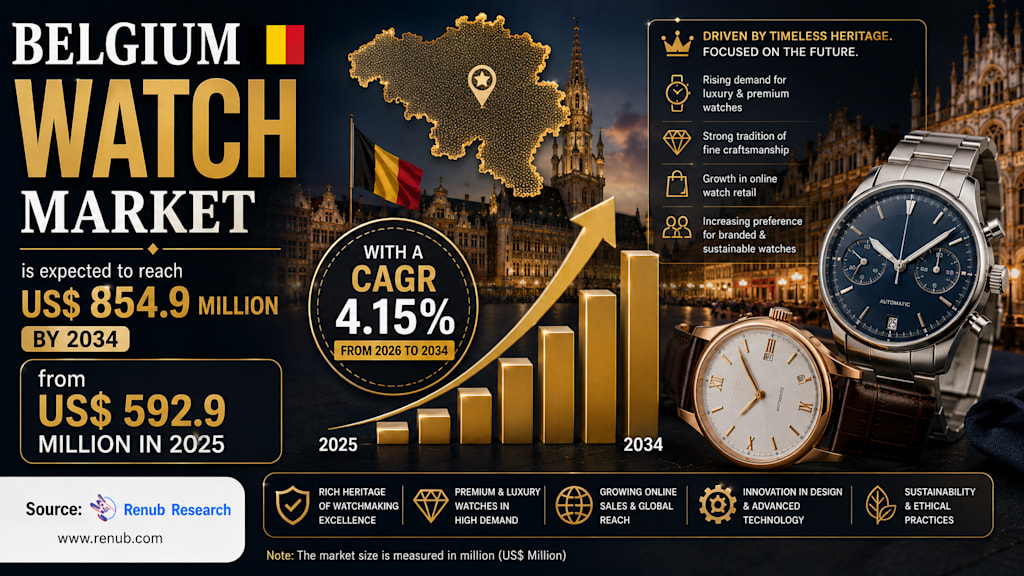
According to Renub Research, the Belgium Watch Market is expected to grow from US$ 592.9 million in 2025 to US$ 854.9 million by 2034, expanding at a CAGR of 4.15% between 2026 and 2034. The market’s growth is supported by increasing demand for premium timepieces, evolving fashion trends, and rising consumer preference for stylish yet functional accessories.
Belgian consumers today view watches as more than functional devices.
Luxury watches symbolize prestige and craftsmanship, while digital and electronic watches appeal to younger consumers seeking convenience and modern features. At the same time, unisex designs and sustainable materials are reshaping how brands approach product innovation.
This evolution is transforming Belgium’s watch market into a highly competitive and innovation-driven segment within the broader fashion and consumer accessories industry.
Fashion and Personal Style Are Driving Demand
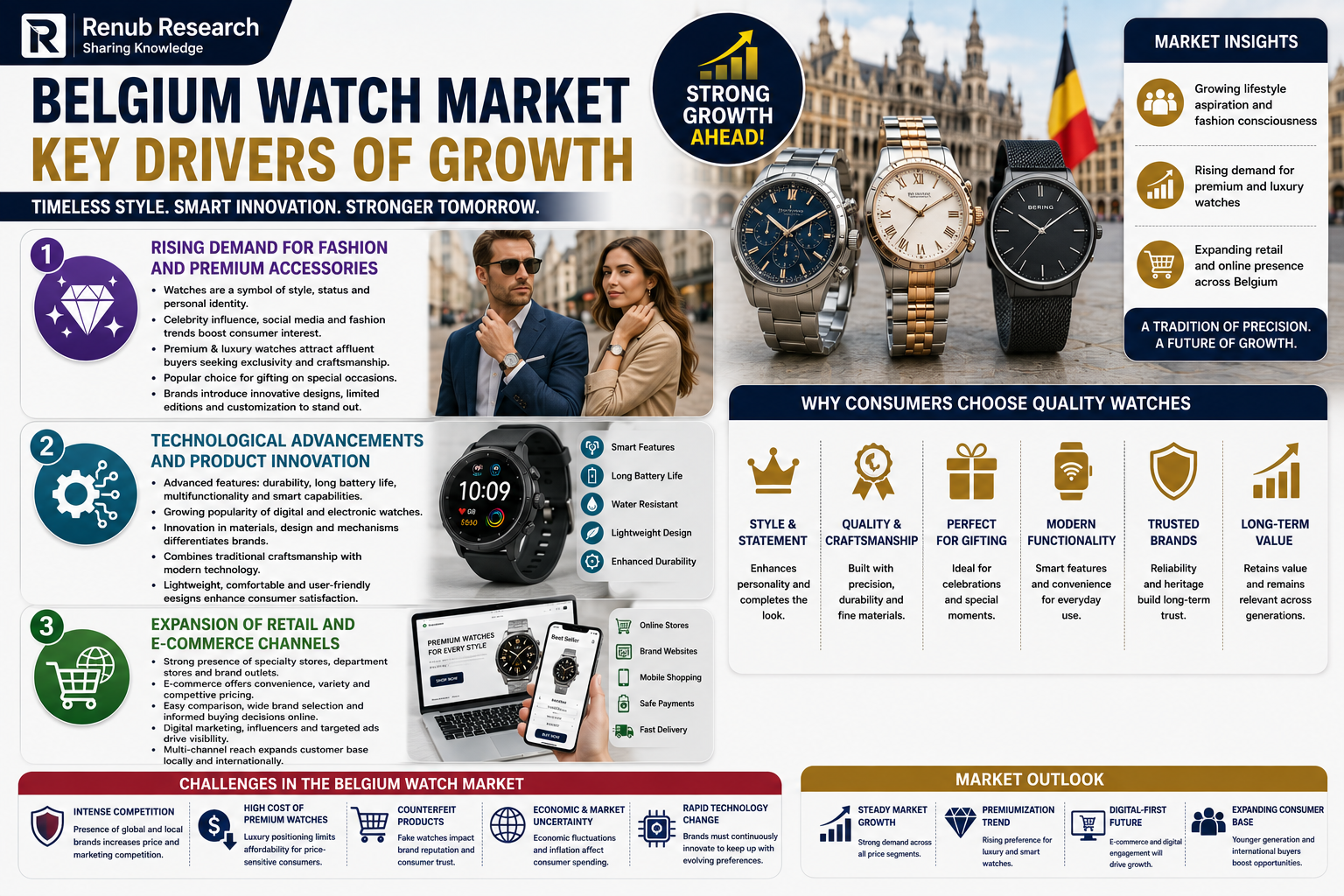
One of the strongest growth drivers within the Belgium watch market is the increasing importance of fashion and personal style.
Consumers increasingly see watches as extensions of their personality and wardrobe rather than simple utility products.
Fashion-conscious buyers actively seek timepieces that complement:
Professional attire
Casual fashion
Luxury lifestyles
Minimalist aesthetics
Streetwear trends
Social media platforms, celebrity culture, and luxury branding have significantly amplified this trend.
Consumers are heavily influenced by:
- Fashion influencers
- Luxury lifestyle content
- Celebrity endorsements
- Designer collaborations
- Digital advertising campaigns
As a result, demand for aesthetically appealing and branded watches continues rising steadily.
Luxury and premium segments are particularly benefiting from this shift, as affluent consumers increasingly prioritize exclusivity, craftsmanship, and heritage value.
Watches are also frequently purchased as gifts for:
- Birthdays
- Anniversaries
- Weddings
- Corporate recognition
- Luxury celebrations
This emotional and symbolic value further strengthens market demand across different consumer groups.
Manufacturers are responding with:
- Limited editions
- Personalized customization
- Premium materials
- Fashion-forward collections
to maintain strong consumer engagement.
Technological Innovation Is Reshaping the Industry
Technology is playing an increasingly important role in the Belgium watch market.
Consumers today expect modern watches to offer more than basic timekeeping functionality.
Manufacturers are integrating advanced features such as:
- Enhanced durability
- Water resistance
- Multifunctional displays
- Improved battery life
- Lightweight materials
- Digital interfaces
Electronic and digital watches are becoming especially popular among younger demographics who prioritize practicality and convenience.
Consumers increasingly seek products that combine traditional craftsmanship with modern innovation.
At the same time, brands continue investing in:
- Comfortable designs
- Ergonomic materials
- Advanced watch mechanisms
- Hybrid analog-digital models
This combination of style and functionality is becoming a key competitive advantage in the evolving watch industry.
Innovation not only improves user experience but also encourages repeat purchases and stronger brand loyalty.
Unisex Watches Are Becoming Increasingly Popular
One of the most noticeable shifts within Belgium’s watch market is the growing popularity of unisex designs.
Consumers increasingly prefer versatile and gender-neutral accessories that align with modern fashion trends emphasizing inclusivity and minimalism.
Unisex watches appeal to a broad range of buyers because they combine:
- Simplicity
- Elegance
- Practicality
- Versatile styling
Brands are focusing on creating designs suitable for both men and women without relying heavily on traditional gender-based aesthetics.
This trend reflects broader cultural shifts within the fashion industry where consumers increasingly value flexibility and individuality over rigid style categories.
The availability of multiple:
- Sizes
- Materials
- Colors
- Strap options
- Design styles
continues supporting strong demand within the unisex segment.
Luxury Watches Continue Driving Premium Growth
Belgium’s luxury watch market remains one of the strongest and most resilient segments within the broader industry.
Luxury timepieces continue attracting affluent consumers, collectors, and international tourists seeking:
- Prestige
- Craftsmanship
- Exclusivity
- Investment value
Luxury watches are often associated with:
- Heritage brands
- Precision engineering
- Sophisticated design
- High-quality materials
Consumers increasingly view premium watches as long-term investments rather than simple fashion purchases.
The luxury segment also benefits from Belgium’s tourism industry, as international visitors contribute significantly to retail sales.
In-store experiences remain especially important within the luxury market.
Consumers purchasing premium watches often value:
- Personalized consultations
- Exclusive collections
- Boutique experiences
- Brand storytelling
Limited-edition models and exclusive releases continue strengthening demand among collectors and high-net-worth consumers.
Despite broader economic uncertainty, the luxury watch segment remains relatively resilient due to its strong emotional and prestige-driven appeal.
E-Commerce Is Expanding Consumer Accessibility
Digital retail has become a major growth driver within Belgium’s watch industry.
Consumers increasingly rely on online platforms to:
- Compare brands
- Review product features
- Explore pricing
- Read customer feedback
- Access international collections
E-commerce offers convenience and product variety while allowing brands to reach broader audiences beyond traditional retail locations.
Online retail channels also support:
- Personalized recommendations
- Influencer collaborations
- Digital advertising campaigns
- Social media-driven purchasing
Luxury brands, fashion labels, and mid-range manufacturers are all investing heavily in digital commerce strategies to strengthen customer engagement.
At the same time, traditional retail outlets such as:
- Specialty watch stores
- Department stores
- Luxury boutiques
continue playing important roles, particularly for premium purchases where hands-on experience and customer service remain essential.
This multi-channel retail approach is helping brands improve accessibility and consumer reach across Belgium.
Quartz Watches Continue Dominating Everyday Demand
Quartz watches remain one of the most popular watch categories in Belgium due to their affordability, reliability, and low maintenance requirements.
Consumers widely prefer quartz watches because they offer:
- Accurate timekeeping
- Cost efficiency
- Everyday practicality
- Broad style availability
These watches appeal strongly to consumers seeking dependable daily-wear accessories without the higher costs associated with luxury mechanical models.
Manufacturers continue improving quartz watch aesthetics to attract fashion-conscious buyers who want both functionality and style.
The wide availability of quartz watches across multiple price ranges helps maintain strong market demand.
Retail channels including physical stores and online platforms continue supporting broad accessibility throughout Belgium.
Electronic Watches Are Gaining Younger Consumers
Electronic watches are steadily gaining popularity, particularly among younger consumers seeking technologically advanced and multifunctional products.
Electronic watches often include features such as:
Digital displays
Alarms
Multifunctional interfaces
Enhanced convenience features
Their modern appearance and practical functionality make them attractive to digitally connected consumers.
Manufacturers continue improving:
- Battery performance
- Durability
- User interfaces
- Comfort
to strengthen competitiveness within the segment.
The growing preference for technology-driven accessories and modern lifestyles continues supporting electronic watch demand across Belgium.
Competition Remains Intense Across the Market
Despite positive growth trends, Belgium’s watch industry remains highly competitive.
The market includes:
Global luxury brands
Mid-range manufacturers
Fashion labels
Affordable private-label products
This crowded landscape creates significant pricing pressure and makes differentiation increasingly difficult.
Brands must continuously invest in:
- Product innovation
- Marketing campaigns
- Brand positioning
- Digital engagement
- Retail experiences
Maintaining customer loyalty is especially challenging as consumer preferences evolve rapidly and product alternatives continue expanding.
Companies unable to clearly communicate value and uniqueness may struggle to maintain long-term market share.
Economic Uncertainty Is Affecting Consumer Spending
Economic fluctuations and inflation remain important challenges for the Belgium watch market.
Because watches are often considered discretionary purchases, consumers may reduce spending during uncertain economic periods.
Buyers increasingly prioritize:
- Affordability
- Functionality
- Long-term value
- Product durability
At the same time, alternative wearable devices and smart technologies continue influencing purchasing behavior, particularly among younger demographics.
Manufacturers must therefore balance:
- Innovation
- Pricing strategies
- Product quality
- Sustainability expectations
to remain competitive within changing market conditions.
Sustainability Is Becoming More Important
Environmental awareness is also shaping consumer preferences within Belgium’s watch market.
Consumers increasingly show interest in:
- Eco-friendly materials
- Ethical production
- Sustainable packaging
- Responsible sourcing
This growing focus on sustainability is encouraging manufacturers to adopt greener practices and introduce more environmentally conscious product lines.
Brands emphasizing transparency and sustainability are likely to gain stronger traction among younger and environmentally aware consumers.
Key Market Segments
By Type
- Quartz Watches
- Electronic Watches
- Mechanical Watches
By Gender
- Men
- Women
- Unisex
By Price Range
- Luxury
- Non-Luxury
By Distribution Channel
- Hypermarket/Supermarket
- Convenience Stores
- Online
- Major Provinces
- Antwerp
- Walloon Brabant
- Flemish Brabant
- West Flanders
- East Flanders
- Limburg
- Liège
- Namur
- Hainaut
- Luxembourg
Major Companies Operating in the Market
Leading companies in the Belgium watch market include:
- Seiko Holdings Corporation
- Casio Computer Co. Ltd
- Timex Group
- Rolex SA
- Compagnie Financière Richemont S.A
- The Swatch Group Ltd
- Citizen Watch Co. Ltd.
- Fossil Group Inc.
- Google LLC (Fitbit Inc.)
These companies continue investing heavily in innovation, luxury branding, digital retail expansion, and sustainable product development.
Final Thoughts
Belgium’s watch market is steadily evolving as fashion trends, technological innovation, and changing consumer lifestyles reshape the industry.
Consumers increasingly seek watches that combine functionality, aesthetics, durability, and personal expression.
Luxury craftsmanship remains highly valued, while digital innovation and unisex styling trends continue expanding the market’s appeal to younger generations.
According to Renub Research, the Belgium watch market is projected to grow from US$ 592.9 million in 2025 to US$ 854.9 million by 2034, highlighting strong long-term growth potential driven by premiumization, innovation, and evolving fashion preferences.
About the Creator
Enjoyed the story? Support the Creator.
Subscribe for free to receive all their stories in your feed.
Comments
There are no comments for this story
Be the first to respond and start the conversation.