
Baidu Spent 15 Years Building Its Own AI Chips. Now Comes the Public Market Test.
Kunlunxin started as a way to cut computing costs. Today it powers banks, power grids, and a 30,000-card AI cluster.
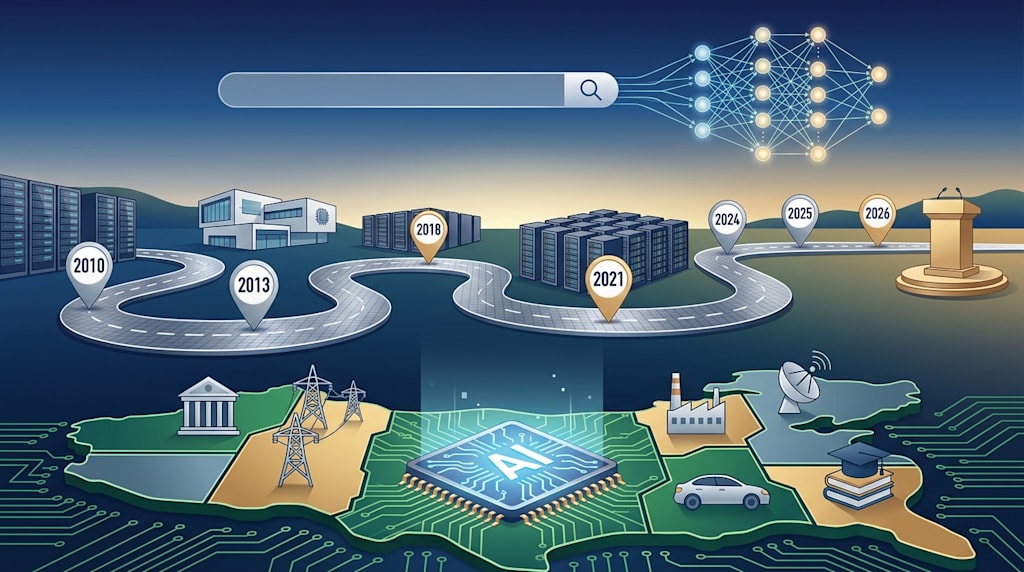
Around 2010, Baidu’s search servers were multiplying. Imported chips cost tens of thousands of dollars each. The computing bill kept eating into profit.
Baidu tried FPGA, CPU, and GPU accelerators. At the time, the mobile internet was just taking off. Investors cared about traffic, apps, and business models. Large models were barely a topic. Almost nobody expected AI training to need tens of thousands of accelerator cards.
For an internet company, making its own chips was not the easy path. Chip R&D is expensive and slow. A failed tape-out can erase years of work. Even a working chip needs software adaptation, system deployment, and a next generation.
Baidu had something chip startups often lack: daily workloads. Search, speech, and image recognition ran nonstop. They changed constantly. That made them a real test for silicon.
In 2012, Baidu’s net profit passed 10 billion yuan for the first time. The business was still growing fast. Robin Li wrote in an internal letter that Baidu should not chase higher short-term profit. It should put more money into new businesses and innovation.
In 2013, Baidu created the Institute of Deep Learning, or IDL. Li served as dean. In 2015, the Xiantong chip team won Baidu’s Highest Award. In 2016, Baidu built a large GPU cluster. That September, Li said at Baidu World: “The mobile internet era is over. The next act is artificial intelligence.”
The direction became clearer. While most companies were still cashing in on mobile internet growth, Baidu was building algorithms, computing power, and chips for the next era.
In 2018, Li introduced the first-generation Kunlun chip at Baidu Create. The project finally had a public name. Baidu had spent eight years from forming a chip team to releasing that first chip.
For an AI chip, lab benchmarks are only the first step. In production, the chip has to run stably, adapt to changing models, and survive long periods of high load. Kunlunxin entered Baidu’s real businesses early. Problems showed up in operation. The team iterated from there. Before the product reached scale, outsiders could not easily judge what the investment would return.
Li later described Baidu’s approach to long-cycle technology. He said: “When we have one yuan, we invest it in technology. When we have 100 million yuan, we invest it in technology. When we have 10 billion yuan, we still invest it in technology.”
In 2021, Baidu released Kunlun 2, its second self-developed AI chip. The product went into mass production. That same year, Baidu spun off the chip business. Kunlunxin became a separate company and brought in outside capital. After the first funding round, its post-money valuation reached 13 billion yuan.
In 2024, the third-generation chip entered mass production. It was deployed in energy, industry, transportation, finance, and the internet. Cumulative deployment reached tens of thousands of units. In 2025, Baidu brought online China’s first fully self-developed 30,000-card cluster.
The problem changed from the first chip to the 30,000-card cluster. Single-chip performance still mattered. But with tens of thousands of cards running together, communication between cards, task scheduling, fault recovery, and software adaptation also shaped system efficiency.
That shift connected to Baidu’s broader AI stack. Kunlunxin supplies computing power. Baidu AI Cloud manages infrastructure. The ERNIE model runs training and inference. Agents and other applications create continuous demand. Their data feeds back into the infrastructure.
The full stack matters because the layers can feed each other. Computing problems from models and applications can reach the cloud platform and the chips. When the underlying hardware changes, the software and models can adjust.
In 2025, Li told GeekPark: “Over the years, Baidu has succeeded at some things and failed at others. If there is a pattern, it is this: when success depends almost entirely on how advanced the technology is, our odds go up. Especially when the technology needs many years of investment and iteration. Then our odds go up even more.”
In early 2026, Kunlunxin confidentially filed for an IPO with the Hong Kong Stock Exchange.
In August 2026, Li said on the earnings call that Kunlunxin had completed R&D and commercialization for three generations of AI chips. He also disclosed the M100 and M300 product roadmaps.
For a chip company, a roadmap shows direction. Mass production and delivery show results.
Kunlunxin has entered China Merchants Bank’s large-model computing project. It has been deployed at State Grid and China Iron & Steel Research Institute. It has built fully domestic Kunlunxin clusters for internet, energy, finance, manufacturing, automotive, telecom, education, and other industries.
On September 21, 2026, Li presented Baidu’s Highest Award at an internal event. Both shortlisted teams won. Each received $1 million.
The Tianchi team built Baidu’s Tianchi supernode architecture for trillion-parameter MoE models. The dodo team works on enterprise AI employees, bringing agents into organizations.
At the award ceremony, Li said the Tianchi team’s win “is very likely the beginning of a long journey.”
He also mentioned the Xiantong team, which worked on chips in 2015, and the Linghang team, which started autonomous driving in 2021. The fields differ. Both had R&D cycles longer than ten years. Early chip work became Kunlunxin. Autonomous driving investment made Apollo Go one of the world’s top robotaxi players.
Baidu’s Highest Award began in 2010. It has run for 16 editions. Baidu says cumulative prize money is close to 400 million yuan. Chips, autonomous driving, and now supernodes all fit the same pattern: Baidu rewards long-cycle technology projects.
Baidu’s chip path started with a computing bill. It moved through strategy, a spinoff, outside capital, and commercial deployment. Now it is at the IPO stage. At each step, Baidu made a concrete choice: keep funding R&D when profit was good; keep iterating chips despite skepticism; spin off the business and raise outside money; put chips into real workloads; use the full stack to create feedback.
None of those choices was easy alone. Together they built a long chain.
Fifteen years ago, Baidu started making chips because computing was expensive. Fifteen years later, Kunlunxin has filed for an IPO, the M100 and M300 roadmaps are public, the $1 million awards have been paid, and the 30,000-card cluster is running.
The chip work is not finished. Kunlunxin still has to prove itself in public markets. Mass production and delivery continue.
About the Creator
Jin
Writer of reamstories
https://reamstories.com/jin
Enjoyed the story? Support the Creator.
Subscribe for free to receive all their stories in your feed. You could also become a paid subscriber, letting them know you appreciate their work.
Comments
There are no comments for this story
Be the first to respond and start the conversation.