
Automotive Lighting Market Accelerates as Smart Vehicle Technologies and Safety Regulations Drive Innovation
Rising vehicle production, growing adoption of LED technology, and increasing focus on road safety are fueling significant growth in the global automotive lighting industry.

The automotive industry is undergoing one of the most transformative periods in its history. From electric vehicles and autonomous driving technologies to connected mobility solutions, modern automobiles are becoming smarter, safer, and more technologically advanced than ever before. Amid these innovations, automotive lighting has emerged as a critical component that extends far beyond simple illumination.
Today's automotive lighting systems serve multiple functions, including improving visibility, enhancing vehicle safety, supporting advanced driver-assistance systems, and strengthening brand identity through distinctive design. As manufacturers continue introducing innovative lighting technologies such as LED, OLED, laser, and adaptive lighting systems, the automotive lighting market is experiencing substantial expansion.
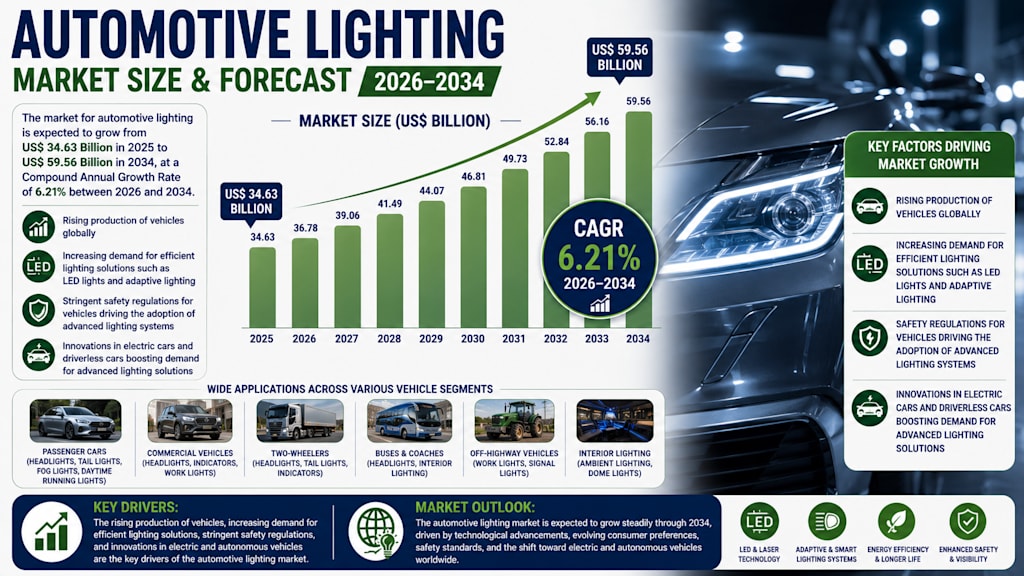
According to Renub Research, the global Automotive Lighting Market is projected to grow from US$ 34.63 billion in 2025 to US$ 59.56 billion by 2034, registering a compound annual growth rate (CAGR) of 6.21% between 2026 and 2034. Rising vehicle production, increasing demand for energy-efficient lighting solutions, and stricter safety regulations are expected to drive market growth throughout the forecast period.
Automotive Lighting Has Become Essential for Safety and Performance
Automotive lighting refers to the various lighting systems installed in vehicles to improve visibility, communication, and overall safety. These systems include headlights, taillights, fog lights, daytime running lights, brake lights, turn signals, side markers, and interior lighting components.
The primary purpose of automotive lighting is to ensure drivers can clearly see the road and surrounding environment while making vehicles visible to other road users. Effective lighting becomes particularly important during nighttime driving and adverse weather conditions such as rain, fog, dust storms, and snow.
Beyond safety, lighting systems have become important design elements that help manufacturers differentiate their vehicles in competitive markets. Modern lighting technologies allow automakers to create distinctive visual identities while improving efficiency and functionality.
As vehicles continue evolving, automotive lighting is becoming increasingly integrated with advanced electronic systems and intelligent driving technologies.
Growing Vehicle Production Is Fueling Market Expansion
One of the strongest drivers of the automotive lighting market is the continued growth in global vehicle production.
As economies expand and urbanization increases, demand for passenger vehicles, commercial vehicles, and electric automobiles continues rising across numerous regions. Every newly manufactured vehicle requires multiple lighting components, creating significant demand for automotive lighting systems.
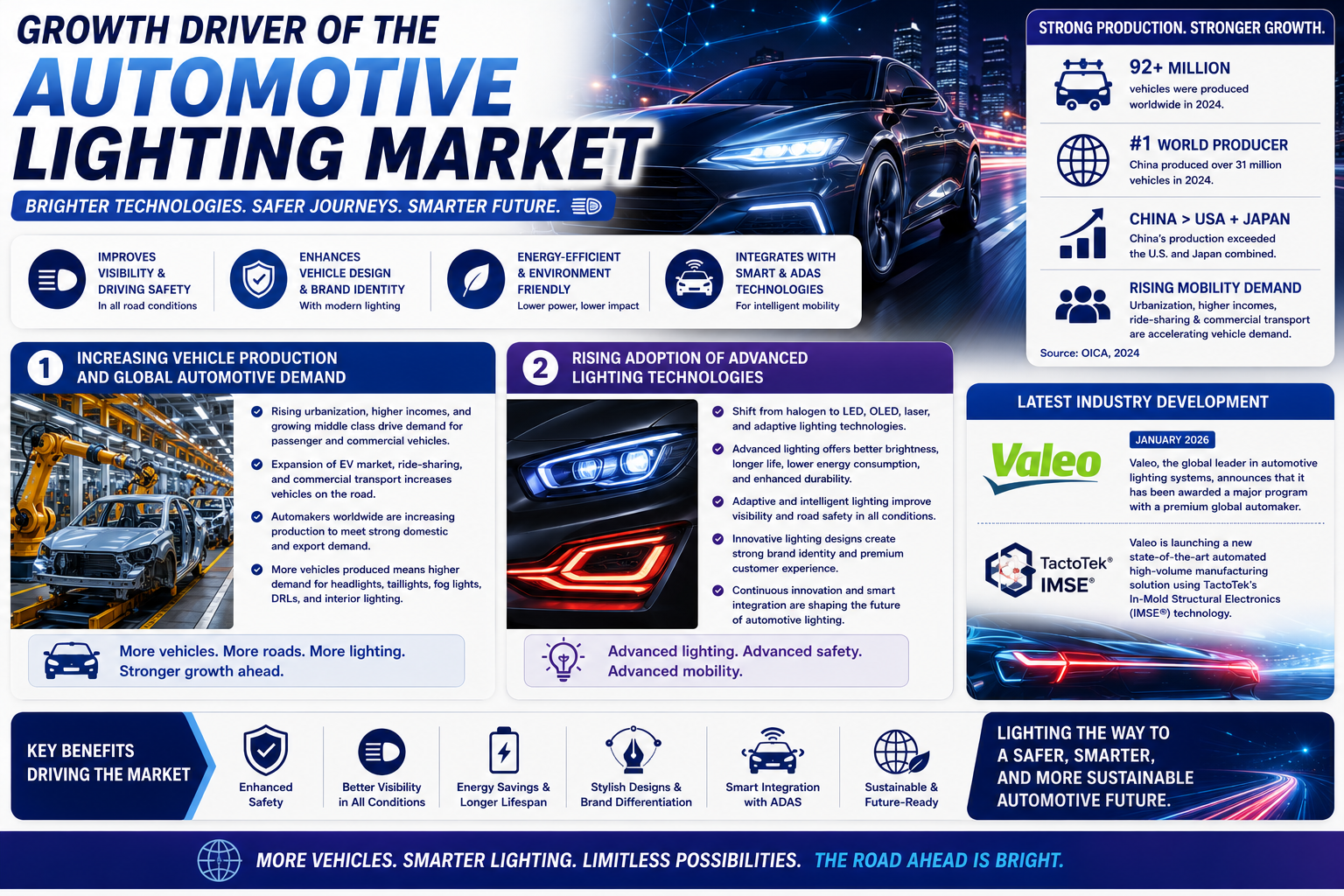
According to industry data referenced in the report, global vehicle production exceeded 92 million units in 2024. China alone produced more than 31 million vehicles, surpassing the combined production of the United States and Japan. Strong domestic demand, increasing exports, and rapid adoption of electric vehicles have contributed significantly to this growth.
The expansion of ride-sharing services, logistics operations, and commercial transportation fleets is further increasing the number of vehicles on roads worldwide.
As vehicle manufacturing continues growing, demand for advanced lighting systems is expected to rise correspondingly.
LED Technology Is Transforming the Industry
The widespread adoption of LED technology represents one of the most important developments in automotive lighting.
Traditional halogen lighting systems are increasingly being replaced by LED solutions due to their superior efficiency, brightness, durability, and design flexibility. LED lights consume significantly less energy while providing enhanced illumination and longer operational lifespans.
These characteristics make LEDs particularly attractive for both conventional and electric vehicles, where energy efficiency plays a critical role.
Automotive manufacturers also appreciate the design freedom offered by LED technology. Unique lighting signatures help establish brand identity and create visually distinctive vehicle designs that appeal to consumers.
As production costs continue declining and technological capabilities improve, LED lighting is expected to remain the dominant technology within the automotive lighting market.
Advanced Lighting Technologies Are Creating New Opportunities
Beyond LEDs, several advanced lighting technologies are reshaping the future of automotive illumination.
Innovations such as OLED lighting, laser headlights, matrix LED systems, and adaptive lighting technologies provide enhanced performance and functionality. These systems can automatically adjust brightness, beam patterns, and illumination direction based on driving conditions.
Adaptive headlights, for example, improve visibility by directing light toward curves in the road, helping drivers navigate safely at night. Matrix LED systems can selectively dim portions of a light beam to avoid dazzling other drivers while maintaining maximum illumination elsewhere.
Manufacturers continue investing heavily in research and development to create lighting systems that improve safety while enhancing the driving experience.
For example, in January 2026, Valeo announced a major automotive lighting program featuring advanced manufacturing solutions utilizing In-Mold Structural Electronics technology, demonstrating ongoing innovation within the industry.
Road Safety Regulations Continue Supporting Growth
Government regulations focused on improving road safety represent another important growth driver for the automotive lighting market.
Transportation authorities worldwide are implementing stricter standards requiring vehicles to incorporate advanced lighting systems that enhance visibility and reduce accident risks.
Many regions now mandate features such as:
Daytime running lights
Automatic headlight activation
Adaptive lighting systems
Enhanced brake lighting
Improved visibility standards
These regulations are designed to improve driver awareness while helping prevent collisions during low-visibility conditions.
Safety assessment programs and vehicle rating systems increasingly evaluate lighting performance as part of broader safety standards. As a result, manufacturers continue investing in advanced lighting technologies to meet evolving regulatory requirements.
The growing emphasis on road safety is expected to remain a major catalyst for market expansion.
Passenger Vehicles Dominate Market Demand
Passenger vehicles represent the largest segment within the automotive lighting market.
Sedans, hatchbacks, sport utility vehicles (SUVs), and crossover vehicles require comprehensive lighting systems that combine safety, performance, and aesthetic appeal. Consumer demand for advanced features has encouraged automakers to integrate increasingly sophisticated lighting technologies into passenger vehicles.
Modern buyers often view lighting as an important factor when evaluating vehicle design and overall quality. Distinctive lighting elements contribute significantly to brand recognition and customer perception.
The continued growth of passenger vehicle sales, particularly in emerging markets, is expected to support sustained demand for automotive lighting products.
Rear Lighting Plays a Critical Safety Role
Rear automotive lighting systems remain essential components of vehicle safety.
These systems include tail lights, brake lights, reverse lights, and rear turn indicators that communicate vehicle intentions to other road users. Effective rear lighting helps reduce accident risks by providing clear signals regarding braking, turning, and reversing actions.
Manufacturers increasingly incorporate LED technology into rear lighting systems because of its rapid response time, improved brightness, and design flexibility.
Dynamic turn signals and distinctive rear lighting signatures have become popular features that enhance both safety and brand differentiation.
As traffic volumes continue increasing globally, rear lighting systems will remain a critical area of focus for automotive manufacturers.
Automotive LED Lighting Leads Market Innovation
The automotive LED lighting segment continues experiencing rapid growth due to its numerous performance advantages.
LED technology offers:
,Lower energy consumption
Longer operational life
, Improved brightness
, Faster response times
, Greater design flexibility
, Reduced maintenance requirements
These benefits make LEDs ideal for headlights, taillights, daytime running lights, interior lighting, and ambient lighting applications.
Electric vehicle manufacturers, in particular, favor LED technology because it minimizes energy consumption while maximizing illumination efficiency.
As consumers increasingly seek modern vehicle designs and enhanced functionality, LED lighting adoption is expected to continue accelerating worldwide.
Automotive Aftermarket Creates Additional Growth Opportunities
The automotive lighting aftermarket represents an important segment within the industry.
Vehicle owners frequently replace damaged or aging lighting components to maintain safety and comply with regulations. Many consumers also upgrade factory-installed halogen systems with LED alternatives to improve visibility and modernize vehicle appearance.
The growing global vehicle fleet creates ongoing demand for replacement lighting products, including headlights, taillights, fog lights, and decorative lighting solutions.
As awareness of lighting performance and safety benefits increases, aftermarket sales are expected to remain a significant contributor to market growth.
Electric Vehicles Are Driving Innovation
The rapid expansion of electric vehicle adoption is creating substantial opportunities for automotive lighting manufacturers.
Electric vehicles often incorporate advanced lighting systems designed to enhance efficiency, improve safety, and communicate vehicle status. Because energy conservation is particularly important in electric vehicles, efficient lighting technologies such as LEDs and OLEDs are highly desirable.
Manufacturers also use lighting as a key design element to distinguish electric vehicle models from conventional automobiles.
As global electric vehicle sales continue increasing, demand for innovative lighting solutions is expected to rise significantly.
Regional Markets Continue Expanding
United States
The United States remains one of the largest automotive lighting markets globally. Strong vehicle production, consumer demand for advanced technologies, and strict safety regulations continue driving innovation and market growth. The expansion of electric and luxury vehicle segments is further increasing adoption of advanced lighting systems.
United Kingdom
The United Kingdom market benefits from a strong automotive manufacturing sector and increasing emphasis on sustainability and vehicle safety. Growing adoption of electric vehicles and energy-efficient lighting technologies continues supporting market expansion.
India
India is emerging as one of the fastest-growing automotive lighting markets due to rising vehicle ownership, expanding automobile production, and increasing adoption of advanced lighting technologies. Government initiatives focused on road safety are also contributing to market development.
Saudi Arabia
Saudi Arabia's automotive lighting market is expanding steadily as vehicle ownership increases and awareness of road safety grows. Harsh environmental conditions, including dust storms and reduced visibility, further emphasize the importance of effective vehicle lighting systems.
Challenges Facing the Industry
Despite strong growth prospects, the automotive lighting market faces several challenges.
One major concern is the high cost associated with advanced lighting technologies such as LED, OLED, and laser systems. Although these technologies offer superior performance, they often increase vehicle production costs and repair expenses.
Design complexity presents another challenge. Integrating adaptive headlights, matrix LED systems, and intelligent lighting technologies requires sophisticated engineering and software development capabilities.
Manufacturers must balance performance, affordability, aesthetics, and regulatory compliance while meeting evolving consumer expectations.
Addressing these challenges will be essential for sustaining long-term market growth.
Market Forecast: Strong Growth Through 2034
According to Renub Research, the global Automotive Lighting Market is expected to expand from US$ 34.63 billion in 2025 to US$ 59.56 billion by 2034, representing a CAGR of 6.21% between 2026 and 2034. Growth will be supported by increasing vehicle production, widespread adoption of LED technology, stricter safety regulations, and ongoing innovation in electric and autonomous vehicle technologies.
The market's outlook highlights the increasingly important role lighting systems play in modern automotive design, safety, and performance.
Final Thoughts
The automotive lighting industry is evolving rapidly as manufacturers embrace smarter, safer, and more energy-efficient technologies. Once viewed primarily as functional components, lighting systems have become critical elements of vehicle design, safety, and brand identity.
With Renub Research forecasting growth from US$ 34.63 billion in 2025 to US$ 59.56 billion by 2034, the industry is positioned for substantial expansion. Innovations in LED technology, adaptive lighting systems, electric vehicles, and intelligent mobility solutions will continue shaping the future of automotive illumination.
About the Creator
Enjoyed the story? Support the Creator.
Subscribe for free to receive all their stories in your feed.
Comments
There are no comments for this story
Be the first to respond and start the conversation.