
Australian Author Junior Joseph Returns with a New Exploration of Reality and Ancient History
The Queensland writer's forthcoming book examines consciousness, spirituality, mythology and the historical questions surrounding humanity's origins.

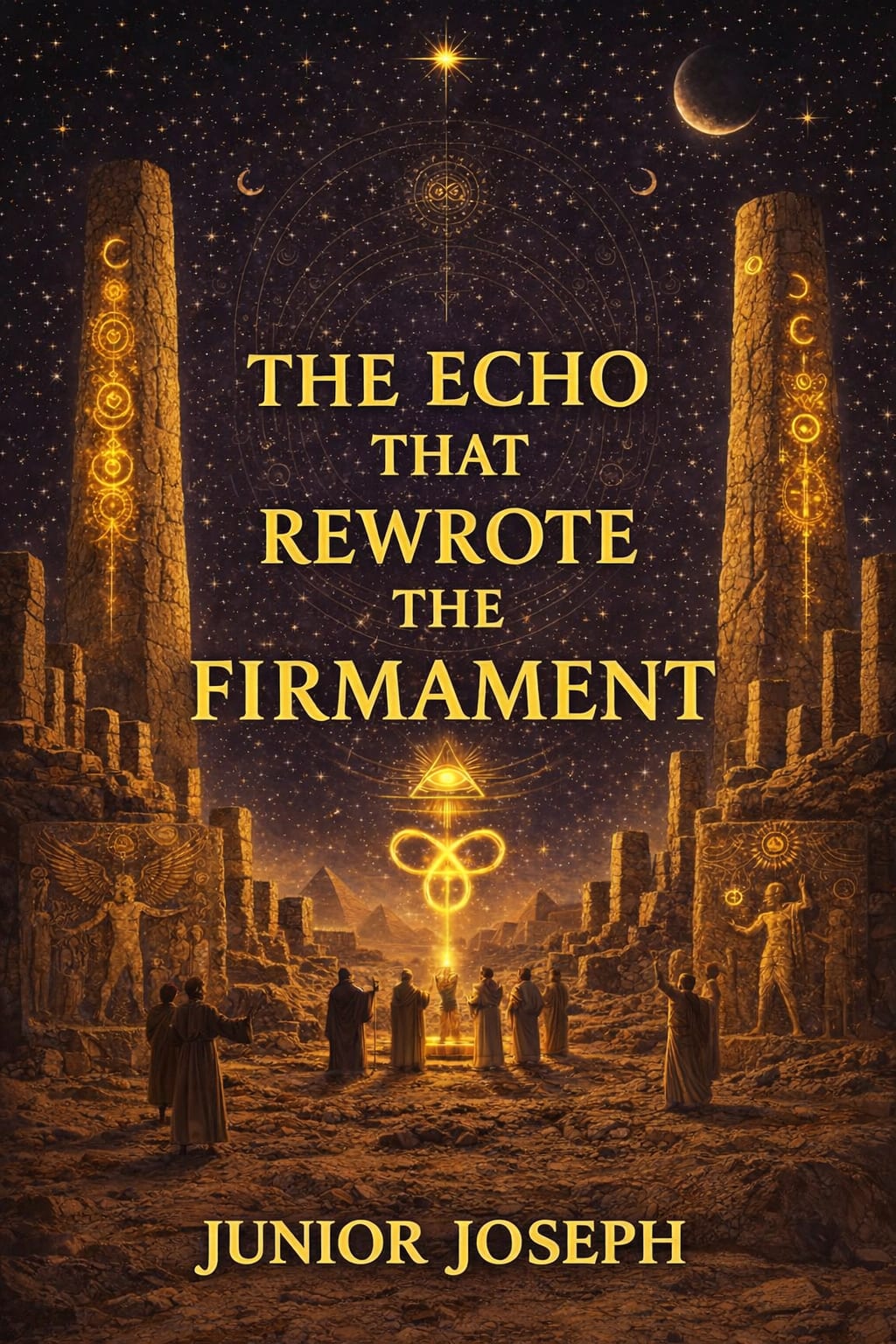
Questions about human existence, spirituality and the nature of reality have occupied philosophers, historians and religious thinkers for centuries. While some seek answers through scientific research, others explore ancient texts, cultural traditions and personal experiences. Queensland-based Australian author Junior Joseph brings several of these perspectives together in his forthcoming book, The Echo That Rewrote the Firmament.
The new manuscript follows his earlier work, The Question That Fractured the Sky, continuing an exploration of how people understand the world around them. Rather than approaching these subjects from a single academic or religious perspective, Joseph moves between philosophical ideas, spiritual interpretations and historical questions.
At the centre of the new work is an interesting question: if questioning reality can change the way people understand their existence, what happens when they begin examining the answers they believe they have received?
Exploring the Relationship Between Reality and Consciousness
One of the central themes of The Echo That Rewrote the Firmament is the relationship between human consciousness and reality. Joseph examines the possibility that individual thoughts, decisions and actions influence how people experience the world.
This perspective connects with broader philosophical discussions about perception, identity and personal responsibility. Throughout history, thinkers have debated whether reality exists independently of human observation or whether personal experience plays a significant role in shaping our understanding of it.
Joseph approaches these questions through a combination of personal reflection and independent research. His writing considers how beliefs develop, how individuals form their identities and why certain assumptions remain unquestioned throughout their lives.
The book also explores subjects such as ego, karma, purpose and inner alignment. These concepts appear in different religious, philosophical and cultural traditions, although their interpretations vary considerably. By examining them together, Joseph invites readers to consider how ancient ideas might relate to contemporary questions about personal development and human behaviour.
An Investigation into the Garden of Eden
Among the more unusual aspects of Joseph's research is his eleven-year investigation into the possible geographical location of the Garden of Eden.
The Garden of Eden is traditionally associated with the biblical account of creation and humanity's earliest beginnings. Its location has been debated for generations, with researchers and religious scholars proposing different geographical interpretations based on biblical descriptions, historical records and archaeological evidence.
Joseph's investigation has led him to examine locations in Ethiopia, particularly the Simien Mountains, Ras Dashen and the ancient region of Asayita.
These geographical areas provide an interesting starting point for discussions about the relationship between ancient landscapes, religious traditions and historical narratives. Ethiopia itself has a long and distinctive cultural and religious history, making it an important subject for anyone interested in the development of ancient traditions.
However, proposed connections between specific locations and biblical accounts remain subjects of interpretation and debate. Personal research and geographical similarities alone cannot establish the historical location of the Garden of Eden.
This distinction is important when approaching alternative historical theories. A compelling hypothesis can encourage further investigation, but it should also be considered alongside established archaeological findings, historical documentation and scholarly research.
Joseph's approach reflects his interest in exploring possibilities that may not receive extensive attention in conventional discussions. He encourages readers to examine the available information rather than accepting an interpretation simply because it is familiar.
Where Spirituality Meets Historical Inquiry
Another significant feature of the manuscript is its broad selection of subjects. Alongside biblical history, Joseph explores mythology, ancient civilizations, psychology, spirituality and questions surrounding human identity.
These topics are often studied separately, but they also share common themes. Ancient civilizations, for example, developed stories and belief systems to explain natural phenomena, human relationships and the origins of existence. Religious traditions similarly contain narratives that have influenced cultures, laws and social structures over many generations.
Psychology provides another perspective by examining how people develop beliefs, respond to uncertainty and understand their place within society.
Bringing these subjects together creates opportunities to consider how different forms of knowledge influence one another. At the same time, it requires careful consideration of the differences between historical evidence, religious belief, philosophical arguments and personal interpretation.
Joseph's work appears to be particularly interested in these intersections. Rather than limiting the discussion to one established framework, he uses questions about the past and present to examine broader ideas about humanity.
The Importance of Questioning Established Beliefs
A recurring message throughout Joseph's writing is the importance of independent thinking.
People often inherit beliefs from their families, communities, educational environments and cultural traditions. These influences can provide valuable guidance and a sense of belonging. However, they can also shape perspectives before individuals have had the opportunity to examine them independently.
Questioning an established belief does not necessarily mean rejecting it. Instead, it can involve understanding where an idea originated, examining the evidence supporting it and considering alternative explanations.
This approach is particularly relevant in an age when information is widely available but not always reliable. Historical claims, spiritual interpretations and alternative theories can circulate rapidly through digital platforms, sometimes without sufficient evidence or context.
Critical thinking therefore remains essential. Readers benefit from distinguishing between documented facts, reasonable interpretations and claims that require further investigation.
Joseph expresses a similar attitude towards his research, stating:
"I'd rather ask the difficult questions and follow the path the evidence leads me down, than stay silent."
The statement reflects an emphasis on curiosity and investigation, although the strength of any conclusion ultimately depends on the quality of the evidence behind it.
Continuing a Personal Research Journey
Joseph's interest in these subjects reportedly developed through more than a decade of personal research. His latest manuscript brings together ideas and investigations that have developed over that period.
The transition from The Question That Fractured the Sky to The Echo That Rewrote the Firmament also represents a continuation of the author's broader exploration of existence, consciousness and humanity's relationship with the unknown.
Independent authors often approach philosophical and historical subjects through personal experiences and individual research interests. Their perspectives can introduce readers to questions they may not have previously considered, even when their conclusions differ from established academic interpretations.
Ultimately, the value of exploring these subjects does not depend on readers agreeing with every argument. A thoughtful discussion can encourage further reading, comparison of sources and a deeper understanding of the historical and philosophical questions involved.
As Joseph prepares to release his second book, his work adds another perspective to ongoing conversations about spirituality, ancient history and human consciousness. Whether examining the origins of religious narratives or considering the relationship between individual choices and personal identity, the underlying theme remains the same: understanding the world requires curiosity, patience and a willingness to examine what we believe.
About the Creator
Enjoyed the story? Support the Creator.
Subscribe for free to receive all their stories in your feed.
Comments
There are no comments for this story
Be the first to respond and start the conversation.