
Australia Smart Home Market Outlook 2026–2034: How Connected Living Is Redefining Modern Homes
The rapid adoption of AI-powered devices, rising demand for energy-efficient living, and growing interest in home automation are transforming Australia's residential landscape and driving strong smart home market growth.

The concept of a smart home has evolved from a futuristic idea into an everyday reality for millions of households worldwide. In Australia, connected living is becoming increasingly popular as consumers embrace technologies that enhance convenience, improve energy efficiency, strengthen home security, and simplify daily routines.
From voice-controlled lighting systems and intelligent thermostats to smart security cameras and AI-powered home assistants, modern households are rapidly adopting technologies that create more personalized and automated living environments. The combination of strong digital infrastructure, growing consumer awareness, and technological innovation is helping accelerate this transformation across the country.
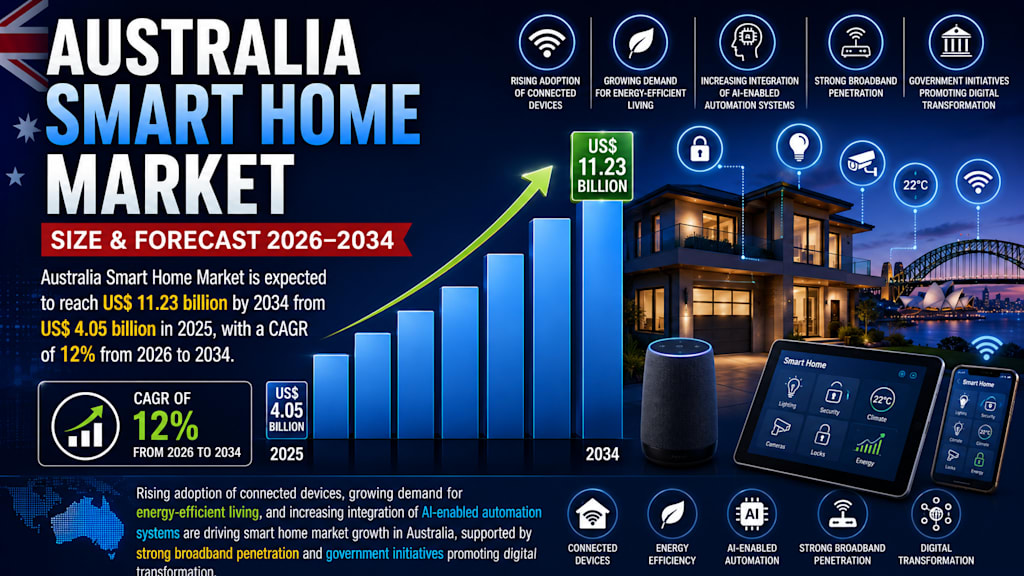
According to Renub Research, the Australia Smart Home Market is expected to grow from US$ 4.05 billion in 2025 to US$ 11.23 billion by 2034, registering a strong compound annual growth rate (CAGR) of 12% from 2026 to 2034. The increasing adoption of connected devices, rising energy costs, expanding broadband infrastructure, and growing demand for AI-enabled automation systems are among the primary factors supporting market expansion.
As consumers continue seeking smarter, safer, and more sustainable living environments, Australia's smart home industry is positioned for significant growth throughout the coming decade.
Understanding the Smart Home Revolution
A smart home refers to a residential environment where multiple devices and systems are interconnected through a centralized network and can be monitored, controlled, or automated remotely.
These connected systems may include lighting, climate control, entertainment equipment, security systems, appliances, energy-management tools, and voice assistants. Through mobile applications, wireless networks, sensors, and artificial intelligence, homeowners can manage various household functions from virtually anywhere.
The appeal of smart home technology extends beyond convenience. Smart systems help reduce energy consumption, improve home security, enhance comfort, and create personalized living experiences based on user preferences and daily routines.
Artificial intelligence plays an increasingly important role in these environments. Many smart devices learn user behavior over time and automatically adjust settings to optimize efficiency and comfort. For example, lighting systems can adjust brightness based on occupancy patterns, while smart thermostats can regulate temperature according to household schedules.
As connected devices become more sophisticated and affordable, smart home technology is moving from luxury status to mainstream adoption.
Artificial Intelligence and IoT Are Driving Market Growth
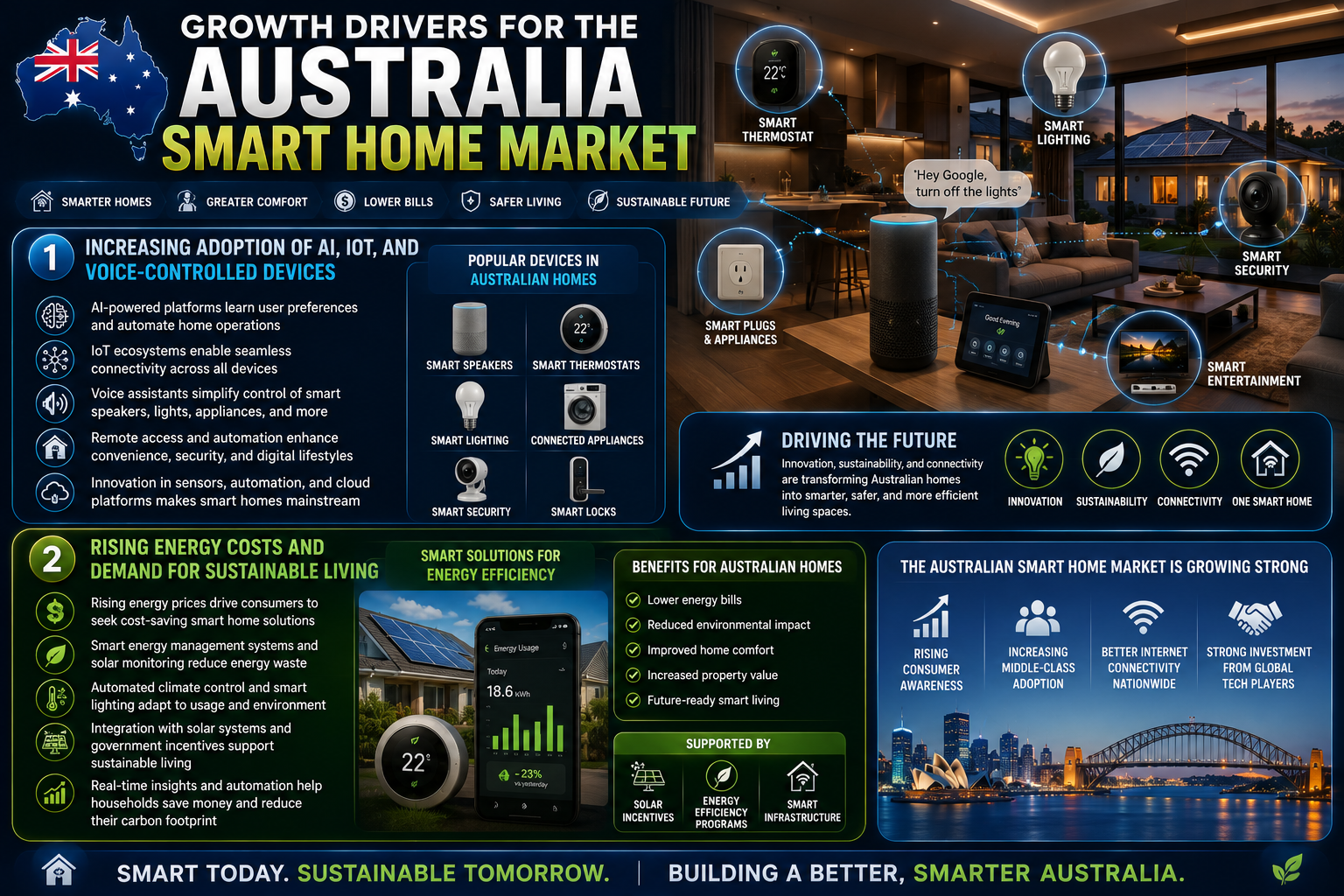
One of the most powerful growth drivers within Australia's smart home market is the rapid adoption of artificial intelligence and Internet of Things (IoT) technologies.
Australian households are increasingly incorporating smart speakers, voice assistants, connected appliances, automated lighting systems, and intelligent climate-control solutions into their daily lives. These technologies work together through integrated platforms that allow seamless communication between devices.
Voice-controlled ecosystems have become particularly popular because they simplify interactions with technology. Homeowners can adjust lighting, control appliances, monitor security systems, and access entertainment services using simple voice commands.
Artificial intelligence enhances these experiences by learning user habits and automating routine tasks. AI-powered systems can identify patterns in energy consumption, adjust environmental settings automatically, and provide personalized recommendations that improve household efficiency.
The growing compatibility between devices from different manufacturers is also supporting adoption. As technology companies continue developing interconnected ecosystems, consumers are finding it easier to build comprehensive smart home networks tailored to their individual needs.
Rising Energy Costs Are Encouraging Smart Home Adoption
Australia's increasing energy costs have become a significant factor influencing consumer behavior.
Many homeowners are turning to smart technologies as a way to reduce electricity consumption and manage household expenses more effectively. Smart energy-management systems provide real-time insights into energy usage, helping consumers identify inefficiencies and make informed decisions about consumption.
Smart thermostats automatically regulate temperature based on occupancy and environmental conditions, reducing unnecessary energy use. Intelligent lighting systems adjust brightness levels and switch off when rooms are unoccupied, minimizing waste.
Solar energy integration is another important trend within the market. Australia has one of the highest rates of residential solar adoption globally, and many homeowners are combining solar installations with smart monitoring platforms to maximize energy efficiency and cost savings.
Government initiatives promoting sustainability and renewable energy further encourage investment in smart home technologies that support environmentally responsible living.
As energy prices continue rising, demand for solutions that improve efficiency and reduce utility costs is expected to remain strong.
Smart Security Is Becoming a Household Priority
Security remains one of the most influential drivers of smart home adoption across Australia.
Consumers increasingly seek technologies that provide greater visibility, control, and protection over their homes. Smart security systems offer real-time monitoring capabilities, allowing homeowners to view live video feeds, receive alerts, and manage access remotely.
Popular smart security solutions include connected surveillance cameras, video doorbells, motion detectors, smart locks, and integrated alarm systems. These technologies provide homeowners with immediate notifications when unusual activity is detected, helping improve response times and peace of mind.
Artificial intelligence is also enhancing security functionality. Advanced systems can recognize faces, distinguish between humans and animals, detect suspicious behavior, and automate lighting responses based on security events.
Cloud-based storage and mobile applications further improve accessibility by allowing homeowners to monitor their properties from virtually any location.
As awareness of home security continues growing, smart surveillance and monitoring technologies are expected to remain among the fastest-growing segments within the Australian smart home market.
The Impact of Broadband and 5G Expansion
Australia's strong broadband infrastructure has played a critical role in enabling smart home adoption.
Reliable internet connectivity is essential for connected devices to communicate effectively and deliver seamless user experiences. High-speed broadband allows homeowners to manage multiple smart devices simultaneously while supporting real-time monitoring and automation functions.
The rollout of 5G networks is creating additional opportunities for growth. Faster connectivity, lower latency, and improved network reliability support more sophisticated smart home applications and enhance the performance of connected devices.
Improved connectivity is particularly important for emerging technologies such as cloud-based artificial intelligence, remote monitoring services, and advanced automation platforms.
As digital infrastructure continues improving nationwide, consumers will gain access to increasingly sophisticated smart home capabilities that further enhance convenience and efficiency.
Challenges Facing the Australia Smart Home Market
Despite strong growth prospects, several challenges continue affecting market expansion.
One of the most significant barriers is the high initial cost associated with smart home implementation. Purchasing connected devices, installing automation systems, and integrating multiple technologies can require substantial investment, particularly for larger households.
Many consumers also encounter compatibility issues when attempting to connect products from different manufacturers. The need for additional hubs, software platforms, or technical support can complicate installation and reduce overall convenience.
Long-term maintenance, software updates, and concerns about technological obsolescence may also discourage some consumers from making significant investments in smart home systems.
For first-time users, managing multiple applications and understanding complex device ecosystems can create additional adoption barriers.
Data Privacy and Cybersecurity Remain Key Concerns
As homes become increasingly connected, concerns surrounding privacy and cybersecurity continue to grow.
Smart devices collect substantial amounts of personal data, including usage patterns, behavioral information, video recordings, and voice interactions. Many consumers worry about how this information is stored, shared, and protected.
Connected devices can also become targets for cyberattacks if security measures are inadequate. Unauthorized access to home networks may compromise privacy and disrupt system functionality.
Manufacturers and service providers must continuously invest in software updates, encryption technologies, and cybersecurity protocols to maintain consumer trust.
Connectivity challenges in rural and remote areas present additional concerns, as inconsistent internet access can affect the reliability of automated systems and remote monitoring capabilities.
Addressing these issues will remain essential for sustaining long-term market growth and consumer confidence.
Regional Market Analysis
New South Wales represents one of Australia's most advanced smart home markets. Sydney and other major urban centers demonstrate strong demand for connected lighting systems, home security solutions, climate-control technologies, and integrated entertainment platforms. The state's emphasis on sustainability and energy efficiency further supports adoption of smart home technologies.
Victoria continues experiencing rapid market expansion driven by high digital literacy, urban density, and strong consumer interest in connected living. Melbourne residents increasingly adopt smart appliances, surveillance systems, and energy-management solutions that enhance convenience and reduce utility costs.
Queensland's market is growing steadily due to increased residential development and strong demand for climate-control technologies. Homeowners throughout Brisbane and the Gold Coast are investing in smart thermostats, automated lighting, and security solutions designed to improve comfort and energy efficiency.
Western Australia is also witnessing rising adoption of smart home technologies, particularly within new residential developments in Perth. Strong interest in solar energy integration, smart climate control, and home security systems continues supporting market growth throughout the region.
Recent Industry Developments
Innovation remains a defining characteristic of Australia's smart home market.
In October 2025, smart home appliance brand Ovox introduced its R8 window-cleaning robot to Australian consumers. The device features intelligent surface adaptation technology and rotating cleaning pads designed to automate window maintenance and improve household convenience.
Earlier, in March 2025, Roborock launched its Saros, F25, and Qrevo EdgeC smart cleaning devices in Australia. These products incorporate advanced artificial intelligence navigation systems, stronger suction capabilities, and robotic-arm technologies designed to enhance household cleaning performance. The launch highlights growing consumer demand for intelligent home automation solutions.
Market Segmentation and Competitive Landscape
The Australian smart home market encompasses a broad range of applications including energy management, lighting control, home entertainment, connectivity solutions, security systems, and smart appliances.
Popular products include smart speakers, interactive security systems, thermostats, monitoring cameras, video doorbells, smart light bulbs, motion sensors, smart switches, door sensors, and connected locks. These technologies collectively contribute to increasingly sophisticated home automation ecosystems.
Leading companies operating within the market include Philips Dynalite, Sonos, Alarm.com, Allegion, Electrolux, Amazon, Apple, Xiaomi, and Honeywell International. These organizations continue investing in innovation, interoperability, artificial intelligence, and user-friendly platforms designed to expand smart home adoption across Australia.
Final Thoughts
The Australia smart home market is undergoing rapid transformation as connected technologies become an integral part of modern living. Artificial intelligence, IoT connectivity, energy management systems, and smart security solutions are fundamentally changing how Australians interact with their homes.
Supported by strong digital infrastructure, growing environmental awareness, rising energy costs, and increasing demand for convenience, the market is expected to experience substantial growth throughout the coming decade.
With the industry projected to grow from US$ 4.05 billion in 2025 to US$ 11.23 billion by 2034, smart home technology is poised to become a standard feature of residential living across Australia. As innovation continues accelerating, connected homes will play an increasingly important role in creating safer, more efficient, and more personalized living environments for consumers nationwide.
About the Creator
Enjoyed the story? Support the Creator.
Subscribe for free to receive all their stories in your feed.
Comments
There are no comments for this story
Be the first to respond and start the conversation.