
Australia Bionic Devices Market Set to More Than Double by 2033 as Advanced Healthcare Technologies Transform Patient Care
From cochlear implants and artificial hearts to neural interfaces and smart prosthetics, Australia is emerging as a global leader in life-changing bionic technologies.

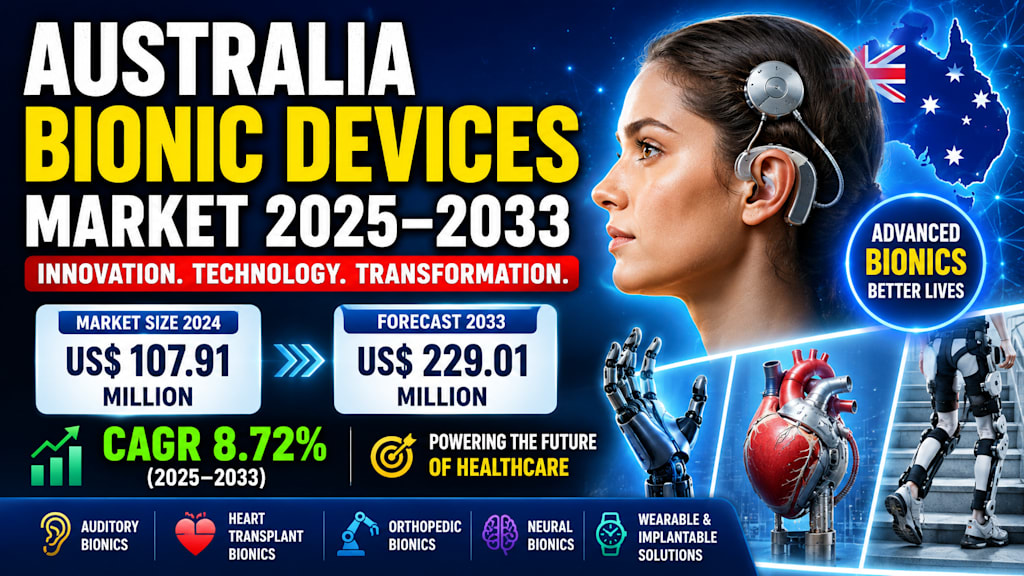
Australia’s Bionic Revolution Is Accelerating
The intersection of healthcare and technology is creating unprecedented opportunities for patients worldwide, and Australia stands at the forefront of this transformation. Once considered futuristic concepts found only in science fiction, bionic devices are now restoring hearing, improving mobility, supporting heart function, and helping individuals regain independence after injury or illness.
According to Renub Research, the Australia Bionic Devices Market was valued at US$ 107.91 million in 2024 and is projected to reach US$ 229.01 million by 2033, expanding at a CAGR of 8.72% between 2025 and 2033.
This impressive growth reflects increasing healthcare investments, technological breakthroughs, a rising prevalence of chronic diseases, and strong government support for advanced medical innovations.
As Australia continues investing in next-generation healthcare solutions, bionic devices are expected to play a vital role in addressing some of the nation's most pressing healthcare challenges.
Understanding Bionic Devices and Their Impact
Bionic devices are sophisticated medical technologies designed to replace, restore, or enhance biological functions that have been lost due to disease, injury, aging, or congenital conditions.
These devices combine electronics, mechanics, sensors, and biological engineering to mimic the natural functioning of organs, limbs, or sensory systems.
Examples include:
Cochlear implants for hearing restoration
Artificial hearts and ventricular assist devices
Advanced prosthetic limbs
Neural stimulation systems
Retinal implants
Wearable exoskeletons
Unlike traditional medical devices, modern bionics increasingly utilize artificial intelligence, machine learning, advanced sensors, and wireless connectivity to provide more natural and responsive functionality.
The result is improved quality of life, greater independence, and better long-term health outcomes for patients.
Australia’s Legacy in Global Bionic Innovation
Australia has already secured a place in medical history through its pioneering work in bionic technologies.
One of the most notable achievements is the development of the cochlear implant, an Australian innovation that has transformed the lives of thousands of people suffering from severe hearing loss.
The country's world-class research institutions, universities, and healthcare organizations continue to drive groundbreaking advancements in medical engineering.
Organizations such as the Bionics Institute, research universities, healthcare providers, and technology companies collaborate extensively to accelerate innovation and commercialization.
This ecosystem has positioned Australia as one of the world's most influential contributors to the field of bionics.
Technological Advancements Driving Market Growth
Rapid technological progress remains one of the strongest growth drivers for the Australian bionic devices market.
Modern bionic systems are becoming increasingly sophisticated through innovations in:
Artificial Intelligence Integration
AI-powered prosthetics can learn movement patterns, adapt to user behavior, and improve functionality over time.
Neural Interfaces
Advanced brain-computer interfaces enable more intuitive control of prosthetic limbs and communication systems.
Bio-Integrated Sensors
Modern sensors deliver real-time feedback, allowing devices to respond more naturally to user intentions.
Miniaturization Technologies
Smaller and more efficient components improve comfort, durability, and device performance.
These innovations are making bionic devices more effective, accessible, and appealing to patients and healthcare providers alike.
The Breakthrough Bionic Eye Project
Australia's commitment to innovation became evident when the country's world-first Bionic Eye System received Breakthrough Device designation from the U.S. Food and Drug Administration.
Developed through collaboration among leading Australian institutions, the project aims to restore functional vision for individuals affected by retinitis pigmentosa.
The technology represents a major milestone in visual restoration and highlights Australia's capability to develop globally significant healthcare innovations.
If successful at a large scale, such technologies could dramatically improve the lives of millions of visually impaired individuals worldwide.
Government Support Strengthening Market Expansion
Government funding and healthcare initiatives continue to play a crucial role in market development.
Australia's federal and state governments actively support medical technology innovation through:
Research grants
Commercialization funding
Healthcare infrastructure investments
Disability support programs
Public-private partnerships
Programs such as the National Disability Insurance Scheme (NDIS) help improve access to advanced assistive technologies.
Government support reduces barriers to adoption while encouraging domestic innovation and international investment.
Artificial Heart Investments Signal Future Opportunities
In a landmark healthcare initiative, the Australian government announced a major investment toward developing and commercializing advanced artificial heart technologies.
The funding aims to accelerate innovation in treating heart failure, one of the leading causes of mortality globally.
Artificial hearts and related technologies could significantly reduce dependency on donor organs while providing life-saving alternatives for patients awaiting transplantation.
Such investments further strengthen Australia's position as a global leader in advanced cardiovascular healthcare solutions.
Rising Burden of Chronic Diseases Increases Demand
The growing prevalence of chronic diseases is another major factor driving demand for bionic devices.
Australia's aging population faces increasing rates of:
Cardiovascular diseases
Diabetes
Arthritis
Hearing impairment
Neurological disorders
Mobility limitations
As healthcare providers seek long-term solutions for these conditions, bionic devices are becoming increasingly important components of treatment strategies.
Improved diagnostic capabilities and greater public awareness are also encouraging earlier interventions, contributing to market growth.
Australia's Aging Population Creates Long-Term Opportunities
Population aging is reshaping healthcare requirements across Australia.
Older adults often experience sensory decline, reduced mobility, cardiovascular complications, and neurological conditions that can benefit from advanced bionic solutions.
The demand for cochlear implants, mobility assistance technologies, and neural stimulation devices is expected to increase substantially over the coming decade.
Healthcare providers and policymakers increasingly recognize the value of bionic technologies in supporting healthy aging and reducing long-term care costs.
Heart Transplant Bionic Devices Gaining Momentum
The heart transplant segment represents one of the most promising areas within Australia's bionic devices market.
Growing cases of advanced heart failure and shortages of donor organs have accelerated interest in:
Ventricular Assist Devices (VADs)
Total Artificial Hearts
Mechanical circulatory support systems
A major milestone occurred when Australia's first BiVACOR Total Artificial Heart was successfully implanted, demonstrating the country's leadership in advanced cardiac care.
These innovations offer new hope for patients facing life-threatening cardiovascular conditions.
Orthopedic Bionics Transforming Mobility
Orthopedic bionic technologies are helping patients regain mobility and independence.
This segment includes:
Smart prosthetic limbs
Powered exoskeletons
Advanced spinal implants
Adaptive joint systems
Modern orthopedic devices increasingly utilize artificial intelligence and sensor technologies to deliver more natural movement patterns.
Patients recovering from accidents, sports injuries, or degenerative conditions benefit significantly from these innovations.
As technology improves, orthopedic bionics are expected to become more affordable and widely available.
Implantable Bionic Devices Continue Expanding
Implantable devices represent a significant share of Australia's bionic devices market.
Popular implantable solutions include:
Cochlear implants
Retinal implants
Deep brain stimulators
Neural prosthetics
These technologies provide long-term therapeutic benefits and often deliver life-changing improvements in patient outcomes.
Australia's strong clinical research environment and supportive regulatory framework continue encouraging innovation within this segment.
Electronic Technologies Powering Modern Bionics
Electronics form the foundation of most modern bionic systems.
Advanced microprocessors, biosensors, wireless communication modules, and actuators enable precise functionality and real-time responsiveness.
Australian companies and research institutions are investing heavily in electronic innovation to improve:
Battery efficiency
Wireless capabilities
Device durability
Signal processing
User experience
Future developments in electronics will likely further enhance the effectiveness of bionic technologies.
Hospitals Leading Adoption Across Australia
Hospitals remain the primary end users of bionic devices.
Major healthcare institutions provide:
Device implantation procedures
Specialist consultations
Rehabilitation services
Long-term patient monitoring
Australia's advanced healthcare infrastructure enables widespread access to complex bionic procedures, particularly in urban centers.
Collaboration between hospitals and research institutions further accelerates technology adoption and clinical innovation.
Specialized Healthcare Facilities Supporting Growth
Beyond hospitals, rehabilitation centers and specialized healthcare facilities play an increasingly important role.
These facilities provide:
Prosthetic training
Device calibration
Physical therapy
Remote monitoring services
Long-term patient support
As demand increases, healthcare providers are investing in integrated care models that maximize patient outcomes and device effectiveness.
Challenges Limiting Market Expansion
Despite strong growth prospects, several challenges remain.
High Costs
Advanced bionic devices often require significant financial investment, limiting accessibility for some patients.
Regional Healthcare Disparities
Rural and remote communities may face difficulties accessing specialized services and skilled healthcare professionals.
Technical Complexity
Some devices require extensive training, maintenance, and ongoing support.
Adaptation Challenges
Not all patients adapt easily to advanced technologies, potentially affecting long-term adoption and outcomes.
Addressing these barriers will be essential for achieving broader market penetration.
Future Outlook: A New Era of Human Enhancement
The future of Australia's bionic devices market appears exceptionally promising.
Continued advances in artificial intelligence, robotics, neural engineering, and bioelectronics are expected to unlock new possibilities previously considered impossible.
As costs gradually decline and technologies become more sophisticated, bionic devices may become a routine part of healthcare delivery.
Australia's strong innovation ecosystem, supportive government policies, and world-class research capabilities position the nation to remain a global leader in this rapidly evolving field.
10 Recent Developments from Leading Companies
1. Cochlear Ltd.
Continued expansion of next-generation cochlear implant technologies focused on improved hearing outcomes and wireless connectivity.
2. Medtronic Australasia Pty Ltd
Advanced neurostimulation solutions developed to improve treatment options for neurological disorders.
3. Edwards Lifesciences Australia Pty Ltd
Expanded innovation efforts in structural heart technologies and cardiovascular support systems.
4. Baxter International Inc.
Strengthened healthcare technology portfolio supporting critical care and patient management.
5. Boston Scientific Corp
Enhanced neuromodulation and implantable device capabilities for chronic disease management.
6. Abiomed Australia Pty Ltd
Expanded mechanical circulatory support technologies designed for advanced heart failure patients.
7. Abbott Laboratories
Continued development of implantable cardiac monitoring and medical device innovations.
8. Bionics Institute
Progressed research programs focused on neural engineering and sensory restoration technologies.
9. BiVACOR
Achieved significant progress in total artificial heart development and clinical implementation.
10. University of Melbourne Research Collaborations
Advanced research initiatives supporting bionic eye systems and next-generation implant technologies.
Final Thoughts
Australia's bionic devices market represents far more than a rapidly growing healthcare segment. It symbolizes a future where technology and medicine work together to restore lost capabilities, enhance quality of life, and redefine human potential.
With the market expected to grow from US$ 107.91 million in 2024 to US$ 229.01 million by 2033, the nation is poised to remain a global center for innovation in bionics. Continued investments in research, supportive government policies, and groundbreaking technological advances will ensure that Australia remains at the forefront of this healthcare revolution.
For patients, healthcare providers, and technology innovators alike, the coming decade promises extraordinary opportunities as bionic devices become increasingly integrated into modern medical care.
About the Creator
Enjoyed the story? Support the Creator.
Subscribe for free to receive all their stories in your feed.
Comments
There are no comments for this story
Be the first to respond and start the conversation.