
Astral time travel
The silver cord didn’t look like a rope; it looked like a pulse of liquid neon stretching from the center of Elias’s chest into the infinite dark
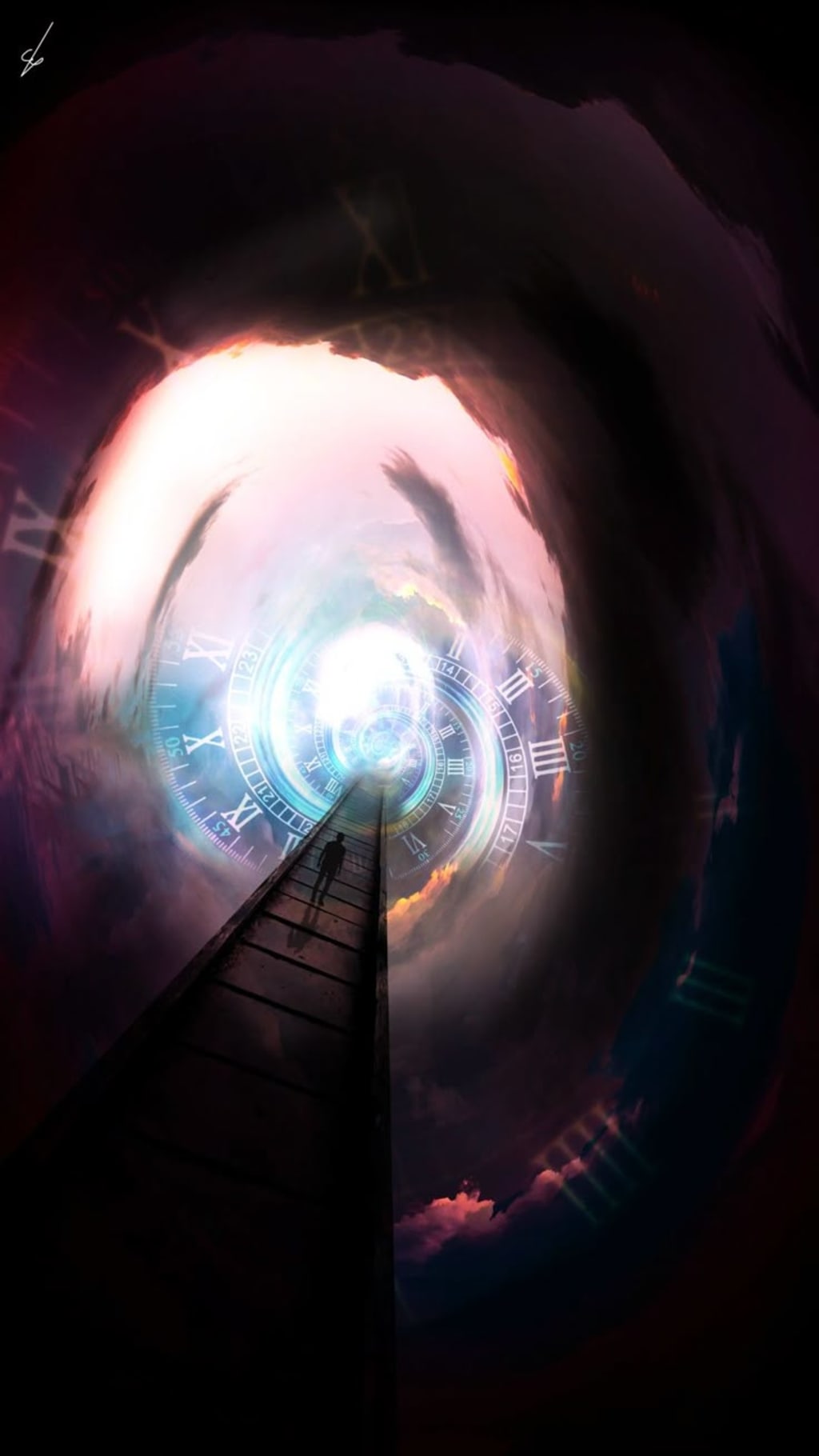
The silver cord didn’t look like a rope; it looked like a pulse of liquid neon stretching from the center of Elias’s chest into the infinite dark. Elias stood—or rather, vibrated—in the "In-Between." Behind him lay his physical body, tucked under a weighted blanket in a cramped London flat, breathing the rhythmic, shallow breaths of a deep trance. Before him lay the Tapestry, a shimmering vertical sea of golden threads, each representing a moment in the river of time. Most astral travelers were content to float through the ceiling and spy on their neighbors or visit the moon. Elias was a Chronographer. He didn't just want to see where things were; he wanted to see where they had been. The Anchor and the Leap He reached out, his translucent hand hovering over a thread that hummed with the scent of ozone and wet cobblestones. To travel physically through time was a mathematical impossibility that would tear atoms apart. But the soul? The soul was non-local. It was a witness, not a participant. With a sharp tug on his intent, the London flat dissolved. The silence of the void was replaced by a cacophony of shouting, the rhythmic clack-clack of horse hooves, and the thick, cloying smell of coal smoke. Elias found himself hovering five feet above Fleet Street. The year was 1892. He felt the familiar "Density Drag." Even as a spirit, the past felt heavy, like walking through waist-deep water. He watched a newsboy weave through the crowd, oblivious to the shimmering ghost standing in his path. The boy passed right through Elias, leaving a sensation like a sudden ice-cube down the back. The Paradox of the Witness Elias wasn't here for the history books. He was here for the Unseen Moments. He drifted toward a narrow alleyway, guided by a specific frequency he’d spent months calibrating in his meditations. He found her—Elara, a woman whose name existed in no census, yet whose face haunted the margins of a single daguerreotype Elias had found in a museum basement. She was sitting on a wooden crate, clutching a small, leather-bound diary. She looked up, her eyes narrowing as if she could sense a disturbance in the air. "Energy cannot be created or destroyed," Elias whispered, though he had no lungs. "But it can be felt." Elara shivered and pulled her shawl tighter. She began to write. This was the moment Elias had come to see: the recording of a lost discovery, a mathematical formula for "Spirit Resonance" that had been suppressed by the scientific elite of her time. He watched her pen fly across the page. He didn't need to steal the book; he simply needed to observe the ink as it dried. The Static Interference Suddenly, the golden thread beneath his feet began to vibrate violently. A low, rhythmic thrumming echoed through the astral plane—the sound of his own heartbeat. Back in the 21st century, his alarm clock was likely chirping, or perhaps a siren was passing his window. In the astral realm, this manifested as a Timeline Tremor. The cobblestones of 1892 began to blur into the steel beams of a 1950s skyscraper, then into the mud of a medieval field. "Not yet," Elias gritted his teeth, focusing his willpower on the silver cord. When you astral travel through time, you aren't just fighting physics; you’re fighting the universe’s desire to keep its secrets. The "Censors"—shadowy, formless entities that guarded the Tapestry—began to coalesce at the end of the alley. They looked like static on an old television, flickering shapes that blurred the edges of reality. The Return Elias committed the last lines of Elara’s formula to his memory—not his physical brain, which was miles and years away, but to his Aetheric Mind. The Censors lunged. They didn't have hands, but they had a way of pulling at a traveler's consciousness, trying to unravel the silver cord and leave the soul stranded in a "When" that didn't belong to them. Elias stopped fighting the Density Drag. He let go of 1892. He didn't fly back; he snapped back. The sensation was like being the pellet in a giant rubber band. The Victorian alley vanished. The Tapestry became a blur of light. The "In-Between" roared past him in a heartbeat. THUMP. Elias gasped, his physical lungs burning as they took in a deep, panicked breath of stale apartment air. His limbs felt like lead, four-hundred pounds of meat and bone pinning him to the mattress. He lay still for a long time, watching the morning light filter through his dusty blinds. Slowly, his fingers trembling, he reached for the notepad on his nightstand. The ink was modern, the paper was cheap, but the words were a century old. He had gone where no machine could ever go. He had stepped out of the "Now" and realized the ultimate truth of the Chronographer: Time isn't a line; it’s a song, and he had finally learned how to hum the chorus.
About the Creator
Enjoyed the story? Support the Creator.
Subscribe for free to receive all their stories in your feed.
Comments
There are no comments for this story
Be the first to respond and start the conversation.