
Association Meetings Strategy: How to Build Purpose-Driven and Impactful Events
How Associations Can Leverage Strategy, Innovation, and Expertise to Deliver Meaningful Meeting Experiences
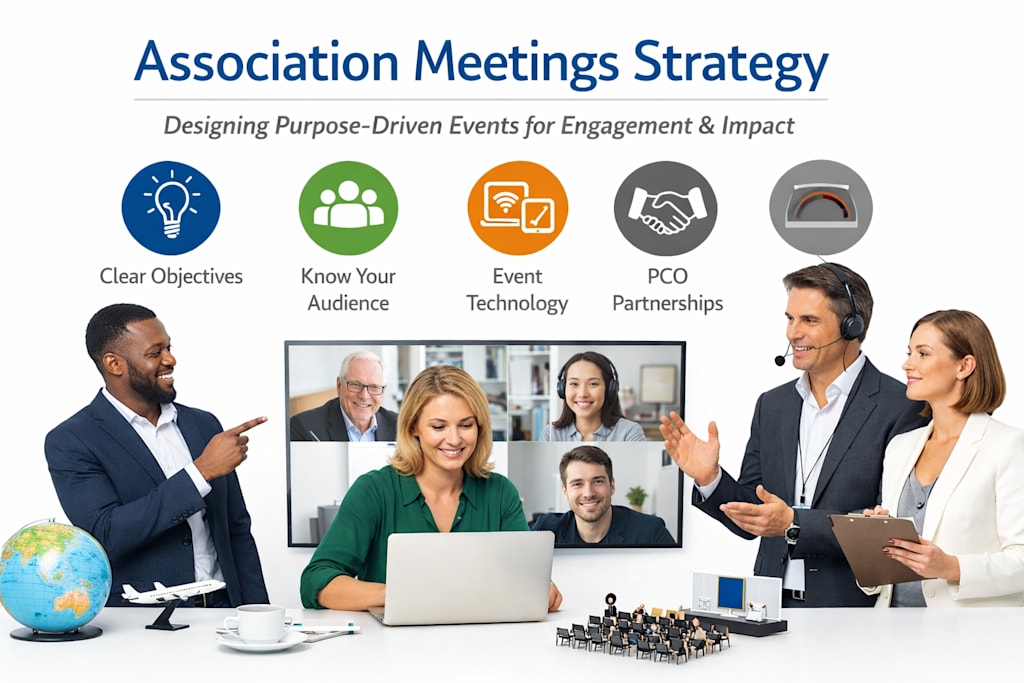
In today’s evolving business landscape, associations are no longer hosting meetings just for networking or formal discussions. They are designing experiences that deliver value, foster collaboration, and drive long-term growth. This shift has made having a strong Association Meetings Strategy more important than ever.
A well-defined Association Meetings Strategy goes beyond logistics. It aligns every meeting with the organization’s mission, member expectations, and measurable outcomes. Whether it’s an annual congress, leadership summit, or regional workshop, the right strategy ensures every event contributes to the association’s broader goals.
What is an Association Meetings Strategy?
An Association Meetings Strategy is a structured approach that guides how associations plan, execute, and evaluate their meetings and events. It focuses on defining clear objectives, identifying target audiences, and creating meaningful experiences that go beyond traditional formats.
Rather than organizing standalone events, associations are now integrating meetings into a cohesive framework that supports knowledge sharing, member engagement, and industry advancement.
Why Associations Need a Strategic Approach
Without a clear strategy, meetings can become repetitive, costly, and ineffective. A strong Association Meetings Strategy helps organizations:
- Align events with their mission and long-term vision
- Improve attendee engagement and satisfaction
- Maximize return on investment (ROI)
- Strengthen industry influence and thought leadership
- Build stronger communities among members
In an era where attendees expect personalization and value, a strategic approach ensures that every meeting delivers measurable impact.
Key Elements of a Successful Association Meetings Strategy
1. Defining Clear Objectives
Every meeting should have a purpose. Are you aiming to educate members, influence policy, or generate revenue? Clear objectives act as the foundation of your Association Meetings Strategy, guiding all planning decisions.
2. Understanding Your Audience
Knowing your members is critical. Different segments may have different expectations—young professionals may seek networking opportunities, while senior leaders may focus on policy discussions or industry insights.
3. Content That Drives Value
Content is the core of any meeting. High-quality sessions, expert speakers, and interactive formats help keep attendees engaged and ensure they leave with actionable insights.
4. Leveraging Meetings and Event Technology
The role of Meetings and Event Technology has become central to modern event planning. From virtual platforms and mobile apps to AI-driven personalization tools, technology enhances both planning and attendee experience.
By integrating Meetings and Event Technology, associations can:
- Offer hybrid or virtual participation options
- Track attendee behavior and preferences
- Improve engagement through interactive features like polls and Q&A
- Streamline event management processes
Technology not only improves efficiency but also provides valuable data to refine future strategies.
5. Collaboration with Professional Congress Organisers (PCOs)
Partnering with Professional Congress Organisers (PCOs) can significantly improve the execution of complex events. These experts bring industry knowledge, operational expertise, and global networks that enhance the quality of meetings.
Professional Congress Organisers (PCOs) can support:
- Venue sourcing and negotiation
- Logistics and on-site management
- Sponsorship and exhibition coordination
- Compliance with international standards
Working with experienced partners allows associations to focus on strategy while ensuring seamless execution.
6. Measuring Success
An effective Association Meetings Strategy includes clear metrics for success. This could include:
- Attendance numbers
- Engagement levels
- Revenue generation
- Member satisfaction scores
Post-event analysis helps identify what worked and what needs improvement, enabling continuous growth.
The Role of Innovation in Association Meetings
Innovation is reshaping how associations design and deliver meetings. Traditional formats are being replaced with more interactive and immersive experiences.
Some emerging trends include:
- Hybrid events that combine physical and virtual participation
- Personalized agendas based on attendee preferences
- Data-driven decision-making
- Sustainable event practices
By embracing innovation, associations can stay relevant and meet the evolving expectations of their members.
Challenges in Implementing an Association Meetings Strategy
While the benefits are clear, implementing a strong Association Meetings Strategy comes with challenges:
Budget Constraints
Balancing cost with quality can be difficult, especially for smaller associations.
Changing Member Expectations
Attendees now expect more engaging, personalized, and flexible experiences.
Technology Integration
Adopting and managing new technologies requires investment and expertise.
Global Competition
Associations are competing with numerous events worldwide, making differentiation essential.
Addressing these challenges requires careful planning, collaboration, and a willingness to adapt.
Best Practices for Building an Effective Strategy
To create a successful Association Meetings Strategy, consider the following best practices:
- Start with a clear vision: Align meetings with organizational goals
- Focus on attendee experience: Design events that deliver real value
- Use data to guide decisions: Analyze past events to improve future ones
- Invest in technology: Enhance efficiency and engagement
- Collaborate with experts: Work with partners like event professionals and organizers
- Continuously improve: Treat every event as a learning opportunity
Future of Association Meetings
The future of association meetings is dynamic, technology-driven, and highly personalized. As digital transformation continues, the role of Meetings and Event Technology will only grow stronger, enabling associations to create smarter and more engaging events.
At the same time, the expertise of partners like Professional Congress Organisers (PCOs) will remain essential in delivering large-scale, complex events with precision and professionalism.
Associations that invest in a strong strategy today will be better positioned to adapt to future changes and maintain their relevance in a competitive landscape.
Conclusion
An effective Association Meetings Strategy is no longer optional—it is a necessity for associations aiming to deliver meaningful, impactful events. By focusing on clear objectives, leveraging technology, and collaborating with experienced partners, organizations can transform their meetings into powerful tools for growth and engagement.
In a world where expectations are constantly evolving, associations must move beyond traditional event planning and adopt a strategic, forward-thinking approach. With the right framework in place, meetings can become more than just gatherings—they can become catalysts for innovation, collaboration, and long-term success.
About the Creator
Enjoyed the story? Support the Creator.
Subscribe for free to receive all their stories in your feed.
Comments
There are no comments for this story
Be the first to respond and start the conversation.