
Assisted Reproductive Technology Market Accelerates Growth as Rising Infertility Rates Increase Demand for Advanced Fertility Solutions
Growing awareness of fertility treatments, technological advancements in reproductive medicine, and delayed parenthood are driving significant expansion in the global Assisted Reproductive Technology market.

For millions of individuals and couples worldwide, the journey to parenthood is not always straightforward. Infertility has become an increasingly common challenge, affecting people across all age groups, regions, and socioeconomic backgrounds. While advances in healthcare have improved life expectancy and overall well-being, changing lifestyles, delayed family planning, environmental factors, and reproductive health disorders have contributed to a growing number of individuals seeking medical assistance to conceive.
This growing need has placed Assisted Reproductive Technology (ART) at the center of modern fertility care. Once considered a specialized medical service available only to a limited number of patients, ART has evolved into a rapidly expanding healthcare sector supported by technological innovation, advanced laboratory techniques, and increasing public awareness. Procedures such as In Vitro Fertilization (IVF), Intracytoplasmic Sperm Injection (ICSI), embryo cryopreservation, and artificial insemination have transformed the reproductive medicine landscape, offering hope to families who may otherwise struggle to conceive.
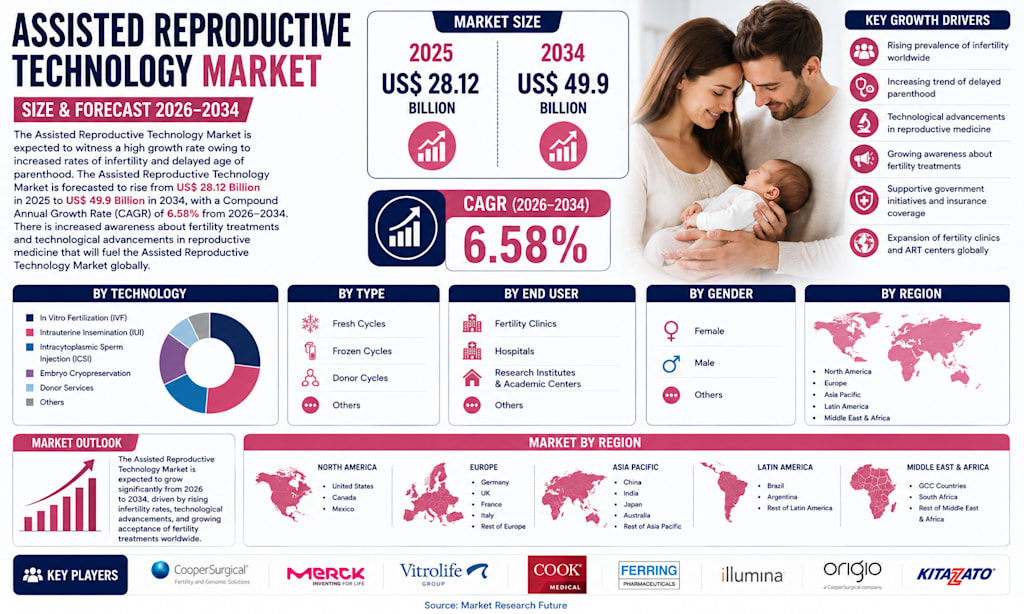
As awareness increases and fertility treatment becomes more accessible, demand for Assisted Reproductive Technology continues to rise across developed and emerging economies. According to Renub Research, the global Assisted Reproductive Technology Market is projected to grow from US$ 28.12 billion in 2025 to US$ 49.9 billion by 2034, expanding at a compound annual growth rate (CAGR) of 6.58% between 2026 and 2034. This growth reflects increasing infertility rates, expanding fertility clinic networks, and continuous innovation within reproductive medicine.
Understanding Assisted Reproductive Technology
Assisted Reproductive Technology refers to a group of medical procedures designed to help individuals and couples achieve pregnancy when natural conception proves difficult. These procedures involve the handling of eggs, sperm, or embryos outside the human body to improve the likelihood of successful fertilization and implantation.
Among the most widely recognized ART procedures is In Vitro Fertilization (IVF), where eggs are fertilized with sperm in a laboratory environment before the resulting embryo is transferred into the uterus. Other techniques include Intracytoplasmic Sperm Injection (ICSI), which involves the direct injection of a single sperm into an egg, as well as embryo freezing and fertility preservation methods.
ART has become an essential solution for individuals facing a wide range of fertility challenges, including hormonal imbalances, ovulation disorders, blocked fallopian tubes, male infertility factors, unexplained infertility, and age-related fertility decline.
The increasing effectiveness of these procedures has contributed significantly to their growing acceptance worldwide.
Rising Infertility Rates Are Driving Market Expansion
One of the most important factors fueling growth in the Assisted Reproductive Technology market is the increasing prevalence of infertility.
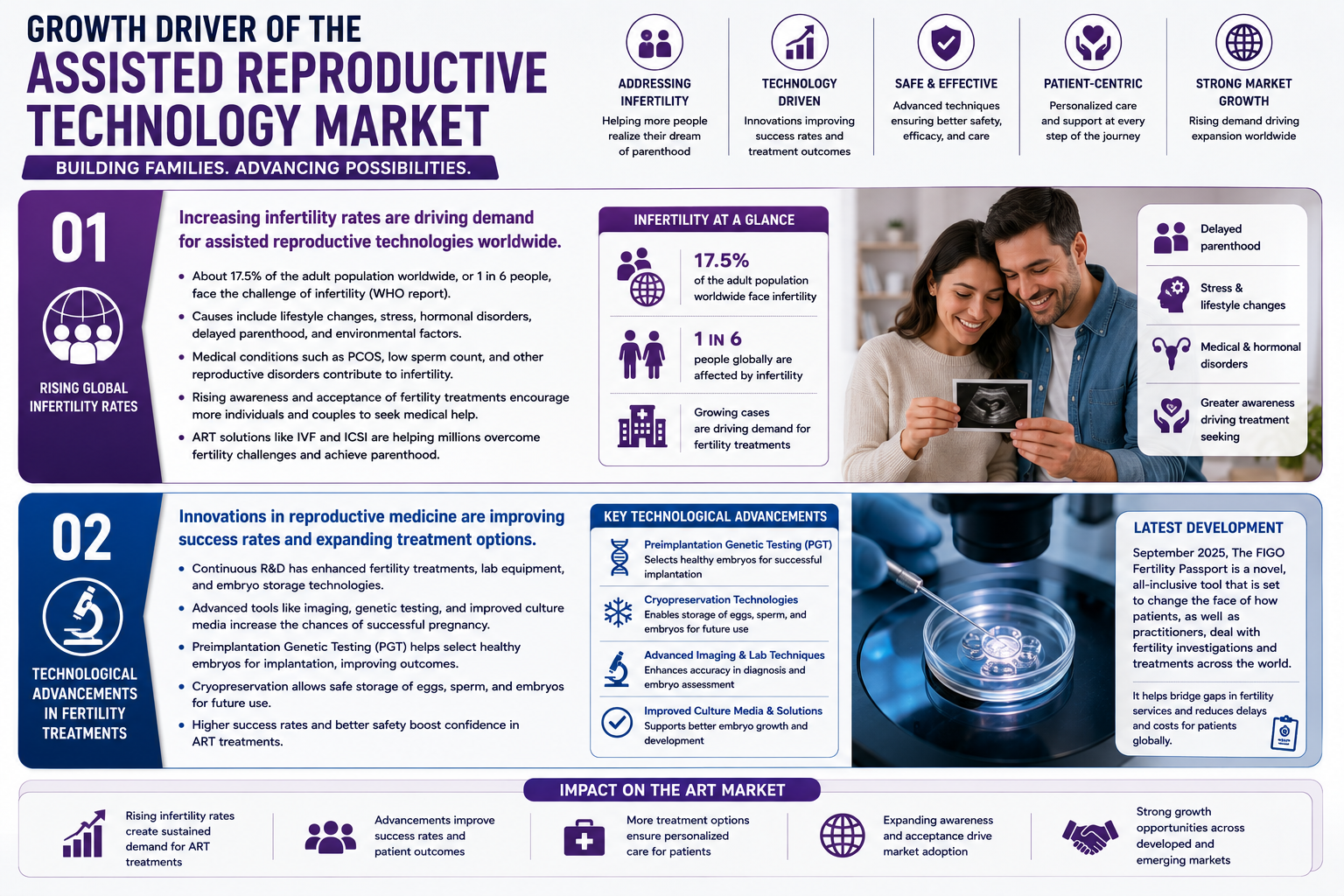
According to global health estimates, approximately one in six adults experiences infertility during their lifetime. This statistic highlights the growing need for accessible and effective fertility care services worldwide.
Several factors contribute to rising infertility rates. Modern lifestyles often involve high stress levels, poor dietary habits, environmental exposures, and delayed parenthood. Many individuals choose to postpone starting families due to educational, professional, or financial considerations. While these decisions provide personal and economic benefits, fertility naturally declines with age, particularly among women.
Medical conditions such as polycystic ovary syndrome (PCOS), endometriosis, low sperm count, and reproductive health disorders further contribute to fertility challenges.
As awareness of infertility grows and social stigma surrounding fertility treatment declines, more individuals are seeking professional assistance, creating sustained demand for ART services.
Technological Innovation Is Transforming Fertility Treatment
Advancements in reproductive medicine continue to reshape the fertility treatment landscape.
Modern fertility clinics now utilize highly sophisticated laboratory equipment, imaging systems, embryo monitoring technologies, and genetic testing tools that significantly improve treatment outcomes. These innovations have enhanced both the safety and effectiveness of ART procedures.
One of the most significant developments is Preimplantation Genetic Testing (PGT), which allows specialists to evaluate embryos for specific genetic conditions before implantation. This technology helps identify healthy embryos and can improve the chances of a successful pregnancy.
Cryopreservation technology has also advanced considerably. Patients can now preserve eggs, sperm, and embryos for future use with greater confidence and improved success rates. This capability has become particularly valuable for individuals who wish to delay parenthood or undergo medical treatments that may affect fertility.
As research continues to advance reproductive medicine, fertility specialists are gaining access to increasingly effective tools that improve patient outcomes and treatment success rates.
Delayed Parenthood Is Increasing Demand for Fertility Services
Changing social and economic trends have significantly influenced reproductive behavior worldwide.
Many individuals and couples are choosing to delay parenthood while pursuing higher education, career development, financial stability, or personal goals. While these choices reflect broader societal changes, they also contribute to increased demand for fertility services.
Female fertility naturally declines with age, particularly after the mid-thirties. Male fertility may also be affected by age-related factors, although often to a lesser extent. As a result, many couples who postpone family planning eventually seek medical assistance to achieve pregnancy.
This demographic trend has become a major driver of growth within the ART market. Fertility clinics increasingly serve patients in their late thirties and forties who require specialized treatment options to overcome age-related fertility challenges.
As delayed parenthood becomes more common globally, the demand for reproductive technologies is expected to continue rising.
Growing Awareness Is Encouraging More Patients to Seek Treatment
Public awareness regarding fertility health has improved significantly over the past decade.
Historically, infertility was often considered a private issue that received limited public discussion. Misconceptions and social stigma prevented many individuals from seeking medical assistance even when effective treatment options were available.
Today, educational campaigns, patient advocacy groups, healthcare organizations, and digital information platforms have transformed public understanding of fertility issues. People are increasingly aware that infertility is a medical condition that can often be treated successfully.
This growing awareness is encouraging more individuals to consult fertility specialists earlier in their reproductive journeys. Early intervention can improve treatment outcomes and increase the likelihood of successful conception.
The expansion of fertility education programs and reproductive health initiatives is expected to remain an important driver of market growth.
IVF Continues to Dominate the ART Market
Among all Assisted Reproductive Technology procedures, In Vitro Fertilization remains the most widely utilized and recognized treatment option.
IVF involves retrieving eggs from the ovaries, fertilizing them with sperm in a laboratory setting, and transferring the resulting embryo into the uterus. This approach has proven highly effective for a variety of infertility conditions.
Advances in laboratory techniques, embryo culture systems, and fertility medications have significantly improved IVF success rates over time. Modern clinics utilize sophisticated monitoring systems and personalized treatment protocols to optimize outcomes for each patient.
IVF also benefits from the integration of complementary technologies such as embryo freezing and genetic testing, which further enhance treatment effectiveness.
As success rates continue improving, IVF is expected to remain the cornerstone of the global ART market.
Artificial Insemination Provides an Accessible Alternative
Artificial insemination represents another important segment of the Assisted Reproductive Technology market.
This procedure involves placing sperm directly into the female reproductive tract to improve the chances of fertilization. One common approach, Intrauterine Insemination (IUI), places sperm directly within the uterus during ovulation.
Artificial insemination is often recommended for couples experiencing mild male infertility, cervical factors, or unexplained fertility challenges. Compared with IVF, it is generally less invasive, less complex, and more affordable.
Because of its accessibility and lower cost, artificial insemination remains an attractive option for many patients seeking fertility treatment during the early stages of care.
Its continued popularity contributes significantly to overall market growth.
Fertility Clinics Are Expanding Worldwide
The increasing availability of specialized fertility clinics has played a crucial role in market development.
Modern fertility centers offer comprehensive reproductive healthcare services, including fertility testing, IVF procedures, fertility preservation, artificial insemination, and counseling support. These facilities are equipped with advanced technologies and staffed by specialists trained in reproductive medicine.
As awareness grows, healthcare providers continue expanding fertility clinic networks across developed and emerging markets. Patients now have greater access to specialized services than ever before.
Many clinics also emphasize personalized treatment plans tailored to individual patient needs. This patient-centered approach improves satisfaction and helps optimize treatment outcomes.
The continued expansion of fertility clinic infrastructure is expected to support long-term growth within the ART market.
Hospitals Continue to Play an Important Role
Hospitals remain an essential component of fertility care delivery.
Many hospitals operate dedicated reproductive medicine departments that provide diagnostic services, fertility treatments, surgical interventions, and multidisciplinary care. Their comprehensive healthcare capabilities allow them to manage complex infertility cases and provide additional medical support when necessary.
Hospitals often serve as referral centers for patients requiring advanced procedures or specialized expertise. Their ability to integrate reproductive services with broader healthcare resources strengthens their role within the ART ecosystem.
As healthcare systems continue investing in reproductive medicine, hospitals are expected to remain important contributors to fertility treatment access.
Regional Markets Present Significant Opportunities
United States
The United States remains one of the world's largest and most advanced Assisted Reproductive Technology markets. High infertility rates, strong healthcare infrastructure, advanced laboratory capabilities, and growing acceptance of fertility treatments continue to support market growth. The integration of artificial intelligence into IVF processes is further enhancing treatment outcomes.
United Kingdom
The United Kingdom benefits from a mature fertility care sector, strong regulatory oversight, and increasing social acceptance of reproductive technologies. Advances in embryo testing and fertility preservation continue driving market development.
India
India is emerging as a major ART market due to improving healthcare infrastructure, increasing awareness, and affordable treatment options. The country has also become a destination for fertility tourism, attracting patients from around the world.
Saudi Arabia
Saudi Arabia's growing investment in healthcare infrastructure and specialized fertility services is supporting market expansion. Increasing awareness and broader acceptance of fertility treatments are encouraging more couples to seek professional assistance.
Challenges Facing the ART Market
Despite strong growth prospects, several challenges continue to affect the market.
One of the most significant barriers is the high cost associated with fertility treatments. Advanced procedures such as IVF often require specialized equipment, highly trained professionals, and multiple treatment cycles, increasing overall expenses.
Insurance coverage remains limited in many regions, creating financial obstacles for patients seeking care. Affordability continues to be a major concern, particularly in low- and middle-income countries.
Ethical, legal, and cultural considerations also influence market development. Issues surrounding embryo selection, storage, reproductive rights, and differing regulatory frameworks create complex challenges for healthcare providers and policymakers.
Addressing these concerns will be important for ensuring broader access to fertility care in the future.
Market Forecast: Strong Growth Through 2034
According to Renub Research, the global Assisted Reproductive Technology Market is expected to grow from US$ 28.12 billion in 2025 to US$ 49.9 billion by 2034, representing a CAGR of 6.58% between 2026 and 2034. Rising infertility rates, increasing awareness, expanding fertility clinic networks, and ongoing technological innovation are expected to remain the primary drivers of market expansion.
As reproductive medicine continues to advance and treatment accessibility improves, the market is poised for sustained long-term growth.
Final Thoughts
The Assisted Reproductive Technology market is transforming the lives of million+s of individuals and families around the world. What was once considered a highly specialized medical service has evolved into a rapidly growing healthcare sector driven by innovation, awareness, and expanding patient demand.
With Renub Research forecasting growth from US$ 28.12 billion in 2025 to US$ 49.9 billion by 2034, the industry is positioned for substantial expansion over the coming decade. Advances in IVF, genetic testing, cryopreservation, and personalized fertility care are improving outcomes while expanding opportunities for patients seeking parenthood.
As healthcare providers, researchers, and policymakers continue working to improve access and affordability, Assisted Reproductive Technology will remain a cornerstone of modern reproductive medicine and a source of hope for families worldwide.
About the Creator
Enjoyed the story? Support the Creator.
Subscribe for free to receive all their stories in your feed.
Comments
There are no comments for this story
Be the first to respond and start the conversation.