
Asphalt Paver Price and Asphalt Plant Cost Are One Ecosystem, Not Two Line Items
Asphalt Paver Price and Asphalt Plant Cost Are One Ecosystem, Not Two Line Items

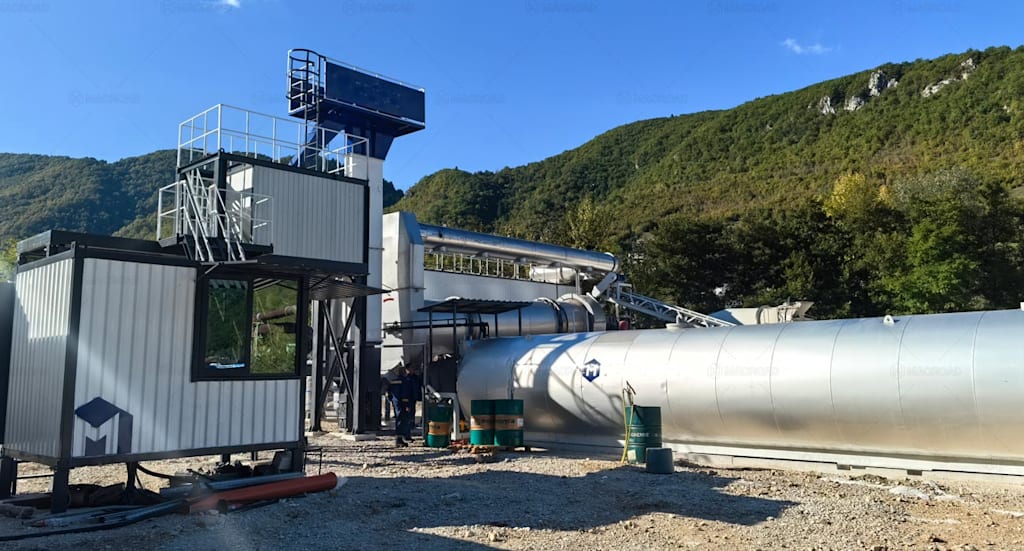
Looking past a competitive asphalt paver price to examine the complete infrastructure ecosystem reveals that how much does an asphalt plant cost is inseparable from the telemetry and logistics automation that connects plant output to paver screed demand. A centralized hot mix setup whose truck-loading cycles operate without integration to the paver's GPS tracking generates the coordination failure that drops mix temperature before delivery — not because the plant underperforms or the paver is misspecified, but because the logistical gap between two capable systems was never engineered closed. The asphalt paver price and asphalt plant cost that appear competitive in isolation become expensive in combination when truck dispatch timing is managed manually against a paving front that moves continuously and unpredictably.

Why Loose Logistical Coordination Inflates the Real How Much Does an Asphalt Plant Cost Calculation
How much does an asphalt plant cost in total operational terms includes the thermal waste generated by every truck that arrives at the plant too early and holds loaded mix through extended queue time, and every paver that idles because the next truck is still loading. Both events are temperature loss events — and temperature loss on mix that has already consumed plant fuel, aggregate heating energy, and bitumen heating cost represents a total input waste that the initial how much does an asphalt plant cost comparison never captured.
Extended truck queuing at the plant loadout point compounds the temperature drop problem by adding holding time before haul distance begins. A truck that queues for twenty minutes at the plant before departure arrives at the paving front with a significantly reduced thermal buffer — compressing the time available for mat placement and compaction below the window that deep-lift specification requires. Manual dispatch coordination cannot prevent this queuing pattern because it lacks the real-time paving front position data needed to calculate precise departure timing from the plant.

What Integrated Telemetry Between Plant and Paver GPS Delivers
A hot mix plant configuration with integrated telemetry software syncing truck-loading cycles to the paver's onboard GPS tracking calculates each truck's departure time against the paver's current position, travel speed, and projected material consumption rate — dispatching loaded trucks at intervals that maintain continuous paver feed without queue formation at the loadout point or idle time at the paving front. This calculation is dynamic rather than scheduled, updating departure timing as the paver's actual advance rate deviates from plan due to surface preparation requirements, geometric constraints, or crew transitions.
The asphalt paver price premium for GPS-equipped pavers with telemetry integration capability reflects this logistical optimization value alongside screed specification advantages. A paver whose onboard system communicates position and consumption rate data to the plant dispatch platform converts GPS hardware from a machine control tool into a supply chain management node — justifying part of its price premium through fuel savings, mix temperature protection, and reduced thermal waste that manual coordination cannot achieve at equivalent scale.

How Telemetry Integration Affects Total Infrastructure Ecosystem Cost
Evaluating how much does an asphalt plant cost for a telemetry-integrated configuration requires confirming that the plant's loadout automation hardware — truck identification systems, load cell weighing, automated dispatch signaling — is compatible with your paver fleet's GPS platform rather than requiring a separate proprietary system that adds integration cost above both the asphalt paver price and the plant investment. Suppliers who offer open-protocol telemetry integration compatible with standard GPS fleet management platforms reduce the total ecosystem cost relative to those whose dispatch systems require dedicated hardware that neither the plant supplier nor the paver manufacturer includes in their baseline quotes.
Truck fleet size optimization is a downstream benefit of telemetry integration that affects total project capital requirements. Precise dispatch timing reduces the number of trucks needed to maintain continuous paver feed — because each truck's cycle time is utilized efficiently rather than padded with queue buffer that manual coordination requires to prevent paver starvation.
Conclusion
Asphalt paver price and how much does an asphalt plant cost are only accurately evaluated as an integrated ecosystem when truck dispatch telemetry, paver GPS synchronization, and open-protocol platform compatibility are confirmed as standard features — because the logistical gap between a capable plant and a capable paver is where mix temperature, project schedule, and infrastructure investment returns are lost simultaneously.
About the Creator
Macroad Asphalt Plant
Macroad, a global leading manufacturer in asphalt mixing plants, offers a wide range of specifications to meet diverse project needs. Its high-quality, efficient equipment is widely applied in road construction.
Enjoyed the story? Support the Creator.
Subscribe for free to receive all their stories in your feed.
Comments
There are no comments for this story
Be the first to respond and start the conversation.