
Asia-Pacific Electric Kick Scooter Market to Hit US$ 3.02 Billion by 2033 as Urban Mobility Goes Green
Rising Urbanization, Smart Mobility Trends, and Eco-Friendly Transportation Solutions Accelerate E-Scooter Adoption Across Asia-Pacific

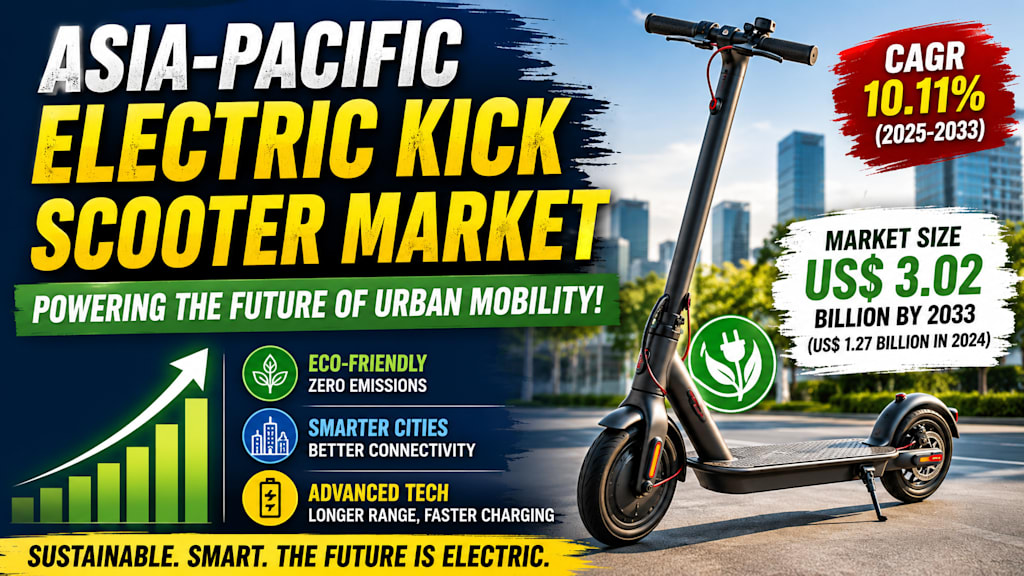
The Asia-Pacific electric kick scooter market is rapidly transforming urban transportation as consumers increasingly seek affordable, eco-friendly, and efficient mobility solutions. According to Renub Research, the market is projected to grow from US$ 1.27 billion in 2024 to US$ 3.02 billion by 2033, expanding at a CAGR of 10.11% from 2025 to 2033.
The remarkable growth of electric kick scooters across Asia-Pacific is closely tied to rising urban congestion, increasing environmental awareness, rapid technological advancements, and growing investments in shared mobility ecosystems. Countries such as China, India, Japan, and South Korea are emerging as major growth hubs as governments and consumers alike embrace sustainable transportation alternatives.
Urban Congestion Driving Demand for Alternative Transportation
Asia-Pacific cities are experiencing intense urbanization, resulting in overcrowded roads, longer commute times, and worsening air pollution. Traditional transportation systems are struggling to keep pace with rapidly growing urban populations.
Electric kick scooters are emerging as an ideal solution for short-distance urban travel. Compact, lightweight, and energy-efficient, these vehicles provide a practical way for commuters to navigate crowded city environments while reducing their carbon footprint.
India represents one of the strongest examples of this trend. The country’s urban population surpassed 508 million in 2022, placing immense pressure on transportation infrastructure. As traffic congestion worsens in cities like Delhi, Mumbai, Bengaluru, and Kolkata, electric kick scooters are becoming increasingly attractive for daily commuting and last-mile transportation.
Similarly, China’s mega-cities continue to experience heavy congestion, pushing both governments and consumers toward electric mobility solutions that are affordable and environmentally responsible.
Environmental Awareness Fueling Market Expansion
Growing concerns about climate change and air pollution are significantly influencing consumer purchasing behavior across the region. Electric kick scooters produce zero tailpipe emissions, making them a cleaner alternative to gasoline-powered vehicles.
Governments across Asia-Pacific are actively encouraging electric vehicle adoption through subsidies, tax benefits, and infrastructure investments. Environmental sustainability initiatives are accelerating the transition toward cleaner urban transportation systems.
Consumers are also becoming more environmentally conscious. Younger urban populations, particularly millennials and Gen Z users, increasingly prefer transportation solutions aligned with sustainability goals. Electric scooters fit perfectly into this shift toward greener lifestyles.
The rising popularity of lithium-ion battery technology further strengthens the environmental appeal of electric kick scooters. These batteries offer improved energy efficiency, longer lifespan, and reduced environmental impact compared to older battery technologies.
Technological Innovations Enhancing Consumer Adoption
Technology is playing a central role in the rapid evolution of electric kick scooters. Manufacturers are continuously improving battery performance, charging speed, connectivity, and overall riding experience.
Modern electric kick scooters now feature:
- Longer battery range
- Fast charging capabilities
- GPS tracking systems
- Mobile app integration
- Smart locking systems
- Real-time diagnostics
- Enhanced braking systems
Improved suspension and ride comfort
Advancements in lithium-ion batteries are particularly important. Earlier generations of e-scooters faced criticism due to limited range and long charging times. Today’s models can travel longer distances with significantly improved charging efficiency.
Smart connectivity features are also reshaping consumer expectations. Riders can monitor battery health, track routes, locate parked scooters, and even access anti-theft protection directly through smartphone applications.
These innovations are making electric kick scooters more practical for daily urban commuting while also increasing their appeal among tech-savvy consumers.
Shared Mobility Services Transforming Urban Transportation
Shared mobility services have emerged as one of the strongest growth drivers for the Asia-Pacific electric kick scooter market.
Rental-based e-scooter platforms are becoming increasingly common in densely populated cities where consumers seek flexible and affordable mobility options without vehicle ownership costs.
Shared electric scooters are particularly effective for last-mile connectivity. Users can travel from metro stations, bus stops, or railway terminals to their final destinations quickly and efficiently.
This model helps reduce traffic congestion while complementing public transportation systems. It also offers commuters a cost-effective alternative to taxis and ride-hailing services.
Major urban centers across China, Japan, South Korea, and Southeast Asia are witnessing rising demand for app-based scooter rental services. As urban mobility ecosystems continue evolving, shared electric scooters are expected to become an essential component of smart city transportation infrastructure.
Battery Costs and Maintenance Remain Key Challenges
Despite impressive growth prospects, the market still faces several challenges.
High battery costs continue to impact overall scooter pricing. Premium lithium-ion batteries significantly improve performance but also increase manufacturing expenses. For price-sensitive consumers, especially in developing economies, high upfront purchase costs remain a barrier.
Battery replacement expenses are another concern. Over time, batteries degrade and require replacement, which can add substantial ownership costs.
Maintenance infrastructure also remains underdeveloped in many regions. Electric kick scooters require regular servicing of batteries, motors, brakes, and electrical systems. However, limited service networks and repair facilities create inconvenience for consumers.
Durability concerns may further slow adoption in areas with poor road conditions and extreme weather patterns.
To sustain long-term growth, manufacturers and governments will need to invest heavily in service infrastructure, charging ecosystems, and consumer safety initiatives.
China Leading the Regional Market
China remains the dominant force in the Asia-Pacific electric kick scooter market due to its massive urban population, strong EV ecosystem, and government-backed sustainability initiatives.
The country has aggressively promoted electric mobility through subsidies, favorable regulations, and infrastructure development. Chinese consumers increasingly rely on electric scooters for daily commuting, especially in highly congested urban areas.
China’s strong manufacturing ecosystem also gives domestic companies a competitive advantage in production scale and technological innovation.
The rapid growth of shared mobility platforms has further accelerated adoption across major Chinese cities.
However, regulatory challenges and safety concerns remain important issues that authorities continue addressing through stricter operational guidelines and infrastructure planning.
India Emerging as a High-Growth Opportunity
India is becoming one of the fastest-growing markets for electric kick scooters in Asia-Pacific.
Government initiatives promoting electric vehicles are creating strong momentum for the industry. Policies encouraging the transition away from fossil-fuel-powered transportation are driving consumer interest in electric mobility solutions.
Urban congestion, rising fuel prices, and growing environmental awareness are further contributing to demand growth.
Electric scooters are increasingly viewed as practical, low-cost transportation solutions for short-distance commuting. Their affordability compared to conventional vehicles makes them particularly attractive to young professionals and students.
Nevertheless, India still faces challenges related to charging infrastructure, road safety, and consumer awareness. Expanding charging networks and improving after-sales support will be essential for long-term market penetration.
Japan and South Korea Supporting Sustainable Mobility
Japan and South Korea are also witnessing growing demand for electric kick scooters as governments emphasize smart urban mobility and carbon reduction goals.
In Japan, electric scooters are gaining popularity in cities like Tokyo and Osaka where traffic congestion and limited parking availability encourage compact transportation alternatives.
South Korea is similarly investing in sustainable transportation infrastructure. Cities such as Seoul and Busan are actively promoting electric mobility through subsidies and smart city initiatives.
Both countries are also seeing rapid expansion of shared mobility platforms, increasing consumer accessibility to electric scooters.
Technological innovation remains particularly strong in these markets, with manufacturers integrating advanced smart features and enhanced battery systems into new product offerings.
Market Segmentation Highlights
The Asia-Pacific electric kick scooter market is segmented across several major categories:
By Battery
- Lead Acid
- Lithium-ion (Li-ion)
- Others
Lithium-ion batteries dominate the market due to their superior energy efficiency, lightweight structure, and longer operational lifespan.
By Drive Type
- Belt Drive
- Chain Drive
- Hub Drive
Hub drive systems are becoming increasingly popular because of their compact design and lower maintenance requirements.
By Voltage
- Below 24V
- 36V
- 48V
- Greater than 48V
Higher-voltage scooters are gaining traction among consumers seeking greater speed and extended range.
By Application
- Personal
- Rental
The rental segment is expanding rapidly due to the growing popularity of shared mobility platforms across urban centers.
Competitive Landscape Intensifying
The Asia-Pacific electric kick scooter market is becoming increasingly competitive as global and regional companies invest in innovation, strategic partnerships, and market expansion.
Leading companies operating in the market include:
- Xiaomi
- YADEA Technology Group Co., Ltd.
- NIU International
- Bird Rides, Inc.
- Swagtron
- Segway Inc.
Companies are focusing on:
- Smart mobility integration
- Enhanced battery performance
- Lightweight scooter designs
- Safety innovations
- Shared mobility partnerships
- Geographic expansion
The competitive environment is expected to intensify further as demand for sustainable urban transportation continues rising.
Recent Developments in the Electric Kick Scooter Industry
1. Xiaomi Expands Smart E-Scooter Ecosystem
Xiaomi has continued integrating IoT-enabled smart connectivity into its latest electric scooter lineup, improving navigation, battery monitoring, and anti-theft capabilities.
2. YADEA Accelerates International Expansion
YADEA Technology Group Co., Ltd. expanded its global retail footprint across Southeast Asia to strengthen its position in the electric mobility market.
3. NIU International Launches Advanced Urban Mobility Models
NIU International introduced upgraded electric scooters with enhanced range and intelligent riding systems targeting urban commuters.
4. Bird Rides Strengthens Shared Mobility Operations
Bird Rides, Inc. expanded partnerships with city authorities to improve urban scooter-sharing infrastructure and rider safety programs.
5. Segway Introduces AI-Powered Safety Features
Segway Inc. launched new electric scooter models equipped with enhanced stability systems and intelligent ride assistance technologies.
6. Swagtron Focuses on Lightweight Mobility Solutions
Swagtron unveiled compact electric scooter models designed for highly congested urban environments.
7. Battery Technology Improvements Reduce Charging Time
Several manufacturers introduced faster-charging lithium-ion battery systems capable of significantly reducing downtime for urban riders.
8. Expansion of Shared E-Scooter Networks Across Asia
Multiple mobility startups expanded app-based scooter rental services in major Asia-Pacific cities to address last-mile transportation challenges.
9. Governments Increase EV Incentives
Countries across Asia-Pacific strengthened electric vehicle subsidy programs to encourage sustainable transportation adoption.
10. Smart City Projects Integrate Micromobility Infrastructure
Urban planners across the region increasingly incorporated electric scooter lanes, parking zones, and charging stations into smart city development strategies.
Final Thoughts
The Asia-Pacific electric kick scooter market is entering a transformative growth phase fueled by sustainability goals, urban mobility challenges, and technological innovation. As governments push for cleaner transportation systems and consumers seek affordable commuting alternatives, electric kick scooters are rapidly becoming an integral part of modern urban life.
Although challenges related to battery costs, infrastructure, and safety remain, continued technological advancements and policy support are expected to strengthen long-term market growth.
With rising demand across China, India, Japan, South Korea, and Southeast Asia, the region is poised to become a global leader in micromobility innovation over the next decade.
About the Creator
Enjoyed the story? Support the Creator.
Subscribe for free to receive all their stories in your feed.
Comments
There are no comments for this story
Be the first to respond and start the conversation.