
Asia Pacific Dairy Market Expands as Health Awareness and Premium Nutrition Drive Consumption
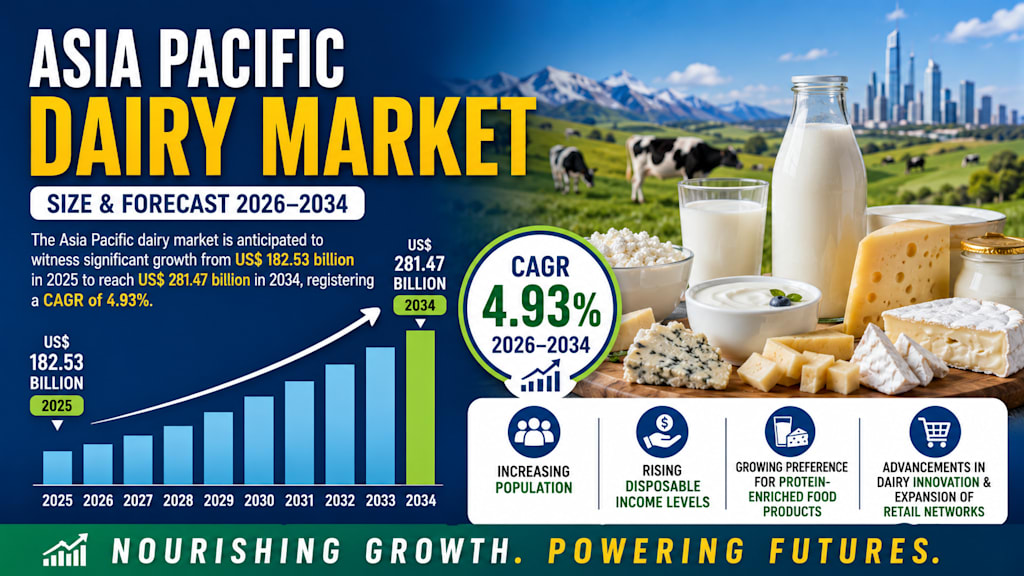
The Asia Pacific dairy market is projected to grow from US$ 182.53 billion in 2025 to US$ 281.47 billion by 2034, supported by rising disposable income, expanding middle-class populations, health-conscious consumers, and rapid dairy product innovation across the region.

Asia Pacific Dairy Market Overview
The Asia Pacific dairy market is witnessing steady transformation as consumers across the region increasingly shift toward nutritious, protein-rich, and convenient food products. According to the market outlook provided in the report, the market is expected to rise from US$ 182.53 billion in 2025 to US$ 281.47 billion by 2034, expanding at a CAGR of 4.93% during the forecast period. This growth is being supported by urbanization, rising disposable incomes, health awareness, and innovation in both traditional and modern dairy categories.
Dairy products have become an essential part of modern diets in many Asia Pacific countries. Milk, cheese, butter, yogurt, cream, frozen desserts, and flavored dairy drinks are now consumed across different age groups and income categories. Traditionally, some Asian countries had lower dairy consumption levels, but changing eating habits and Western food influences have significantly increased adoption rates. Young consumers, in particular, are driving demand for products such as flavored milk, yogurt beverages, cheese snacks, and dairy desserts.
The region also represents a major production hub for global dairy. Asia accounted for 294.5 million tons of milk production in 2024, representing 37% of total global cow’s milk production, highlighting the strategic importance of the region in the worldwide dairy supply chain.
Rising Disposable Income and Middle-Class Expansion
One of the biggest growth drivers in the Asia Pacific dairy market is the rapid rise in disposable income and middle-class expansion across emerging economies. Countries such as India, China, Indonesia, Vietnam, and other ASEAN nations are experiencing strong economic development, allowing consumers to spend more on premium and nutritious food products.
As purchasing power rises, consumers are moving toward higher-quality food choices that support health and wellness. Dairy products are increasingly viewed as important sources of protein, calcium, and essential vitamins. Organized retail growth and e-commerce expansion are also helping dairy brands improve product accessibility across urban and semi-urban markets.
The middle-class transformation across ASEAN countries is especially important because it is creating millions of new dairy consumers. Rising household incomes are not only increasing milk consumption but also driving interest in premium cheese, yogurt, probiotic drinks, and dairy desserts. This economic shift is expected to remain one of the strongest long-term growth pillars for the regional dairy industry.
Growing Health Awareness and Demand for Protein-Rich Diets
Health consciousness is reshaping the dairy industry throughout Asia Pacific. Consumers are becoming increasingly aware of nutrition, fitness, immunity, and preventive healthcare, which is encouraging higher dairy consumption. Dairy products are naturally associated with protein, calcium, vitamins, and bone health, making them attractive to health-focused consumers.
This trend is especially visible among younger professionals, fitness-conscious individuals, and aging populations seeking better nutrition and immunity support. Functional dairy products such as probiotic yogurt, fortified milk, lactose-free milk, and high-protein beverages are gaining strong traction across the region. Governments in countries such as India are also encouraging milk consumption to address malnutrition and improve nutritional intake among children and elderly populations.
Dairy manufacturers are responding with innovation-focused strategies. In March 2024, Ashgrove introduced Eco-Milk in partnership with Sea Forest, using methane-reducing feed technology capable of reducing emissions by up to 90%. Sustainability and health are increasingly becoming interconnected themes in the dairy sector, especially among environmentally conscious consumers.
Product Innovation and Dairy Alternatives
Innovation remains one of the defining features of the Asia Pacific dairy market. Companies are introducing flavored milk, ready-to-drink beverages, high-protein snacks, lactose-free products, and functional dairy products to meet evolving consumer preferences. The growth of dairy alternatives and hybrid dairy products has also expanded the consumer base.
Packaging innovation is another important factor supporting market growth. Single-serve and portable packaging formats have become popular among busy urban consumers looking for convenience. Digital marketing and social media campaigns are helping dairy brands connect with younger audiences and position products as lifestyle-oriented choices rather than traditional commodities.
China’s Yili Group launched lactose-free UHT milk in 2024 using microbial lactase technology, helping attract lactose-intolerant consumers who previously avoided dairy products. At the same time, membrane filtration technologies are helping companies produce higher-purity whey protein products that support the growing sports nutrition markets in Japan and South Korea.
Market Challenges
Despite strong growth potential, the Asia Pacific dairy market faces several operational and consumer-related challenges. Lactose intolerance remains one of the biggest barriers to traditional milk consumption in many Asian countries, particularly in China, Japan, and Southeast Asia. As a result, consumers are increasingly exploring plant-based alternatives such as soy milk, almond milk, and oat milk.
Changing consumer preferences toward environmentally sustainable and ethical food choices are also increasing competition for traditional dairy brands. Younger consumers are often more willing to experiment with plant-based products, forcing dairy companies to invest in lactose-free and hybrid dairy solutions.
Supply chain constraints continue to create additional challenges. Dairy production depends heavily on feed availability, weather conditions, transportation, cold chain systems, and animal health management. In many developing countries, insufficient cold storage infrastructure contributes to product waste and uneven distribution. Volatile feed and energy costs also affect production pricing, making profit margins less predictable for manufacturers.
Growth of Cultured Butter and Premium Dairy Products
The Asia Pacific cultured butter market is growing steadily as urban consumers become more interested in premium dairy experiences and Western-style culinary products. Cultured butter is increasingly being used in bakeries, cafés, restaurants, and gourmet cooking because of its rich taste and texture.
Countries such as Japan, Australia, and South Korea are leading demand growth for premium dairy categories. Consumers in these markets are highly quality-conscious and willing to pay more for organic, grass-fed, and artisanal dairy products. The rise of gourmet retail chains and premium supermarkets has also improved product visibility and accessibility.
Processed Cheese Market Expansion
Processed cheese is becoming increasingly popular across the Asia Pacific region due to the rapid growth of fast-food chains, cafés, bakeries, and ready-to-eat meal consumption. Burgers, pizzas, sandwiches, and snack foods have become deeply integrated into urban food culture, especially among younger populations.
Countries such as China, India, and Indonesia are witnessing particularly strong demand growth because of urbanization and expanding quick-service restaurant networks. Processed cheese also offers longer shelf life and affordability compared with natural cheese, making it highly attractive for both manufacturers and consumers.
Fresh Milk and Dairy Beverage Demand
Fresh milk continues to represent one of the largest dairy segments in the Asia Pacific market. Milk remains a daily nutritional staple in countries such as India and China, where governments actively promote milk consumption for better nutrition and public health outcomes.
Consumers are also increasingly interested in value-added milk products, including fortified milk, flavored milk, organic milk, and lactose-free milk. Rapid population growth, urbanization, and health awareness are expected to sustain strong demand for fresh milk products across the region over the coming years.
Online Dairy Retail Growth
Online retail is transforming how consumers purchase dairy products across Asia Pacific. Rising smartphone penetration, internet access, digital payments, and e-commerce adoption are making online dairy shopping more convenient and accessible.
Countries such as China, India, and South Korea have developed strong logistics systems and cold chain delivery networks that support online dairy distribution. Consumers can now easily purchase milk, butter, yogurt, cheese, and frozen desserts through digital platforms and receive doorstep delivery. This trend is expected to remain a major growth driver for dairy brands looking to expand customer reach.
China Dairy Market
China represents one of the largest and fastest-growing dairy markets in the Asia Pacific region. Urbanization, higher income levels, health awareness, and Western dietary influences are driving strong demand for milk, yogurt, cheese, and infant nutrition products.
Although China has invested heavily in dairy farm modernization and local production, the country still relies on imported dairy products for quality assurance and supply stability. E-commerce and advanced cold chain systems are helping improve product distribution in both urban and rural regions.
In January 2026, Yili Group organized partner conferences across Southeast Asia to strengthen dairy collaborations and expand regional market presence, highlighting the company’s growing international ambitions.
India Dairy Market
India continues to play a dominant role in the Asia Pacific dairy market as the world’s largest milk producer. Dairy products are deeply integrated into Indian food culture, supporting strong and stable demand for milk, ghee, butter, paneer, yogurt, and other dairy products.
Government initiatives supporting rural development and dairy farming have strengthened production capabilities and supply chains across the country. Private sector investments are also improving processing technology, packaging standards, and product quality.
In June 2025, Yogurt Factory entered the Indian market through a partnership with FranGlobal, introducing gourmet frozen yogurt, smoothies, waffles, and bubble tea products aimed at modern urban consumers.
Final Thoughts
The Asia Pacific dairy market is entering a new era defined by health-focused consumption, product innovation, premiumization, and digital retail expansion. Rising disposable incomes, urban lifestyles, and growing awareness about nutrition are creating long-term demand opportunities across multiple dairy categories.
While lactose intolerance, plant-based competition, and supply chain challenges remain important concerns, dairy companies are adapting through innovation, sustainability initiatives, and value-added product development. The region’s strong population base and evolving dietary habits continue to position Asia Pacific as one of the most important dairy growth markets globally.
Recent Developments by Companies
Inner Mongolia Yili Industrial Group Co. Ltd expanded its Southeast Asia collaboration network through partner conferences held across the region in January 2026 to strengthen dairy distribution and partnerships.
Ashgrove launched Eco-Milk in partnership with Sea Forest in March 2024, introducing methane-reducing dairy technology capable of reducing emissions by up to 90%.
Yili Group introduced lactose-free UHT milk using microbial lactase technology in 2024, targeting lactose-intolerant consumers across Asia.
Dairy producers in Japan and South Korea expanded whey protein production capabilities using membrane filtration technologies to support sports nutrition demand.
Yogurt Factory entered the Indian dairy dessert market in June 2025 through a partnership with FranGlobal to launch gourmet frozen yogurt and beverages.
Great Giant Foods introduced Indonesia’s first Gelato Yogurt under its Hometown Dairy brand in September 2025 using premium Sicilian pistachio ingredients.
LILO Desserts expanded its dairy dessert portfolio in New Zealand during November 2025 with new fruit-based dairy dessert offerings using natural local dairy ingredients.
Dairy brands across Asia Pacific increasingly adopted single-serve and portable packaging formats to meet urban consumer convenience preferences in 2025.
Multiple dairy companies accelerated digital marketing campaigns and e-commerce expansion strategies to target younger consumers across Asia Pacific.
Dairy manufacturers throughout Asia Pacific expanded lactose-free and plant-based dairy product development to address changing dietary preferences and rising lactose intolerance.
About the Creator
Enjoyed the story? Support the Creator.
Subscribe for free to receive all their stories in your feed.
Comments
There are no comments for this story
Be the first to respond and start the conversation.