
Artificial Urinary Sphincter Market Faces Critical Inflection as Patient Demand Outpaces Innovation
The global market size is projected to reach USD 1.12 billion by 2033, up from an estimated USD 720 million in 2026, reflecting a robust CAGR of 6.5% over the forecast period.

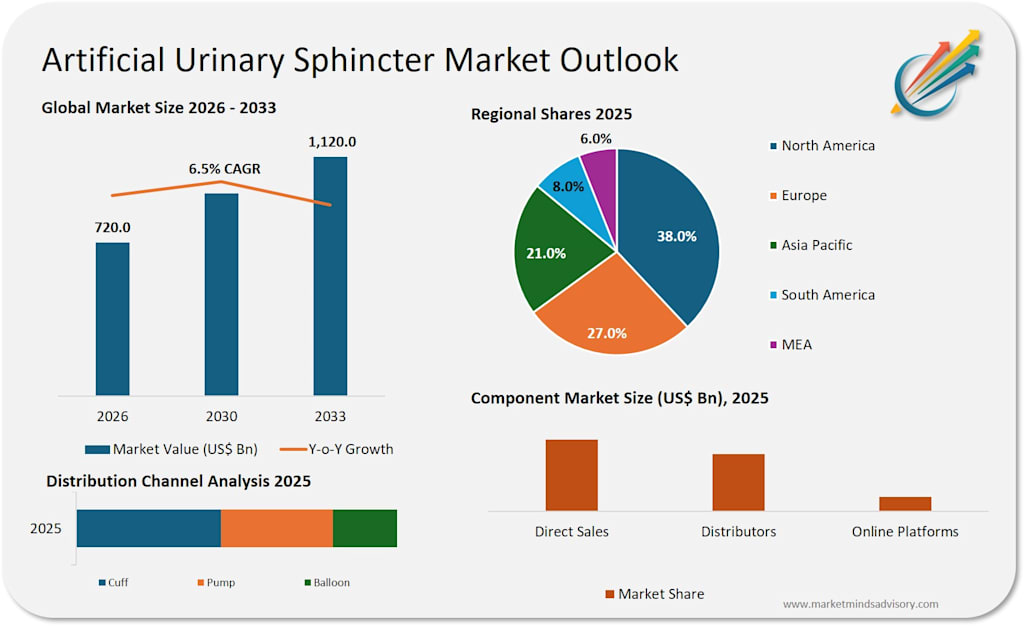
The gap between clinical need and device evolution is widening, creating strategic risk for medtech players and healthcare systems unprepared for demographic and regulatory shifts.
The Quiet Crisis in Urological Care
Healthcare systems across developed markets are confronting an uncomfortable reality: the population most in need of urinary incontinence solutions is growing faster than the innovation pipeline can support. Artificial urinary sphincters, once considered a mature category, are now at the center of a strategic dilemma. Aging demographics, rising post-prostatectomy incontinence rates, and evolving patient expectations are colliding with device limitations, reimbursement pressures, and competitive stagnation. Companies that treat this as a stable, low-growth segment risk missing a fundamental market restructuring already underway.
The challenge is not just clinical. It is economic, operational, and competitive. Medtech firms face a choice: invest in next-generation solutions now or cede ground to emerging alternatives that promise less invasive, more patient-friendly outcomes. The window for strategic repositioning is narrowing.
Why This Market Shift Matters Now
Urinary incontinence is no longer a condition patients accept quietly. Cultural shifts around quality of life, combined with greater awareness of treatment options, are driving demand for interventions that restore function without compromising lifestyle. Artificial urinary sphincters have long been the gold standard for severe stress urinary incontinence, particularly in post-surgical male patients. But the market is entering a new phase where patient tolerance for device-related complications, revision surgeries, and lengthy recovery times is declining sharply.
At the same time, healthcare systems are tightening reimbursement criteria, demanding better long-term outcomes and cost-effectiveness. Payers are scrutinizing device durability, infection rates, and revision frequency with unprecedented rigor. For manufacturers, this means the bar for market entry and sustained competitiveness is rising. Companies relying on legacy designs without meaningful innovation face margin compression and market share erosion.
The strategic implication is clear: this is not a market where incremental improvements will suffice. The next wave of growth will belong to those who can deliver step-change advancements in device reliability, patient experience, and clinical outcomes.
Structural Shifts Driving the Market
Demographic Pressure and Prostate Cancer Survivorship
Prostate cancer remains one of the most diagnosed cancers globally, and survival rates continue to improve. However, post-prostatectomy incontinence remains a persistent complication, affecting a significant portion of patients. As the population of prostate cancer survivors grows, so does the pool of candidates for artificial urinary sphincters. This is not a temporary spike. It is a structural shift that will sustain demand for at least the next two decades. Companies that fail to scale manufacturing, optimize supply chains, and build clinical evidence for this cohort will struggle to capture share in high-growth geographies.
Regulatory Evolution and Device Scrutiny
Regulatory bodies are tightening oversight of implantable devices, particularly those with historical complication profiles. Artificial urinary sphincters, while effective, carry risks including infection, erosion, and mechanical failure. Recent regulatory trends suggest a move toward more stringent post-market surveillance, real-world evidence requirements, and transparency in adverse event reporting. For manufacturers, this means higher compliance costs and longer approval timelines. It also creates a barrier to entry that favors established players with robust clinical data and regulatory infrastructure. However, it simultaneously opens the door for disruptors who can demonstrate superior safety profiles through novel materials or design innovations.
Competitive Pressure from Minimally Invasive Alternatives
The artificial urinary sphincter market does not exist in isolation. It competes with a growing array of alternatives, including adjustable continence devices, urethral slings, and emerging neuromodulation therapies. While sphincters remain the most effective option for severe cases, the threshold for “severe” is being redefined by patient preference and clinical practice evolution. Patients increasingly favor less invasive options, even if efficacy is marginally lower. This shift is eroding the addressable market for traditional sphincters and forcing manufacturers to rethink positioning. The strategic response cannot be defensive. It must involve portfolio diversification, hybrid solutions, or partnerships that address the full continuum of incontinence severity.
Where the Real Opportunity Lies
The highest-value opportunity is not in volume growth alone. It is in capturing the premium segment of patients who demand superior outcomes and are willing to navigate reimbursement complexities for next-generation devices. This includes younger, more active patients post-prostatectomy who prioritize lifestyle preservation and are less tolerant of device-related limitations. Targeting this segment requires a shift from purely clinical messaging to patient-centric value propositions that emphasize durability, ease of use, and quality of life.
Geographically, the opportunity is bifurcating. Mature markets like North America and Western Europe offer stable demand but face reimbursement headwinds and competitive saturation. Growth will come from market share gains, not expansion. In contrast, emerging markets in Asia-Pacific and Latin America present volume opportunities driven by rising healthcare access, growing awareness, and increasing prostate cancer incidence. However, success in these regions demands localized strategies, cost-optimized products, and partnerships with regional healthcare systems.
Competitive or Strategic Shift
The competitive landscape is consolidating around a few dominant players with deep clinical relationships and extensive installed bases. However, this concentration creates vulnerability. Hospitals and urology practices are increasingly seeking alternatives to avoid single-source dependency, particularly as supply chain disruptions have exposed risks. New entrants with differentiated technology, particularly in materials science or smart device integration, have an opening to disrupt established relationships.
At the same time, the market is seeing early signs of commoditization in standard devices. Pricing pressure is intensifying, particularly in markets with centralized procurement. Manufacturers that compete solely on price will see margins erode. The strategic imperative is to move up the value chain through innovation, clinical evidence, and service differentiation. This includes offering comprehensive patient support programs, surgeon training, and post-implant monitoring solutions that reduce complications and improve outcomes.
The Cost of Delayed Action
Companies that delay investment in next-generation artificial urinary sphincters face compounding risks:
Market share erosion to competitors with superior devices or alternative solutions that capture patient and physician preference
Margin compression as reimbursement tightens and pricing power diminishes in commoditized segments
Regulatory setbacks if legacy devices face increased scrutiny or post-market safety concerns that damage brand reputation
Talent and partnership gaps as top-tier surgeons and research institutions align with innovators rather than incumbents
Geographic disadvantage in high-growth emerging markets where early movers establish clinical networks and regulatory pathways
The window for proactive repositioning is finite. Once competitive dynamics shift and reimbursement structures solidify around new standards, the cost of entry or repositioning multiplies.
About the Creator
Sanjay Vane
At Market Minds Advisory, we’re more than just consultants—we’re partners in your journey to growth and success.
Enjoyed the story? Support the Creator.
Subscribe for free to receive all their stories in your feed.
Comments
There are no comments for this story
Be the first to respond and start the conversation.