
Are Ozone Generators Safe? What the Science Actually Says
Ozone Generators

Ask around online and you'll get two completely different answers. One side swears by ozone as a miracle purifier that wipes out odors, mold, and pathogens better than anything else on the market. The other side calls the machines dangerous and points to government warnings as proof. Both camps are citing real science — they're just each leaving out the half of the story that doesn't support their argument. The real answer comes down to how, where, and why the ozone is being used, and that distinction turns out to be pretty clear once you strip away the marketing noise.
Why Ozone Cuts Both Ways
Ozone is oxygen with an extra atom bolted on — three oxygen atoms instead of two — and that extra atom makes it one of the most reactive oxidizers in common use. That reactivity is exactly why ozone works: it tears apart odor molecules, ruptures bacterial cell walls, neutralizes viruses, and breaks down organic contaminants that shrug off gentler treatments.
It's also exactly why ozone carries risk. Lung tissue is organic material too, and ozone doesn't know the difference between a smoke molecule and the lining of a human airway. Breathing elevated concentrations irritates the respiratory system, triggers coughing and chest tightness, worsens asthma, and with prolonged exposure can damage lung tissue over time. Children, older adults, and anyone with a respiratory condition feel these effects at lower levels than healthy adults do. None of this is controversial — it's the same chemistry behind ground-level ozone being a regulated air pollutant on smoggy summer days.
What the Regulators Actually Target
The regulatory language is narrower than the scare headlines suggest, and it pays to read it closely. OSHA caps worker exposure at 0.1 parts per million averaged over an eight-hour shift. The FDA requires medical devices marketed for indoor use to emit no more than 0.05 ppm. And the EPA has repeatedly warned that ozone generators sold as household air purifiers can't do their advertised job safely — at concentrations low enough to breathe, ozone barely purifies anything, and at concentrations high enough to purify, it isn't safe to breathe.
What that warning actually condemns is running a generator in an occupied room and calling it an air purifier. It says nothing against the two uses where ozone has operated safely at industrial scale for over a century: treating unoccupied spaces, and treating water. The machine is identical in both cases. What changes is whether anyone is standing in the ozone while it's working.
Safe Use in Unoccupied Spaces
Restoration crews rely on ozone shock treatments to strip smoke odor out of fire-damaged buildings, kill mildew smells in basements, and deodorize cars, hotel rooms, and rentals. The protocol behind this is well established: clear the space of people, pets, and plants; run the generator at high concentration for a set period; then wait. That waiting period is the part that actually matters. Ozone breaks down naturally, with a half-life of roughly thirty minutes to a few hours indoors depending on temperature and surfaces, decaying back into ordinary oxygen. By the time the space has aired out and readings drop to background levels, there's nothing left behind — ozone doesn't leave residue.
Nearly every documented injury from this kind of use traces back to someone skipping a step: reentering too soon, running a unit overnight in an occupied home, or treating a room with open ductwork into living space. Never run an ozone generator in a space where anyone is present — the rule exists because that's where every real-world injury actually happens, not because the shock-treatment method itself is unsafe.
Water Treatment Is a Different Situation
Dissolved in water, ozone behaves completely differently, which is why bottled water plants, municipal utilities, aquariums, and food processors have relied on it for decades with a strong safety record. It reacts with contaminants, then decays into dissolved oxygen within minutes — it never reaches anyone's lungs. Engineered systems add extra layers of protection on top of that: off-gas destruct units that convert any undissolved ozone back into oxygen, ambient air monitors that alarm well before OSHA limits are approached, and automatic shutoffs tied to those monitors.
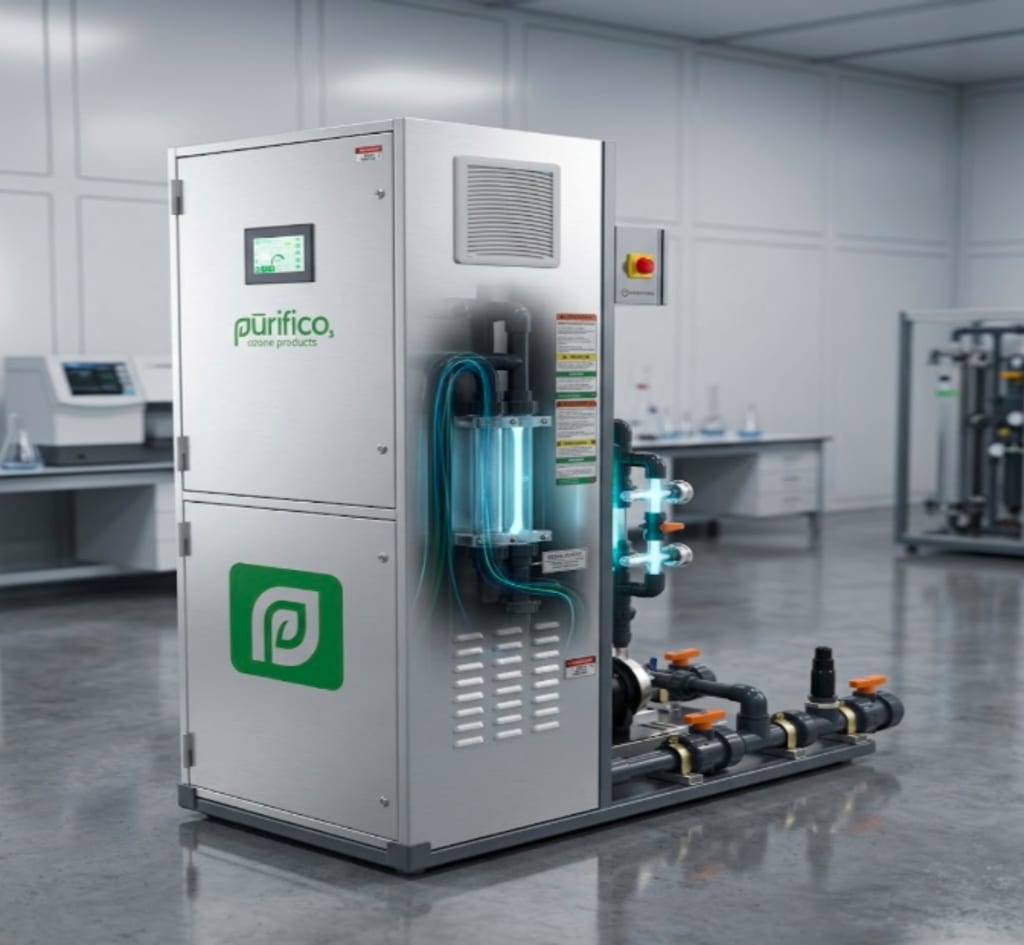
Commercial equipment — including product lines like the S, SC, HV, and C series systems — is built around exactly these controls, which is why a properly installed water treatment setup can run for years without a single exposure incident. In this context, an ozone generator isn't inherently more dangerous than the electrical panel powering it, and it's considerably safer than keeping drums of chlorine on site.
So, Safe or Not?
It genuinely depends on the application. Running a generator as an air freshener in an occupied room is unsafe, and the EPA is right to warn against it. Using one for shock treatment of an empty space is safe as long as the vacate-treat-ventilate protocol is followed all the way through. And using ozone in engineered water treatment systems, with proper monitoring and destruct equipment, isn't just safe — it's arguably safer than the chemical alternatives it replaces, since nothing hazardous is stored, delivered, or left behind in the water.
The Practical Takeaway
For homeowners: don't sleep in a room being treated, don't reenter early, and give it the full recommended ventilation window before you do. Treat the machine like a chemical fogger, not a fan.
For businesses or facilities considering ozone for water or process use: buy engineered equipment with built-in monitoring and destruct systems rather than repurposing consumer units, have it professionally installed and commissioned, and most of the safety question resolves itself through the design.
Ozone is a powerful tool with a well-understood hazard, and like most powerful tools, its safety lives in how it's used rather than in the device itself. Used carelessly in occupied air, it earns every warning it gets. Used correctly — in unoccupied spaces or engineered water systems — it does something no gentler method can match, then quietly reverts to the oxygen it came from.
About the Creator
Gulshan
SEO Services, Guest Post & Content Writter.
Enjoyed the story? Support the Creator.
Subscribe for free to receive all their stories in your feed.
Comments
There are no comments for this story
Be the first to respond and start the conversation.