
Apple’s Quietest AI Move Yet: It Didn’t Buy Huxe, It Bought the People
A dead podcast app, a team from Google, and the race to make audio that’s generated just for you.
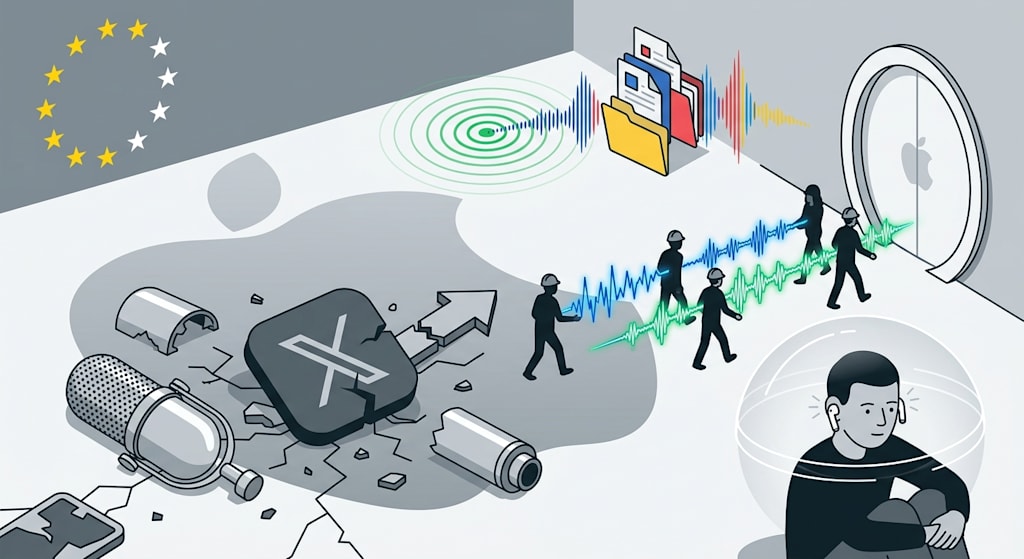
Apple did not buy Huxe. It hired some of its people and licensed its intellectual property. The disclosure sits in a filing with the European Commission, first reported by MacRumors. The wording is narrow: Apple agreed to make employment offers to certain Huxe AI employees and to take a non-exclusive license to Huxe’s IP. No price. No names. No product plan. The filing does not say who received an offer, whether anyone accepted, or what Apple intends to build.
That structure has a name: reverse acqui-hire. A large company does not swallow the startup whole. It takes the key team, licenses the technology, and leaves the corporate shell behind. The approach has become common in AI. It lets a buyer add talent and technical assets without triggering the loudest antitrust reviews. It also keeps the transaction quiet. A press release is optional. A blog post is not required. A filing can be written in the flat language of employment offers and licensing terms.
Huxe’s value was not its app store ranking. It was the people who built it. The founders came from the team behind NotebookLM’s AI-generated podcast feature. NotebookLM, now renamed Gemini Notebook, showed that a document could become a two-person audio conversation. Huxe pushed the idea further. It used personal data, including email, calendar, and interests, to generate audio briefings and podcasts. A user could interrupt the AI hosts and ask questions. The product treated audio as something generated in the moment, not recorded in advance.
The company did not last. On May 21, 2026, Huxe announced it was shutting down. The app was pulled from Apple’s and Google’s stores. The service stopped. User data was deleted. The farewell note on its website was direct: “We’re going to do new things. This product will not be developed further.” It thanked users for using it, telling friends, and sending suggestions. “You made us feel like we were building it together.”
One day before that note, Spotify launched its own AI podcast generation features, including question-and-answer and briefing generation. The timing lined up. On June 9, Apple filed the Huxe deal with the European Commission. The filing was restrained. It did not name the employees. It did not describe the technology. It did not explain what Apple would do with either.
The likely target is Apple Podcasts. Apple has a large podcast directory and a loyal listening base. It does not have a generative audio system that turns a user’s calendar, inbox, or reading list into a private show. Spotify has moved in that direction. Google’s NotebookLM proved the format. Apple’s Siri can speak, but it does not generate a daily audio briefing from personal context. Apple Intelligence can summarize, but it has not become an audio host.
Huxe’s team knows how to make that leap. Its product was built around the idea that audio can be assembled from personal data and shaped by a conversation. If Apple folds that capability into its products, several paths open. Apple Podcasts could generate personalized episodes from a user’s interests. Siri could produce a morning briefing from calendar, weather, email, and news. Apple Intelligence could turn long documents, meeting notes, or study materials into a conversational audio summary. None of these products is confirmed. The filing only confirms the ingredients.
The podcast itself is changing. For two decades, the model was subscription and listening. A creator records an episode. A listener subscribes, waits for the update, and presses play. The creator decides what to say. The listener decides whether to hear it. AI-generated audio breaks that sequence. If a system can generate a show from personal data, the content is not fixed. It is produced for one listener at one moment. Morning audio becomes a briefing. Midday audio becomes a study session. Evening audio becomes a story shaped to a child’s age and mood. The broadcast becomes narrowcast. The narrowcast becomes a single-person broadcast.
The technology is easy to imagine. The habit is harder. Podcast listeners often choose shows for the host. They like a voice, a sense of humor, a way of explaining things. An AI host can imitate conversation. It cannot easily copy the feeling of a person talking. When a listener knows the other side is a model, the relationship changes. That does not kill the format. It may simply create a different category: audio as utility. For information, learning, scheduling, and family routines, a generated show may be faster and more relevant than a downloaded episode. It may sit beside human podcasts rather than replace them.
Spotify, Google, and Apple are approaching this from different angles. Spotify is the fast tester. It has already put AI podcast generation in front of users and tied it to personal data. Google is the underlying technologist. NotebookLM demonstrated document-to-audio, and the Huxe team came from that project. Apple is the careful latecomer. It prefers to ship when the experience, privacy, and system integration are ready. The Huxe deal is a shortcut. Apple gets a team that has already built a personalized audio product and a license to the technology. It does not have to start from zero.
The winner will be the company that makes AI audio a daily habit. Spotify has a content library. Google has models and data. Apple has devices and system-level entry points. Each has a piece. None has the whole board.
Regulators are watching the deal structure, not just the deal. Reverse acqui-hires have become a way to move AI talent without the scrutiny of a full merger. The Federal Trade Commission has raised concerns that such transactions can evade merger review. Apple’s filing with the European Commission shows that it knows the eyes are there. The legal question is awkward. If a startup has already shut down, if the team has dispersed, and if the technology is licensed rather than bought, what is left to block? A regulator can stop a company from being acquired. It cannot easily stop people from taking new jobs. The competitive question is larger. When giants can absorb the most promising AI teams before those teams become independent players, the startup market loses some of its future.
Users remain the open variable. Personalized audio has clear uses. It can save time. It can adapt to context. It can answer a question in the middle of a show. But podcasts also thrive on human presence. The appeal includes information, but it also includes company. AI can generate a voice. It cannot yet generate a person. The market may split. Human podcasts for connection. Generated audio for tasks. Apple’s move suggests it is preparing for both.
The Huxe app is gone. The user data is deleted. The farewell note is still part of the public record. Apple’s filing says only that it made offers and took a non-exclusive license. Apple Podcasts still has no AI host. Siri still waits for a prompt. The next software update may change that. For now, the confirmed facts are a shutdown, a filing, and a quiet set of employment offers.
About the Creator
Jin
Writer of reamstories
https://reamstories.com/jin
Enjoyed the story? Support the Creator.
Subscribe for free to receive all their stories in your feed. You could also become a paid subscriber, letting them know you appreciate their work.
Comments
There are no comments for this story
Be the first to respond and start the conversation.