
Apple’s HomeView Is a $299 Bet That Your House Needs Siri
Apple finally built a smart home hub. The catch is that the people who need it most may not be able to buy it.
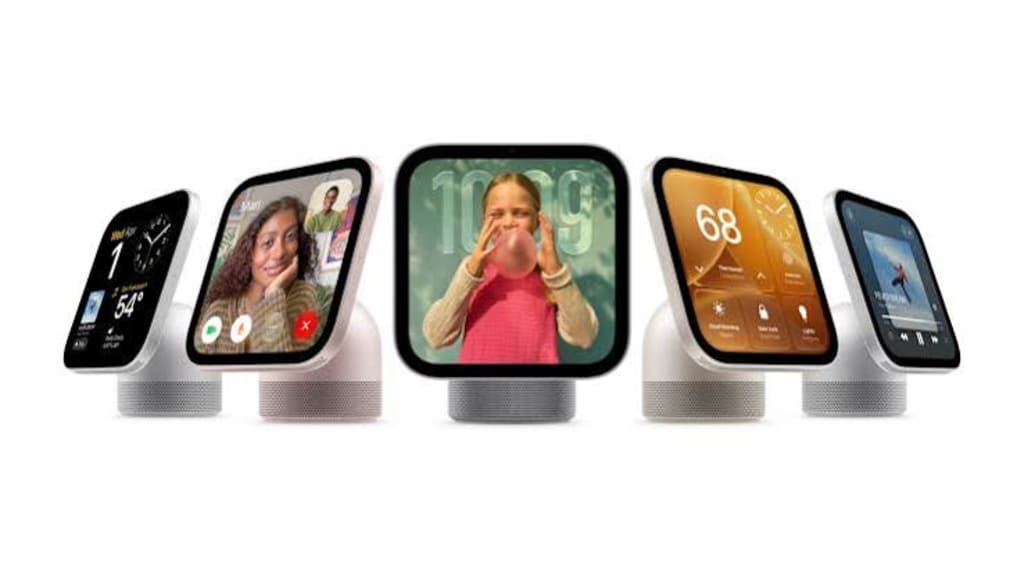
On October 13, 2026, Apple held an event called Welcome Home. There was no iPhone, no Mac, no iPad. The company put the living room, kitchen counter, and hallway at the center. It introduced HomeView, a $299 smart home hub with a 7-inch screen; a second-generation HomePod mini; a fourth-generation Apple TV 4K; and Apple Home Collection, a set of cameras, locks, thermostats, and sensors developed with LG and Schneider Electric.
The message was direct. After twelve years of HomeKit, Apple is no longer content to supply a protocol and let other companies build the experience. It is building the hub itself.
Twelve years of HomeKit: early start, small footprint
Apple launched HomeKit in 2014. It arrived before Xiaomi and Huawei pushed into smart home at scale. By 2026, the results were uneven. HomeKit had around 10% of the Chinese market and about 1,000 compatible devices. Amazon Alexa worked with roughly 140,000 devices. Google worked with about 85,000.
In the U.S. DIY smart home market, Parks Associates puts Amazon Alexa at about 31%, Google Home at 21%, Samsung SmartThings at 7% to 8%, and Apple HomeKit at 9%. In smart speakers and smart displays, Amazon Echo and Google Nest together hold about 91% of the market. Apple holds about 6%.
The reasons are not mysterious. Apple provided a framework. Third-party manufacturers joined. Apple did not tightly control the experience. The result was fewer devices, higher prices, and uneven automation. For a consumer buying a smart home setup, the first question was not “Does this work with HomeKit?” It was “Does this work with Mi Home or Alexa?”
HomeKit also lacked a visible control panel. Users relied on Apple TV or HomePod as an invisible hub. There was no screen for information, no visual control surface. Old Siri struggled with natural language. When a home had many devices, the experience could fall apart. HomeKit did local automation and privacy encryption well. Those benefits were hard for ordinary users to feel. Without a must-have feature, HomeKit stayed small.
HomeView: a screen that knows faces
HomeView is Apple’s answer.
The device has a 7-inch Liquid Retina display, an A18 chip, a 12MP camera, Wi-Fi 6E, Bluetooth 6.0, and Thread. The display supports True Tone and automatic brightness from 0.3 to 500 nits. The desktop version uses an aluminum body. The screen connects to a hemispherical speaker base through a stainless steel hinge and tilts. It comes in silver, starlight, rose pink, and space gray. The wall version uses Schneider Home mounts and comes in space gray and silver. Both versions cost $299. Preorders opened in Australia, Canada, India, New Zealand, the U.K., and the U.S. Singapore follows on October 15. Shipping starts November 13. The product will not be sold in the EU. Schneider’s Power Mount USB-C starts at $59.95, AC Wired at $79.95, and PoE Wired at $129.95 in early 2027.
The main difference is face recognition. HomeView can identify up to six family members. When it recognizes a face, it switches to that person’s interface. It shows that person’s Messages, FaceTime, Calendar, Reminders, and Find My content. Personal content appears only when the device recognizes a registered user, and that user’s paired iPhone or iPad is on the same home network and has been unlocked recently. HomeView does not store private data. Camera and microphone processing runs in Secure Exclaves. Apple says it cannot access the data.
Apple Global Marketing Senior Vice President Greg Joswiak described HomeView as a device “designed to be shared by everyone in the home, while feeling completely personal to each user.” The phrase is marketing, but the feature is concrete. The screen behaves like a shared appliance that changes identity. It does not work like a tablet tied to one account.
The interaction model is also deliberate. HomeView does not have an App Store. It runs Apple’s own apps. Third-party apps can cast widgets from an iPhone. The screen shows information. It is not the main place to tap and operate. Users talk to Siri AI. The screen shows status and results. Apple positions HomeView as a dedicated home appliance rather than an iPad.
The interface has watch-face-like options. Photos uses portrait depth. Flow reacts to presence and motion. Snoopy animations change with time, weather, sports, and holidays. Users can also set a shared album and use the device as a family digital photo frame.
Family features go beyond control. HomeView supports FaceTime, Center Stage, voice replies in Messages, and an on-screen keyboard. Intercom sends a voice message to selected rooms or the whole house. A web recipe can be turned into step-by-step instructions. There are hands-free timers and ingredient tracking. Find My and Live Activities show a playing song, timer status, or an intercom message from another room. The Home Camera interface can display up to nine video feeds at once. With iCloud+ and compatible cameras, HomeKit Secure Video can identify people, familiar faces, pets, packages, and vehicles. It can send a notification when someone arrives at the front door. It can detect smoke or carbon monoxide alarms and alert an iPhone, iPad, or Apple Watch.
The audio system is built for a countertop or a wall. The desktop version has two custom full-range drivers in the screen, a down-firing subwoofer in the base, and two passive radiators to cancel vibration. Computational audio adjusts output based on volume and conditions. The wall version uses dual drivers tuned for wall mounting. HomeView supports Apple Music, Apple Podcasts, Apple News, Apple TV, and compatible third-party audio and video apps. Handoff moves music from an iPhone. It can join HomePod and HomePod mini in a multi-room audio setup.
The supporting cast: HomePod mini 2, Apple TV 4K, and Home Collection
HomeView is not alone. Apple updated the rest of the home line.
HomePod mini 2 uses an S10 chip. It adds Sound Glow, a top light that changes with music and album art. With the fourth-generation Apple TV 4K, up to four units can form a surround sound system. The speakers identify their positions and calibrate timing and volume. Colors include pink, green, blue, white, and midnight. It costs $149 and ships October 30. The China price is 1,099 yuan.
The fourth-generation Apple TV 4K uses an A19 chip. CPU performance rises up to 50% over the previous generation. GPU performance can double. It adds an AV1 decoder. The box has three far-field microphones, so users can call Siri without picking up the remote. The new Siri Remote supports Find My precision finding. It costs $299 and ships November 13.
Apple Home Collection is a line of officially certified accessories developed with LG and Schneider Electric. It includes indoor and outdoor cameras, a video doorbell, a smart lock, a thermostat, and temperature and humidity sensors. Setup happens by tapping an iPhone. Everything is managed in the Home app. Users do not need a separate account or manufacturer app for each device. One LG indoor camera has a specific behavior. When the first family member arrives home, the lens turns down and stops monitoring.
The AI bet: Siri as the brain
The event’s central story is AI. HomeView, HomePod mini 2, and Apple TV 4K all use the new Siri AI.
The updated Siri AI can call personal context across Messages, Calendar, and Apple Music. A user can say, “Play that song Jeff mentioned in his text.” Or “Find the restaurant my friend recommended.” That kind of context-based conversation is how Apple extends its AI strategy from the phone into the home.
There are limits. Reports from WWDC26 said Siri’s memory is not persistent across conversations. If a user tells Siri “I have two kids” in one conversation, a new conversation will not automatically treat that as a permanent tag. Siri’s context is more within a session than across sessions.
Analyst Paolo Pescatore of PP Foresight told Reuters: “Apple needs to prove its AI can deliver benefits beyond basic voice commands, simplify daily tasks, and bring more intelligence to the home.” The point is practical. AI as a home brain depends on whether it makes daily actions simpler and more natural, not on whether it adds another wake word.
There is also a hardware requirement. To use Siri AI, the home owner in the Home app must have an Apple Intelligence-capable iPhone or iPad, updated to the latest system and with Siri AI enabled. For households that have not upgraded, that is a hidden cost.
Competition: $299 against cheaper screens
HomeView costs $299. That is not cheap next to its competitors.
Amazon Echo Show 8 costs about $200. Google Nest Hub costs about $100. HomeView is about 50% more than the Echo Show and nearly three times the Nest Hub. If a user mainly wants to check time and weather, play music, and control lights, the premium may be hard to justify.
Apple’s differentiation is clear. HomeView’s face recognition goes beyond the account switching on Echo Show and Nest Hub. Those devices switch profiles based on Amazon or Google accounts. They are not tied to phone brands. Apple’s system identifies multiple people and pushes personalized content. HomeView also has no ads. Echo Show can push promotions on screen. HomeView is designed to blend into a home, not to serve as an ad board on a kitchen counter.
There is a market signal. Parks Associates found that among HomeKit users, the share who said they would never switch to another platform rose from 13% in 2024 to 20% in 2025. The base is small, but loyalty is rising. That gives HomeView a relatively stable starting market.
Apple’s goal may not be to take share from Amazon and Google quickly. Smart home hardware has limited margins. The larger opportunity is services: iCloud storage for security video, Apple TV+, and possible advanced AI subscriptions. Home devices are a way to pull users into those subscriptions.
The missing markets: EU and China
HomeView will not be sold in the EU. The reason is the Digital Markets Act. The DMA requires Apple to open user data access to competitors. Apple says that conflicts with its privacy design. Siri AI is not available in iOS in the EU. HomeView depends on new iOS 27 features. Without Siri AI, the full product cannot ship. Apple says it is working with the EU on a solution. Until then, the market is on hold.
For China, the issue is Apple Intelligence. Its core features are not available in mainland China. Even if HomeView gets a China version later, the full Siri AI experience would be limited. For Chinese consumers, the practical product from this event is the HomePod mini 2 at 1,099 yuan.
What Apple is doing
Apple now builds the hub as well as the protocol. It is putting Siri AI inside that hub. It wants a device in the home that people can see, talk to, and rely on. HomeView is Apple saying: if third parties will not make the experience good, Apple will set the standard itself.
This is not the first time Apple has entered a market after others. The iPod was not the first MP3 player. The iPhone was not the first smartphone. The Apple Watch was not the first smartwatch. Apple’s pattern is to enter after the category is visible, then use design, chips, and system integration to redefine the experience.
Smart home is different. It runs on accessories, protocols, and routines. It does not behave like a single product. HomeView can be a good control panel. It cannot solve the structural problems of HomeKit by itself: fewer accessories, higher prices, and uneven automation. Apple Home Collection is a step. To match Alexa’s 140,000 compatible devices, Apple has a long way to go.
HomeView is a $299 screen with a camera, a microphone, and an A18 chip. The question is whether Apple can sell it to the 9% who already use HomeKit. The larger question is whether Siri AI can make controlling a home feel more natural than pulling out a phone, opening an app, and tapping a few times. If it can, Apple has found its way into the living room. If it cannot, HomeView is a well-built display that asks people to change habits they never minded having.
About the Creator
Jin
Writer of reamstories
https://reamstories.com/jin
Enjoyed the story? Support the Creator.
Subscribe for free to receive all their stories in your feed. You could also become a paid subscriber, letting them know you appreciate their work.
Comments
There are no comments for this story
Be the first to respond and start the conversation.