
Apple’s First Foldable Costs $2,200. It’s a Work Phone, Not a Toy.
The iPhone Duo gets the hinge and software right, but the crease, the 254-gram weight, the missing telephoto lens, and a delayed AI rollout in China make it a niche device for a very specific buyer.
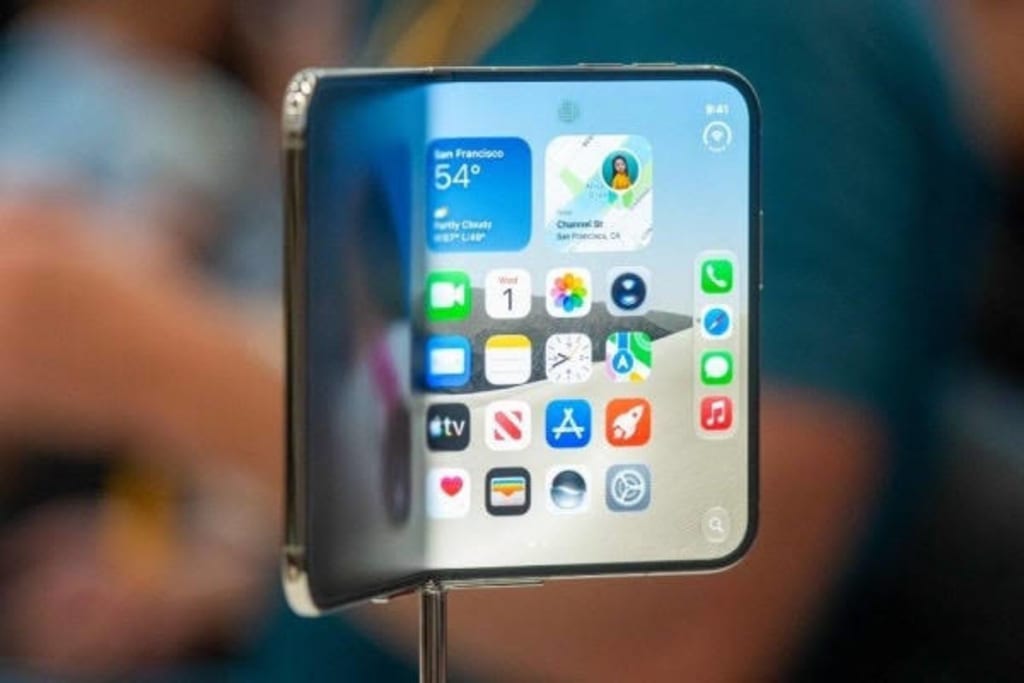
Apple's First Foldable: Competent, Not Revolutionary
Apple opened its foldable chapter on September 10, 2026. The iPhone Duo starts at 15,999 yuan in mainland China and reaches 26,499 yuan for the 2TB model.
It was John Ternus's first launch as CEO. He had two things to prove: Apple had not missed the foldable market, and Apple's AI plan was more than a slide. The iPhone Duo carries both arguments.
It proved them partly.
The crease
The crease is the first thing people notice on a foldable. Apple attacks it with nano-textured glass, a multi-layer sliding structure, a hinge with more than 100 micro-components, and a carbon fiber support plate. Apple says the display is 40 percent more rigid than other foldable displays.
Hands-on videos show a flat inner screen. Reviewers say the crease is hard to see at normal viewing distance.
One detail matters. When the screen is off, the display becomes a black surface. The crease is easier to see. Many early videos showed the screen on. Fewer showed it off. That is not an accident.
Apple's own wording is careful: it “minimizes the visibility of the crease.” It does not claim to remove the crease. Apple cannot remove it. Physics does not bend for Cupertino. The company has made one of the flattest foldable screens on the market. That is an engineering result. Calling it a crease-free screen is false.
What Apple optimized, and what it gave up
The iPhone Duo follows a familiar Apple pattern. It spends heavily where Apple controls the experience. It compromises where Apple thinks users will accept the trade-off.
The hinge is the strongest part. A Grade 5 titanium frame, an aerospace-grade aluminum body, and IP68 water resistance. The hinge opens with even resistance. It does not feel loose. This is serious mechanical work.
The software also fits the form. iOS 27 includes Split View, a vertical dock that uses the unfolded space, and app continuity between the inner and outer screens. In half-folded mode, the phone becomes a small laptop: content on top, keyboard on the bottom.
Android foldables have existed for seven years. Many still stretch phone apps to tablet size. Apple adapted the system. That gives it an advantage.
The costs are clear. The phone weighs 254 grams. The Samsung Galaxy Z Fold8 weighs 201 grams. The difference is 53 grams, about the weight of an egg. You feel it in a pocket. Folded, the iPhone Duo is 11.3 mm thick. A standard slab phone is much thinner.
There is no telephoto lens. The iPhone Duo has two 48MP cameras: a main camera and an ultra-wide. Maximum optical zoom is 2x. At 15,999 yuan, a foldable without a telephoto means you crop from the main camera for distant shots and portraits. That is a gap in the 2026 flagship market.
Apple's bet is simple: hinge and software matter more than weight and camera range. Whether that bet pays off depends on the buyer.
eSIM and AI: China gets a different phone
Weight and camera are global trade-offs. eSIM and AI are specific to mainland China.
The iPhone Duo uses eSIM only worldwide. Buyers in mainland China must take their ID to a carrier store and activate the phone there. The mainland model stores at most two eSIMs. The Hong Kong and overseas models store eight.
Two eSIMs are enough for some users. For people who switch SIM cards often, or move cards between devices, this is a barrier. You cannot pull a card from an old phone and put it in the new one in five seconds. You have to visit a carrier store.
AI is the larger problem. In July 2026, Apple Intelligence passed filing with the Cyberspace Administration of China. The compliance step was done. At the launch, Apple said the new Siri AI would start with English only. Mainland China is not in the first group. Apple China's website is more cautious. It says the new iPhone is “ready for Apple Intelligence” and that launch timing “depends on regulatory approval.”
So a buyer pays 15,999 yuan for an A20 Pro chip, dual neural engines, a 32-core architecture, and a 2nm process. Those are the hardware pieces for on-device AI. The AI features are not available.
The eSIM rules make this worse. The mainland model lacks the full AI experience. The overseas model cannot normally use a mainland China phone number. Apple has not solved this. It has not given a date for AI on the mainland model either.
Ternus called Apple's AI plan an “intelligent personal hub.” He said it needs “ubiquitous network connectivity” and “powerful on-device models.” A mainland iPhone Duo that cannot use AI is not that hub yet.
What 15,999 yuan buys
The price has a logic. The A20 Pro chip delivers 35 percent higher sustained performance than the iPhone 17 Pro. The dual-battery design gives 44 hours of video on the outer screen, 24 hours of mixed use, and 31 hours on the inner screen. Five minutes of fast charging gives up to five hours of outer-screen video. Both screens support Apple Pencil, a first for the iPhone line.
A logical price is not the same as a good purchase.
Foldables remain a small market. IDC expects global foldable shipments to grow 12.6 percent in 2026, to about 22.9 million units. By 2030, the figure may reach 45 million. Total smartphone shipments are over a billion units a year. Foldables are less than 3 percent of that.
Apple will change the category. IDC expects Apple to take 22 percent of the foldable market in its first year. Counterpoint expects 25 percent, or 6 million units, and a global No. 2 rank. But the category itself is still niche. It will not become a mass-market product soon.
This is a high-end device for a specific buyer. It is not a phone for everyone.
Who should buy it
Buy it if you depend on Apple's products and services and need to work away from a desk. The 7.6-inch inner screen, Split View, Apple Pencil support, and app continuity can improve mobile work. The hinge feels solid. The software fits the screen. The 254-gram weight and 11.3 mm thickness are easier to accept if you use the phone sitting down, not while walking.
Do not buy it if portability matters. The weight is noticeable. Do not buy it if you care about cameras. A 15,999-yuan phone without a telephoto is hard to justify in 2026. Do not buy it if you mostly watch short videos and use social media. The unfolded screen needs two hands. A slab phone is easier to use in bed.
Mainland China buyers must decide whether they are willing to pay 15,999 yuan, wait for Apple Intelligence without a clear date, and accept eSIM activation at a carrier store. If yes, the iPhone Duo is the most complete foldable iPhone available. If no, wait.
Final thoughts
The iPhone Duo is mature, not revolutionary. It shows Apple can build a strong hinge and software that fits the form. Its battery life is strong for the category.
It does not change the basic facts of foldables: heavy, expensive, and niche. The 254-gram weight, the missing telephoto, the missing AI in mainland China, and the eSIM-only setup are not solved by the Apple brand alone.
Ternus says AI will create new experiences. That may be true. A mainland iPhone Duo that cannot use AI cannot create that experience today.
Apple's first foldable is a serious attempt. Whether it is worth 15,999 yuan depends on which user you are. For a Silicon Valley reviewer, it is a new benchmark for foldable maturity. For a mainland China buyer, it is a phone whose AI features are not ready.
About the Creator
Jin
Writer of reamstories
https://reamstories.com/jin
Enjoyed the story? Support the Creator.
Subscribe for free to receive all their stories in your feed. You could also become a paid subscriber, letting them know you appreciate their work.
Comments
There are no comments for this story
Be the first to respond and start the conversation.