
Apple Broke a 16-Year-Old Promise. The $400 Premium Is Not About Touch.
The new 14-inch MacBook Pro bundles an OLED screen, a lighter body, a glowing logo, and a limited touch experience. You cannot buy the screen without the touch.
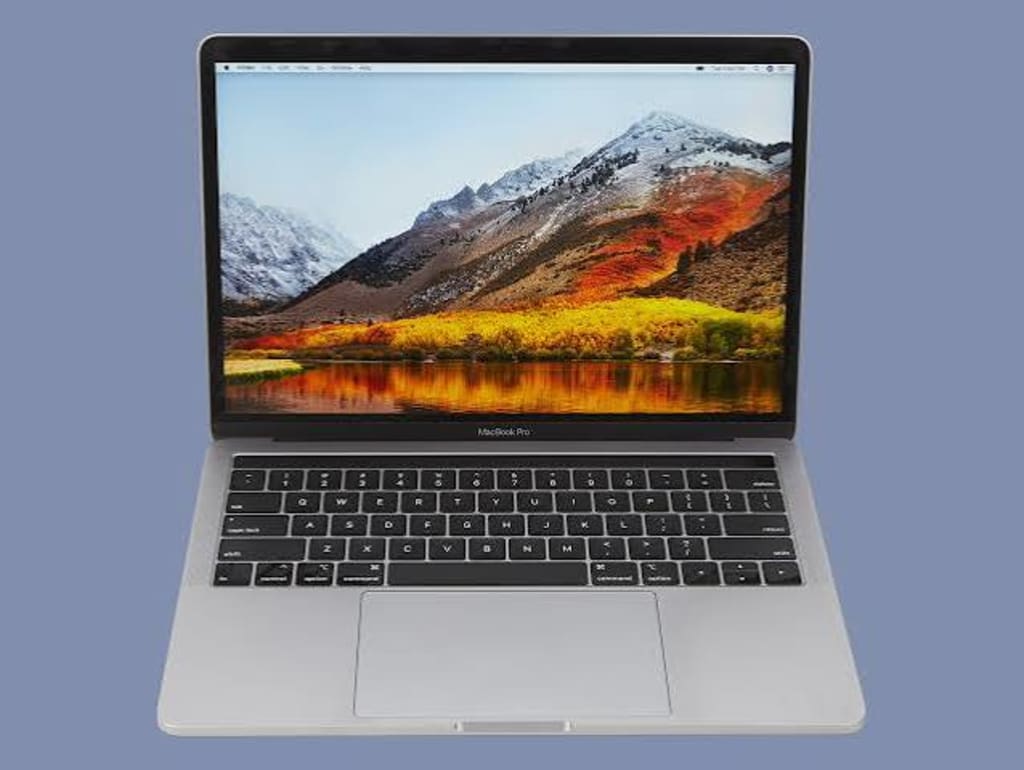
In October 2010, Steve Jobs said touchscreen laptops do not work. “Touch surfaces don’t want to be vertical,” he said at the Back to the Mac event. “It gives great demo, but after a short period of time you start to fatigue, and after an extended period of time, your arm wants to fall off.” Sixteen years later, Apple shipped its first touchscreen MacBook Pro. The 14-inch model starts at $2,899. That is $400 more than the non-touch version with the same core configuration, a 16.01% increase. In China, it costs 22,999 yuan, 3,000 yuan more than the 19,999-yuan mini-LED model.
A feature the founder publicly rejected has returned with a 16% premium. Jobs’s ergonomic argument still holds. So what does that $400 sell?
Jobs Was Right. Apple Found a Different Opening.
The gorilla arm problem has not gone away. The new MacBook Pro hinge stops at 135 degrees. It does not lie flat at 180 degrees, and it does not flip 360 degrees. You cannot rest it on a desk and use your fingers the way you would on a tablet. Hold your arm up long enough to tap the screen, and it will ache.
Apple accepts Jobs’s premise and avoids his conclusion. macOS did not become iPadOS. The keyboard and trackpad remain the main interface. Touch is a supplement. Apple is not asking you to spend the day poking the screen. It is asking you to use a finger for short, precise actions: marking in and out points in Final Cut Pro, dragging clips, pinch-zooming the timeline; turning the screen into a touch keyboard and drum pads in Logic Pro; drawing and selecting in Pixelmator Pro. These actions do not require ten minutes of raised-arm work. They require a finger for the few seconds when a mouse movement feels clumsy.
Jobs’s judgment stands. Apple chose a narrow use case he did not take seriously. Touch fills gaps where keyboard and mouse feel clumsy. It does not replace them.
The 3,000 Yuan Buys a Bundle You Cannot Split.
Look only at the word “touch,” and the 3,000-yuan gap looks absurd. The touch and non-touch versions share the same starting chip, memory, and storage: M5 Pro, 24GB unified memory, 1TB SSD. The premium buys changes across the whole machine. Apple does not let you choose them one by one.
The screen matters most. ProLED XDR tandem OLED, 2,000 nits peak brightness, 10 million:1 contrast, P3 and Adobe RGB coverage, and Rec.2020 coverage above 80%. For colorists, HDR reviewers, and photographers, the screen alone justifies the purchase. The chassis is also thinner and lighter. The 14-inch model drops to 1.4 kg. The hinge was redesigned to keep the screen stable during touch input. The cooling system changed too.
Apple did not make OLED exclusive to the touch model. It also did not offer OLED without touch. If you want this screen, you accept touch. You accept the thicker glass or coating prepared for fingers. You accept an input method you may never need. How much of the 3,000 yuan pays for the screen, how much pays for touch, and how much pays for engineering changes is a calculation Apple never intended you to finish. That ambiguity is the pricing strategy. It moves the decision from “Is touch worth 3,000 yuan?” to “Is there at least one thing in this bundle that makes me pay more?”
The Compromises Are Concrete. They Do Not Vanish Because Apple Made Them.
Fingerprints and smudges are the visible cost. Apple uses the same oleophobic coating as on the iPhone and iPad. The coating wears down with wiping. A laptop screen that people touch will need cleaning more often than a non-touch screen. Apple also updated the compatibility list for its $9 polishing cloth to include this ProLED XDR display. A cloth sold separately, with its own updated compatibility note, is the clearest evidence that touch will dirty the screen.
The software split will not heal because macOS 27 has touch optimizations. First-party apps are adapted. Many third-party professional apps are not. Plenty of operations still depend on the trackpad. A device starting at 22,999 yuan has a core selling point that, on launch day, works only inside a limited list of software. Apple’s brand does not change that.
The Dynamic Island on the Mac visually intrudes deeper into the content area than the notch did. Users who worry it will block the top UI of apps are not imagining things. Apple’s solution lets the Dynamic Island pull down into a floating widget. Menu bar items expand when touched, and window controls enlarge for finger precision. The top of the screen stops being a passive blocked area. It becomes an entry point for Spotlight, Live Activities, and Siri. Whether it stays out of the way in daily use needs hands-on time. It is not a decorative transplant.
The glowing logo returns. Apple filed a patent in 2022 for a backlit partial reflector. On the new MacBook Pro, the logo brightness follows screen brightness. When the light is off, it looks metallic. When the light is on, it glows. The chassis mold has not changed for years. A recognizable visual symbol is part of product segmentation. It adds no productivity. It serves the people who need others to know they bought the latest model.
Who Will Buy It, and Who Will Not.
TrendForce estimates 1.2 million to 1.5 million shipments in 2027. Ming-Chi Kuo’s earlier production plan reached 2 million to 3 million units per year. Against a MacBook market of roughly 20 million to 25 million units a year, that is 5% to 7%. This model is not a mass-market product. It does not need to be.
The buyers are easy to picture. Imaging and design professionals come for the OLED screen. Touch and Apple Pencil are a bonus. Editors, musicians, and illustrators find a few actions in Final Cut, Logic, and Pixelmator where touch beats keyboard and mouse. Users with no budget pressure want a visible sign that they bought the latest model. The glowing logo and Dynamic Island provide that sign. They buy a bundle. They do not buy the label “touch.”
The non-buyers are just as clear. For office work, coding, and word processing, touch adds almost no efficiency. Those users would pay 3,000 yuan for changes they do not need. People who care about a clean screen face a display that will show marks more often than a non-touch model. The group that trusts Jobs’s judgment has no reason to switch. Apple still sells the mini-LED non-touch version. It costs less and has the same core performance.
Apple did not make touch correct. It made touch optional, but not removable. It bundled a better screen, a lighter body, a more visible symbol, and a limited touch experience. The premium holds only for a specific group. Jobs said touchscreen laptops were an ergonomic disaster. Sixteen years later, Apple’s answer is: you were right. We did not make touch the main input. We put it in a box that enough people will buy for other reasons.
Whether that counts as redefining depends on which side of the box you stand on.
About the Creator
Jin
Writer of reamstories
https://reamstories.com/jin
Enjoyed the story? Support the Creator.
Subscribe for free to receive all their stories in your feed. You could also become a paid subscriber, letting them know you appreciate their work.
Comments
There are no comments for this story
Be the first to respond and start the conversation.