
Apple Answered a Question Nobody Asked. The iPad Mini 8's 60Hz Problem Isn't About the Screen.
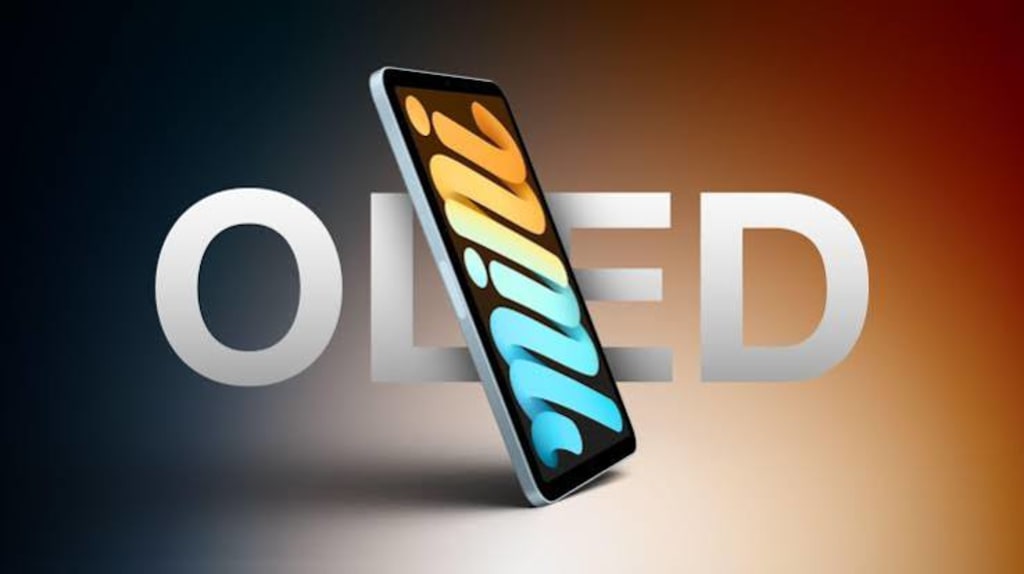
OLED's fast pixel response is real. It's also completely irrelevant to why a 5,499-yuan tablet in 2026 still can't manage 120Hz.
1. What the Executive Said, and What He Didn't
Pakula's exact words deserve to be taken apart sentence by sentence. He said: "The display experience isn't determined by a single spec. One of OLED's big advantages is its extremely fast pixel response time, more than an order of magnitude faster than LCD. The benefit is that the picture looks very fluid. Compared with LCD, it significantly reduces motion blur. Add contrast, brightness, color, and the other aspects, and this is absolutely an excellent display."
Every sentence in that passage is true. OLED pixel response time is far faster than LCD's; there is less smear; contrast and brightness are higher. The problem is that users asked "Why no high refresh rate?" and he answered "The rest of this screen is strong." That isn't lying. It's answering a different question.
60Hz means the screen updates 60 times per second, one frame every 16.67 milliseconds. 120Hz compresses that interval to 8.33 milliseconds. Pixel response time determines how clean a single frame is: how long a pixel takes to change from one color to another. Refresh rate determines how smoothly one frame follows the next: how often the picture changes. The former governs smear; the latter governs stutter. Pakula used the former to cover for the latter, using "clean picture" to answer "insufficient frame rate." They are two different dimensions. One cannot substitute for the other.
2. A Counterintuitive Fact: OLED Can Make 60Hz Look Worse
More troublesome is that OLED's fast response at 60Hz does not necessarily make the subjective sense of fluidity better. It can even make stutter more obvious.
On older 60Hz LCDs, the slow twisting of liquid crystals produces slight motion blur. That smear unintentionally acts as a lubricant between frames. The previous frame hasn't fully disappeared before the next one arrives, so some of the 60-frame jumpiness is masked by blur. OLED pixels switch almost instantly. Once smear is gone, every frame is crisp and sharp. The discontinuous jump between frames, 60 discrete pictures per second, is instead exposed and amplified.
OLED makes individual frames cleaner, but it can make the frame-skipping feel of a low frame rate more glaring. Using "less motion blur" to answer "why no high refresh rate" is using a first-layer advantage to explain a second-layer absence. Users aren't incapable of understanding the technology. They don't like being treated as if they can't.
3. The Real Reasons ProMotion Is Missing, Reasons the Executive Didn't Mention
Multiple analysts point to two reasons. Pakula mentioned neither.
The first is product segmentation. ProMotion supports adaptive refresh from 10Hz to 120Hz and has long been a core selling point of the iPad Pro. If the iPad mini, starting at 5,499 yuan, also got 120Hz, it would directly cannibalize the appeal of the more expensive iPad Pro. Apple would rather customize a 60Hz panel for the mini than preserve the hierarchy of its product line. Analysts have noted that Apple "would rather customize a 60Hz panel for the mini than preserve the hierarchy of its own product line."
The second is panel type and battery-life trade-offs. Some analysis suggests the iPad mini uses a lower-cost LTPS OLED rather than the LTPO panel on the iPad Pro that supports adaptive refresh. If LTPS were forced to run at 120Hz, it could not drop its refresh rate for static content, putting pressure on battery life. Neither reason is flattering, but they answer "Why 60Hz?" The executive chose not to say them.
4. Why 60Hz in 2026 Stands Out So Much
If this were a budget tablet, 60Hz would not spark such controversy. But this is a 5,499-yuan iPad mini with OLED, P3 wide color, 326ppi, a 2,000,000:1 contrast ratio, 600 nits SDR brightness, 1,200 nits HDR brightness, IP67 dust and water resistance, and an all-new acoustic display. The better the screen, the more conspicuous the absence of 60Hz becomes. What users feel is not "this screen is bad," but "this screen could have been more complete."
The market environment in 2026 has changed. 120Hz high refresh rates are now common even on budget phones, and a large number of users have grown used to the continuity of high refresh. Research on refresh-rate perception shows that users are especially sensitive to a drop back down. Once the eyes are accustomed to high refresh, the discontinuity when falling back to 60Hz is amplified, not offset by cleaner individual frames. One user said that with an iPhone 17e test unit, the 60Hz experience felt "like sudden network lag." That isn't being precious; it's the perception of someone conditioned by high refresh.
5. Conclusion
The OLED screen on the iPad mini 8 is excellent in itself. Fast response time, high contrast, improved brightness, vivid color: these are advances. The executive's technical facts are not fabricated, and OLED can produce cleaner motion.
But "the screen is excellent" and "the response is persuasive" are two different things. Users asked about an absence; Apple answered with a presence. Users asked about frame rate; Apple answered with response time. Users asked whether a 5,499-yuan device in 2026 should have high refresh; Apple answered with how good the screen's other specs are. That is a shift of the question, not a technical explanation.
Apple can choose not to give the iPad mini 8 a high refresh rate. Product segmentation and battery-life trade-offs are legitimate business decisions. But it should not try to make users believe that "no high refresh rate is also fine." For a 5,499-yuan device, users expect OLED's pure image quality plus the continuity of high refresh. When even budget phones have high refresh, using "experience isn't just about specs" to explain the retention of a core spec on a top-tier product line is, in effect, asking users to accept a compromise set by product strategy rather than technical necessity.
An excellent screen doesn't upset anyone. What upsets them is a product compromise presented as technical inevitability.
About the Creator
Jin
Writer of reamstories
https://reamstories.com/jin
Enjoyed the story? Support the Creator.
Subscribe for free to receive all their stories in your feed. You could also become a paid subscriber, letting them know you appreciate their work.
Comments
There are no comments for this story
Be the first to respond and start the conversation.