
Apple Alleges Former Employee Used Confidential Technology at OpenAI
The company claims a former engineer accessed trade secrets, worked with an OpenAI colleague to destroy evidence, and exploited an authentication flaw

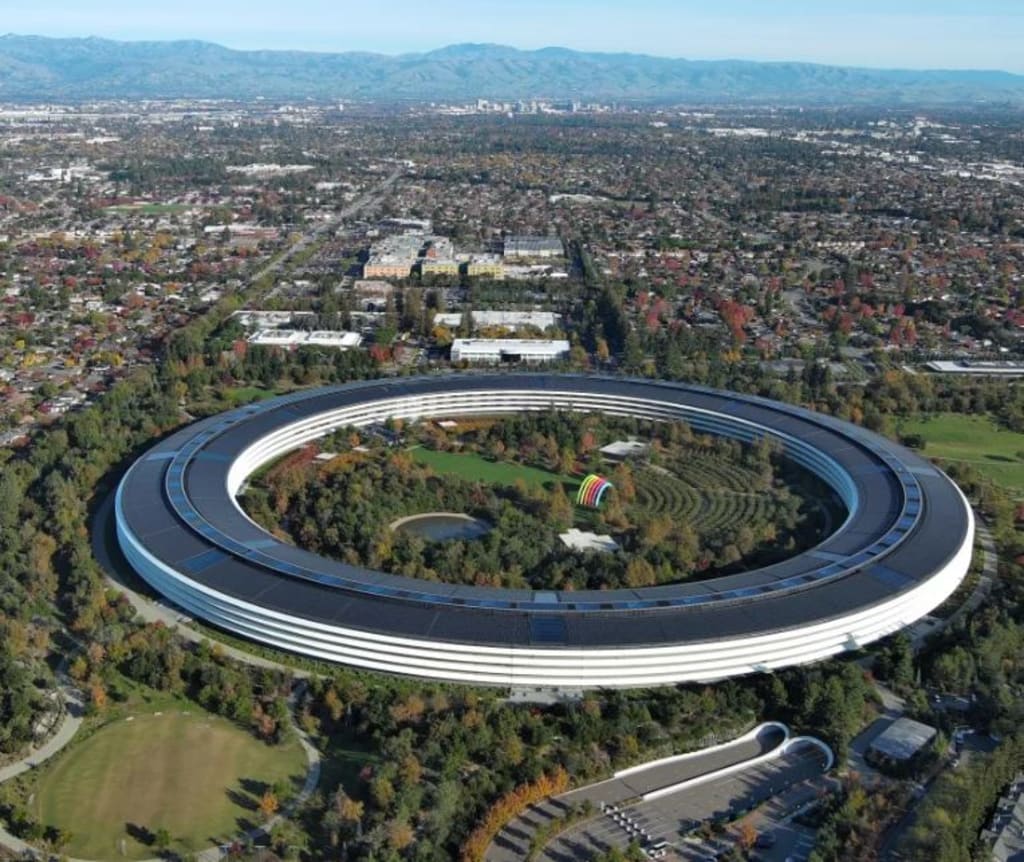
Apple has submitted what it describes as “shocking evidence” in its lawsuit against OpenAI, intensifying allegations that a former employee transferred confidential information to his new employer.
The latest claims emerged after legal counsel for Chang Liu, a former Apple employee who now works at OpenAI, provided Liu’s old Apple work laptop for investigation earlier this month. Apple says its examination of the device revealed evidence that Liu may have used protected Apple materials in his work at OpenAI.
According to a recent court filing, Apple alleges that Liu used a confidential circuit schematic belonging to the company. Apple also claims that he used a tool whose name matches that of an internal Apple engineering application. The company argues that these details support its allegation that Apple technology and trade secrets were improperly carried into OpenAI.
Apple further alleges that OpenAI was “well-aware” of Liu’s access to Apple data. The company claims that Liu sought help from OpenAI colleague Yu-Ting Peng to destroy evidence in June after learning that Apple had begun investigating his activities.
“The MacBook represents the very limited information Defendants provided so far,” Apple’s filing states, arguing that the device was produced only after weeks of delay. The company says the laptop demonstrates that it is not conducting a baseless search for information, but investigating whether its trade secrets were used and whether evidence was destroyed.
The newest evidence remains largely redacted from public court documents. However, earlier Apple filings included text messages allegedly sent by Liu. Some of those messages were punctuated with “crying laughing” emojis, which Apple presented as evidence that Liu knew he still had access to Apple files after leaving the company.
OpenAI has previously defended Liu and disputed Apple’s characterization of his access. In a blog post published earlier this month, the company said Liu accessed Apple files only after he had stopped working there and only to help former Apple colleagues who requested his assistance.
OpenAI also argued that Apple was attempting to shift responsibility onto Liu for what it called “residual access.” The company claimed that former employees sometimes retain access to internal systems because Apple does not properly manage permissions when employees leave.
Apple disputes that explanation. The company claims Liu’s continued access was not merely the result of an ordinary administrative oversight. Instead, Apple alleges that Liu “exploited a rare, previously unknown authentication bug.”
The disagreement over how Liu retained access could become central to the case. OpenAI’s position suggests that any access occurred because Apple failed to revoke permissions properly. Apple’s account suggests that Liu intentionally took advantage of a technical vulnerability to reach information he was no longer authorized to use.
Neither side’s allegations have been finally established in court. The filing represents Apple’s claims, while OpenAI has offered a different account of Liu’s actions and the company’s internal access controls. TechCrunch has requested comment from OpenAI regarding Apple’s latest allegations.
Apple is seeking a preliminary injunction that would prevent OpenAI from working on hardware based on Apple technology while the lawsuit continues. A preliminary injunction is a court order issued before a final judgment that can temporarily restrict a party’s actions when a judge determines that immediate measures may be necessary.
The company is also asking for expedited discovery. That request would accelerate the process through which the parties exchange documents, communications, device data, and other evidence. Apple argues that fast-tracked discovery is necessary because more former employees may be involved.
According to Apple’s original lawsuit, more than 400 former Apple employees now work at OpenAI. That figure is significant because it raises the possibility of overlapping knowledge, shared systems, and access to confidential information across the two companies.
The lawsuit reflects growing competition between Apple and OpenAI as both companies pursue advances in artificial intelligence and hardware. OpenAI has expanded beyond software and is reportedly interested in developing new consumer devices, while Apple has spent decades building proprietary technologies, design systems, and engineering processes.
Trade-secret disputes often depend on highly technical evidence. Companies must show that information was confidential, that employees had a duty to protect it, and that it was improperly acquired, used, or disclosed. They may also need to prove that the alleged misuse caused or could cause measurable harm.
The laptop provided by Liu’s legal team could become an important source of evidence. Digital devices may contain documents, application histories, messages, access records, and other information that helps establish what files were viewed or transferred. They can also reveal whether data was deleted or altered.
Apple’s claim that evidence was destroyed adds another serious dimension to the dispute. If proven, attempts to remove or conceal relevant information could lead to additional legal consequences and influence how the court evaluates the parties’ conduct.
At the same time, OpenAI’s argument about residual access could raise questions about Apple’s own security practices. When employees leave a company, organizations typically need to disable accounts, revoke permissions, retrieve equipment, and monitor unusual access. If those processes fail, determining responsibility can become complicated.
The case may therefore involve more than an alleged misuse of trade secrets. It could also examine how technology companies protect sensitive information when employees move between competitors. As competition for engineers and researchers intensifies, employee mobility has become a significant source of both talent and legal risk.
For now, the court has not ruled on Apple’s request for a preliminary injunction or expedited discovery. The next phase of the case will likely focus on examining the laptop, reviewing access records, and determining whether Liu used Apple’s confidential materials in his work at OpenAI.
Apple’s latest filing presents the allegations as evidence of deliberate misconduct. OpenAI has maintained that Liu’s access was connected to assistance for former colleagues and that Apple’s systems allowed the access to continue. The court will ultimately have to determine which account is supported by the evidence.
The dispute highlights the increasingly valuable nature of technical knowledge in the technology industry. A circuit schematic, internal engineering tool, or authentication method may represent years of investment and development. For companies such as Apple and OpenAI, protecting that information is central to maintaining a competitive advantage.
As the lawsuit proceeds, the investigation of Liu’s laptop and the question of how other former Apple employees handled confidential data could determine whether the case remains focused on one individual or expands into a broader conflict between the two companies.
About the Creator
Mark Lim
Hi I am mark an automotive student and a car, tech and food enthusiast ! Im gonna try and post daily & hope you enjoy what I write and do share my page with people you know. I would gladly appreciate it! Cheers
Enjoyed the story? Support the Creator.
Subscribe for free to receive all their stories in your feed.
Comments
There are no comments for this story
Be the first to respond and start the conversation.