
Analysis Of Common Faults Of Film-Blowing Machine
Film-Blowing Machine

Introduction
In plastic manufacturing, the film blowing process is one of the most sensitive and technically demanding operations. Every detail matters, from the temperature inside the extruder barrel to the airflow around the cooling ring. Even a small fluctuation can change the entire film structure and affect the final product quality.
One of the most frequently reported production issues is when Bubble film is unstable, polymer molecules fail to maintain uniform behavior during extrusion. This instability does not come from a single cause. Instead, it develops through a combination of material inconsistency, machine settings, and environmental conditions.
Understanding these faults is not just about fixing machines. It is about understanding how polymer science, mechanical design, and real-time process control work together in a film blowing line.
Behavior of Film Blowing Process in Real Production
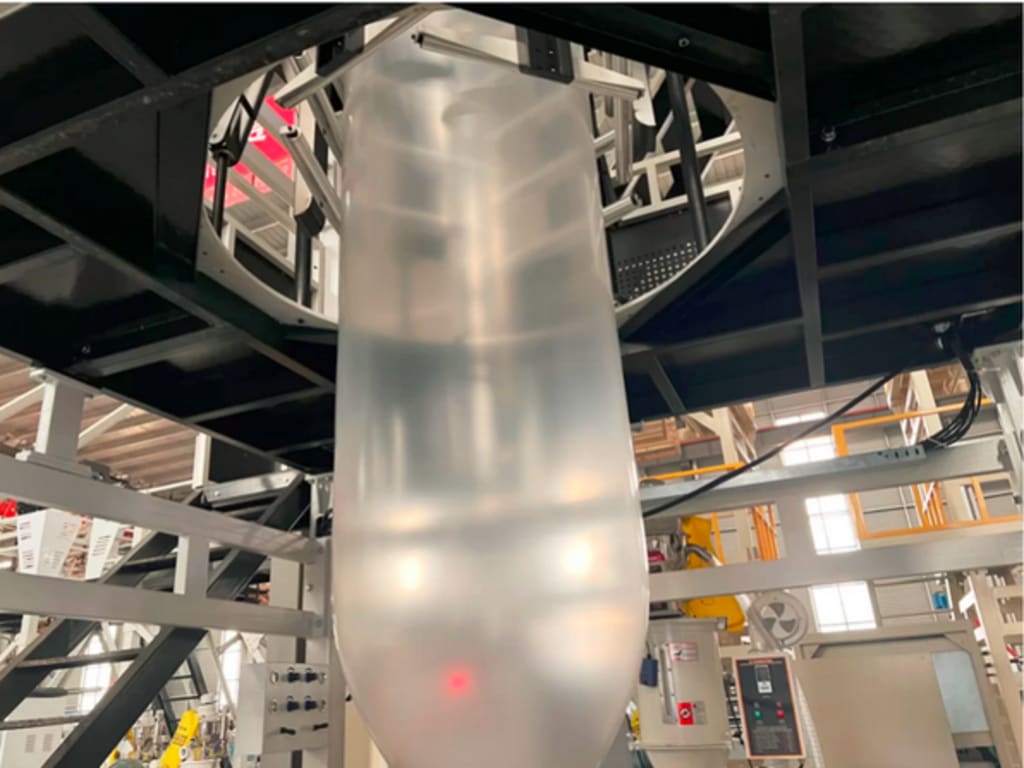
In a typical extrusion system, plastic resin such as LDPE, HDPE, or LLDPE is melted inside the extruder. The molten polymer flows through the die head and forms a tubular bubble. This bubble is then stretched upward, cooled by an air ring, and flattened into film by nip rollers.
During this journey, the polymer melt flow must remain stable. If viscosity changes or pressure becomes inconsistent, the system reacts immediately. This is where many operators notice that Bubble film is unstable, and polymer molecules are not aligning properly during stretching.
When molecular chains lose alignment, the film becomes weak, uneven, and difficult to control. This is why process stability is extremely important in every stage of production.
Instability in Bubble Formation and Its Root Causes
Bubble instability is one of the most critical issues in film blowing machines. It often appears as vibration, uneven expansion, or sudden collapse of the film bubble.
In many cases, Bubble film is unstable, polymer molecules are affected by inconsistent melt temperature inside the extruder barrel. If the heating zones are not balanced, the polymer does not melt evenly, causing fluctuations in extrusion pressure.
Another major reason is irregular airflow from the cooling ring. If the air distribution is not uniform, one side of the bubble cools faster than the other, leading to deformation. Screw speed variations, improper die head alignment, and unstable back pressure also contribute to this problem.
Even resin quality plays a major role. Low-grade polyethylene or poorly mixed masterbatch can disturb polymer flow behavior and reduce bubble stability.
Polymer Molecules and Their Role in Film Quality
At a deeper level, the quality of film depends on how polymer molecules behave during processing. These molecules must stretch, align, and crystallize in a controlled way to form a strong film structure.
When Bubble film is unstable, polymer molecules fail to maintain proper orientation, the entire structure becomes weak and inconsistent. This results in poor tensile strength, reduced clarity, and uneven thickness distribution.
Factors such as molecular weight distribution, thermal stability, and additive compatibility all influence how these chains behave. For example, excessive slip agents or antiblok additives may interfere with polymer bonding and reduce film strength.
Understanding this molecular behavior helps operators adjust processing conditions more effectively instead of relying only on machine adjustments.
Temperature Control and Its Direct Impact
Temperature management is one of the most sensitive areas in film blowing technology. The extrusion temperature must be stable across all heating zones to ensure smooth polymer flow.
If the temperature rises too high, melt fracture and sharkskin defects can appear on the film surface. If it drops too low, incomplete melting leads to blockages and unstable pressure.
When Bubble film is unstable, polymer molecules often indicate poor thermal control inside the system. Thermocouples, heater bands, and PID controllers must all work together to maintain consistent heat distribution.
Even slight deviations in temperature can affect viscosity, which directly impacts bubble formation and film uniformity.
Mechanical Issues in Film Blowing Machines
Mechanical performance is equally important in maintaining production stability. The extruder screw and barrel experience constant stress during operation. Wear and tear can gradually reduce efficiency and affect output consistency.
Gearbox issues, motor load fluctuations, and improper torque settings can also lead to unstable extrusion flow. When these mechanical systems do not operate smoothly, Bubble film is unstable, polymer molecules are forced into irregular stretching conditions.
In addition, misalignment in nip rollers or haul-off systems can create tension imbalance, leading to wrinkles and edge waviness in the final film product.
Cooling System and Airflow Control
The cooling system plays a major role in stabilizing the bubble. The air ring must provide even airflow around the entire bubble surface. If airflow is uneven, one side of the bubble cools faster, which creates distortion.
This imbalance often causes Bubble film is unstable, polymer molecules to lose uniform
stretching behavior. Frost line height becomes inconsistent, and film thickness varies across the width.
Proper adjustment of cooling air velocity, combined with stable extrusion speed, ensures better control of bubble shape and film clarity.
Thickness Variation and Surface Defects
Gauge variation is another common issue in film production. It occurs when the film thickness is not uniform across its width. This problem is often linked with unstable melt pressure, screw speed variation, or die head contamination.
When Bubble film is unstable, polymer molecules are not evenly distributed in the melt flow, thickness variation becomes more visible. Surface defects such as haze, rough texture, or optical distortion may also appear.
In some cases, melt fracture and flow instability lead to visible lines on the film surface, reducing its commercial value.
Importance of Process Synchronization
A film blowing machine operates as a complete system where every component must work in harmony. Extrusion speed, cooling airflow, haul-off speed, and winding tension must remain synchronized.
If any part of the system becomes unbalanced, the entire production line is affected. This is often when Bubble film is unstable, polymer molecules show unpredictable behavior during stretching and cooling stages.
Proper synchronization reduces waste, improves output consistency, and enhances product quality.
Maintenance and Operational Stability
Regular maintenance is essential to prevent recurring faults. Cleaning the die head, checking heater performance, and monitoring pressure sensors are critical tasks.
Operators should also ensure that screw wear is inspected periodically and that gearbox lubrication is maintained. Faulty thermocouples or unstable PLC control systems can silently affect production without immediate visible signs.
When Bubble film is unstable, polymer molecules repeatedly appear as a problem; it often indicates deeper maintenance issues rather than surface-level defects.
Conclusion
Film blowing machines require precise coordination between mechanical systems, thermal control, and material science. Faults such as thickness variation, surface defects, and bubble instability are interconnected and cannot be solved in isolation.
The repeated situation where Bubble film is unstable, polymer molecules fail to behave consistently highlights the importance of understanding both polymer behavior and machine dynamics.
By maintaining proper temperature control, ensuring mechanical stability, and optimizing cooling airflow, manufacturers can significantly improve film quality and production efficiency. In the end, consistent monitoring and a deep understanding of process behavior are the keys to stable and high-quality film production.
About the Creator
Gulshan
SEO Services, Guest Post & Content Writter.
Enjoyed the story? Support the Creator.
Subscribe for free to receive all their stories in your feed.
Comments
There are no comments for this story
Be the first to respond and start the conversation.