
America’s Growing Sleep Crisis: How Advanced Sleep Apnea Devices Are Transforming Millions of Lives
Rising rates of sleep disorders, obesity, home healthcare adoption, and breakthrough innovations in CPAP technology are fueling strong growth in the United States sleep apnea devices market.

Sleep is one of the most essential pillars of human health, yet millions of Americans struggle to get the restorative sleep their bodies need. Among the many sleep disorders affecting the population, sleep apnea stands out as one of the most widespread and potentially dangerous conditions.
Characterized by repeated interruptions in breathing during sleep, sleep apnea can have serious consequences if left untreated. Beyond poor sleep quality and daytime fatigue, the condition has been linked to cardiovascular disease, hypertension, diabetes, stroke, depression, and reduced overall quality of life.
Fortunately, advances in medical technology are helping patients manage the condition more effectively than ever before. Modern sleep apnea devices have become smaller, quieter, smarter, and significantly more comfortable, encouraging greater adoption and improving patient outcomes.
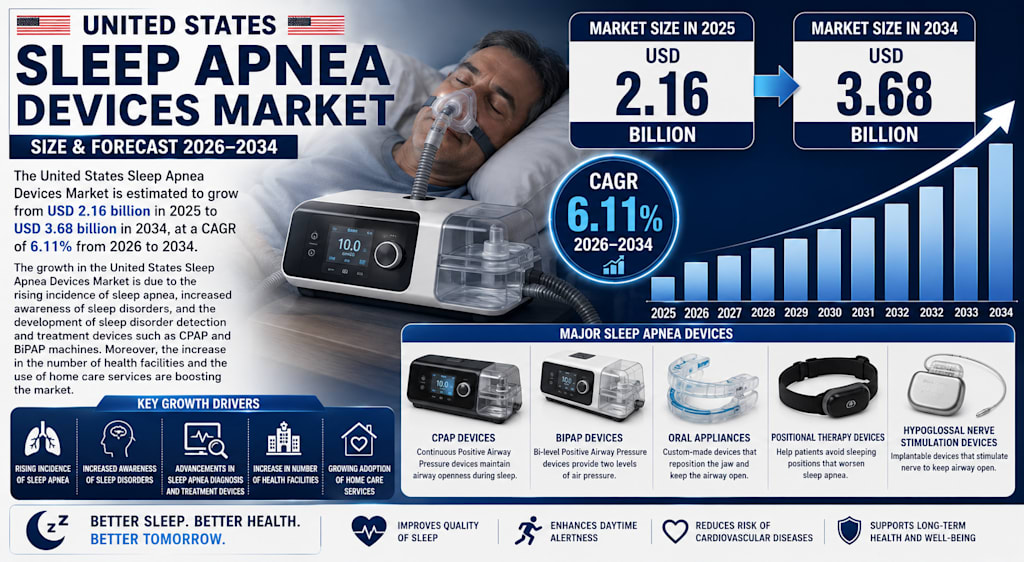
This growing demand is reflected in strong market expansion. According to Renub Research, the United States Sleep Apnea Devices Market is projected to grow from US$ 2.16 billion in 2025 to US$ 3.68 billion by 2034, expanding at a compound annual growth rate (CAGR) of 6.11% between 2026 and 2034. Rising prevalence of sleep apnea, increasing awareness of sleep disorders, technological innovation, and growing adoption of home healthcare services are among the major factors driving market growth.
As sleep health gains recognition as a critical component of overall wellness, sleep apnea devices are becoming increasingly important within the American healthcare landscape.
Understanding Sleep Apnea and Its Health Impact
Sleep apnea is a condition in which breathing repeatedly stops and starts while an individual sleeps.
The most common form is Obstructive Sleep Apnea (OSA), which occurs when throat muscles relax excessively and block airflow. Central Sleep Apnea, another form of the condition, results from disruptions in communication between the brain and breathing muscles.
Many individuals remain unaware that they suffer from sleep apnea because symptoms occur during sleep.
Common warning signs include loud snoring, gasping for air during sleep, excessive daytime fatigue, morning headaches, irritability, difficulty concentrating, and poor sleep quality.
Untreated sleep apnea can increase the risk of serious health complications, including cardiovascular disease, metabolic disorders, and cognitive decline.
As awareness regarding these risks continues to increase, more Americans are seeking diagnosis and treatment.
Sleep apnea devices play a critical role in managing the condition by helping maintain open airways and ensuring uninterrupted breathing throughout the night.
Sleep Apnea Is Becoming a Major Public Health Concern
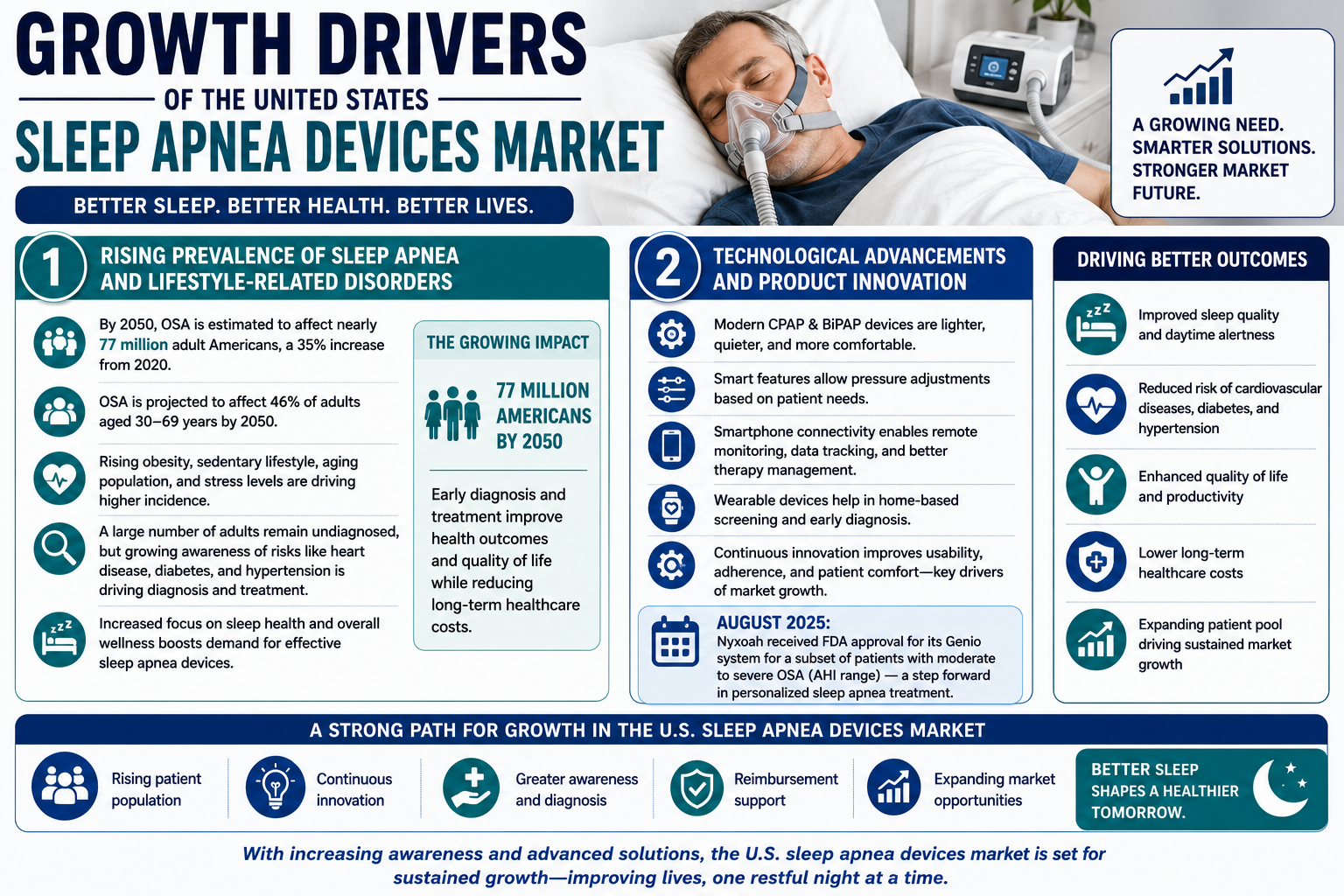
One of the most significant growth drivers for the sleep apnea devices market is the increasing prevalence of sleep disorders across the United States.
Several factors are contributing to this trend.
Rising obesity rates, sedentary lifestyles, aging populations, stress, and poor sleep habits have all been associated with increased risk of sleep apnea.
The scale of the challenge is substantial.
According to a study cited in the market report, obstructive sleep apnea is expected to affect approximately 77 million adult Americans by 2050, representing an increase of nearly 35% compared with 2020 levels. The study further estimates that approximately 46% of adults aged 30 to 69 could be affected by OSA by mid-century.
Despite these numbers, many individuals remain undiagnosed.
Growing public awareness about the connection between sleep apnea and chronic diseases is encouraging more people to seek evaluation and treatment.
As diagnosis rates improve, demand for sleep apnea devices is expected to continue rising.
Technology Is Transforming Patient Experience
Historically, one of the biggest challenges associated with sleep apnea treatment involved patient discomfort.
Earlier generations of devices were often bulky, noisy, and difficult to use consistently.
Today, technological innovation is changing that reality.
Modern CPAP and BiPAP devices are lighter, quieter, and more user-friendly than ever before. Manufacturers have focused heavily on improving comfort, portability, and ease of use.
Many devices now feature automatic pressure adjustment capabilities that adapt to patient breathing patterns throughout the night.
Advanced humidification systems reduce dryness and irritation, while improved mask designs enhance comfort and fit.
Connectivity features are also becoming increasingly common.
Many sleep apnea devices can now connect to smartphones, tablets, and cloud-based platforms, allowing patients and healthcare providers to monitor therapy effectiveness remotely.
Wearable technologies are also contributing to better diagnosis and monitoring capabilities.
These innovations are helping improve patient compliance and treatment outcomes.
A major milestone occurred in August 2025 when Nyxoah received FDA approval for its Genio system designed to treat a subset of patients with moderate to severe obstructive sleep apnea. The approval highlighted growing innovation within the sleep apnea treatment landscape.
Home Healthcare Is Reshaping Sleep Apnea Treatment
The growing popularity of home healthcare represents another major catalyst for market growth.
Patients increasingly prefer receiving care within the comfort of their homes whenever possible.
Sleep apnea management is particularly well suited to this trend because many diagnostic and therapeutic devices can be used effectively outside traditional healthcare settings.
Portable diagnostic devices allow patients to undergo sleep evaluations at home, eliminating the need for overnight hospital stays in many cases.
Similarly, CPAP and BiPAP machines are designed for long-term home use.
This approach offers several advantages, including convenience, lower healthcare costs, and improved patient satisfaction.
Healthcare providers also benefit because home-based care helps reduce pressure on hospitals and sleep laboratories.
The expansion of telemedicine and remote monitoring technologies is further supporting this shift toward decentralized care.
As home healthcare continues gaining momentum, sleep apnea device adoption is expected to increase significantly.
Favorable Insurance Coverage Supports Adoption
Insurance reimbursement policies play an important role in improving access to sleep apnea diagnosis and treatment.
Many private insurers, as well as government programs such as Medicare, provide coverage for approved sleep apnea therapies and diagnostic procedures.
This financial support helps reduce out-of-pocket costs for patients and encourages earlier intervention.
Healthcare providers are also more likely to recommend treatment when reimbursement pathways are clearly established.
The availability of insurance coverage has been instrumental in expanding access to sleep apnea devices across diverse patient populations.
As awareness continues growing, reimbursement support is expected to remain an important factor supporting market expansion.
Therapeutic Devices Lead Market Demand
Therapeutic devices represent the largest segment within the United States sleep apnea devices market.
These devices are specifically designed to treat sleep apnea by maintaining open airways during sleep.
Common therapeutic options include Continuous Positive Airway Pressure (CPAP), Bi-Level Positive Airway Pressure (BiPAP), Auto-CPAP systems, and Adaptive Servo-Ventilation (ASV) devices.
Their effectiveness in reducing symptoms and preventing health complications has made them central to sleep apnea management.
Growing diagnosis rates, increased physician recommendations, and ongoing product innovation continue driving demand for therapeutic devices across the country.
CPAP Devices Remain the Gold Standard
Among available treatment options, CPAP devices continue to dominate the market.
CPAP therapy works by delivering a constant stream of pressurized air that prevents airway collapse during sleep.
Healthcare professionals widely regard CPAP as the most effective treatment for obstructive sleep apnea.
Continuous improvements have made modern CPAP devices significantly more comfortable and convenient than earlier versions.
Features such as automatic pressure adjustment, integrated humidifiers, improved mask designs, smartphone connectivity, and cloud-based monitoring systems have enhanced user experience considerably.
Despite challenges related to patient compliance, CPAP remains the preferred treatment solution for millions of Americans.
Its clinical effectiveness ensures continued leadership within the therapeutic device segment.
Diagnostic Devices Continue to Evolve
Accurate diagnosis is essential for effective treatment.
Polysomnography devices remain the gold standard for diagnosing sleep apnea and other sleep disorders.
These sophisticated systems monitor brain activity, oxygen levels, breathing patterns, heart rate, and sleep stages.
Hospitals and specialized sleep laboratories rely heavily on polysomnography equipment for comprehensive evaluations.
At the same time, portable diagnostic technologies are becoming increasingly popular.
Oximeters, actigraphy monitoring devices, respiratory polygraphs, and sleep screening tools provide convenient alternatives for preliminary assessments and home-based monitoring.
The increasing emphasis on early diagnosis is supporting demand across all diagnostic device categories.
Oximeters Are Becoming Essential Monitoring Tools
Oximeter devices represent one of the fastest-growing diagnostic segments.
These devices monitor blood oxygen levels during sleep and help identify breathing disruptions associated with sleep apnea.
Their affordability, ease of use, and suitability for both clinical and home environments have contributed to widespread adoption.
Technological advancements have further improved functionality.
Modern wearable and wireless oximeters provide real-time monitoring and integrate seamlessly with digital health platforms.
These capabilities make oximeters valuable tools for both patients and healthcare providers.
As remote patient monitoring becomes increasingly common, demand for advanced oximetry solutions is expected to continue growing.
Hospitals and Clinics Remain Critical Care Providers
Hospitals and clinics continue serving as essential components of the sleep apnea care ecosystem.
These facilities provide comprehensive diagnostic evaluations, specialist consultations, and treatment planning services.
Access to advanced technologies such as polysomnography systems, experienced sleep specialists, and multidisciplinary care teams ensures accurate diagnosis and effective treatment.
Insurance coverage for sleep studies and treatment procedures further encourages utilization of hospital and clinic services.
As awareness regarding sleep disorders increases, healthcare institutions are expected to remain major contributors to market growth.
California Leads Regional Growth
California represents one of the largest sleep apnea device markets in the United States.
The state's large population, advanced healthcare infrastructure, high technology adoption rates, and growing awareness of preventive health practices support strong demand.
Lifestyle-related risk factors, including obesity, stress, and urban living, have contributed to increasing sleep disorder prevalence.
California's concentration of medical technology companies and healthcare innovators further accelerates adoption of advanced diagnostic and therapeutic solutions.
Home healthcare services and telemedicine platforms are particularly influential within the state's healthcare ecosystem.
Florida Benefits From an Aging Population
Florida's large elderly population makes it an important market for sleep apnea devices.
Older adults face a higher risk of developing sleep apnea, creating substantial demand for diagnosis and treatment services.
The state's well-developed healthcare infrastructure and expanding home healthcare sector support continued market growth.
Rising awareness regarding the relationship between sleep apnea and cardiovascular health is also encouraging more patients to seek treatment.
These demographic and healthcare trends position Florida as a significant contributor to future market expansion.
Challenges Continue to Impact Adoption
Despite strong growth prospects, several challenges remain.
Patient compliance remains one of the industry's most persistent issues.
Many individuals struggle to adapt to CPAP therapy due to discomfort, mask pressure, noise, claustrophobia, or anxiety. Non-compliance can reduce treatment effectiveness and negatively impact long-term outcomes.
Cost is another concern.
Although insurance coverage helps offset expenses, advanced devices may still require significant out-of-pocket spending for some patients.
Additionally, millions of Americans remain undiagnosed because they are unaware of sleep apnea symptoms or reluctant to undergo sleep evaluations.
Addressing these barriers will be essential for maximizing market potential.
Final Thoughts
Sleep apnea has emerged as one of the most significant yet underrecognized health challenges facing the United States. Its impact extends far beyond disrupted sleep, affecting cardiovascular health, mental well-being, workplace productivity, and overall quality of life.
Fortunately, advances in sleep apnea devices are transforming diagnosis and treatment. From smarter CPAP systems and wearable monitoring technologies to remote healthcare solutions and innovative therapeutic approaches, patients now have access to more effective options than ever before.
With the United States Sleep Apnea Devices Market projected to grow from US$ 2.16 billion in 2025 to US$ 3.68 billion by 2034, the future of sleep health technology appears exceptionally promising.
As awareness continues to increase and innovation accelerates, sleep apnea devices will play an increasingly important role in helping millions of Americans achieve healthier sleep, better health outcomes, and improved quality of life.
About the Creator
Enjoyed the story? Support the Creator.
Subscribe for free to receive all their stories in your feed.
Comments
There are no comments for this story
Be the first to respond and start the conversation.