
America's Beauty Boom Is Transforming the Cosmetics Industry Through Innovation and Self-Care
Personal Grooming, Social Media Influence, and Premium Beauty Trends Are Driving Growth in the United States Cosmetics Market

Beauty has always been an important part of self-expression, confidence, and personal identity. Today, however, the cosmetics industry is evolving far beyond traditional makeup and skincare. Modern consumers are increasingly viewing beauty products as tools for wellness, self-care, personal empowerment, and lifestyle enhancement.
Across the United States, demand for cosmetics continues to rise as consumers invest more heavily in skincare routines, premium beauty products, haircare solutions, fragrances, and makeup innovations. Social media, beauty influencers, celebrity endorsements, and online shopping platforms have transformed how consumers discover and purchase products, creating one of the most dynamic and competitive markets in the world.
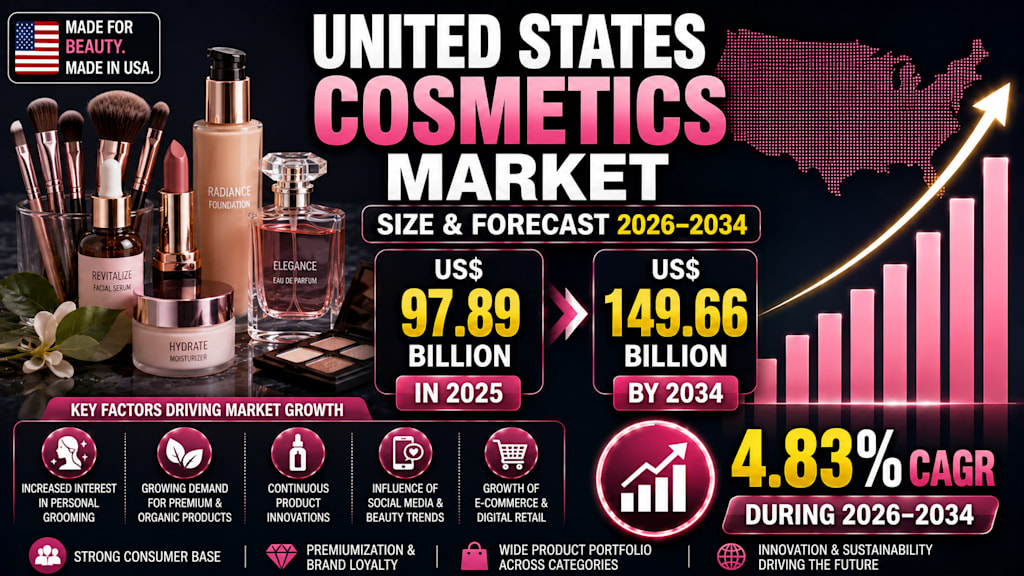
According to Renub Research, the United States Cosmetics Market is expected to grow from US$ 97.89 billion in 2025 to US$ 149.66 billion by 2034, expanding at a compound annual growth rate (CAGR) of 4.83% between 2026 and 2034. Growing interest in personal grooming, increasing demand for premium and organic products, expanding e-commerce channels, and continuous product innovation are among the primary drivers of market growth.
As beauty standards evolve and consumers become increasingly conscious of ingredients, sustainability, and wellness, the cosmetics industry is entering a new era of opportunity and transformation.
Cosmetics Have Become a Daily Lifestyle Essential
Cosmetics encompass a wide range of products designed to improve, enhance, and protect the appearance of skin, hair, and the body.
The industry includes skincare products, makeup, haircare solutions, fragrances, deodorants, and specialized personal care products.
Beyond aesthetics, cosmetics often provide additional benefits such as hydration, sun protection, anti-aging support, nourishment, and wellness enhancement.
For millions of Americans, cosmetics are integrated into everyday routines.
Consumers use these products not only to improve appearance but also to boost confidence, express individuality, and maintain personal well-being.
The growing connection between beauty and self-care has significantly expanded the role of cosmetics in modern lifestyles.
As consumer awareness regarding personal care continues increasing, demand for innovative beauty solutions is expected to remain strong.
Self-Care and Personal Grooming Are Driving Market Growth
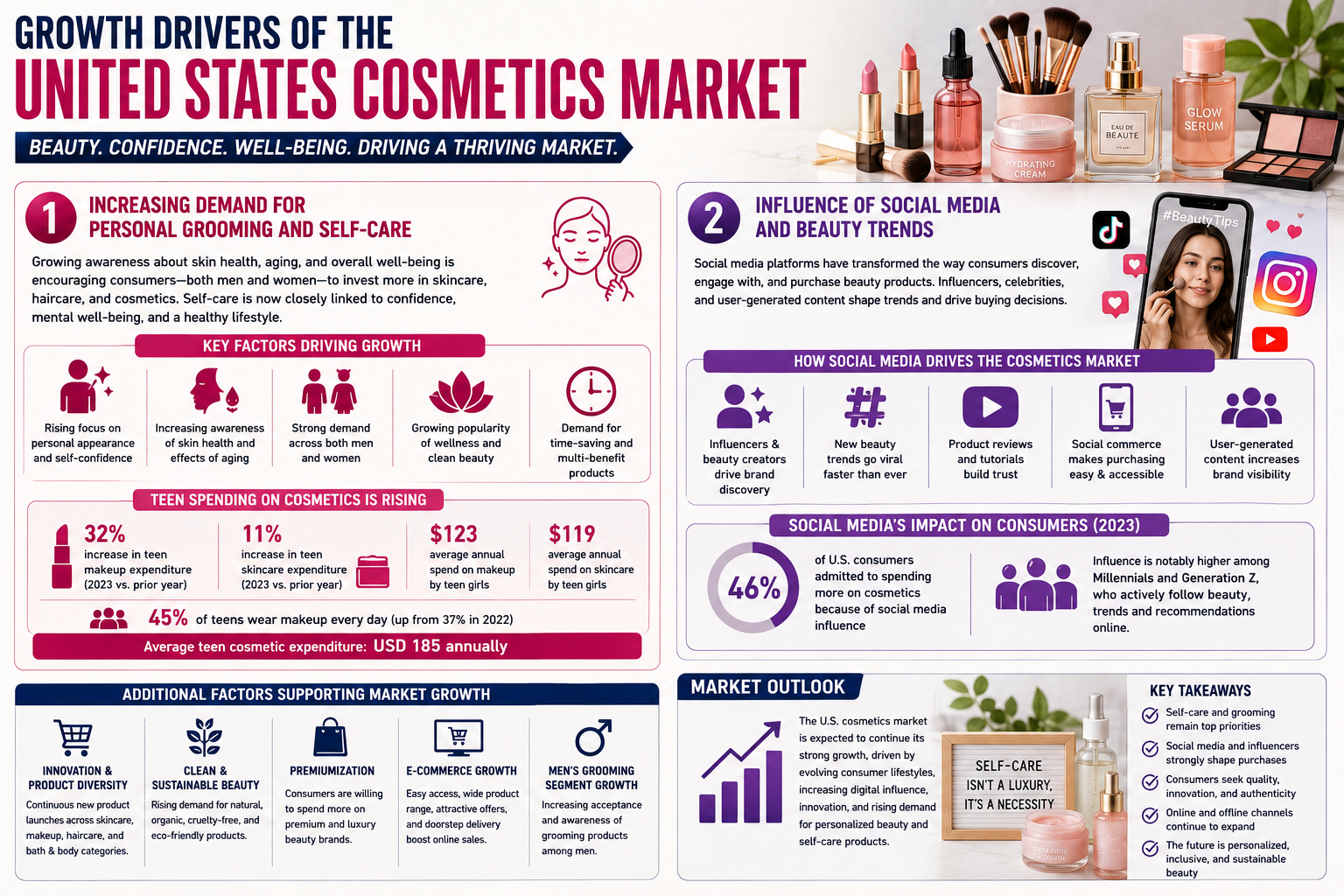
One of the strongest factors fueling growth in the U.S. cosmetics market is the increasing emphasis on personal grooming and self-care.
Consumers today are investing more time and money in maintaining healthy skin, hair, and overall appearance.
This trend extends across all age groups and demographics.
Skincare routines, wellness-focused beauty products, and preventative care solutions have become increasingly popular as consumers seek long-term benefits rather than temporary cosmetic improvements.
The growing awareness of aging, skin health, and environmental damage has also encouraged greater spending on personal care products.
Men are becoming increasingly active participants in the beauty and grooming market as well, contributing to broader industry growth.
According to industry data highlighted in the report, teen spending on makeup increased significantly, reflecting growing consumer engagement with beauty products at younger ages.
As self-care continues gaining importance, cosmetics are expected to remain a key component of consumer wellness routines.
Social Media Has Revolutionized Beauty Marketing
Few industries have been influenced by social media as dramatically as cosmetics.
Platforms such as Instagram, TikTok, YouTube, and Pinterest have transformed how consumers discover, evaluate, and purchase beauty products.
Beauty influencers, content creators, celebrities, and makeup artists play an increasingly important role in shaping consumer preferences and driving product trends.
A single viral beauty tutorial or product review can generate substantial demand within days.
Consumers frequently rely on online reviews, demonstrations, and influencer recommendations before making purchasing decisions.
This digital influence has accelerated product lifecycles and increased the speed at which trends emerge and evolve.
Brands now invest heavily in influencer partnerships, social commerce strategies, and digital marketing campaigns to remain competitive.
As social media continues shaping consumer behavior, its influence on the cosmetics industry is expected to remain substantial.
Premium Beauty Products Are Gaining Momentum
The premiumization trend is transforming the cosmetics market.
Consumers are increasingly willing to pay higher prices for products perceived as superior in quality, effectiveness, and ingredient composition.
Premium skincare products, luxury cosmetics, and advanced beauty formulations continue attracting strong consumer interest.
Many shoppers are prioritizing products that offer specialized benefits such as anti-aging properties, hydration, skin repair, and long-lasting performance.
Premium brands often emphasize scientific innovation, exclusive ingredients, and superior user experiences.
The willingness of consumers to invest in higher-quality products is helping increase market value while creating opportunities for premium beauty companies.
As disposable incomes rise and beauty becomes more closely linked to wellness, premium cosmetics are expected to maintain strong growth momentum.
Clean Beauty Is Reshaping Consumer Preferences
One of the most influential trends within the cosmetics industry is the growing demand for clean beauty products.
Consumers are becoming increasingly aware of product ingredients and their potential effects on personal health and the environment.
As a result, there is rising interest in cosmetics that are organic, cruelty-free, vegan, sustainable, and free from controversial ingredients.
Transparency has become a major purchasing consideration.
Consumers increasingly expect brands to provide clear information regarding sourcing, formulation, manufacturing practices, and environmental impact.
Companies are responding by reformulating products, adopting sustainable packaging, and promoting ethical business practices.
The clean beauty movement has evolved from a niche category into a major force shaping the future of the cosmetics industry.
As environmental and health awareness continue growing, demand for clean beauty solutions is expected to accelerate.
Skincare Remains the Fastest-Growing Segment
Among all product categories, skincare continues to represent one of the most dynamic areas of growth.
Consumers increasingly view skincare as an essential investment rather than a luxury purchase.
Products such as moisturizers, serums, sunscreens, cleansers, anti-aging creams, and treatment solutions are experiencing strong demand.
The growing focus on preventative skincare has encouraged consumers to begin skincare routines at younger ages.
Interest in active ingredients such as hyaluronic acid, vitamin C, retinol, peptides, and niacinamide continues rising.
Consumers increasingly seek multifunctional products that provide hydration, protection, and anti-aging benefits simultaneously.
As awareness of skin health continues expanding, the skincare segment is expected to remain a major contributor to market growth.
Sun Care Products Are Becoming More Important
Awareness regarding the harmful effects of ultraviolet radiation has significantly increased demand for sun protection products.
Consumers are increasingly incorporating sunscreen and SPF-based cosmetics into their daily routines.
Public health campaigns highlighting skin cancer risks have further encouraged sunscreen adoption.
Modern sun care products combine protection with additional skincare benefits such as hydration, anti-aging support, and cosmetic enhancement.
Many beauty products now include built-in SPF protection to address consumer demand for convenience and comprehensive care.
As awareness of skin protection continues growing, the sun care segment is expected to experience sustained expansion.
Hair Care Continues to Attract Consumer Spending
Hair care represents another important segment within the U.S. cosmetics market.
Consumers increasingly prioritize products that improve hair health, appearance, and manageability.
Shampoos, conditioners, hair oils, serums, styling products, and specialized treatments remain highly popular.
Demand for sulfate-free, paraben-free, and naturally formulated products continues rising as consumers become more ingredient-conscious.
Products addressing hair loss, scalp health, and damage repair are also gaining popularity.
Salon-quality products designed for home use have further expanded consumer spending within this category.
As hair care becomes more closely associated with wellness and self-care, market demand is expected to remain strong.
Makeup Continues to Evolve Through Inclusivity and Innovation
The makeup and color cosmetics segment remains one of the most visible and influential areas of the beauty industry.
Foundations, lipsticks, mascaras, eyeshadows, concealers, and blushes continue attracting strong consumer demand.
Modern makeup trends increasingly emphasize inclusivity, diversity, and personalization.
Brands now offer broader shade ranges designed to accommodate a wide variety of skin tones and ethnic backgrounds.
Long-lasting, waterproof, skin-friendly, and multifunctional formulations are also becoming increasingly popular.
Social media trends continue influencing makeup styles and product innovation.
As consumers seek both creativity and practicality, the makeup category remains highly dynamic and competitive.
Online Beauty Shopping Is Transforming Distribution
E-commerce has become one of the most important distribution channels within the cosmetics industry.
Consumers increasingly prefer online shopping because it offers convenience, competitive pricing, extensive product selection, and access to reviews.
Digital platforms allow consumers to compare products, learn about ingredients, and receive personalized recommendations.
Virtual try-on tools and artificial intelligence-powered beauty advisors are further enhancing online shopping experiences.
The growth of direct-to-consumer brands has also reshaped traditional retail models.
As online shopping continues expanding, digital channels are expected to remain a major driver of cosmetics market growth.
Regional Markets Continue to Shape Industry Trends
California
California remains one of the most influential cosmetics markets in the United States. Strong consumer spending, celebrity culture, sustainability trends, and beauty innovation continue driving demand.
Texas
Texas benefits from a large and diverse population, increasing disposable incomes, and growing interest in personal grooming and beauty products.
New York
As a global fashion and beauty hub, New York plays a major role in setting cosmetic trends and influencing consumer preferences nationwide.
Florida
Florida's climate supports strong demand for skincare, sun protection products, moisturizers, and long-lasting cosmetics suitable for outdoor lifestyles.
Challenges Facing the Industry
Despite strong growth prospects, the cosmetics market faces several challenges.
Regulatory Compliance
Manufacturers must comply with increasingly strict regulations regarding ingredients, labeling, safety testing, and marketing claims.
Meeting these requirements can be costly and complex, particularly for smaller companies.
Intense Competition
The U.S. cosmetics industry is highly competitive and saturated.
Established global brands, emerging startups, celebrity-backed labels, and direct-to-consumer companies all compete for consumer attention.
Continuous innovation and effective branding are essential for maintaining market relevance.
Final Thoughts
The United States cosmetics industry is undergoing a profound transformation driven by self-care, wellness, social media influence, clean beauty trends, and technological innovation.
According to Renub Research, the United States Cosmetics Market is projected to grow from US$ 97.89 billion in 2025 to US$ 149.66 billion by 2034, reflecting strong consumer demand and continued industry evolution.
As consumers become increasingly focused on personal well-being, ingredient transparency, sustainability, and premium experiences, beauty products will continue expanding their role in everyday life.
The future of cosmetics is no longer just about appearance—it is about confidence, wellness, individuality, and empowering consumers to look and feel their best in an increasingly connected world.
About the Creator
Enjoyed the story? Support the Creator.
Subscribe for free to receive all their stories in your feed.
Comments
There are no comments for this story
Be the first to respond and start the conversation.