
America Just Found A Way Out Of Its Rare Earth Trap And It Starts With A Water-Based Solution
A US company discovered its gold-mining formula might unlock rare earths without the environmental nightmare. If it works, it could end America's dangerous dependence on China.


America has a problem it's been ignoring for 20 years.
Every electric vehicle on US roads needs rare earth elements. Every wind turbine powering the grid needs them. Every military weapons system, robot, and high-tech gadget needs rare earths.
And America doesn't mine them anymore.
Instead, the country imports them. Mostly from China. Which controls 80% of global rare earth processing and uses that leverage like a geopolitical weapon.
In 2010, China restricted rare earth exports as a political move against Japan. In 2020, amid trade tensions with the US, China threatened to cut off rare earth supplies entirely. The threat was clear: want advanced technology? Better play nice with Beijing.
The US military, tech companies, and EV manufacturers sat in an uncomfortable chair: utterly dependent on a geopolitical adversary for materials critical to national security.
Then, last month, a company called RZOLV Technologies said something that might change everything.
"We might have found a way to process rare earths domestically, cleanly, and profitably."
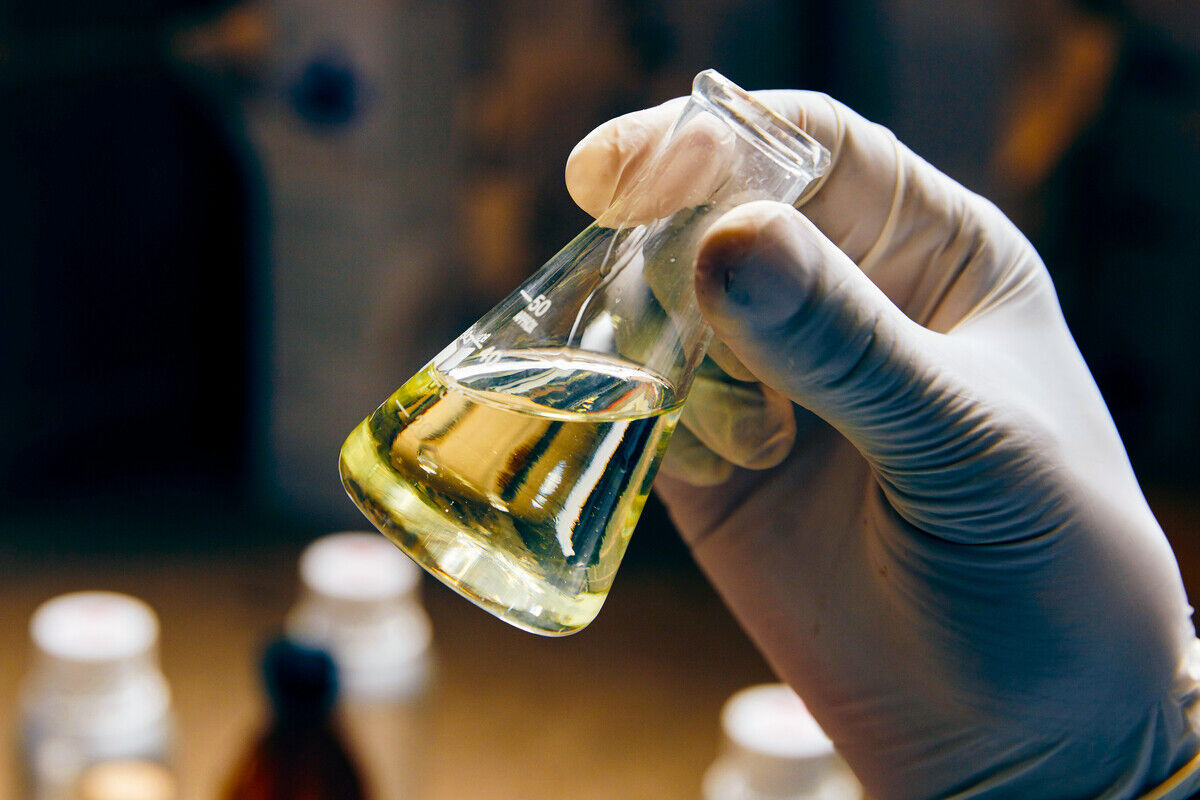
And the method is so simple it's almost embarrassing: water-based chemistry instead of the toxic acid leaching that China uses.
The Problem With Rare Earths (Why You Should Actually Care)
Rare earth elements aren't rare. They're actually pretty common in the Earth's crust.
The problem is that processing them doesn't just require geology. It requires chemistry. Industrial-scale chemistry. The kind that makes environmental regulators nervous.
Traditional rare earth processing uses sulfuric acid and hydrochloric acid leaching. It's environmentally brutal. Mountains of radioactive waste. Toxic runoff. Environmental damage that takes decades to remediate.
China does it anyway. Why? Because environmental regulations are weaker, labor is cheaper, and they have cornered the market decades ago.
The US looked at rare earth processing, saw the environmental cost, and decided: "Let China deal with it." Now America pays the price geopolitically.
That's where RZOLV comes in.
The Solution That Wasn't Supposed To Exist
RZOLV Technologies spent years developing a water-based leaching solution for gold recovery. No cyanide (which is standard in gold mining). Low toxicity. Eco-friendly. It worked beautifully for gold.
Then someone at the company asked a question that sounds obvious in hindsight: "What if we tried this on other metals?"
It worked on silver. Nearly 90% recovery from recycled solar panels. Clean. Efficient.
Then they looked at rare earths.
Early testing on a mine sample showed the water-based RZOLV solution mobilized 13 different rare earth elements into solution, including dysprosium, neodymium, praseodymium, samarium, and terbium. The exact elements that go into:
Permanent magnets for electric vehicles and wind turbines
Electronics in phones, laptops, and military tech
Defense systems that depend on US-made components
Robotics and advanced manufacturing
Why This Matters More Than You Think
Let's be direct: America is currently held hostage by its rare earth dependence.
China doesn't just process rare earths. China owns the supply chain. Processing facilities. Separation technology. Recovery systems. Refineries. China controls it all.
If China cuts off exports tomorrow, the US military loses access to components for advanced weapons systems. EV manufacturers can't build cars. Wind turbine manufacturers can't expand renewable energy. Tech companies lose access to materials for semiconductors and batteries.
This isn't paranoia. This is a documented geopolitical strategy.
In 2010, China restricted rare earth exports to Japan over a territorial dispute. The message was unmissable: "Mess with us on trade, and we'll cripple your tech sector."
The US remembers. It's why the government has been desperately trying to build domestic rare earth capacity. It's why the Biden administration threw billions at restarting US rare earth mining.
But mining is only half the problem. You also need processing. Separation. Refining. And that's where America has been stuck.
RZOLV might have just solved that.
Why The Early Results Matter
The company is being cautious. "Preliminary apparent extraction indicators," the statement says. "Does not yet represent confirmed solution recoveries."
Translation: We found something promising, but we haven't proven we can do this consistently or economically yet.
But here's what matters: They used their standard RZOLV formula designed for gold recovery. They didn't even optimize it for rare earths. And it still mobilized 13 different rare earth elements.
If optimization works and there's no reason to think it won't, the recovery rates could be significantly higher.
Duane Nelson, RZOLV's CEO, put it plainly in a column for Metal Tech News:
"Rare earth supply chains are constrained by geology, processing, environmental control, and the ability to convert complex materials into recoverable products. RZOLV addresses the processing piece."
The Geopolitical Implications
This isn't just about chemistry. This is about decoupling America's critical supply chains from Chinese control.
RZOLV's approach creates what Nelson calls a "platform-style opportunity," meaning the water-based leaching solution could work with multiple feedstock sources:
New ore deposits in the US
Existing mining tailings (waste materials)
Industrial waste streams (rare earths in unexpected places)
Recycled materials (old electronics, magnets, etc.)
Instead of America needing one giant rare earth processing facility (which is what China has), you could have a distributed network of smaller facilities using RZOLV's chemistry.
That's antifragile. That's resilient. That's exactly what national security experts have been saying America needs.
What Happens Next
RZOLV isn't trying to become a rare earth mining company. That's not their play. Instead, they want to be the chemistry layer that makes rare earth processing cleaner, cheaper, and domestically viable.
The plan:
Optimize the RZOLV formula specifically for rare earth feedstocks
Validate that it consistently works
Compare it against conventional acid leaching (prove it's better environmentally and economically)
Partner with recovery and separation systems (molecular adsorption, resin capture, ion-exchange chromatography the technical layers that come after leaching)
Let multiple feedstock owners and processors use the platform.
If this works and the early indicators suggest it could, it changes everything.
Why China Should Be Nervous
China's rare earth dominance is based on:
Geology (they have abundant deposits)
Processing (they've built massive industrial capacity)
Environmental acceptance (they're willing to create ecological damage)
First-mover advantage (they cornered the market in the 1990s)
RZOLV doesn't beat geology. But it beats everything else.
A water-based, non-toxic processing method means the US can build rare earth facilities without environmental catastrophe. It means feedstocks that were previously uneconomical (tailings, waste streams, recycled materials) suddenly become viable. It means processing can happen in multiple locations instead of one geopolitical chokepoint.
That's asymmetric disruption. China can't compete on environmental devastation. The whole point of a cleaner process is to avoid that game.
The Honest Assessment
This is an early stage. Preliminary results. Promising but unproven.
But the timing is significant. The US government is desperate for domestic rare earth solutions. The EV boom is creating genuine supply-chain vulnerabilities. Environmental concerns make traditional rare earth processing politically impossible in America.
RZOLV's water-based chemistry might be the missing piece that makes all of this work.
A US company developed a water-based leaching solution for gold that might work for rare earths. Early testing mobilized 13 different rare earth elements. If optimization succeeds, it could let America process rare earths domestically without environmental devastation.
This matters because America is currently dependent on China for 80%+ of rare earth processing. That's a national security vulnerability. A geopolitical hostage situation.
If RZOLV's chemistry works at scale, it could break China's stranglehold on critical supply chains.
It's still early. But for the first time in two decades, America might have found a way out of its rare earth trap.
The chemistry is simple. The implications are enormous.
About the Creator
Mark Lim
Hi I am mark an automotive student and a car, tech and food enthusiast ! Im gonna try and post daily & hope you enjoy what I write and do share my page with people you know. I would gladly appreciate it! Cheers
Enjoyed the story? Support the Creator.
Subscribe for free to receive all their stories in your feed.
Comments
There are no comments for this story
Be the first to respond and start the conversation.