
Algorithmic Trading Software Development: What It Really Takes to Build an Automated Trading System
Discover what it takes to build a healthcare app—from early research and feature planning to development challenges, compliance, and real project costs.
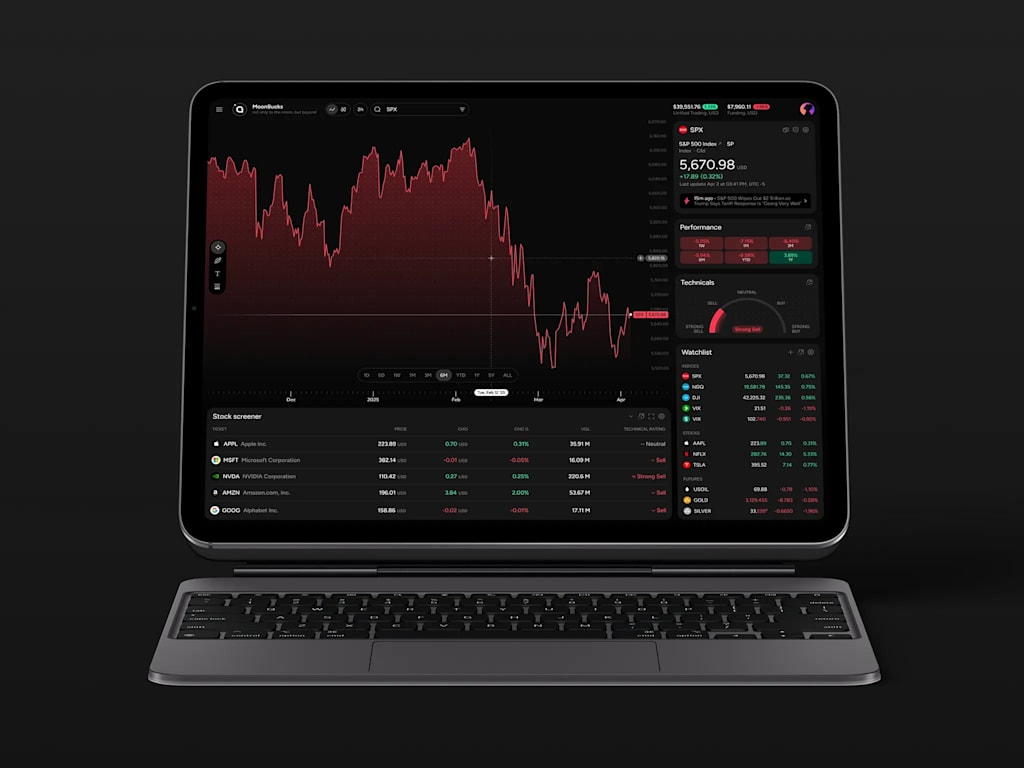
Most people imagine algorithmic trading as a strategy problem. They picture signal logic, model quality, maybe a clever edge. In practice, the harder part is usually everything around the strategy: the data arriving on time, the orders reaching the market without confusion, the risk controls stepping in before a bug becomes a loss. That is why teams building these products often borrow patterns from broader fintech platform development, where reliability matters just as much as feature depth.
An automated trading system is not one script running in isolation. It is a connected environment that watches market data, evaluates rules, places orders, records what happened, and exposes enough visibility for humans to trust it. If any one of those parts is weak, the whole platform becomes fragile very quickly.
The strategy is only one layer
At the center of the product sits the trading logic: the rules that decide when to enter, exit, hold, or stop. That part gets most of the attention early on because it is closest to the business idea. But once development starts, teams usually discover that the algorithm itself is only one layer in a much larger machine.
A usable trading platform needs market data pipelines, execution services, risk controls, logging, monitoring, and a dashboard that helps people understand what the system is doing. It also needs to recover gracefully from ordinary failures: delayed messages, dropped connections, rejected orders, partial fills, stale balances, and mismatched timestamps. These are not edge cases in trading software. They are daily reality.
That is why real algorithmic trading software development looks less like building a feature and more like designing a dependable workflow under pressure.
What the system actually has to do
A production trading system usually follows a simple sequence on paper. Data comes in. Strategy rules run. An order is generated. The market responds. The result is recorded. Risk checks stay active the whole time.
What makes the work complicated is that none of these steps happen in clean laboratory conditions. Market data can spike. Exchange APIs can behave differently under load. One venue may confirm instantly while another lags. A system that looked fine in testing can start drifting in production for reasons that are annoyingly small: a queue growing too long, a retry rule firing twice, a clock mismatch between services.
So the technical work becomes very specific. Teams need predictable data normalization, stable exchange integrations, careful order-state tracking, portfolio-level exposure checks, and dashboards that surface the right problems fast. In trading software, visibility is not a convenience feature. It is part of the control surface.
Where projects become expensive
Cost usually rises in four places.
The first is strategy complexity. A simple bot with a narrow ruleset is one thing. A multi-strategy platform with safeguards, portfolio logic, and simulation workflows is something else entirely.
The second is integration scope. One exchange is manageable. Several exchanges mean different formats, rate limits, authentication flows, failure modes, and operational quirks.
The third is performance expectation. A system that can tolerate a little delay is cheaper than one that must react immediately under heavy load. Once low latency becomes a requirement, architecture choices narrow and engineering effort grows.
The fourth is lifecycle. Trading platforms are rarely “done.” They need re-testing, recalibration, support, and ongoing operational maintenance as markets change and the product expands.
Why teams bring in experienced builders
The reason companies work with specialized teams is not that the problem is mysterious. It is that the same families of problems repeat, and experience shortens the amount of time wasted learning them the hard way.
Teams that have built trading, analytics, or high-volume financial products already know where instability tends to appear. They know that dashboards cannot become visual noise, that risk controls must remain understandable, and that integrations need to be designed for failure rather than ideal conditions. That experience becomes even more valuable when a platform grows beyond traditional brokerage workflows and starts touching crypto infrastructure or other Web3 product environments, where systems operate continuously and edge cases appear faster.
A good automated trading platform is not impressive because it places trades. Plenty of software can do that. It is impressive because it keeps doing it predictably, visibly, and safely after the first clean demo is long forgotten.
About the Creator
Enjoyed the story? Support the Creator.
Subscribe for free to receive all their stories in your feed.
Comments
There are no comments for this story
Be the first to respond and start the conversation.