
Air Purifier Market Size and Forecast 2026–2034: Why Clean Indoor Air Is Becoming a Global Priority
From Urban Pollution to Smart Homes, the Air Purifier Industry Is Entering a New Era of Growth

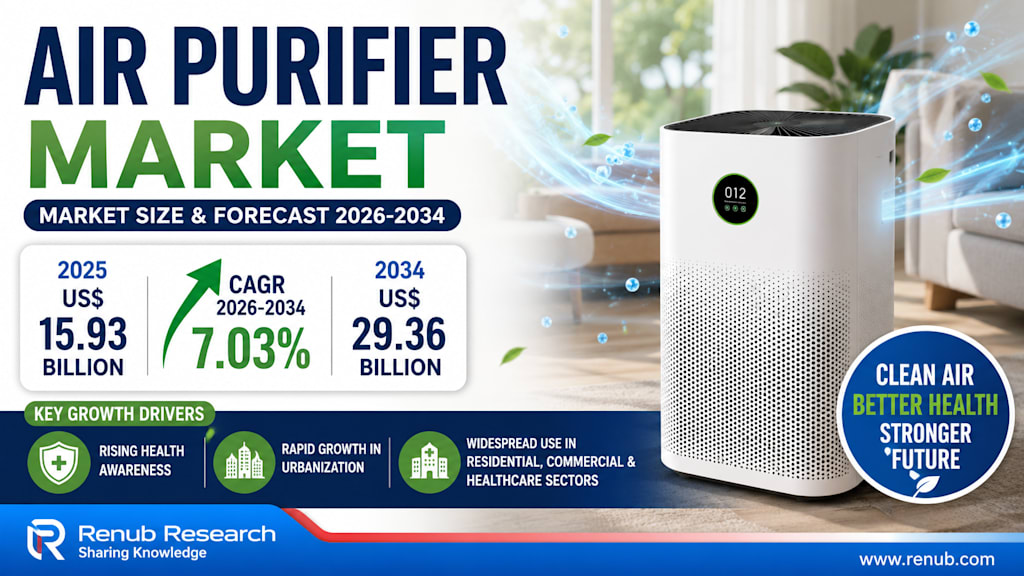
Air pollution is no longer a seasonal concern or an issue limited to industrial cities. Across the world, people are becoming increasingly aware that the quality of the air inside homes, offices, schools, and hospitals directly affects long-term health and overall well-being. As respiratory illnesses, allergies, and airborne contaminants continue to rise, air purifiers are rapidly evolving from optional appliances into essential household and commercial devices.
According to Renub Research, the global Air Purifier Market is projected to grow from US$ 15.93 Billion in 2025 to US$ 29.36 Billion by 2034, expanding at a compound annual growth rate (CAGR) of 7.03% from 2026 to 2034. This impressive growth reflects not only rising pollution levels but also changing lifestyles, stronger health awareness, and continuous technological innovation in air purification systems.
The modern consumer is no longer purchasing air purifiers solely for comfort. Today, buyers are investing in cleaner indoor environments to protect themselves from allergens, viruses, smoke particles, dust, pet dander, and harmful chemicals. As a result, the air purifier industry is becoming one of the most important segments within the broader health and smart home ecosystem.
Understanding the Air Purifier Market
An air purifier is a device designed to improve indoor air quality by removing contaminants from the surrounding environment. These contaminants may include dust, smoke, bacteria, allergens, pollen, volatile organic compounds (VOCs), and even microscopic airborne particles.
Most air purifiers function through a multi-stage filtration system. The device draws contaminated air into the machine, filters impurities using advanced technologies such as HEPA filters or activated carbon systems, and then circulates purified air back into the room.
Over the past decade, air purification systems have transformed significantly. Earlier models were bulky, noisy, and limited in functionality. Today’s systems are compact, energy-efficient, smart-device compatible, and capable of monitoring indoor air quality in real time.
The growing popularity of smart homes and connected appliances has further accelerated demand. Consumers now expect air purifiers to integrate with mobile applications, voice assistants, and intelligent monitoring systems.
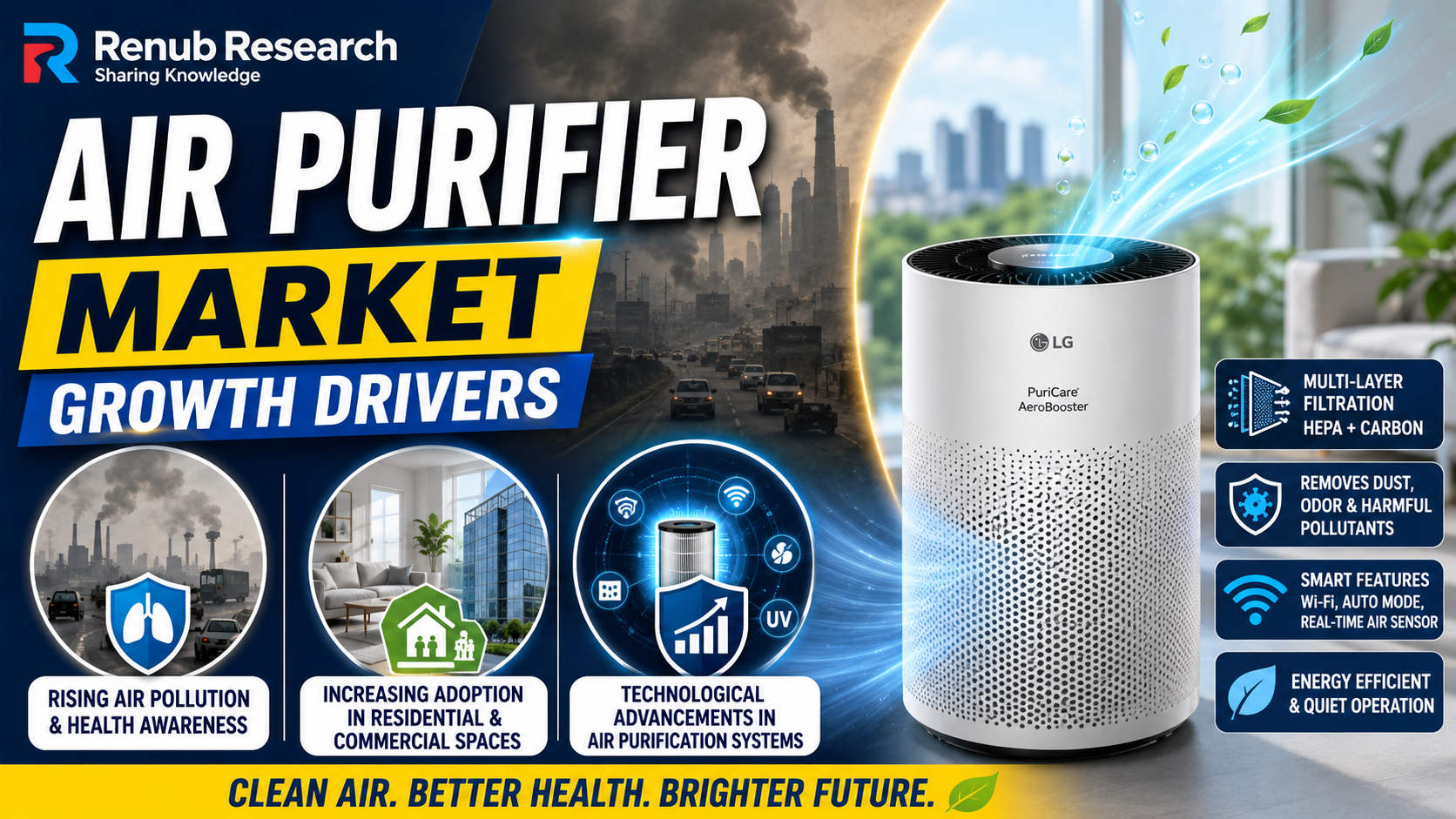
Why the Air Purifier Market Is Growing So Quickly
Rising Air Pollution and Health Concerns
One of the strongest drivers behind the expansion of the air purifier market is the alarming increase in global air pollution.
According to the World Health Organization (WHO), a vast majority of the global population breathes air that exceeds recommended pollution limits. Urbanization, industrial growth, traffic congestion, construction activities, and climate-related environmental challenges are contributing heavily to declining air quality.
Poor air quality has been linked to numerous health conditions, including:
- Asthma
- Bronchitis
- Lung infections
- Allergies
- Cardiovascular complications
- Reduced immunity
As awareness of these risks grows, households are increasingly turning toward air purification solutions to create healthier living environments.
This trend became especially visible after global health crises heightened public awareness regarding airborne transmission and indoor hygiene. Consumers are now more proactive about maintaining cleaner indoor air, particularly in densely populated cities.
Increasing Adoption Across Residential and Commercial Spaces
The air purifier market is no longer limited to residential buyers. Commercial adoption is becoming equally important.
Businesses, educational institutions, healthcare facilities, shopping centers, and hospitality companies are investing heavily in indoor air quality management systems. Clean indoor environments are now viewed as part of workplace wellness, customer safety, and operational hygiene.
Hospitals, in particular, rely on air purification technologies to minimize airborne contamination and maintain sterile environments. Offices and educational institutions are also using these systems to improve employee productivity and student well-being.
Several technology companies are introducing advanced products tailored for modern commercial environments. For example, in January 2025, LG Electronics launched the PuriCare AeroBooster, an air purification system featuring multi-layer filtration, UV cleaning technology, and enhanced airflow hygiene systems.
Such innovations are helping businesses move beyond basic ventilation toward intelligent air management solutions.
Rapid Technological Advancements
Technology is reshaping the future of the air purifier market.
Manufacturers are introducing increasingly advanced purification technologies that combine effectiveness with convenience. Some of the most popular technologies include:
- HEPA filtration systems
- Activated carbon filters
- UV purification systems
- Ionic filtration
- Electrostatic precipitation
Smart sensors and AI-based monitoring
Smart air purifiers now allow users to monitor air quality through smartphone applications and automated systems. Many devices can adjust fan speed, filtration intensity, and purification modes automatically based on indoor pollution levels.
Energy efficiency has also become a major focus. Consumers increasingly prefer quieter, low-power systems that operate continuously without significantly increasing electricity costs.
In January 2024, COWAY CO., LTD. introduced the Airmega 100, featuring a 360-degree air intake system, three-stage HEPA filtration, energy-saving technology, and real-time air quality monitoring. Such innovations demonstrate how air purifiers are becoming more intelligent and consumer-friendly.
Key Challenges Facing the Industry
High Costs and Maintenance Expenses
Despite growing popularity, affordability remains a challenge for many consumers.
Advanced air purifiers equipped with smart sensors, HEPA filtration, and multi-stage purification systems often carry high upfront costs. In addition, maintenance expenses such as filter replacement and periodic servicing can discourage long-term adoption.
Commercial buyers also face substantial installation costs when deploying multiple purification systems across large facilities.
Manufacturers are attempting to solve this challenge by introducing budget-friendly models and energy-efficient technologies designed to lower operational costs.
Limited Awareness in Developing Regions
Although awareness is growing globally, several developing markets still face limited consumer education regarding indoor air quality.
In many regions, consumers are more focused on visible outdoor pollution and may not fully understand the risks associated with indoor contaminants. Misconceptions regarding air purifier functionality, maintenance requirements, and health benefits also slow adoption.
To address this issue, manufacturers are investing in educational campaigns, retail demonstrations, and digital awareness initiatives.
As urban populations continue to expand in developing economies, awareness campaigns are expected to play a major role in future market growth.
Standalone and Portable Air Purifiers Are Dominating Consumer Demand
Portable air purifiers have become one of the fastest-growing segments within the industry.
Consumers increasingly prefer lightweight and movable systems that can easily be used in bedrooms, offices, classrooms, and living rooms. Portable models are attractive because they require minimal installation and offer flexibility for smaller indoor spaces.
The popularity of hybrid work culture has further increased demand for portable systems. Many individuals now seek air purification both at home and within flexible workspaces.
Modern portable units also include smart connectivity features, allowing users to monitor indoor air quality remotely through mobile devices.
As apartment living and urban density continue to increase worldwide, portable air purifiers are expected to remain highly popular among consumers.
HEPA Air Purifiers Continue to Lead the Market
HEPA filtration remains the gold standard in air purification technology.
HEPA filters are designed to capture microscopic particles such as:
- Dust
- Pollen
- Mold spores
- Bacteria
- Fine particulate matter
Because of their high efficiency, HEPA-based systems are widely used in homes, hospitals, laboratories, and commercial facilities.
Individuals suffering from respiratory illnesses and allergies often prefer HEPA systems because they significantly reduce airborne irritants.
Healthcare facilities rely heavily on HEPA filtration to maintain sterile environments and minimize contamination risks.
As health consciousness continues to grow globally, HEPA air purifiers are expected to maintain a dominant market position throughout the forecast period.
Activated Carbon Air Purifiers Are Gaining Popularity
While HEPA filters excel at trapping particles, activated carbon filters specialize in removing odors, gases, and chemical pollutants.
Activated carbon systems are highly effective against:
- Smoke odors
- Cooking smells
- Volatile organic compounds (VOCs)
- Industrial gases
- Chemical contaminants
These systems are particularly useful in kitchens, laboratories, offices, and industrial environments.
Many premium air purifiers now combine HEPA and activated carbon technologies to deliver comprehensive air purification performance.
As awareness of indoor chemical pollutants increases, activated carbon air purifiers are likely to see strong future demand.
Commercial Air Purifiers Are Becoming Essential
Commercial spaces are emerging as major growth drivers for the air purifier market.
Large offices, hotels, schools, malls, and hospitals increasingly recognize indoor air quality as an important factor in customer satisfaction and employee wellness.
Commercial air purifiers are specifically designed to handle large airflow volumes and operate continuously in high-traffic environments.
Modern commercial systems also integrate with building management systems and smart infrastructure platforms, allowing centralized monitoring and automation.
As companies prioritize healthier indoor environments, the commercial segment is expected to witness sustained growth over the next decade.
Regional Insights: Global Markets Driving Expansion
United States
The United States continues to be one of the largest air purifier markets globally.
Rising concerns over allergies, wildfire smoke, seasonal pollution, and respiratory illnesses are fueling demand across residential and commercial sectors.
American consumers are particularly interested in smart air purification systems equipped with advanced filtration technologies and app-based controls.
The growing focus on wellness-oriented living spaces is also supporting market expansion.
United Kingdom
The United Kingdom market is experiencing steady growth due to rising awareness regarding indoor pollution and environmental health.
Urban households increasingly use air purifiers to remove dust, pollen, and allergens, especially in densely populated cities.
Businesses and healthcare facilities are also investing in air quality solutions to create healthier indoor environments.
India
India represents one of the fastest-growing air purifier markets worldwide.
Major cities such as Delhi and Mumbai regularly experience severe air pollution, prompting strong consumer demand for air purification systems.
Growing health awareness, government initiatives, and expanding middle-class purchasing power are accelerating market adoption.
Manufacturers are also introducing affordable product ranges tailored to Indian consumers.
Saudi Arabia
Saudi Arabia’s market is growing steadily due to environmental conditions such as dust storms and desert climates.
Residential users and commercial establishments are increasingly investing in air purification technologies to maintain cleaner indoor environments.
Smart connected systems with real-time monitoring capabilities are becoming especially popular among urban consumers.
Competitive Landscape
The air purifier industry is highly competitive, with major global players focusing on technological innovation, product diversification, and smart connectivity.
Leading companies operating in the market include:
- Daikin Industries Ltd
- IQAir
- Whirlpool Corporation
- Resideo Technologies Inc.
- Unilever PLC
- Panasonic Corporation
- Xiaomi Corp
- Sharp Corporation
- Koninklijke Philips NV
- LG Electronics Inc.
These companies are focusing heavily on research and development, energy-efficient systems, smart home integration, and enhanced filtration technologies.
Final Thoughts
The global air purifier market is entering a transformative period driven by environmental concerns, public health awareness, urbanization, and technological advancement.
What was once considered a luxury appliance is rapidly becoming a necessity for homes, businesses, healthcare institutions, and educational facilities worldwide.
As consumers become more conscious about indoor air quality, demand for smart, efficient, and affordable purification systems will continue to rise. Manufacturers that successfully combine innovation, affordability, and sustainability are expected to lead the next phase of industry growth.
With the market projected to reach nearly US$ 30 Billion by 2034, the air purifier industry is no longer simply about appliances—it is about creating healthier, safer, and more sustainable living environments for future generations.
About the Creator
Enjoyed the story? Support the Creator.
Subscribe for free to receive all their stories in your feed.
Comments
There are no comments for this story
Be the first to respond and start the conversation.