
AI Wearables in 2026: The Devices Actually Worth Buying
AI wearables have finally reached the point where the useful products are separating themselves from the experiments.

AI wearables have finally reached the point where the useful products are separating themselves from the experiments. A few years ago, almost anything with a microphone, sensor, or connection to a chatbot could be marketed as an AI wearable. In 2026, buyers are asking a much better question: does wearing this device actually save time, provide information that would otherwise be missed, or remove the need to keep checking a phone?
The answer depends heavily on the category. Smart glasses can put audio, cameras, and assistants into something people already wear. Smart rings quietly collect health information without adding another screen. AI pins and pendants are trying to become searchable memories for conversations, while AI-powered earbuds are turning voice assistants and translation into features that are available whenever the headphones are in your ears.
That does not mean every new wearable deserves a place on your body. The most convincing devices tend to perform one or two jobs particularly well instead of trying to replace the smartphone completely.
The Best AI Wearables Now Solve Specific Problems
The strongest products in 2026 are surprisingly focused. Oura is not trying to make its ring into a miniature phone; it uses AI to make health patterns easier to understand. Plaud does not pretend its NotePin is an entertainment device; it concentrates on conversations and notes. Smart glasses are splitting between visual products built around cameras and audio-first products designed around calls, translation, and voice AI.
This narrower approach is a positive change. Wearables have very limited space for batteries, controls, and sensors, so trying to include everything usually creates compromises. A device becomes much easier to justify when you can describe its purpose in one sentence: “this helps me remember meetings,” “this helps me understand my sleep,” or “this lets me use AI without constantly reaching for my phone.”
Decide What You Want AI to Notice for You
Before reading any AI wearable devices guide, it helps to decide what information you regularly lose or what action you repeat too often. Someone who constantly forgets what was agreed during meetings has a different problem from someone trying to improve sleep or a traveler who wants hands-free translation.
A good wearable should quietly remove friction from something you already do. If it requires constant attention, complicated setup, or another app that you rarely open, the novelty can disappear quickly. Before buying, ask yourself:
Do I want help with conversations and notes? Look at AI pins, pendants, or audio-focused glasses.
Do I want health and recovery insights? A smart ring is usually the better fit.
Do I want photography and visual AI? Camera-equipped smart glasses make more sense.
Do I want hands-free voice AI and translation? Smart glasses or AI-enabled earbuds are worth considering.
Do I already wear the device type every day? Products that replace something you already use are easier to keep using.
That last question matters more than it sounds. A ring, pair of sunglasses, or earbuds can become part of an existing routine. A completely new wearable has to earn its place every morning.
Smart Glasses Are Becoming the Most Interesting Everyday Category
Smart glasses have one major advantage over many other AI devices: millions of people already wear glasses and sunglasses. Adding useful technology to that familiar form can feel much more natural than clipping a new gadget to a shirt.
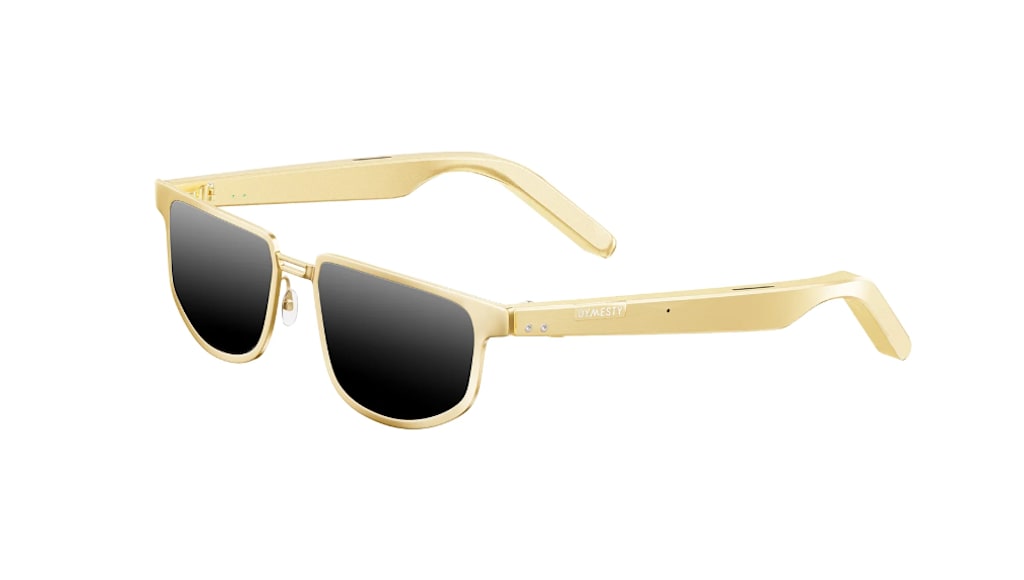
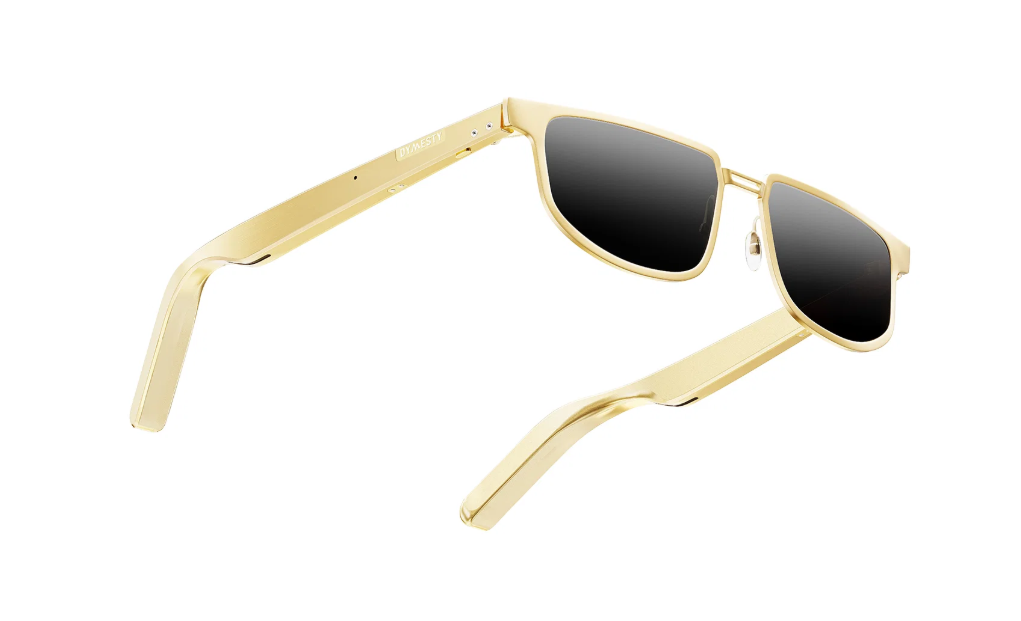
The alternative is to remove the camera and focus on audio. Dymesty AI Sunglasses Moore Vision takes this route, combining a titanium sunglasses frame with four microphones, open-ear speakers, AI meeting recording, summaries, translation, and voice assistance. Dymesty lists 48 hours of typical battery life and explicitly positions the model as camera-free and display-free.
The choice between these approaches is more meaningful than simply asking which glasses have more features. Ray-Ban Meta makes sense when photography and visual AI are central to the experience. Dymesty makes more sense for someone who wants audio and AI functions without wearing an outward-facing camera.
Smart Rings Are Worth Buying When You Want Less Screen Time
The smartest thing about a good smart ring is that it rarely asks you to interact with the ring itself. It collects information in the background and lets the phone app turn that information into something understandable.
Oura Ring 4 remains one of the strongest examples. Its focus is sleep, activity, recovery, stress, and longer-term health patterns. Oura says Ring 4 offers around five to eight days of battery life, while Oura Advisor uses AI to turn the wearer's own data into more personalized explanations and suggestions. In 2026, Oura also expanded Advisor with additional AI work around women's health.
Samsung Galaxy Ring is the obvious alternative for people already using Samsung phones and Samsung Health. Its Galaxy AI-powered Energy Score combines factors such as sleep, activity, and heart-rate information to provide a simple picture of daily readiness, while Wellness Tips turns those patterns into suggestions.
Neither ring is worth buying because “AI” appears in the marketing. They are worth considering because AI can make weeks of passive health data easier to interpret.
AI Pins Are Finally Finding a More Realistic Purpose
The early vision of AI pins was extremely ambitious: wear one device and perhaps you would no longer need to look at a smartphone. The more convincing products in 2026 have moved toward a simpler goal—helping people remember conversations.
Plaud NotePin S is a good example of that shift. It is a wearable recorder intended for in-person discussions, turning captured conversations into transcripts, summaries, and other structured notes through the Plaud system. It can be worn rather than placed on a desk, which makes it useful for people who move between meetings, interviews, site visits, or lectures.
Amazon's Bee is more ambient. Amazon describes Bee as a wearable AI device that can learn from conversations and other information a user chooses to connect, then provide insights and suggested actions. The company says conversations are processed in real time without retaining the underlying audio, and features now include voice notes and links to email and calendars.
These products will not appeal to everyone, especially because conversation recording raises obvious privacy and consent questions. For people whose workday is dominated by spoken information, however, the category is becoming much easier to understand.
AI Earbuds May Be the Least Exciting—and Most Useful—Wearables
AI headphones rarely look futuristic, which may actually be their strength. People already wear earbuds for music and calls, so adding a capable assistant does not require adopting a completely new habit.
Google Pixel Buds Pro 2 provide one of the clearest examples. Google integrates Gemini Live into the earbuds, allowing users to have hands-free conversations with Gemini while on the move. The buds also include features such as Adaptive Audio and provide up to 30 hours of total listening time with the charging case.
For Apple users, AirPods Pro 3 are the obvious counterpart. Apple Intelligence powers Live Translation when the earbuds are paired with a compatible iPhone, allowing translated speech to be heard through the AirPods while the phone helps manage the conversation. AirPods Pro 3 also combine this with noise cancellation and Apple ecosystem integration.
Neither product is trying to become an independent AI computer. Their usefulness comes from making the phone's intelligence available without requiring the phone to be in your hand.
Camera-Free Wearables Deserve Their Own Category
One of the more interesting developments in 2026 is that wearable makers are no longer assuming that adding a camera is automatically an upgrade. Cameras make visual AI possible, but they also consume power and can be uncomfortable in workplaces or other privacy-sensitive settings.
For buyers who care more about calls, meetings, translation, and spoken AI, Dymesty AI Sunglasses demonstrate the opposite philosophy. The camera is deliberately absent, allowing the product to concentrate on audio interaction and longer typical-use battery life. That makes it a different proposition from Ray-Ban Meta rather than simply a competitor with fewer camera features.
This distinction will probably become more important as the smart-glasses market grows. Some users will want AI to see the world with them; others will specifically prefer a wearable that cannot record video.
Which AI Wearables Are Actually Worth Buying?
For most people, buying one good wearable makes more sense than collecting several devices that overlap.
Choose smart glasses if you want AI, audio, or photography to become part of something you already wear. Choose a smart ring if health tracking is the priority and you want fewer notifications, not more. Choose an AI pin if conversations are the information you most often lose, and choose AI earbuds if you already spend much of the day listening or talking through headphones.
The best products in 2026 share a common trait: they make AI feel less like another app and more like a quiet layer around something you were already doing.
FAQs About AI Wearables in 2026
Are AI wearables worth buying if I already have a smartphone?
They can be if they remove a repeated reason to use the phone. Smart rings collect health data more comfortably than carrying a phone to bed, glasses can handle calls or translation without reaching into a pocket, and wearable recorders can capture meetings without placing a phone on the table. If the wearable simply duplicates an app you rarely use, it is probably unnecessary.
What is the best AI wearable category for everyday use?
There is no universal winner, but smart glasses, rings, and earbuds currently have an advantage because they replace or enhance products people already wear. AI pins can be extremely useful for meeting-heavy users but require a new habit and more careful thinking about recording consent.
Should I choose camera or camera-free smart glasses?
Choose camera-equipped glasses if first-person photos, video, or visual AI are important. Choose camera-free glasses when privacy, audio, translation, meetings, and longer battery endurance matter more. Neither design is automatically better; they are intended for different kinds of users.
AI Wearables Are Getting Better by Doing Less
The most promising sign in the 2026 wearable market is that companies are becoming more selective about what their products are supposed to do. The smartest ring does not need a screen. The most useful meeting wearable does not need to replace a phone, and smart glasses do not all need cameras.
That focus makes buying decisions easier. Instead of asking which wearable contains the most AI, ask which one quietly removes a problem from your day.
For many people, that may be a ring that makes health patterns easier to understand. For others, it will be earbuds that put an assistant in their ears, a pin that remembers meetings, or glasses that combine familiar eyewear with hands-free AI.
The devices actually worth buying in 2026 are not the ones trying hardest to look futuristic. They are the ones that become useful enough that, after a few weeks, wearing them no longer feels futuristic at all.
About the Creator
Enjoyed the story? Support the Creator.
Subscribe for free to receive all their stories in your feed.
Comments
There are no comments for this story
Be the first to respond and start the conversation.