
AI Songs Are Playing on the Radio and Nobody Told You Should They Have?
The debate over AI-generated music has moved from hypothetical to actual, and the questions it raises about art, authenticity, and what we're really listening to when we listen to music aren't going away


AI Songs Are Playing on the Radio, and Nobody Told You That You Should Have?
The debate over AI-generated music has moved from hypothetical to actual, and the questions it raises about art, authenticity, and what we're really listening to when we listen to music aren't going away.
Somewhere in the past few months, you may have found yourself genuinely enjoying a song on the radio, nodding along, maybe humming the melody, only to find out later that no human being wrote it, performed it, or felt anything while making it. A machine generated it, start to finish, and it found its way onto a playlist without any indication that this was the case.
Does that change how you feel about the song? Does it change how you feel about the radio station that played it? And does any of it actually matter as long as the song connected with you in the moment?
These are not hypothetical questions anymore. They're the ones a growing number of listeners, musicians, and platform operators are being forced to answer right now.

What's Actually Happening
In Northern Ireland, AI-generated songs with a distinctly local theme accumulated hundreds of thousands of plays on social media and found their way onto local commercial radio playlists. When the origins of the songs became clear, the online debate was intense enough that the stations pulled them. The songs were removed. The conversation they started was not.
This isn't an isolated incident. AI-generated music is increasingly present on streaming platforms, and the line between human-created and machine-generated content is becoming harder to identify, not because the technology is flawless, but because it's improving rapidly and there is currently no consistent requirement to disclose what you're hearing.
The Human Cost Argument
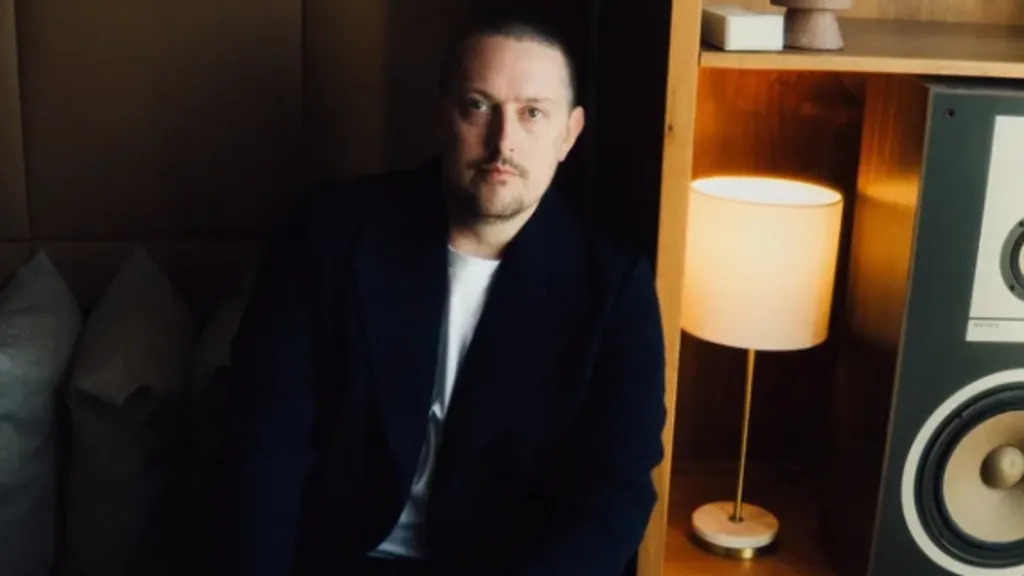
Paul Connolly has spent nearly two decades in the music industry as a songwriter and the lead singer of alternative-punk band The Wood Burning Savages. He also runs music workshops for people of all ages. When he talks about AI music, he uses words like "angry" and "deflated," and describes it as a "slap in the face to artists whose job it is to help us make sense of the world."
His concern isn't abstract. He describes authentic artists struggling to be heard because they can't cut through the volume of AI-generated content. He sees musicians devaluing themselves. He sees people leaving the industry.
"AI cannot comfort us, and it can't inspire the next generation of songwriters," he said. "Music is food for the soul, and AI is just a takeaway for the arteries."
That last line is worth sitting with. It's not just a rhetorical flourish; it captures a genuine philosophical position about what music is for. If music is a form of human communication, a way of processing experience and sharing it with others, then a song generated by a system that has no experiences to process is something categorically different, regardless of how it sounds. The emotional response in the listener might be identical. The nature of what created that response is not.
The Counter-Argument: Tools Change, Connection Doesn't
Oliver McCann sees it differently. In 2025, he became the first AI music designer to sign with a traditional record label, after his AI-generated track Stone became the first song to reach one million streams on the AI music platform Suno, and another track accumulated three million streams.
McCann's background is in visual design, not music production. AI gave him access to a creative process that would otherwise have required a room full of collaborators and a six-figure studio budget. He uses it to bring his lyrics to life; the story and emotional core, as he describes it, are his. The tools that realise them are AI.
"There's a big difference between an artist using this technology with intention and someone just pressing a button," he said. "I don't press buttons."
This distinction matters for the debate because it complicates the binary of human versus machine. McCann argues that AI is an instrument, a significantly more powerful and accessible instrument than what preceded it, but an instrument nonetheless. The person directing it still makes creative choices. The intention, the story, and the emotional target still originate with a human being.
He also makes a historical observation that's harder to dismiss than it might initially seem: radio has always been guided by whether a song connects with listeners, and that principle hasn't changed. The tools musicians use have always evolved. The relationship between artist and audience has remained constant.
The Disclosure Problem
Whatever position you hold on AI music, there's a separate and more immediately resolvable question: should listeners know what they're hearing?
Currently, there is no legal obligation for streaming platforms to label AI-generated songs. The landscape is a patchwork of voluntary measures.
Spotify launched a test feature earlier this year showing how an artist used AI in a song's credits, but it relies entirely on artists self-reporting to their labels or distributors. Deezer has gone further, deploying an AI detection tool that tags AI-generated music and is working to expand its detection capabilities. Apple Music requires labels and distributors to declare AI use through transparency tags in metadata.
None of these is legally mandated. None are universally applied. And none of them address the radio context, where songs arrive on playlists without the metadata infrastructure that streaming platforms can leverage.
The Northern Ireland situation, where AI-generated songs are played on the radio without listeners knowing, is therefore likely to repeat itself in other markets. The technology to create convincing AI music is widely available. The infrastructure to consistently identify and label it is not.
The Question Nobody Has Cleanly Answered
The Right to Repair debate asks who controls something you've purchased. The AI music debate asks something more fundamental: what are you actually experiencing when you experience art?
If a song makes you feel something, nostalgia, joy, grief, recognition, and you later discover the feeling was produced by a system with no interiority, no experience of loss or love or confusion, no reason to make that particular song except that a human directed it to, does the feeling retroactively change? Was the connection real?
Most people's instinctive answer is that something is different, even if they struggle to articulate exactly what. Paul Connolly's "tacky wall" metaphor gets at it. The aesthetic experience might be identical, but the meaning behind it, the sense that another human consciousness reached across and touched yours, is absent.
McCann's counter is that his consciousness is still present in the lyrics, in the creative direction, in the intention. The AI is the studio, not the artist.
Both positions are coherent. Both point to a debate that isn't going to be resolved by pulling songs from playlists; it's going to require the music industry, platforms, regulators, and listeners to decide what they actually value in music and build systems that reflect those values honestly.
In the meantime, the songs are playing. And most people still don't know.
About the Creator
Mark Lim
Hi I am mark an automotive student and a car, tech and food enthusiast ! Im gonna try and post daily & hope you enjoy what I write and do share my page with people you know. I would gladly appreciate it! Cheers
Enjoyed the story? Support the Creator.
Subscribe for free to receive all their stories in your feed.
Comments
There are no comments for this story
Be the first to respond and start the conversation.