
AI in Healthcare: Top Five Advancements and Challenges to Consider
Key Opportunities and Challenges of AI in Healthcare

Introduction
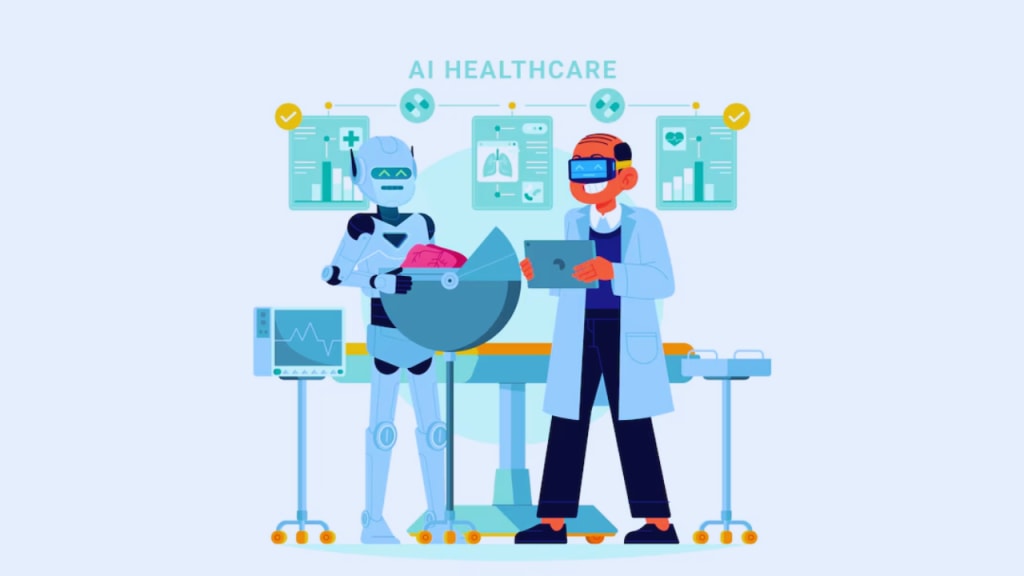
Healthcare is an industry that is undergoing a drastic transformation through the development of artificial intelligence. AI technological enters involve themselves in various aspects of patient care, diagnosis, treatment, and management thus making health improved results and improved processes. The demand for AI development is evolving at a rapid pace and it has become a key player in the healthcare sector, addressing exciting opportunities and challenges for patients and providers alike.
In this article, you will be exposed to the five biggest opportunities and challenges that AI presents to healthcare software development and how these aspects impact healthcare’s evolution in the future.
Key Opportunities in Healthcare
1). Improved Diagnostic Accuracy
AI is enabling diagnosis by analyzing numerous medical factors including images, records, and genetic data. Using AI technology in the examination of the patient results in the detection of diseases such as cancer, heart diseases, and neurological disorders can be accurate when compared to what the human mind can notice. In radiology, to detect tumors and other forms of ‘abnormalities’, AI tools improve the precision with which imaging data is interpreted and thus enhance patient care.
2). Personalized Treatment Plans
AI allows for the creation of personalized medical treatment by analyzing individual patient data, including genetics and medical history. AI systems can offer the proposed custom treatment based on the patient’s profile and increase the efficacy of treatments while eliminating potential side effects. It is especially useful in areas where AI can analyze desirable treatment outcomes and find what drug or drugs should be used to attack different mutations in cancer cells to enhance patients’ quality of life.
3). Operational Efficiency and Cost Reduction
AI can reduce many routine tasks such as appointment booking, billing, and patient records and it can dramatically enhance operation efficiency. Healthcare providers can improve staff productivity using patient-centered resources like time and hospital beds; insurance revenues and medical coding and billing workflow. This helps to trim expenses, prevent work mistakes, and release additional workers to provide patient care – all of which lead to improved quality of health care.
4). Enhanced Drug Discovery and Development
The process of drug discovery is often lengthy and expensive. In this process, ‘AI fast forwards this process by using big data sets to look for potentially lucrative drugs’. AI can also be used to optimize clinical trial designs by selecting eligible subjects for the trial and predicting results on the said subjects. This makes the process of developing the drug shorter, less expensive, and functional, making the delivery of new treatments more realizable to patients.
5). Improved Healthcare Accessibility
AI-driven tools can help address the issue of healthcare in regions that have little or no healthcare facilities. Teleworking, remote consultations, and AI-based diagnostic tools allow patients, particularly those in the rural zones, to receive medical help not going anywhere. In marginalized communities, AI can find health risks and then suggest remedies that improve the health of people who might not get proper care.
Navigating the Challenges of AI in Healthcare
1). Data Privacy and Security Concerns
AI makes use of vast volumes of personal health data to make predictions and hence may involve conflicting issues of data privacy and security. Preventing losses of patient data and the risk of hacking and unlawful access are important. HCOs are obligated to regulate the utilization of the technologies to align with rules such as HIPAA and GDPR to safeguard patient data confidentiality and integrity.
2). Bias and Inequality in AI Algorithms
The AI systems will inherit biases from the data they have been tailored on. This means that where data is skewed or has a biased nature, AI algorithms may return skewed or biased results thus meaning that different populations are treated differently. Minimizing bias in the AI models is critical to make sure that AI will benefit all, regardless of their background or demographics.
3). Integration with Existing Healthcare Systems
Many healthcare organizations are still using legacy systems which are not compatible with the latest AI technologies. Implementation of AI solutions is also costly because it will entail integration with other existing technological systems, such as improving the supporting infrastructural system and training personnel. AI is becoming increasingly important in healthcare but for it to be adopted, integration is critical and must provide a value chain to all.
4). Regulatory and Ethical Issues
AI in the healthcare industry requires several regulatory and ethical challenges. Other concerns like the ways AI may change life decisions for people need to be solved. Many industry experts will argue that clear policies and regulations will be required to support patient safety and build the consumer’s trust in AI.
5). High Costs and Resource Requirements
AI is known to save overall costs in the long run, the initial capital expenditure on the systems including the development of the AI models, deployment, and sustaining also requires a huge capital investment. For the small medical centers, however, the financial aspect can turn into a problem regarding the implementation of AI technologies. The first is the cost, which can be reduced by working with AI development companies and using AI development services, but remains a major problem.
Conclusion
AI comes up with great possibilities for healthcare by providing better diagnosis, prescriptive, administrative, drug discovery, and access. Challenges such as data protection, bias, integration issues, legal complexities, and high costs must be very wisely achieved to enable AI to be implementable in the healthcare system. By addressing these challenges healthcare providers AI development companies, and healthcare software development teams will be able to realize the true capabilities that AI can bring to healthcare and foster better patient outcomes and improved healthcare systems.
About the Creator
Paul Copper
Software development experts specializing in data engineering, custom software & mobile apps | Building scalable digital solutions for businesses.
Enjoyed the story? Support the Creator.
Subscribe for free to receive all their stories in your feed.
Comments
There are no comments for this story
Be the first to respond and start the conversation.