
AI Gives Pathologists "Super Vision": A New Era in Cancer Detection
A Breakthrough From Australia Seeing What the Eye Cannot Four Conditions, One Powerful Tool Reliable, Affordable, and Actionable Assisting, Not Replacing Precision Medicine for Everyone A Vision for the Near Future

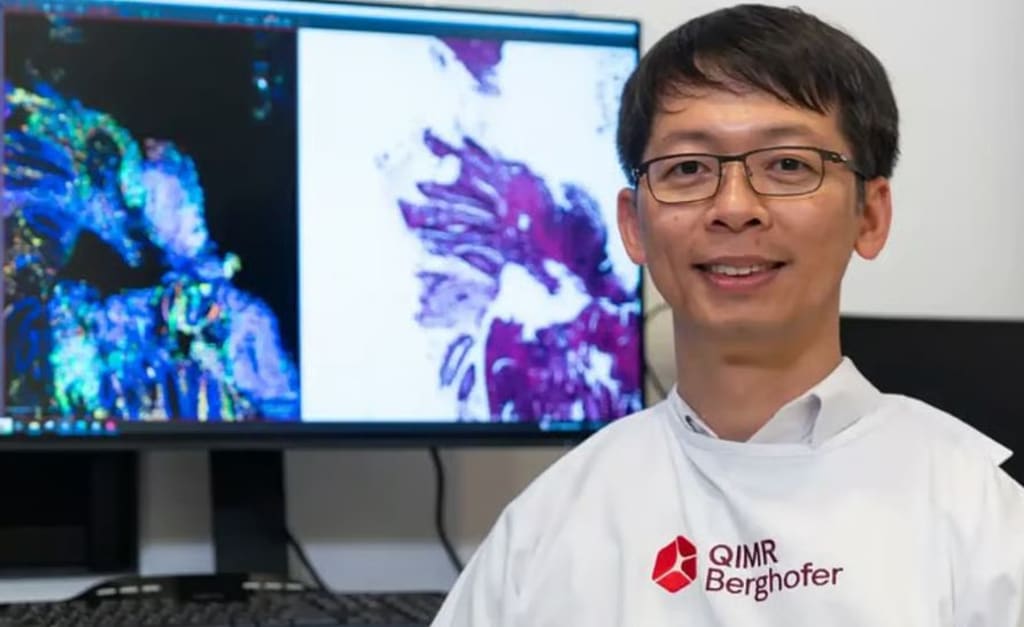
For generations, pathologists have peered through microscopes, examining tissue samples for subtle patterns that reveal the presence of disease. Their skill is extraordinary, but human vision has limits. Now, researchers at Australia’s QIMR Berghofer Medical Research Institute have developed an artificial intelligence tool that effectively shatters those boundaries, giving specialists what lead developer Associate Professor Quan Nguyen describes as "the super‑resolution vision of Superman or Superwoman." Named STimage, this system can detect hidden biomarkers invisible to the naked eye, potentially transforming how cancer and complex immune conditions are diagnosed worldwide.
Seeing What the Eye Cannot
At the heart of this advance is spatial biology analysis, a powerful method that examines not just what cells are present, but exactly where they lie within a sample, alongside their genetic activity and interactions. Where traditional pathology might identify general abnormalities, STimage sifts through millions of data points across a tiny specimen to pinpoint the two or three markers that signal trouble. "It makes a diagnostic prediction and mathematically computes the level of certainty about the result," Nguyen explained. It does not merely flag anomalies; it quantifies confidence, offering pathologists a precise, evidence‑based guide to what might otherwise remain concealed.
Four Conditions, One Powerful Tool
The system has demonstrated remarkable versatility. In research published in Nature Communications, it accurately identified and assessed breast cancer, melanoma (skin cancer), kidney cancer, and a serious liver immune disease. Beyond simple detection, it provides critical additional insights: gauging likely disease progression and predicting how a patient may respond to treatment. This dual capability, spotting the problem and forecasting its path, could shift medicine from reactive to proactive, helping doctors tailor therapies long before symptoms escalate.
Reliable, Affordable, and Actionable
What makes STimage especially promising is its practicality. The study confirmed it is reliable, low‑cost, and rapid, producing results that are straightforward for medical professionals to interpret. No exotic new equipment is required; it works with routine tissue samples already collected every day in clinics around the world. That accessibility means it is not destined solely for elite research centres; it could reach ordinary hospitals and community health centres without prohibitive expense.
Assisting, Not Replacing
Crucially, the tool is designed to empower pathologists, not supersede them. "It provides extra information about cell types and genetic activity that they cannot see with their own eyes," Nguyen emphasised. In an era where AI is often framed as replacing human expertise, this approach is deliberate and respectful. STimage acts as a powerful assistant, highlighting what might be missed, offering clarity where patterns blur, and letting specialists make the final informed call. It extends their capability rather than diminishing their role.
Precision Medicine for Everyone
The ripple effects could be transformative. Faster, more accurate diagnosis means treatment begins sooner. Better prediction of how a disease will behave allows for truly personalised medicine, matching the right therapy to the right patient. Perhaps most profoundly, it could democratise specialist care. In remote or underserved areas where top‑tier pathologists are scarce, STimage could provide expert‑level analysis locally, sending clear, data‑rich reports to specialists wherever they are. A sample taken in a rural clinic could receive world‑class assessment almost immediately, shrinking the gap between city and countryside.
A Vision for the Near Future
The team’s goal is clear: to see STimage integrated into standard clinical practice within two years. If realised, this timeline would place a groundbreaking technology into doctors' hands faster than almost any comparable advance. From "supervision" to everyday rounds that is the promise. For patients, it means catching cancer earlier, understanding it more deeply, and facing it with far better intelligence. In STimage, science has given medicine not just a sharper lens but a fairer chance, one that reaches further, sees clearer, and serves more people than ever before.
About the Creator
Mark Lim
Hi I am mark an automotive student and a car, tech and food enthusiast ! Im gonna try and post daily & hope you enjoy what I write and do share my page with people you know. I would gladly appreciate it! Cheers
Enjoyed the story? Support the Creator.
Subscribe for free to receive all their stories in your feed.
Comments
There are no comments for this story
Be the first to respond and start the conversation.