
AI Can Plant a Memory You Never Had. Then It Stamps "Approved" on the Next Mistake.
A 2025 MIT experiment showed that AI video makes people remember events that never happened. Seven months later, a U.S. airstrike killed more than a hundred people at a school in Iran. The two failures share a mechanism, and it is not the algorithm.
I keep coming back to the wedding photo.
Two hundred people sat in front of screens at MIT and looked at 24 ordinary pictures. A wedding. A street. A footrace. Then the researchers showed them something else. Some saw the originals again. Some saw photos that AI had quietly altered. Some saw short videos built from those altered images, moving and continuous and believable.
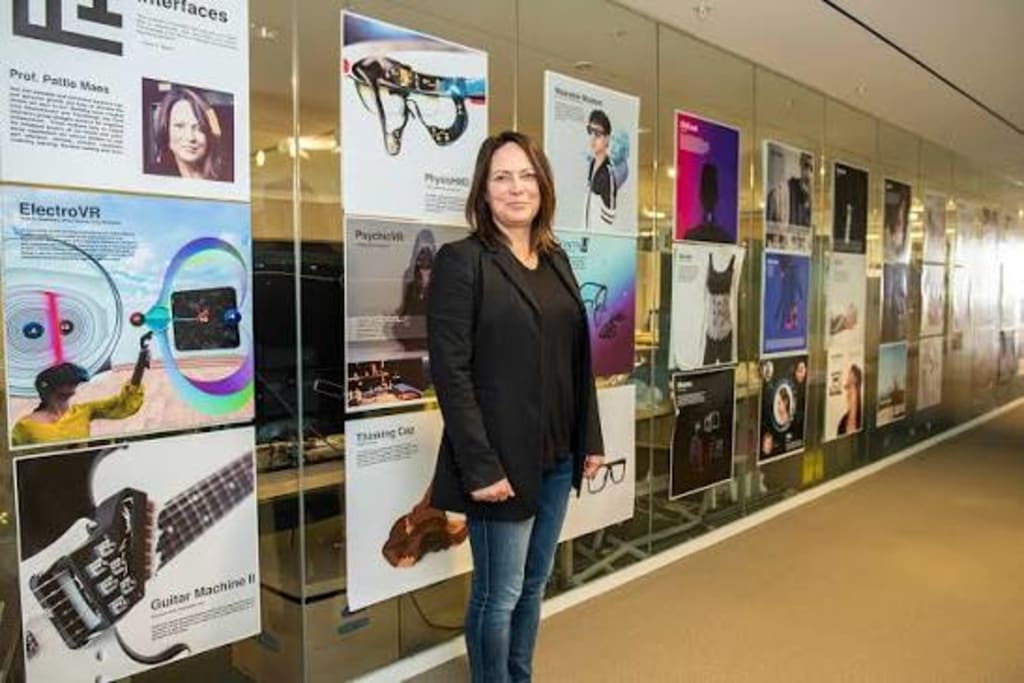
The people who watched the videos did not just misremember. They remembered with confidence. False-memory rates hit 2.05 times the control group. Their confidence in events that never happened was 1.19 times higher. Pattie Maes's group at the MIT Media Lab presented the work at CHI in April 2025.
The number I cannot shake is 1.19. It is not the size of the error. It is the confidence attached to it.
Memory is not a filing cabinet. Every time you recall something, you bring it back into a state where it can be edited, and then you store it again. Elizabeth Loftus spent decades proving that a subtle suggestion after the fact can change what a person swears they saw. The MIT work scales that up. AI does not suggest one false detail. It hands you motion. Faces. A sequence of frames that your brain tries to fit into what it already knows, and the fitting is where the damage happens.
A second study from the same lab found something worse. Even ordinary chatbot conversations, nothing malicious, increased false memories while lowering confidence in true ones. AI does not just plant lies. It makes you doubt the things you actually remember.
That is the part that should worry anyone who votes.
Representative democracy runs on a simple assumption. Voters judge politicians by what those politicians did. If a deepfake can put a scandal in your memory that never happened, the assumption breaks. Gizmodo, reporting on the MIT study, cited research showing that fabricated political scandals do exactly this, strongly enough to reduce voting intention. Maes said the effects persist after correction.
Read that again. After correction.
A correction is an external fact. "That video is fake." But once the video is in your memory, the correction is competing with your own recollection. You are not being asked to update a belief. You are being asked to distrust your experience. That is a much harder ask, and most people cannot do it.
During the 2026 midterms, a Texas Senate campaign paid for a deepfake ad in which a candidate said words he never said. A Russia-linked network called Matryoshka amplified AI-generated videos aimed at Democratic candidates. Neither operation needed to fool everyone. They needed to leave a trace in enough memories. A vague sense that something happened.
February 28, 2026. Minab, Iran. A U.S. airstrike hit a school. More than a hundred people died, most of them children.
The Pentagon's investigation found a chain of avoidable failures. The site had been a military facility years earlier. Commercial satellite imagery had shown a school there since 2018. Colored walls. A soccer field. Analysts had noticed the change in 2019 and logged it in a system that was not connected to the main intelligence database.
Then came the pressure. More than a thousand targets in 24 hours. The final confirmation window compressed. Civilian-protection staff cut. Some personnel at Central Command leaned on Palantir's Maven Smart System, expecting it to catch outdated intelligence in the data underneath.
It did not catch anything. Palantir's statement afterward was careful and precise. The company is not responsible for the underlying data. It is not responsible for identifying intelligence gaps.
Here is the detail that matters. Hours after the strike, Pentagon personnel already knew the U.S. was responsible. Hours. The information was there. It simply did not reach the right node at the right moment, because the people in the room believed a system was watching for exactly that.
No algorithm failed. The algorithm did what it was built to do. Humans stopped doing what they were supposed to do because they thought the machine was doing it. Responsibility did not land anywhere. It evaporated in the space between the person and the screen.
The standard answer to all this is human in the loop. A trained expert reviews the AI output. Problem solved.
The evidence says otherwise.
A randomized trial in NEJM AI in 2026 tested physicians who had been trained in AI literacy. When they saw incorrect model advice, their diagnostic accuracy fell from 84.9% to 73.3%. Fourteen points, from wrong suggestions they were supposedly equipped to catch.
Then there is the endoscopy study. After AI-assisted polyp detection arrived at four centers, experienced endoscopists' adenoma detection rate in ordinary colonoscopies without the AI dropped from 28.4% to 22.4%. Every one of those doctors had done thousands of procedures. The AI was not even switched on.
That is the part people miss. Automation bias does not just cause a bad call in the moment. It trains the skill out of you. When the machine is there, you stop looking. When the machine is gone, you have forgotten how.
A formal analysis of the human-in-the-loop framework makes four points, and they are not comforting. The supervisor and the system make the decision together, so the supervisor is never truly outside it. Irreversible actions make review after the fact meaningless. Blind spots do not vanish with training. And the technology changes faster than the rules can.
In practice, the human in the loop is often stamping a document that is already finished.
Regulators have noticed. Article 50 of the EU AI Act took effect on August 2, 2026. Deepfakes and unreviewed AI text on matters of public interest must carry clear labels and machine-readable markers. Fines go up to 15 million euros or 3% of global turnover. The EU even published a set of icons.
All of that helps with the ecosystem and none of it helps with memory.
Labels land before the memory forms. The harm lands after. A video with an AI watermark in the corner is still a video you watch, process, and store. The participants in the MIT experiment were told exactly what they were looking at, and they still walked out remembering things that never happened.
The second gap is worse. Transparency rules govern content in circulation. They do not govern the moment a human and a system decide something together. Palantir's Maven does not need a label on a video. It sits inside a process, and the process teaches the people in it to trust a safeguard that is not there.
So what would actually help.
Two things, and neither is easy. First, treat memory as something worth defending on its own terms, not just information that needs a fact-check. That means researching interventions that stop synthetic content from taking root, and asking honest questions about what we lose when we outsource remembering to machines. Second, stop treating human in the loop as a compliance checkbox. If supervisors cannot really supervise under time pressure and automation bias, say so in the rules. Build redundancy that does not depend on a perfect human. Verify the underlying data independently. Require systems to state what they are not designed to catch. Forbid the quiet transfer of a safety duty to a tool that was never built to carry it.
Maes's team pointed out the paradox themselves. The same technique that can reconstruct a memory therapeutically can be used to rewrite a country's politics. The tool has no direction. We supply it.
But a society with no defense against memory manipulation, and no willingness to admit that its human oversight is often theater, is handing the custody of truth to whatever produces the smoothest output.
The wedding photo was smooth. That was the whole point.
The stamp is real. The review is empty.
About the Creator
Jin
Writer of reamstories
https://reamstories.com/jin
Enjoyed the story? Support the Creator.
Subscribe for free to receive all their stories in your feed. You could also become a paid subscriber, letting them know you appreciate their work.
Comments
There are no comments for this story
Be the first to respond and start the conversation.