
A Sticky Label With A Battery Could Actually Stop Cargo Theft Because Shipping's Been Basically Invisible For Years
Samsara's new tracking device is simple: a disposable label that broadcasts its location via Bluetooth. The trick is they already have millions of receivers on the road listening for it.


So Guy Fieri's tequila company lost 24,000 bottles sometime in late 2024. Not like they misplaced them in a warehouse. They vanished. Completely gone. Worth a lot of money, and suddenly nobody had any idea where they went.
That's the thing about cargo theft that doesn't get talked about much: most of the world's shipping essentially goes dark between checkpoints. You load something onto a truck at the warehouse. It either shows up at the next distribution center, or it doesn't. In between? Nobody knows what happened.
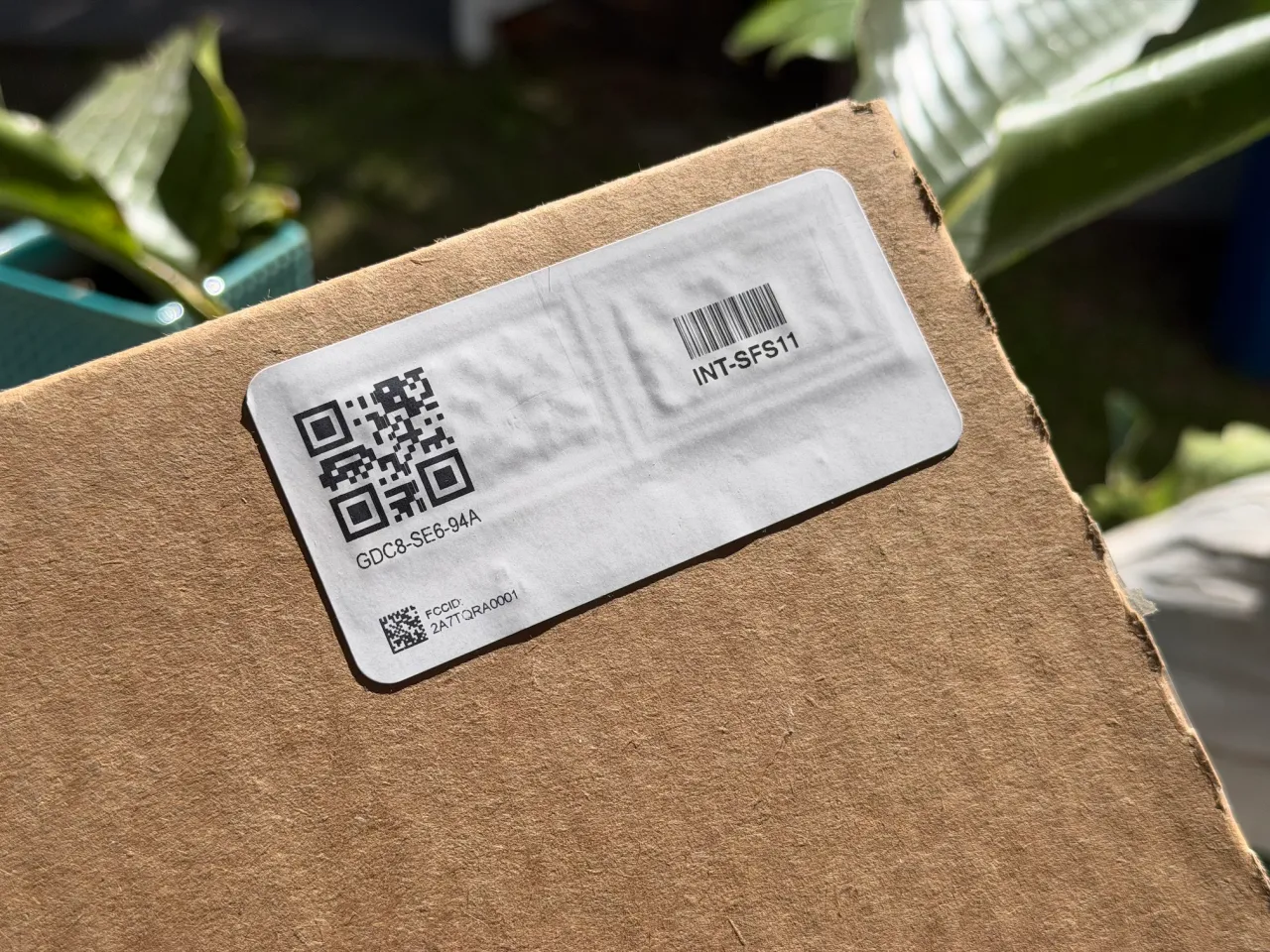
Samsara announced a solution Wednesday: a business-card-sized sticky label with a zinc battery and Bluetooth inside. Activate it, and it broadcasts its location for 45 days. That's it. No magic. Just real-time visibility on cargo that would otherwise be invisible.
The Problem Is Actually Massive
Cargo theft isn't some fringe logistics issue. It's an industry-wide nightmare. Companies lose shipments. They have no idea what happened. By the time they realize something's missing, the truck's already gone. The cargo's already moved. The trail's cold.
Samsara's David Gal, VP of connected equipment, explained it simply: companies kept telling them the same thing. "We need something real-time, and we need something that can be small enough to mount on any piece of equipment."
That's the core problem. You need to know where your stuff is, right now, not six hours from now when it reaches the next checkpoint.
The Previous Solution Didn't Actually Work
Samsara already had a tracker, something called the Asset Tag, about the size of a wine cork. Real-time visibility. Worked well.
Problem: It was bulky. It stuck out. It was expensive enough that you could only justify putting it on high-value cargo. And customers wanted it back after the shipment, which meant it wasn't useful for one-way trips. So it solved the problem for some use cases, but not the ones that mattered most.
The Tracking Label is the iteration. Stick it on any box. Activate it. It broadcasts for 45 days. Then you throw it away. The cost is low enough that you can put it on regular shipments, not just premium cargo.
Here's Why It Actually Works
The real play is Samsara's existing network. Over the past few years, they've been equipping customer fleets with cameras and sensors — dashcams, fleet management stuff, all the hardware that logistics companies use to run their operations.
That existing network of millions of devices becomes a Bluetooth listening network. The Tracking Label broadcasts to any Samsara device in range — other trucks, cameras on buildings, whatever. That data feeds back to Samsara's system, which tells you exactly where your package is.
It's elegant because Samsara didn't have to build a new network from scratch. They just leveraged the infrastructure they already installed while selling fleet management software.
The Economics Make Sense
The label stays in sleep mode for up to nine months before activation. Once activated, the zinc battery powers the Bluetooth for around 45 days. Then it's disposable. Done.
Gal was explicit about not using a lithium battery because that would complicate the disposability; you'd need recycling infrastructure, return logistics, all the overhead. Zinc is simpler. Use it once, throw it away.
The cost has to be low enough that putting it on a regular shipment makes sense. We don't know the exact price, but if they're targeting "critical shipments" at major companies, it's probably somewhere in the range of a few dollars per label at scale. Not free, but cheap enough to be worth it for visibility.
What Actually Changes
Gal framed it as shifting from reactive to proactive. Right now, you don't know a shipment's delayed until it doesn't show up. Then you scramble. With real-time tracking, you know it's delayed while there's still time to do something about it. Re-route it. Find it. Prevent the loss.
That matters for theft, sure. But it also matters for logistics efficiency, supply chain management, and customer communication. If you know a shipment's delayed, you can tell your customer proactively instead of having them discover it's late. That changes the entire dynamic.
The Theft Angle
Gal wasn't shy about this: "I have a feeling that we'll bust some crime rings with this."
That's the real problem this solves. Organized cargo theft is sophisticated. People know the routes. They know the weak points. They know when shipments are vulnerable. With real-time tracking, that disappears. You put a label on the box, and if it moves somewhere it shouldn't, you know immediately.
That doesn't mean cargo theft disappears. But it means it gets a lot harder. It's one thing to steal cargo that nobody knows is missing until it reaches its final destination. It's another thing to steal cargo where someone's actively monitoring its location in real time.
The Competition
UPS announced RFID tracking for packages in April. Sounds good until you realize the limitation: RFID only works if the package stays close to an RFID reader. If a shipment falls off a truck or gets diverted, RFID stops working. Samsara's approach works anywhere because the network is mobile; it's all the trucks, all the logistics infrastructure, constantly moving and listening for Bluetooth signals.
That's the advantage. Not better technology. Just a better use of existing infrastructure.
Samsara is being realistic about the initial market. This is for "critical shipments," high-value cargo from major companies. Think pharmaceuticals, electronics, and premium goods. The stuff that's worth stealing.
But once the infrastructure is proven and the labels get cheaper, this could expand. Right now, it's companies like Fieri's tequila brand. Eventually, it might be standard on any shipment that matters.
This is Samsara doing what they've been doing for years, taking existing infrastructure (fleet management devices) and building new business lines on top of it. First, they added "Ground Intelligence" to spot hazards like potholes in real time. Now they're adding cargo tracking.
Each new product leverages the network they've already built. That's the play. Not inventing new technology, but finding new uses for infrastructure that's already deployed.
A sticky label with a battery probably sounds boring until you realize what it actually solves: companies having no idea where their cargo is between checkpoints. That's a real problem causing real losses.
Samsara's solution is simple enough to work at scale, cheap enough to justify on regular shipments, and clever enough to leverage infrastructure they've already installed. Will it bust crime rings? Maybe. Will it help companies prevent losses and make better decisions about delayed shipments? Definitely.
That's not flashy. But it's the kind of practical solution that actually changes how industries work.
About the Creator
Mark Lim
Hi I am mark an automotive student and a car, tech and food enthusiast ! Im gonna try and post daily & hope you enjoy what I write and do share my page with people you know. I would gladly appreciate it! Cheers
Enjoyed the story? Support the Creator.
Subscribe for free to receive all their stories in your feed.
Comments
There are no comments for this story
Be the first to respond and start the conversation.