
A Review of Gunnar Optiks' Ojai Vision Recovery System
The most gimmicky gear for gamers and tech aficionados is no gimmick

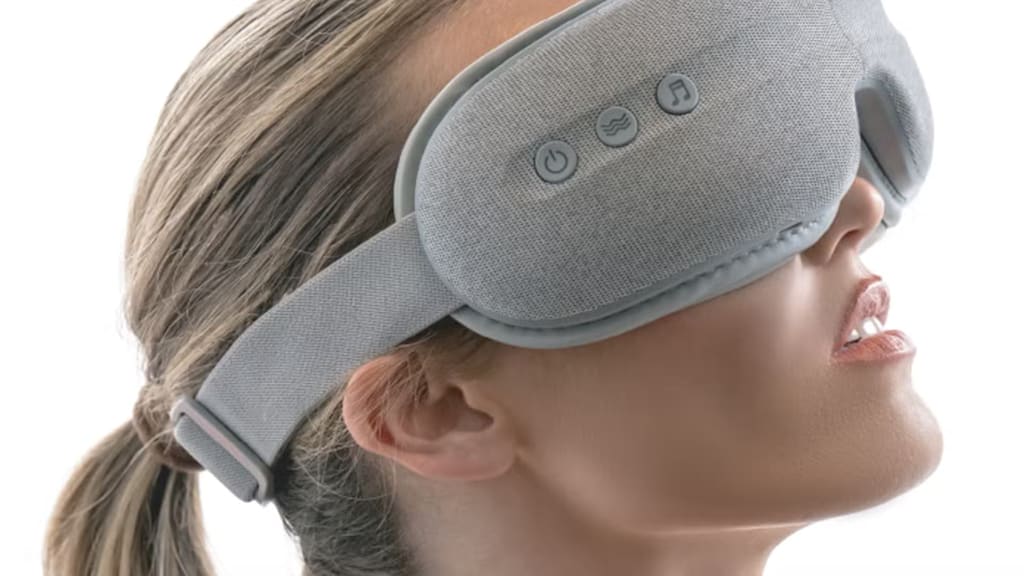
*This product review is not paid for or sponsored by Gunnar Optiks
For those not in the know, Gunnar Optiks, or GUNNAR, has been producing some seriously incredible eyewear for nearly two decades. Founded in 2007, Gunnar Optiks touts its glasses as being built to reduce the eye strain and fatigue that increasing screen time can cause.
As of now, GUNNAR is better known as the company that makes officially licensed glasses inspired by video game franchises ranging from Cyberpunk 2077 to Fallout to Zenless Zone Zero. As someone who greatly appreciates a good pair of glasses and regularly wears GUNNAR, I can say that their baseline products are well worth the hype.
GUNNAR has officially moved beyond just glasses, however, and the Ojai Vision Recovery System is genuinely something I never would have expected to use, let alone see in stores. Where GUNNAR glasses are meant to reduce fatigue, the Ojai is meant to relieve it. And, after two weeks of solid use, I am now meant to tell you whether or not they actually work.
What is the Ojai Vision Recovery System?
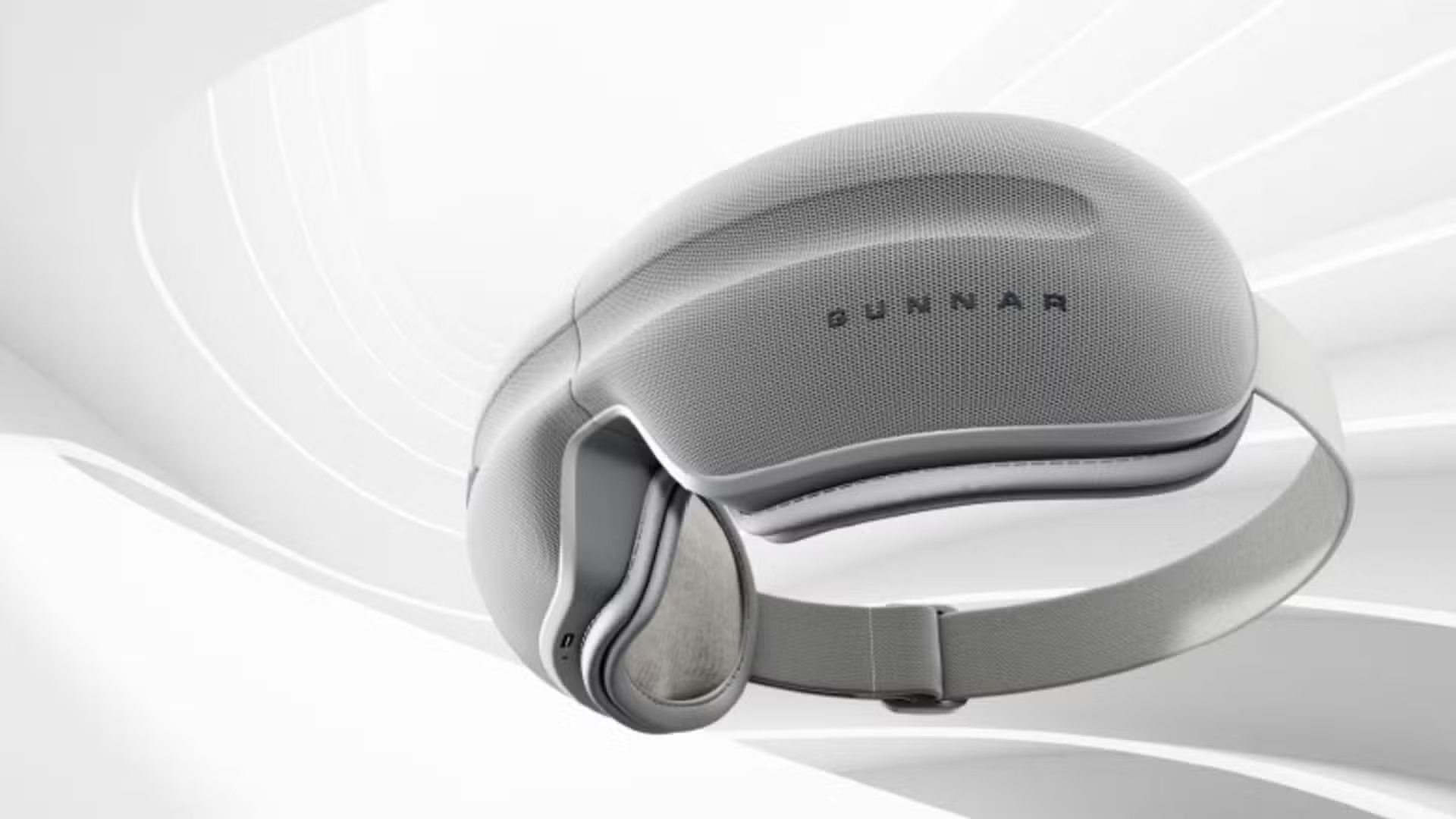
Looking like the futuristic offspring of a sleep mask and VR headset, the Ojai Vision Recovery System boasts a blackout design, air compression massage technology, heat, vibration, and Bluetooth audio, all of which come together to offer relief and recovery over the course of quick ten-minute sessions. On the surface, the Ojai is a robot that massages your face, but it is actually so much less than that, which ultimately makes it so much more.
For anyone worried that the Ojai is some sort of smart device, please rest assured that it is not. The Ojai isn't the kind of device that users are meant to connect to an endless string of devices or add to their list of regular expenditures thanks to some built-in subscription model.
The Ojai Vision Recovery System is more akin to something you would see at Sharper Image, probably priced for well over $500, and probably only capable of working as promised for the length of its manufacturer's warrantee. Thankfully, the Ojai only costs $99, which is kind of unfathomable for everything it says it does.
What Gunnar Optiks' Ojai Vision Recovery System Can Do
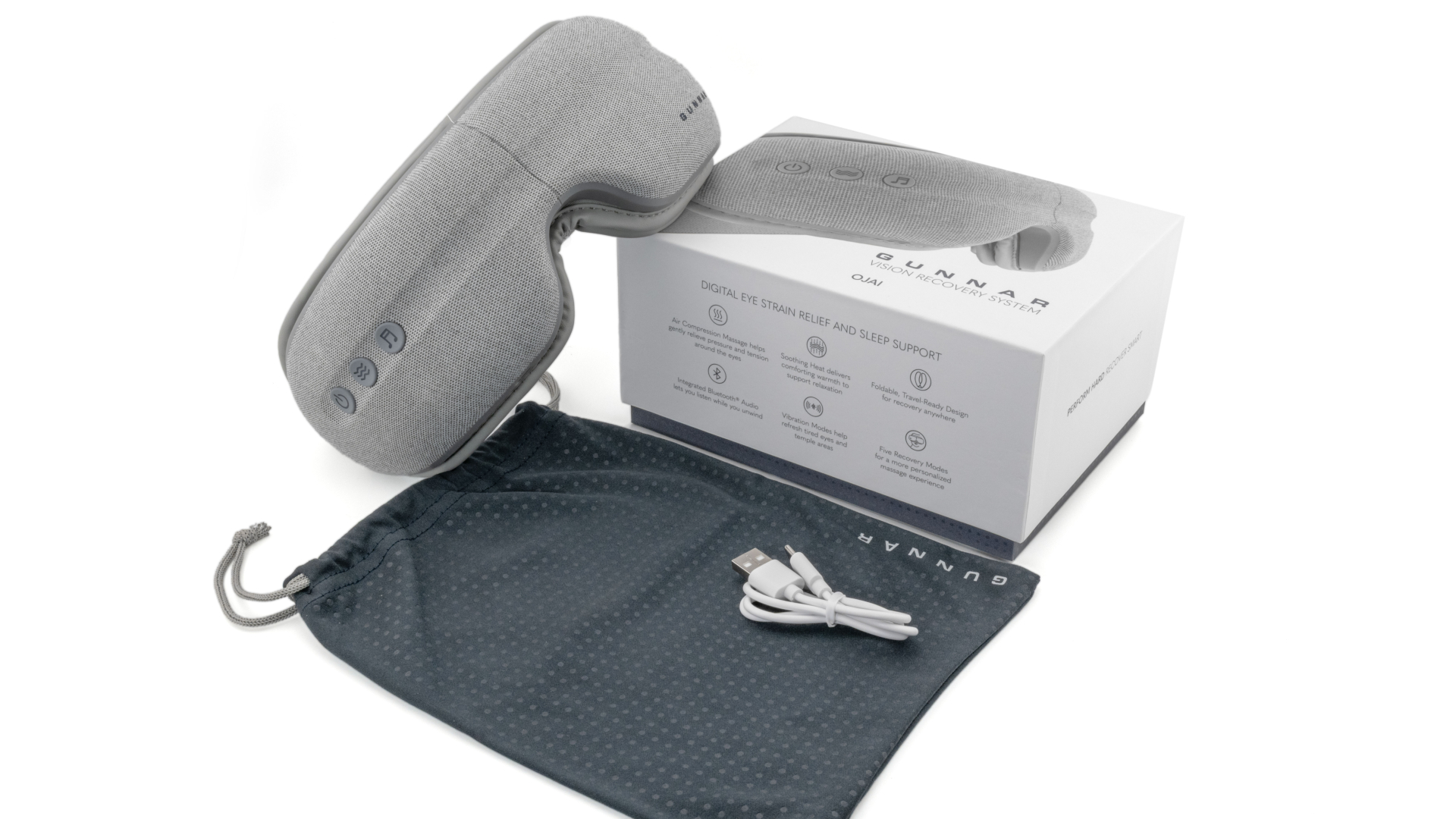
The Ojai offers five different modes: Relaxation, Hot Compress, Heat, Air Pressure, and Power Mode. The Ojai also features three different volume levels and two vibration settings, both of which will be revisited soon enough.
In terms of use, the Ojai is something that just about anyone could pick up and figure out in a matter of seconds. The three buttons on the front of the unit are clearly labeled, even if the existence of a secret fourth button is tacitly implied in the user manual. Other than those three buttons, the only additional material on the Ojai is its USB-C charging port, lending it a remarkably sleek if admittedly bulky design.
The Ojai Vision Recovery System only takes about an hour to charge from 0-100% battery life, with a full charge lasting between three and five sessions depending on what settings and features are being used. Over two weeks of personal use, my Ojai is able to consistently run for four full ten-minute sessions on Relaxation Mode with the vibration and audio both turned off, with the battery dying somewhere around six minutes into a fifth session.
How Does Gunnar Optiks' Ojai Work?
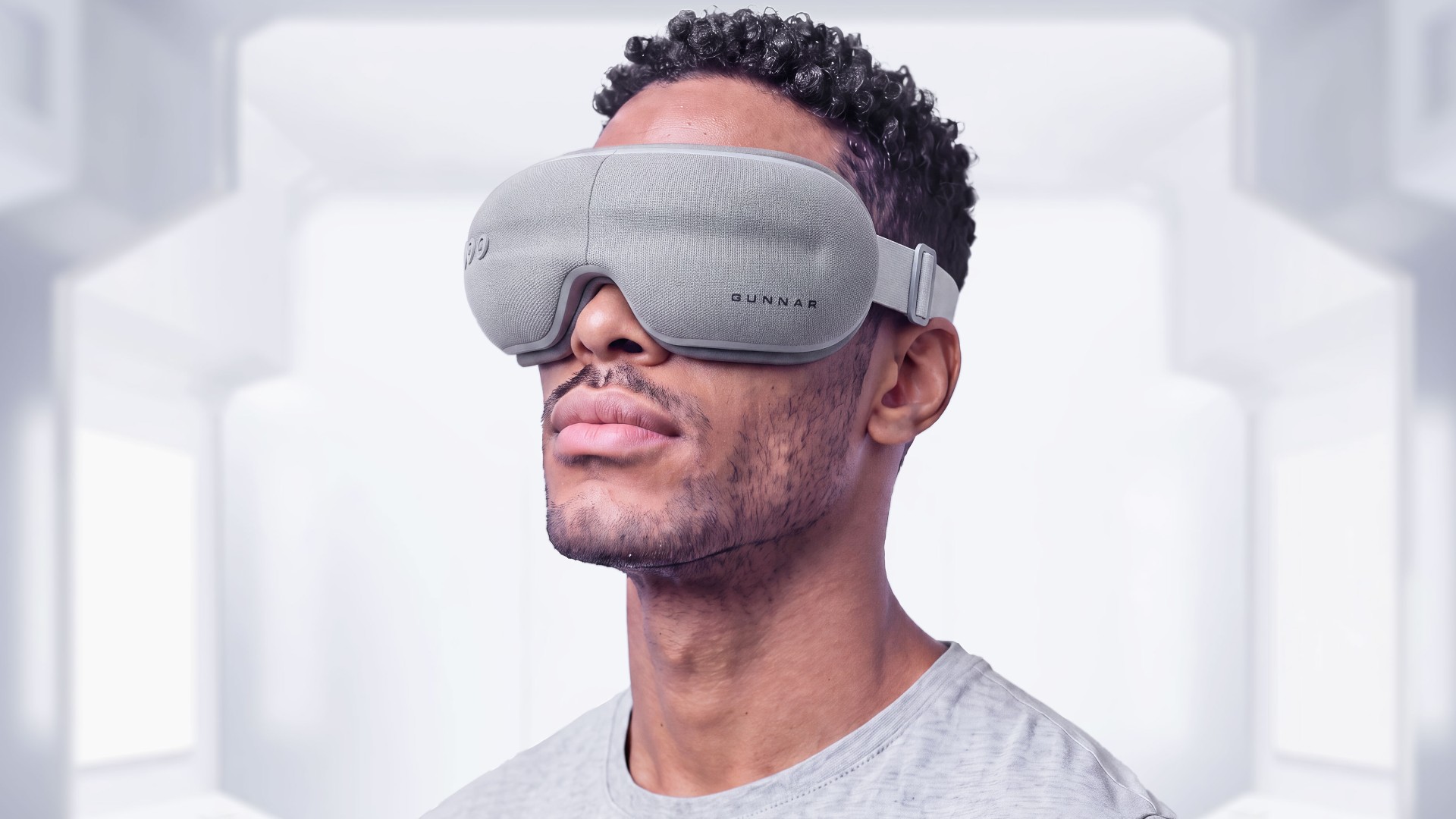
The Ojai is definitely modeled after a sleep mask, but it does not sit like one. Then again, there is no world in which a piece of gear filled with air compressors and speakers and internal heating units will be as slim as a couple pieces of cloth, and there is no expectation that it should be.
Users can tighten the headband on the Ojai so that it sits properly while they are upright, but they really shouldn't. When the Ojai is being worn that tight, the ostensibly relaxing sessions turn into ten minutes of having your temples squeezed at seemingly random intervals.
When worn loosely while reclining or lying down, on the other hand, the Ojai offers a genuinely satisfying experience that has almost put me to sleep on more than one occasion. Again, there are bags of air that are going to inflate and move around, and both they and the headband need some breathing room to be comfortable.
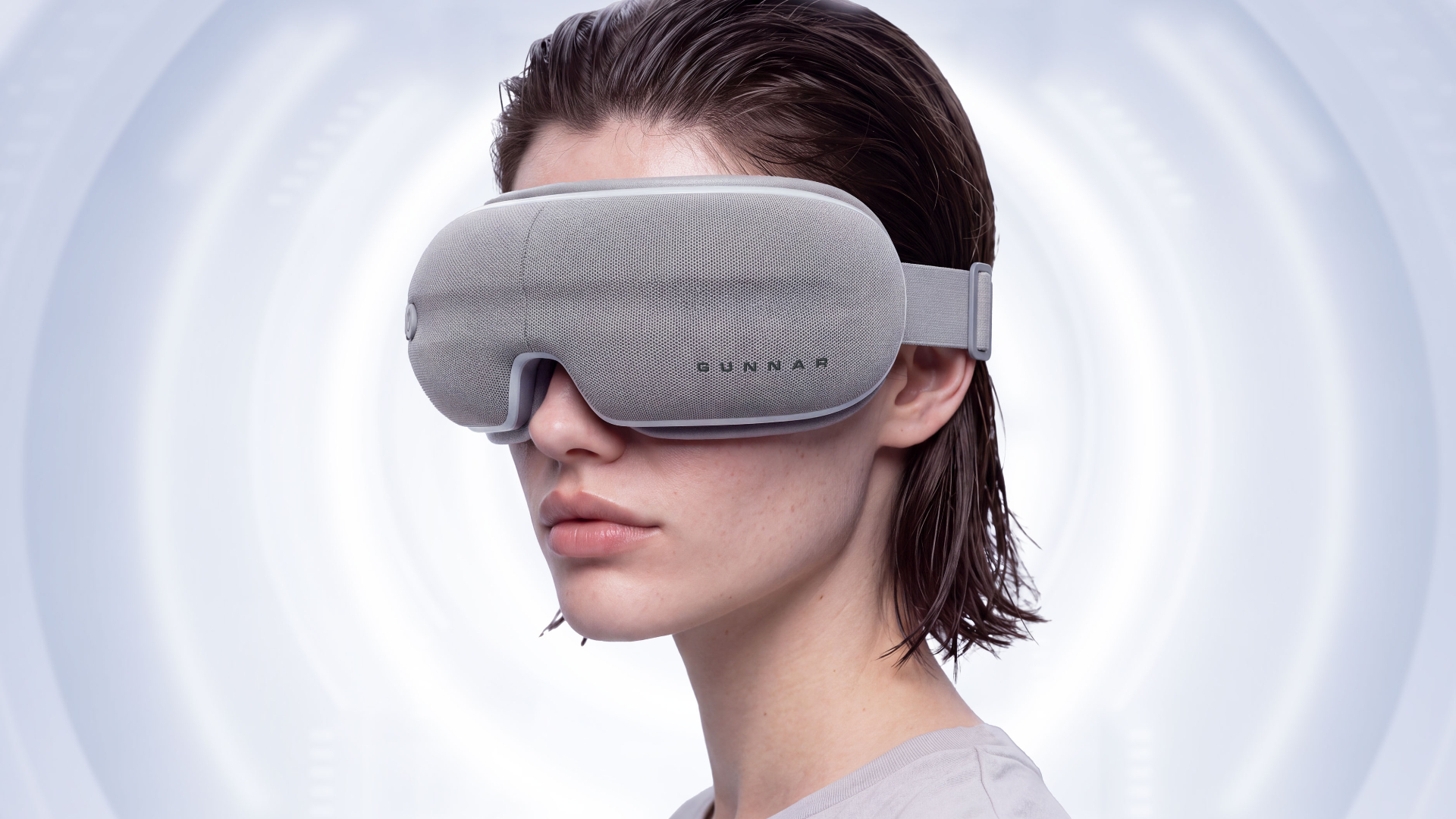
The air compression runs around the edges of the Ojai, while two heating pads just above the eyes provide an entirely different kind of relaxing sensation. The vibration functions, however, feel like some combination of electric toothbrush motors and N64 Rumble Packs, neither of which are necessarily enjoyable. The first, lighter vibration sensation is less noticeable than the vibrations caused by the air compressors, the latter of which are more soothing, not to mention more organically timed to the rhythm of each session.
The second vibration setting is more intense, more focused, and is probably great for someone who is not me. Once more, the vibrations don't quite line up with everything else the Ojai is doing, which can make them jarring beyond their sheer intensity. After giving both modes a couple of tries, I simply turned them off altogether, and I haven't looked back since.
As far as other settings and features go, the difference between the Relaxation and Power Mode is big, but not so vast that the former isn't worth the time nor the latter overwhelming. The Hot Compress mode is a nice in-between, and the Heat and Air Pressure modes are great for users who want to utilize one feature without the other. Unfortunately, there is no way for users to mix-and-match features and settings to create or program their own custom modes, although that is just the trade-off for not having to rely on an app or get sucked into an extended battle with the Ojai's three-button design.
Also unfortunately, BAH! Jump scare! A poorly lit/framed selfie of me using the Ojai at home after not replacing a lightbulb or lining things up properly.
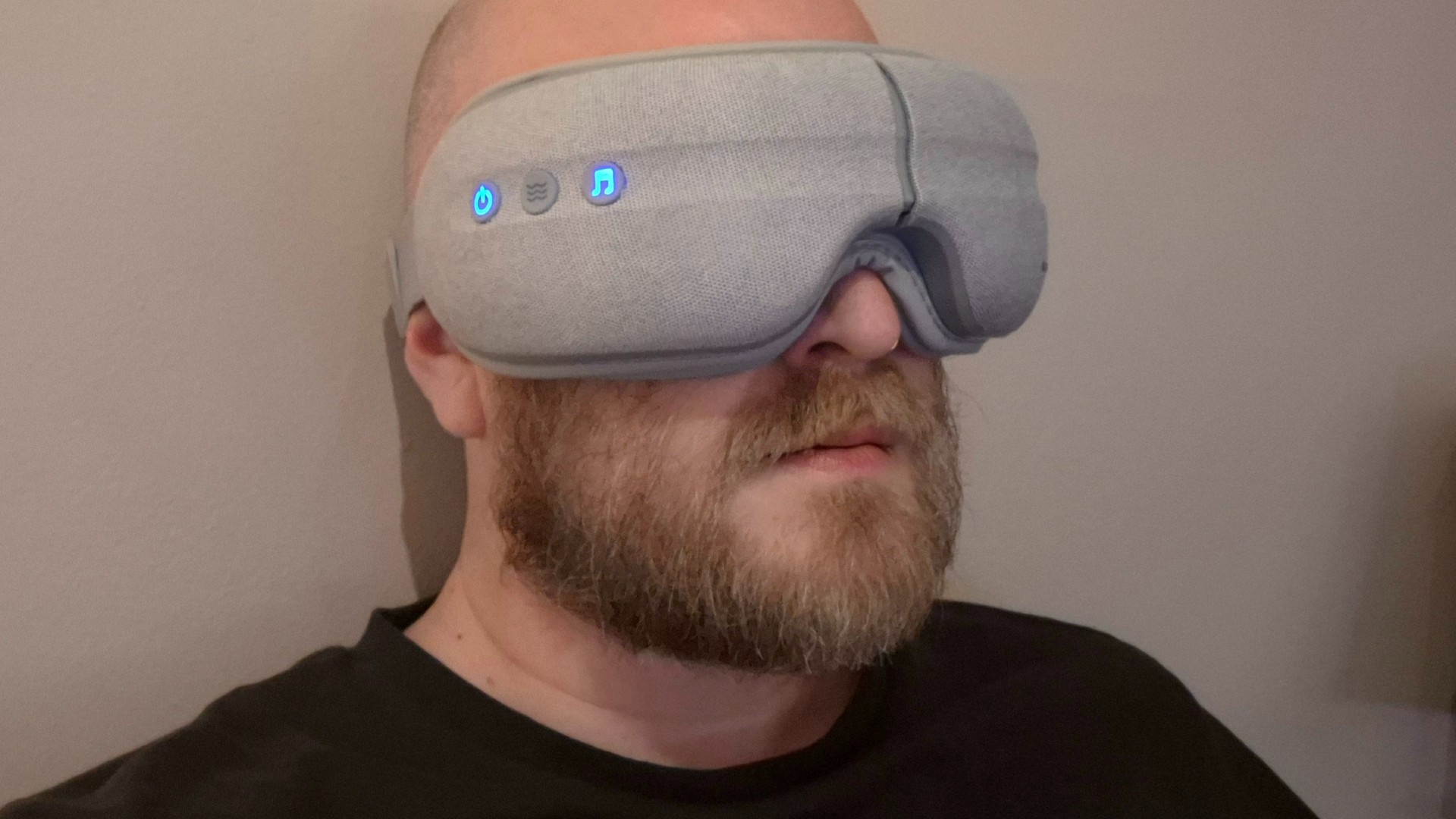
As far as the audio features go, the Ojai's internal speakers come pre-loaded with generic nature sounds, which are akin to what users would hear at their local spa retreat or massage therapy center. The Ojai's Bluetooth is incredibly quick to pair with other devices, and will automatically connect to their last paired device so quickly that it is almost annoying.
For whatever reason (I assume a safety regulation I'm not personally aware of), the Ojai Vision Recovery System plays Bluetooth audio at a fraction of the volume it does its default audio, which it reverts to when the connected Bluetooth device is paused. This can certainly be counted as another minor annoyance, though I can't imagine it ever being a deal breaker. Personally, I enjoy the Ojai on silent so I can let be lulled nearly to sleep by the white noise it creates all on its own.
Although users can use the Ojai in silence with the Heat mode, which has always been pleasant across more than a dozen sessions between two people (me and my wife), there is no option to use the Ojai solely for its audio features. That being said, the Ojai is also heavy and rigid enough that it never sits flush on the face, leaving gaps through which light can enter. Between that and the weight of the Ojai, it is hard to think of it ever purposefully being used as a sleep mask.
Of course, the Ojai is not a sleep mask, it is a Vision Recovery System, and as surprising as it might sound, it really does work. The first two times I used the Ojai, it was not the most enjoyable experience. Fortunately, all it took was figuring out what positions, settings, and features I like over the course of those two sessions for all of that to change.
By my third session, I was ready to lay back, relax, and enjoy ten minutes of letting a not-so-smart device do its thing. By my fourth session, I understood what GUNNAR was going for with the Ojai. And, by the end of my fifth session, I had become a firm believer in the idea of a Vision Recovery System.
Why the Ojai Vision Recovery System is Worth It

Listen, I am not any kind of medical professional. I'm not even one of those doctors who gets to call himself that because he writes pretty okay most of the time. What I am is a guy who regularly has anywhere from three to five screens in front of him at any given time and is kind of shocked that he doesn't actually need prescription lenses at nearly 40-years-old. My fifth session with the Ojai came on a Friday night after a full week of writing, researching, and generally doing my best at doing my worst for my eyes.
When I put on my Ojai and laid down in my bed, my eyes physically hurt from the strain and I was ready for any excuse to close them for a solid ten minutes. By the time that ten minutes was over, I felt better in general because of the aforementioned ten minutes of closing my eyes, laying down, and not thinking about work or bills or being a parent, but also my eyes felt better from the nice little robo-massage they had just received.
This came as a shock. I simply didn't expect that the Ojai was the kind of thing that would literally make my eyes stop hurting after a 50-ish-hour workweek filled with what might as well be the equivalent of 200-ish hours of screen time. My vision was refreshed, even if it was a little bit blurry for the first few seconds afterward due to all the buzzing on my brow and temples.
I don't use my Ojai every day, but I do very much enjoy it when I do. The biggest reason for that is also the biggest reason most people fail when it comes to new ventures. The Ojai only offers ten minute sessions, and finding those ten minutes can be a hassle. It isn't just about the time, but the requisites for a proper session. Being able to kick back in a quiet, comfortable environment where properly using the Ojai is possible can be, well, impossible at times, especially for those who need it the most.
The Ojai is also just bulky, loud, and noticeable enough that no one is going to be busting out theirs mid-flight or on the subway, although I wouldn't begrudge anyone who does. All things considered, the Ojai really does do what it says it can after some trial and error on the part of users, and is more than worth the $99 price tag.
It should be noted, however, that the Ojai also falls somewhere between "tech kitsch" and "lifestyle" in terms of what kind of product it is, and where it falls on that spectrum is almost entirely dependent on users. The Ojai Vision Recovery System by Gunnar Optiks IS gimmicky, sure, but it IS NOT a gimmick. This is a very real, very useful piece of self-care tech, and I am very much looking forward to a session with mine once I'm done rereading and scheduling this review.
The Ojai Vision Recovery System is currently available via Gunnar Optiks.
About the Creator
Enjoyed the story? Support the Creator.
Subscribe for free to receive all their stories in your feed. You could also become a paid subscriber, letting them know you appreciate their work.
Comments
There are no comments for this story
Be the first to respond and start the conversation.