
A Regular Phone Just Made A WhatsApp Call Straight To A Satellite, No Special Equipment Needed
Just a normal phone doing something normal phones haven't really been able to do before.

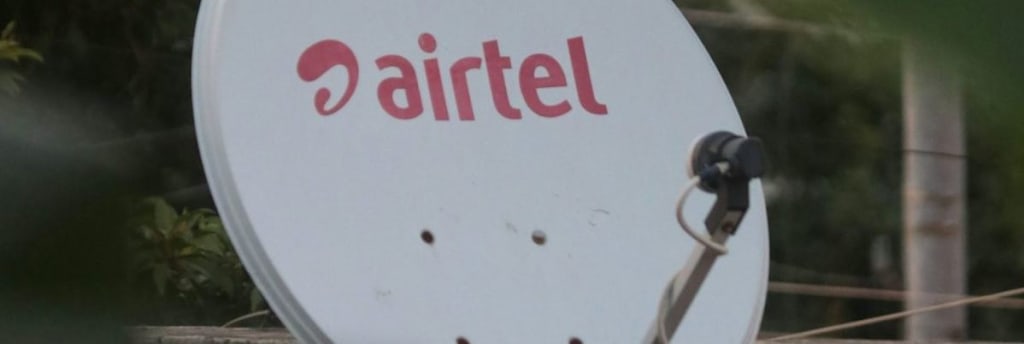
That was Airtel Madagascar's first Direct-to-Cell test, run in partnership with SpaceX, and it happened on July 11 in a place called Sadabe.
What actually happened during the test
Participants weren't just testing whether the connection worked in theory; they actually used it. Sending texts, sending WhatsApp messages, making WhatsApp voice and video calls, pulling up YouTube and Facebook. All on a standard handset, connected directly to a satellite instead of a terrestrial tower.
That's worth pausing on, because it's a genuinely different setup from most satellite internet you've probably heard of. Most satellite connectivity, including the original version of Starlink, works by linking a satellite to a ground station, which then connects to the regular mobile network. That's called satellite backhaul, and it still requires terrestrial infrastructure somewhere in the chain.
Direct-to-Cell skips all of that. The phone itself talks to the satellite. No cell tower required at all.
Why does this actually matter for a place like Madagascar
Airtel pointed out that Madagascar's geography makes a lot of remote areas genuinely hard to reach with conventional mobile infrastructure, mountains, dispersed populations, and areas where building and maintaining physical towers just isn't practical or affordable. Direct-to-Cell offers a way to reach those areas without needing to lay any new ground infrastructure at all.
There's also a disaster-response angle here that seems to be a real priority, not an afterthought. The demo was attended by Madagascar's minister of digital development, officials from the country's telecom regulator (ARTEC), and representatives from the National Bureau for Risk and Disaster Management. Airtel specifically framed this technology as a way to keep communications running during natural disasters or network outages, letting affected communities stay in contact with government, emergency services, and field teams even if terrestrial towers get knocked out entirely.
That's a genuinely compelling use case. When a cyclone or flood takes down local cell towers, satellite connectivity that doesn't depend on any of that ground infrastructure could be the difference between staying connected during a crisis and going completely dark.
To be fair, there's a lot Airtel didn't share. They didn't publish any results on how the service actually performs under real stress, congestion, bad weather, infrastructure failure, or. the exact emergency conditions where this technology would matter most. No numbers on download or upload speeds, latency, connection stability, how much satellite capacity is available, how many users can connect at once, or how well the system hands off between satellite and terrestrial coverage when you move between them.
So right now, this is proof that the connection works real calls, real messages, real handset, no special equipment but not proof of how well it holds up when things get genuinely difficult, which is exactly when this kind of service matters most.
Madagascar isn't a standalone experiment. It's one piece of a much larger partnership between SpaceX and Airtel Africa, aimed at bringing Direct-to-Cell service across Airtel's 14 markets throughout sub-Saharan Africa, pending regulatory approval in each individual country. That broader partnership was announced back in December 2025.
Madagascar actually follows an earlier trial in Kenya from March 2026, where Airtel reported successful Starlink Mobile data and messaging tests in areas with no terrestrial mobile coverage at all, also using standard smartphones. Airtel said what they learned from Kenya is directly feeding into how they prepare for rollout in other markets Madagascar being the next one in that sequence.
And this whole Direct-to-Cell push builds on an even earlier relationship between the two companies. Back in May 2025, Airtel Africa and SpaceX struck a deal to bring Starlink connectivity to businesses, schools, health facilities, and communities across Airtel's footprint plus explore using Starlink for cellular backhaul in rural areas. At that point, Starlink already held operating licenses in nine of Airtel's 14 markets, with applications in progress for the remaining five.
What still needs to happen before this goes live
A real commercial launch in Madagascar depends entirely on ARTEC, the national regulator, completing its assessment and there's no published timeline for when that wraps up. The ITU (the UN body overseeing global telecom standards) points to things like spectrum management and coordination between governments, satellite operators, and mobile providers as the typical regulatory hurdles for this kind of direct-to-device service.
Beyond the regulatory side, there's still practical groundwork needed too figuring out which specific devices will be supported, how the satellite network integrates with Airtel's existing infrastructure, and how customers would actually sign up and get billed for it. None of that pricing, availability, or a launch date has been announced yet.
Anne Catherine Tchokonté, managing director of Airtel Madagascar, framed the trial as part of a broader ambition to make sure global telecom innovation actually reaches the Malagasy people, not just wealthier or more connected markets.
What's happening here fits into a much larger story about how satellite tech is starting to close connectivity gaps that traditional infrastructure just hasn't been able to solve, especially across Africa. Building physical cell towers across remote, mountainous, or sparsely populated regions is expensive and slow. If direct-to-cell satellite technology can genuinely deliver reliable service and that's still an open question given how little performance data has been shared, it could offer a real shortcut, bringing connectivity to places that would otherwise wait years, or indefinitely, for ground infrastructure to reach them.
For now, though, this is a promising proof of concept, not a finished product. Real calls got made on real phones with no special equipment, which is genuinely impressive. Whether it holds up during an actual disaster, at real scale, with real network congestion, is still the question nobody's answered yet.
About the Creator
Mark Lim
Hi I am mark an automotive student and a car, tech and food enthusiast ! Im gonna try and post daily & hope you enjoy what I write and do share my page with people you know. I would gladly appreciate it! Cheers
Enjoyed the story? Support the Creator.
Subscribe for free to receive all their stories in your feed.
Comments
There are no comments for this story
Be the first to respond and start the conversation.